

 Melo Villareal
NCAP Camera Locations in Metro Manila Cities: Roads and Areas Motorists Should Know
Metro Manila motorists now have another reason to pay close attention to traffic signs, lane markings, pedestrian crossings and road regulations.
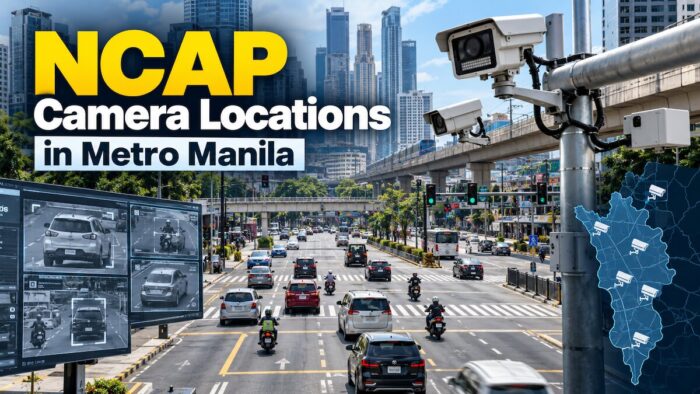
Metro Manila NCAP Camera Locations
The No Contact Apprehension Policy (NCAP) uses cameras and other technology to detect and document traffic violations without requiring a traffic enforcer to physically stop the vehicle.
As of October 2026, several Metro Manila cities have resumed or implemented their own NCAP systems. These include Manila, Quezon City, Parañaque, Muntinlupa, and San Juan. Valenzuela was also included in the planned rollout but temporarily suspended implementation because of ongoing road construction.
For motorists who regularly travel around Metro Manila, knowing the major areas associated with NCAP enforcement can help you understand where to exercise extra caution. However, camera locations can change, so the safest approach is to follow traffic rules on every road.
What Is NCAP?
The No Contact Apprehension Policy, commonly called NCAP, uses cameras and other technology to detect traffic violations.
Instead of requiring an officer to flag down a driver, the system can capture an image or video of an alleged violation. Authorities can then process the evidence and issue a Notice of Violation to the vehicle owner.
The system can help reduce roadside apprehensions and provide a digital record of traffic violations.
NCAP Returns to Metro Manila Cities
Metro Manila has several traffic enforcement authorities.
The Metropolitan Manila Development Authority (MMDA) operates its own camera-based enforcement system on major roads.
Individual local governments can also operate their own NCAP systems.
As of October 2026, cities that have announced city-level NCAP implementation include:
- Manila
- Quezon City
- Parañaque
- Muntinlupa
- San Juan
- Valenzuela, with implementation temporarily suspended because of road construction
This distinction matters because MMDA-issued violations and city-issued violations may follow different checking, payment, and appeal procedures.
NCAP Camera Locations in Manila
Manila has resumed its city-operated NCAP system.
Several major roads and intersections have also historically been associated with MMDA camera enforcement, including:
- P. Burgos Avenue and Maria Orosa Street
- Lagusnilad Underpass
- Liwasang Bonifacio
- R10 and Moriones
- Nagtahan Underpass
- Recto and Mendiola
- España and Morayta
- España and Lacson
- España near R. Magsaysay High School
- Welcome Rotonda
Treat these locations as reference points rather than a permanent list of every active camera.
Camera coverage can change because of road construction, maintenance, traffic management changes, and system expansion.
NCAP Camera Locations in Quezon City
Quezon City has one of the most extensive histories of city-level NCAP implementation.
Previously identified locations included major roads and intersections such as:
- Quirino Highway and Susano Road
- Quirino Highway and Zabarte Road
- Quirino Highway and Tandang Sora
- E. Rodriguez Avenue and Tomas Morato Avenue
- E. Rodriguez Avenue and Gilmore Avenue
- E. Rodriguez Avenue and Hemady Street
- Aurora Boulevard and Hemady Street
- Aurora Boulevard and Gilmore Avenue
- Aurora Boulevard and Broadway Avenue
- Aurora Boulevard and 20th Avenue
- West Avenue and Baler Street
- East Avenue and BIR Road
- Kamias Road and Kalayaan Avenue
- P. Tuazon Boulevard and 13th Avenue
- P. Tuazon Boulevard and 15th Avenue
The city initially focused its camera enforcement on selected primary roads and major intersections.
Motorists should not assume that this older list represents every camera currently operating in Quezon City.
NCAP Camera Locations in San Juan
San Juan is among the cities that resumed NCAP implementation in October 2026.
The city has announced that NCAP covers all major roads in San Juan.
This means motorists should not rely on a short list of individual intersections when driving through the city.
Pay attention to:
- Traffic lights
- Lane markings
- Road signs
- Pedestrian crossings
- Parking restrictions
- Directional signs
- Speed limits
The safest strategy is to treat the entire major-road network as an enforcement area.
NCAP Camera Locations in Parañaque
Parañaque is another Metro Manila city that resumed city-level NCAP implementation.
The city’s roads carry heavy traffic because of their connections to the airport, southern Metro Manila, major commercial areas and neighboring cities.
Previously identified MMDA camera areas in the broader airport and Pasay corridor have included:
- Terminal 3 Rotonda
- Andrews Avenue and Tramo
- Airport Road and Domestic Rotonda
- Terminal 4 and Domestic Road Footbridge
- MIA Domestic and Park N Fly
These locations should be distinguished from Parañaque’s separate city-operated NCAP system.
Motorists should follow the signs and traffic regulations throughout the city rather than relying on a fixed camera list.
NCAP Camera Locations in Muntinlupa
Muntinlupa resumed its city-level NCAP system in October 2026.
The city is an important southern gateway to Metro Manila, with large numbers of vehicles traveling through Alabang and major roads connecting the city with Cavite, Laguna and other parts of the metropolis.
Motorists should exercise particular caution at major intersections and busy arterial roads.
Because camera locations may be updated, drivers should not assume that only previously published locations are monitored.
NCAP Camera Locations in Valenzuela
Valenzuela was initially included among the Metro Manila cities expected to resume city-level NCAP implementation.
However, its rollout was temporarily suspended because of ongoing road construction.
This is an important reminder that NCAP camera information can change quickly.
A camera location published months earlier may no longer be active, while new locations may be added as roads and intersections are upgraded.
MMDA NCAP Camera Locations Across Metro Manila
The MMDA operates its own camera enforcement system on major roads.
Previously identified MMDA camera locations have included areas along:
EDSA
- Guadalupe
- Guadalupe Bridge
- Boni
- Shaw Boulevard
- Ortigas
- White Plains
- Camp Aguinaldo
- Aurora
- Cubao
- Kamuning
- Quezon Avenue
- North Avenue
- SM North
- Congressional
- MCU
- Magallanes
- Tramo
Roxas Boulevard
Previously identified areas include:
- HK Plaza
- Macapagal
- Buendia
- Quirino
- Kalaw
- P. Burgos
Commonwealth Avenue
Previously identified areas include:
- Technohub
- Microtel
- Tandang Sora
- Toyota
- Ever
- St. Peter
- Batasan
- Litex
C5 and Other Major Roads
Other previously identified areas include:
- Kalayaan Avenue
- Lanuza
- J. Vargas
- Ortigas Avenue
- Greenmeadows
- Eastwood
- Libis
- Katipunan Avenue
- Bonifacio-Serrano
- Aurora Boulevard
- Marcos Highway
- C3
Treat these locations as reference points. Camera coverage can change over time.
What Traffic Violations Can NCAP Detect?
The exact violations covered depend on the implementing authority and applicable traffic regulations.
Common violations that may be detected through camera enforcement include:
- Beating the red light
- Illegal parking
- Counterflowing
- Disregarding traffic signs
- Improper lane use
- Violating lane restrictions
- Other traffic violations covered by the applicable traffic code
The Metro Manila Traffic Code of 2023 provides standardized traffic rules and penalties across participating Metro Manila local governments.
How Does NCAP Work?
The process generally involves several steps.
1. The Camera Records the Vehicle
A camera captures an image or video showing an alleged traffic violation.
2. The Violation Is Processed
The responsible authority reviews the recorded information and identifies the vehicle and alleged violation.
3. A Notice of Violation Is Issued
The registered vehicle owner may receive a Notice of Violation according to the issuing authority’s procedures.
4. The Motorist Checks the Violation
The motorist can verify the details using the appropriate government system.
5. The Motorist Pays or Appeals
If the violation is valid, the motorist can follow the payment procedure.
If the motorist believes the apprehension was incorrect, they may file an appeal or protest through the applicable process.
How to Check NCAP Violations
First, identifywhich authority issued the violation.
For an MMDA violation, motorists should use the MMDA’s official NCAP services.
For a city-issued violation, motorists should use the system provided by the relevant local government.
This distinction is important because the MMDA, Manila, Quezon City, Parañaque, Muntinlupa and San Juan may have separate procedures.
If you receive a Notice of Violation, follow the instructions indicated on the notice and verify the information through the appropriate government channel.
Can You Contest an NCAP Violation?
Yes.
Motorists who believe that an NCAP violation was recorded incorrectly can contest the apprehension through the appropriate authority.
The procedure varies by agency and city.
If you plan to appeal, keep relevant evidence such as:
- Photos
- Dashcam footage
- Vehicle documents
- Receipts
- Parking records
- Other supporting documents
Pay attention to the appeal deadline.
NCAP and the Metro Manila Traffic Code
The Metro Manila Traffic Code of 2023 provides standardized traffic rules and penalties for participating Metro Manila local governments.
The goal is to make traffic enforcement more consistent across cities.
However, the authority issuing the violation still matters.
An MMDA-issued violation follows the MMDA process. A city-issued violation follows the process established by that local government.
Tips for Driving in NCAP Areas
Follow the Speed Limit
Always observe the posted speed limit. Don’t assume you can drive faster just because a road appears clear.
Watch Traffic Lights
Approach intersections carefully and prepare to stop before the signal changes.
Stay in Your Lane
Follow lane markings and directional signs, especially at complicated intersections.
Avoid Illegal Parking
Do not park in prohibited areas even if you do not see a traffic enforcer nearby.
Keep Intersections Clear
Do not enter an intersection if traffic ahead is already stopped. Blocking an intersection can disrupt traffic and potentially result in a violation.
Do Not Depend on Camera Lists
Published NCAP camera lists can become outdated.
New cameras may be installed. Existing cameras may be relocated. Enforcement may also be temporarily suspended because of construction or other operational issues.
Verify Before Paying
If you receive a Notice of Violation, verify the information through the appropriate government system before making a payment.
Why NCAP Camera Locations Change
Traffic enforcement systems are not static.
Local governments may move cameras because of:
- Road construction
- New traffic patterns
- Intersection redesign
- Road widening
- Camera maintenance
- Technology upgrades
- Traffic congestion
- New enforcement priorities
Valenzuela’s temporary suspension demonstrates how construction can affect NCAP implementation.
For this reason, motorists should use published camera lists as general references rather than guaranteed real-time maps.
What Motorists Should Remember
Knowing NCAP camera locations should help you understand the enforcement system, not identify roads where you can ignore traffic rules.
Traffic regulations apply whether a camera is visible.
When driving around Metro Manila, observe speed limits, obey traffic lights, follow lane markings, respect pedestrian crossings, and avoid illegal parking.
NCAP enforcement continues to evolve as more local governments adopt camera-based traffic monitoring. Motorists should therefore expect coverage and procedures to change over time.
Frequently Asked Questions About NCAP Camera Locations in Metro Manila
1. Which Metro Manila cities have NCAP?
As of October 2026, Manila, Quezon City, Parañaque, Muntinlupa and San Juan have announced city-level NCAP implementation. Valenzuela was included in the planned rollout but temporarily suspended implementation because of ongoing road construction. The situation can change as cities expand, modify or suspend their systems, so motorists should check the latest announcements from the relevant local government when planning a trip.
2. Are NCAP cameras installed throughout Metro Manila?
No. NCAP enforcement is operated by different authorities and coverage is not necessarily identical throughout Metro Manila. The MMDA operates its own camera enforcement system on major roads, while participating cities can operate their own NCAP systems. Some cities cover selected roads and intersections, while San Juan has announced coverage across all major roads. Camera locations can also change because of construction, maintenance and system expansion.
3. What is the difference between MMDA NCAP and city NCAP?
The main difference is who enforces it. The MMDA operates its own camera-based traffic enforcement system, while cities such as Manila, Quezon City, Parañaque, Muntinlupa and San Juan can operate their own systems. This matters because the authority that issued the Notice of Violation determines where you check the violation, how you pay the fine, and where you file an appeal.
4. Where are the NCAP cameras in Quezon City?
Quezon City has previously identified NCAP locations along major roads such as Quirino Highway, E. Rodriguez Avenue, Aurora Boulevard, West Avenue, East Avenue, Kamias Road and P. Tuazon Boulevard. These roads include several major intersections associated with camera enforcement. However, older lists should not automatically be treated as a real-time inventory of active cameras. Motorists should follow traffic regulations throughout Quezon City regardless of whether a camera is visible.
5. Are all major roads in San Juan covered by NCAP?
San Juan has announced that its NCAP system covers all major roads within the city. This means motorists should avoid relying on a specific list of intersections when driving through San Juan. Instead, drivers should assume that major roads are subject to camera-based enforcement and follow traffic signs, lane markings, speed limits and other applicable regulations throughout their journey.
6. Can I receive an NCAP violation without being stopped?
Yes. The main purpose of NCAP is to allow traffic authorities to document violations without physically stopping the vehicle at the time of the offense. A camera can capture the vehicle and alleged violation, after which the responsible authority can process the evidence and issue a Notice of Violation. The registered vehicle owner can then follow the applicable checking, payment or appeal procedure.
7. How can I check if my vehicle has an NCAP violation?
First identify the authority that issued the violation. Check MMDA violations through MMDA’s official NCAP services, and check city-issued violations through the relevant local government system. If you receive a Notice of Violation, follow the instructions provided by the issuing authority. Avoid unofficial websites and do not respond to suspicious payment requests that do not come from recognized government channels.
8. Can I contest an NCAP violation?
Yes. If you believe a violation was recorded incorrectly, you can contest it through the process the issuing authority establishes. The requirements differ between cities and agencies. Keep evidence that can support your case, such as dashcam footage, photographs, and relevant vehicle documents. Read the Notice of Violation carefully and note the deadline to file an appeal.
9. Does NCAP only apply where I can see a camera?
No. Motorists should never assume traffic rules apply only when a camera is visible. Camera equipment can be positioned in locations that drivers may not immediately notice. More importantly, traffic regulations apply throughout Metro Manila regardless of camera coverage. Drivers should follow speed limits, traffic signals, lane markings, parking restrictions, and other road rules at all times.
10. Where can I find the latest NCAP camera locations?
The most reliable information comes from current announcements and official channels of the MMDA or the relevant city government. Manila, Quezon City, Parañaque, Muntinlupa, San Juan, and other participating cities can modify their enforcement coverage. Older online lists can still provide useful reference information, but they may become outdated when cameras are relocated, new cameras are installed, or enforcement is temporarily suspended because of road construction.
Want updates about LTO driver’s License Renewal in the Philippines? Follow #TeamOutofTown on Facebook, Twitter, Instagram, Bloglovin, and Pinterest for more travel ideas.
Also read:
- How to Apply for RFID Sticker for SLEX, NLEX, CAVITEX, Etc. (EasyTrip & Autosweep)
- How To Renew Passport For OFWs – A Complete Guide
- How to Renew Your Motorcycle Registration in the Philippines
- 10 Free and Cool Things to Do in Manila
- Philippine Passport Renewal in Kuala Lumpur
- Updated LTO Student Permit Requirements and Procedure 2023
- A Complete Guide to Driver’s License Renewal in the Philippines

