

 Melo Villareal
10 Reasons Why You Should Visit Myanmar Now
Myanmar, oftentimes called Burma, is a Southeast Asian country known for having deep Buddhist roots. Although most parts of the country are undeveloped, Myanmar boasts a distinctive elegance that attracts certain types of travelers. Sometimes, attraction is hard to put into words. That is why we’ve written down 10 reasons why Myanmar is attractive and why you should visit it now.
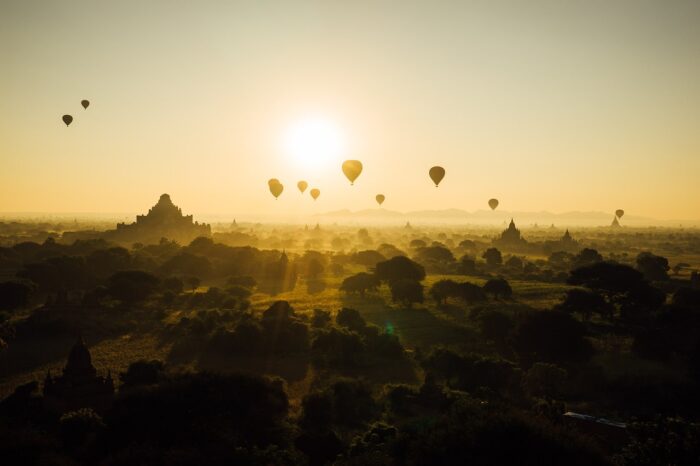
Hot Air Balloon in Old Bagan, Myanmar Ancient City
1. Well-preserved stupas (pagodas)
Monasteries are some of the highlights of Burmese culture. Monks and pagodas have played significant roles in the country’s history, especially during British Rule from 1824 to 1948. It is therefore not surprising that these aspects of Burmese life are venerated and preserved even today.

The country takes pride in the preservation of several temples and pagodas. Some of Myanmar’s best-known pagodas are found in the ancient city of Bagan and in the country’s largest city and former capital, Yangon (Rangoon). Bagan’s cityscape mainly consists of pagodas, or stupas, as locals call them, and is known in the country for its most pagodas. Meanwhile, the most sacred Buddhist pagoda in the country is the Shwedagon Pagoda in Yangon. Parts of the 99-meter-tall pagoda are covered in genuine gold plates and are believed to contain significant Buddhist relics.
Search for Hotels and Resorts in Yangon according to your budget via Agoda.com
2. It is home to some of the most beautiful Buddhist pilgrimage sites
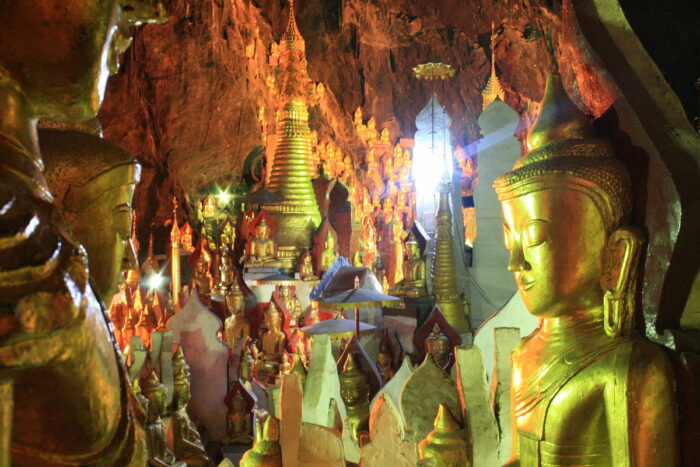
The Pindaya Caves in Myanmar are collectively a famous Buddhist pilgrimage site. These caves are known for housing hundreds of thousands of Buddhist statues and images dating as far back as 1750. The southernmost cave of the three is nearly 150 meters long from north to south and contains over 8,000 images of Buddha.
3. It is also home to the largest Buddhist statues in the world
The Maha Bodhi Tataung region in Myanmar is home to two of the largest Buddha statues in the world—one of which is the Giant Standing Buddha. Soaring to 129 meters, the figure was built with 31 floors, corresponding to the 31 planes of existence in Buddhism.

The largest reclining Buddha statue in the world is conveniently just next to the colossal standing statue. Since it is hollow inside, travelers can enter the statue. There are over 9,000 images of Buddha inside. Together, these two giant statues are surely impossible to miss.
4. River retreats

Running 1,207 kilometers long, the Chindwin River is the country’s largest tributary that flows into the largest river in Myanmar, the Irrawaddy River. Chindwin has peaceful waters and offers some of Myanmar’s least-seen beauties. The river passes by quaint villages and other scenic sights. The giant Buddha statues at Maha Bodhi Tataung are also visible from this river.
Search for Hotels and Resorts in Yangon, Myanmar, according to your budget via Agoda.com
5. Burmese cuisine
Like other Asean countries, Myanmar has several ethnicities. This means that each region has its own version of Burmese cuisine… and if you’re a foodie, giving each of these a try will complete your trip to Myanmar.

Burmese cuisine typically features rice, starches, beans, and a variety of vegetables, and is seasoned with fish sauce and fermented fish. Some traditional Burmese do not use beef and pork because of religious influences (Buddhist and Muslim, respectively). Some of Myanmar’s must-try dishes include Burmese curry and the traditional breakfast bowl of Mohinga.
6. Contemporary art galleries
Contemporary art in Burma is often characterized by religious and political themes, which are largely shaped by the country’s history. In recent years, however, Burmese contemporary art has developed into something rather unique among the nations in Southeast Asia.

Myanmar is home to a vibrant and diverse array of galleries that showcase its rich cultural heritage and contemporary art scene. Throughout cities like Yangon and Mandalay, visitors can explore institutions featuring traditional Burmese paintings, intricate carvings, and modern conceptual art.
These galleries often serve as cultural hubs, hosting exhibitions, workshops, and performances that highlight local talent and international artists alike. Many are housed in historic buildings, blending colonial architecture with innovative design.
Art enthusiasts can immerse themselves in the colorful tapestry of Myanmar’s artistic expression, gaining a deeper understanding of its history, spirituality, and evolving creative landscape.
7. Unspoiled lands
Aside from cities like urban Yangon, Myanmar has many rural, unspoiled lands. The rural areas outside Yangon are home to agricultural and fishing communities. These communities can be found along Inle Lake, the country’s second-largest lake. Inle Lake borders four cities and small villages, with a total population of about 70,000.
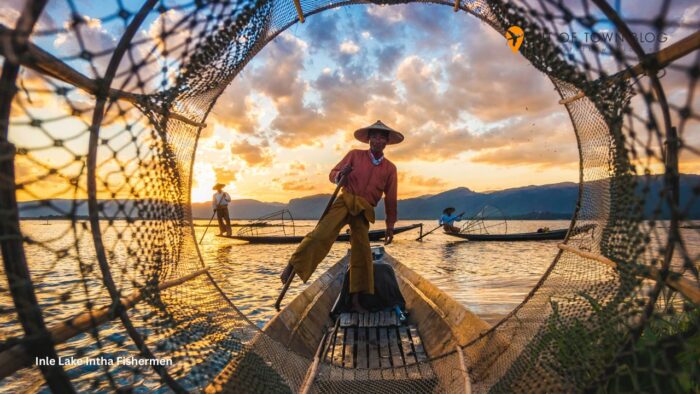
Quaint villages, stilt houses, farmlands, and lakeside houses are some exciting views one can see here. Manual boats and pedal bicycles are the primary modes of transportation in this area.
8. The longest and oldest teakwood bridge in the world

During the British Rule in the country, Myanmar produced nearly 75% of the world’s teak. Today, although Myanmar’s economy focuses more on precious stones like rubies, its legacy as the world’s leading teakwood producer can still be seen in the U Bein Bridge, the world’s longest and oldest teakwood bridge.
Completed in 1851, the 1.2-kilometer bridge stretches over Taungthaman Lake. Because of its age, some teakwood pillars have been replaced with concrete; however, most of the bridge remains untouched.
9. Beautiful parks
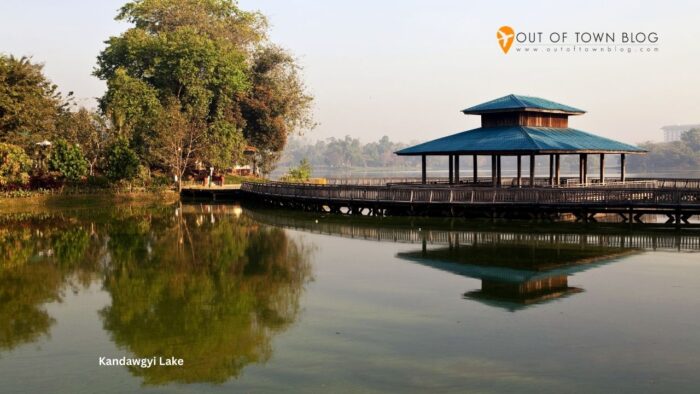
The Kandawgyi Lake was built as a reservoir by the British to supply clean water in Yangon during the colonization era. Now, the lake is surrounded by a park known to tourists and locals alike.
Although the park is also a famous jogging area for most people in the early mornings, it is best to visit Kandawgyi Lake at sunset because it’s when the burning orange of the sun hits the golden Shwedagon Pagoda from afar. The reflection of the glowing stupa is clearly mirrored on the lake’s surface.
10. Friendly locals at Lintha Village
Ever since a British woman established a school in Lintha Village, English has been extensively taught here. Lintha Village is very small, rustic, and undeveloped, so it’s not the typical tourist destination that one usually thinks of.
It’s just a small village with friendly people and enthusiastic children. You can talk to the pupils there or donate a book or two to the local library. After all, as the writer Tim Cahill would say, “a journey is best measured in friends, rather than miles.”
Search for Hotels and Resorts in Yangon according to your budget via Agoda.com
Also Read:
- The Magnificent Adventures of Myanmar
- Myanmar is now Visa-Free for Filipino Travelers
- The art of making Lacquerware in Old Bagan Myanmar
- Sunrise at Bagan, Myanmar
- Shwezigon Pagoda in Old Bagan Myanmar
- Visit to the Golden Land – Myanmar