Melo Villareal
What’s the Difference Between Pancit Malabon and Pancit Palabok? A Filipino Food Guide
Pancit Malabon and Pancit Palabok are two beloved Filipino noodle dishes that often look almost identical at first glance. Both feature rice noodles covered in a rich yellow-orange sauce and generously topped with seafood, pork, eggs, and traditional Filipino garnishes.
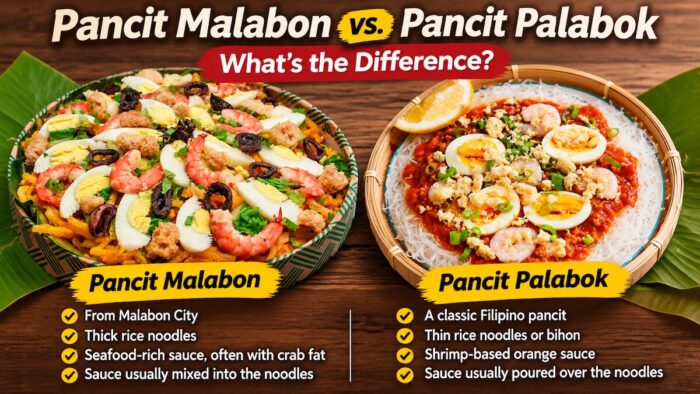
Pancit Malabon vs. Pancit Palabok
Their similarities make them easy to confuse, especially for travelers discovering Filipino cuisine for the first time. However, these two pancit varieties have distinct characteristics that set them apart.
The most noticeable differences are their noodle thickness, sauce composition, preparation, and toppings. Pancit Malabon is known for its thick rice noodles and seafood-rich character, while Pancit Palabok typically features thinner noodles, a shrimp-based sauce, and an assortment of colorful garnishes.
Understanding the difference between Pancit Malabon and Pancit Palabok deepens appreciation for Filipino food culture, local culinary traditions, and the regional influences that shaped these popular dishes.
Pancit Malabon vs. Pancit Palabok: Quick Comparison
| Feature | Pancit Malabon | Pancit Palabok |
|---|---|---|
| Origin | Malabon City, Metro Manila | Filipino pancit tradition, commonly associated with Metro Manila |
| Noodles | Thick rice noodles | Usually thin rice noodles or bihon |
| Sauce | Seafood-rich sauce, often with crab fat | Shrimp-based sauce |
| Sauce preparation | Usually mixed into the noodles | Usually poured over the noodles |
| Common toppings | Shrimp, squid, oysters, mussels, pork | Shrimp, ground pork, tinapa, chicharon |
| Texture | Thick, chewy, hearty | Delicate, softer noodles with contrasting toppings |
| Flavor | Rich, seafood-forward, savory | Savory, shrimp-rich, smoky, and garlicky |
| Appearance | Orange noodles with abundant seafood toppings | Orange sauce layered over noodles and garnishes |
Recipes vary among households and restaurants, so these differences describe common traditional styles rather than strict rules.
What Is Pancit Malabon?
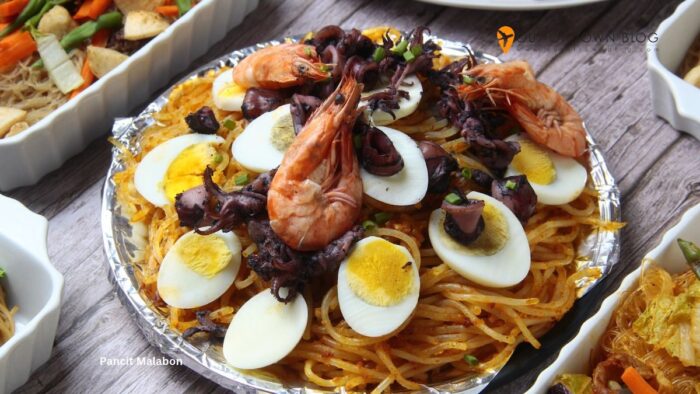
Pancit Malabon is a Filipino noodle dish that originated in Malabon City, a historic community in Metro Manila known for its fishing traditions and distinctive local cuisine.
The dish is famous for its thick rice noodles, rich orange-yellow sauce, and generous assortment of seafood toppings. Unlike other pancit varieties, Pancit Malabon is often served with the sauce already mixed in, allowing the strands to absorb its savory flavor.
Its sauce commonly includes shrimp stock, annatto or atsuete, fish sauce, garlic, and sometimes crab fat, locally known as aligue. These ingredients create a rich, savory, seafood-forward flavor that makes the dish distinctive.
People often prepare Pancit Malabon for birthdays, family gatherings, fiestas, holidays, and other celebrations. It is also a popular merienda and party food that can be ordered in large trays for sharing.
What Makes Pancit Malabon Unique?
The defining characteristics of Pancit Malabon include:
- Thick rice noodles with a substantial, chewy texture.
- A rich, orange-yellow sauce flavored with seafood ingredients.
- Generous seafood toppings, including shrimp, squid, oysters, and mussels.
- A hearty presentation that makes it suitable for group dining.
- A strong connection to Malabon’s culinary heritage.
The abundance of seafood reflects Malabon’s historic relationship with fishing and its location near waterways and coastal resources.
Pancit Malabon Ingredients
Traditional and commonly used ingredients include:
- Thick rice noodles
- Shrimp or shrimp stock
- Annatto oil or atsuete
- Fish sauce or patis
- Crab fat or aligue
- Garlic and onion
- Shrimp
- Squid
- Mussels and oysters
- Smoked fish or tinapa
- Pork or pork belly
- Hard-boiled eggs
- Crushed chicharon
- Fried garlic
- Spring onions
- Calamansi
Not every recipe includes all these ingredients. Some panciterias emphasize seafood, while others add pork, vegetables, or other toppings based on family recipes.
How Pancit Malabon Is Prepared
Pancit Malabon preparation begins with cooking the thick rice noodles until tender but still chewy.
Prepare the sauce separately using seafood stock, annatto, garlic, fish sauce, and other seasonings. Depending on the recipe, crab fat or other seafood ingredients may be added for a richer flavor.
The cooked noodles are then seasoned and coated with the sauce, then arranged on a serving platter.
Add seafood, pork, eggs, chicharon, and other toppings generously. Diners usually serve calamansi alongside the dish to add acidity and balance its rich flavors.
The result is a colorful, substantial noodle dish with a pronounced seafood character.
What Is Pancit Palabok?
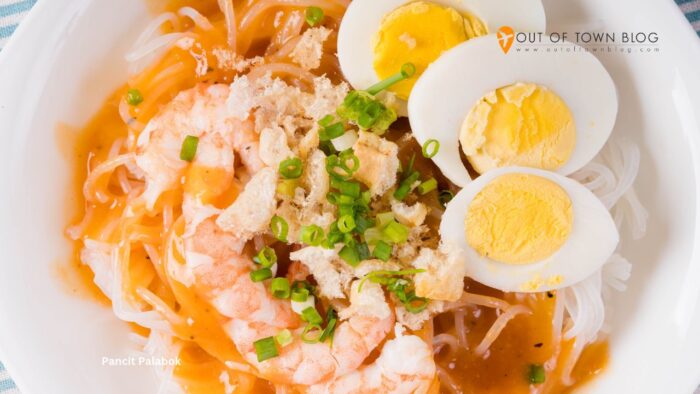
Pancit Palabok is another popular Filipino noodle dish known for its distinctive orange sauce and elaborate toppings. People commonly serve it at birthdays, celebrations, family gatherings, and everyday meals.
Unlike Pancit Malabon, Pancit Palabok typically uses thinner rice noodles, commonly bihon. Cook the noodles separately and arrange them on a platter before pouring the sauce over them.
The sauce is generally made with shrimp stock, annatto, fish sauce, garlic, and other seasonings. Ground pork, shrimp, and other ingredients may also add flavor and texture.
Pancit Palabok is particularly recognizable for its toppings, which often include smoked fish flakes, crushed chicharon, shrimp, boiled eggs, fried garlic, and spring onions.
The word palabok means “adornment” or “embellishment,” fitting the dish’s elaborate presentation.
What Makes Pancit Palabok Unique?
Pancit Palabok stands out because of its:
- Thin rice noodles that absorb the savory sauce.
- Shrimp-based orange sauce.
- Combination of smoky, crunchy, and savory toppings.
- Distinctive presentation with sauce poured over the noodles.
- Balance of seafood flavor, garlic, fish, pork, and citrus.
One of its most recognizable features is the contrast between soft noodles and crunchy chicharon, fried garlic, and other toppings.
Pancit Palabok Ingredients
Common ingredients include:
- Thin rice noodles or bihon
- Shrimp stock
- Annatto or atsuete
- Fish sauce or patis
- Ground pork
- Shrimp
- Tinapa flakes
- Crushed chicharon
- Garlic
- Onion
- Hard-boiled eggs
- Spring onions
- Calamansi
Some recipes incorporate squid, tofu, or other seafood. Ingredient combinations vary by region, restaurant, and family tradition.
How Pancit Palabok Is Prepared
Pancit Palabok is typically assembled, not stir-fried.
Cook the rice noodles separately and place them on a serving platter. The sauce is made with shrimp stock, annatto, garlic, fish sauce, and other ingredients, then thickened to its characteristic consistency.
Pour the orange sauce over the noodles, then add shrimp, ground pork, tinapa flakes, chicharon, eggs, fried garlic, and spring onions.
Diners usually mix everything together before eating, allowing the sauce and toppings to coat the noodles evenly.
The combination of soft noodles, savory sauce, smoky fish, and crunchy pork cracklings creates its characteristic flavor and texture.
7 Key Differences Between Pancit Malabon and Pancit Palabok
1. Noodle Thickness
The most obvious difference between Pancit Malabon and Pancit Palabok is the type of noodles used.
Pancit Malabon traditionally features thick rice noodles. These noodles have a chewy texture and can hold up well to the heavier sauce and generous seafood toppings.
Pancit Palabok generally uses thinner rice noodles, commonly bihon. These noodles are more delicate and allow the sauce to coat them easily.
If you prefer a hearty noodle dish, Pancit Malabon may be more appealing. If you enjoy softer, thinner noodles, Pancit Palabok may be the better choice.
2. Sauce Composition
Both dishes feature an orange-yellow sauce, but their flavor profiles can differ.
Pancit Malabon sauce commonly includes shrimp stock, annatto, fish sauce, and sometimes crab fat. The crab fat adds a deep, briny richness that distinguishes many Malabon-style recipes.
Pancit Palabok sauce is typically shrimp-based, with shrimp stock, annatto, and seasonings forming its foundation. Ground pork or other ingredients may contribute additional flavor.
However, the sauces overlap considerably. Some Pancit Malabon recipes use shrimp prominently, while some Palabok versions include richer seafood ingredients. The exact distinction depends on the cook and recipe.
3. Sauce Presentation
How the sauce is served is another key difference.
Pancit Malabon is commonly prepared by mixing the sauce into the noodles before serving. This gives the dish an orange-yellow appearance and lets the noodles absorb the seasoning.
Pancit Palabok is usually assembled by pouring the sauce over the noodles. Its toppings are arranged on top, creating a layered presentation.
Diners mix the sauce into the noodles before eating.
This difference is especially useful when identifying the dishes at a restaurant or food stall.
4. Toppings
Pancit Malabon is particularly known for its seafood-heavy toppings.
Typical additions include shrimp, squid, oysters, mussels, smoked fish, pork, and eggs. The selection often reflects the cook’s recipe and available ingredients.
Pancit Palabok commonly features shrimp, ground pork, tinapa flakes, crushed chicharon, boiled eggs, fried garlic, and spring onions.
Both dishes can include seafood, pork, eggs, and chicharon. The difference isn’t absolute, but Pancit Malabon is generally more associated with an abundant seafood presentation, while Palabok is known for its mix of shrimp, pork, smoky fish, and crunchy garnishes.
5. Taste and Flavor
Pancit Malabon tends to taste richer, more substantial, and seafood-forward. Its thick noodles and sauce create a hearty mouthfeel, especially when it includes crab fat and shellfish.
Pancit Palabok has a savory shrimp flavor complemented by smoky tinapa, crunchy chicharon, fried garlic, and other toppings.
Both dishes are flavorful, but their textures shape how you experience the flavors.
Malabon delivers a more integrated noodle-and-sauce experience, while Palabok offers a layered combination of sauce, noodles, and toppings.
Calamansi adds acidity to both dishes, helping balance their richness.
6. Origins and Culinary Identity
Pancit Malabon is clearly associated with Malabon City, where it developed as a signature local dish.
Pancit Palabok belongs to the broader Filipino pancit tradition and is widely served across Metro Manila and other parts of the Philippines.
Both dishes demonstrate how Filipino cooks adapted Chinese-influenced noodle traditions using local seafood, smoked fish, pork, annatto, and other ingredients.
Their similarities reflect shared culinary influences, while their differences show how local ingredients and cooking traditions created distinctive Filipino noodle dishes.
7. Texture and Overall Eating Experience
Pancit Malabon is often described as hearty because of its thick noodles and rich sauce. Seafood toppings add different textures, including the tenderness of shrimp and squid and the briny character of shellfish.
Pancit Palabok offers more contrast between its thin noodles and crunchy toppings. Chicharon and fried garlic provide texture, while tinapa adds a smoky layer.
Both are typically enjoyed as shared dishes, but they offer different eating experiences.
Malabon is often a more substantial noodle dish, while Palabok combines soft noodles with toppings that create contrasting textures in every bite.
Pancit Malabon vs. Pancit Palabok: Which One Should You Try?
Choosing between Pancit Malabon and Pancit Palabok ultimately depends on your taste preferences.
Choose Pancit Malabon if you:
- Prefer thick and chewy rice noodles.
- Enjoy seafood-heavy dishes.
- Like rich, savory sauces.
- Want to try a signature Malabon dish.
- Prefer noodles served already coated in sauce.
Choose Pancit Palabok if you:
- Prefer thinner rice noodles.
- Enjoy shrimp-based sauces.
- Like smoky tinapa and crunchy chicharon.
- Appreciate dishes with different textures.
- Want a familiar Filipino noodle dish served at celebrations.
If you are visiting the Philippines for the first time, try both dishes. They offer an excellent introduction to Filipino pancit and the country’s creative use of noodles, seafood, and local ingredients.
Where to Try Pancit Malabon and Pancit Palabok
Both dishes are widely available throughout Metro Manila and other parts of the Philippines.Try
Pancit Malabon in Malabon City, where local panciterias and family-run establishments preserve their own versions of the dish. Some recipes have been passed down through generations, making a visit to the city an opportunity to explore its culinary heritage.
Filipino restaurants, panciterias, food courts, neighborhood eateries, and catering establishments commonly serve pancit palabok. It is also a familiar offering at birthday celebrations, fiestas, and family gatherings.
For travelers, local panciterias are excellent places to experience these dishes alongside other Filipino favorites such as lumpiang shanghai, puto, barbecue, and other traditional merienda options.
When ordering, ask whether the sauce is mixed into the noodles or served separately, especially if you want to compare both.
The History and Origins of Pancit Malabon and Pancit Palabok
The Chinese Influence on Filipino Pancit
Pancit has a strong connection to Chinese culinary traditions. Chinese merchants and migrants introduced noodle dishes and cooking techniques to the Philippines, where they gradually adapted to local ingredients and preferences.
Filipino cooks incorporated local seafood, pork, vegetables, fish sauce, smoked fish, and other ingredients into noodle dishes. Over generations, pancit became an important part of Filipino food culture.
Pancit is now associated with birthdays, celebrations, family gatherings, and everyday meals. Its many regional variations demonstrate how communities adapted noodle dishes to local tastes and available resources.
The Story of Pancit Malabon
Pancit Malabon takes its name from Malabon City, a historic community north of Manila.
Malabon has long been associated with fishing, waterways, and seafood. These local resources helped shape the city’s culinary identity and contributed to the seafood-rich character of its signature noodle dish.
One commonly reported origin story connects Pancit Malabon to an earlier dish called pancit labong, which used bamboo shoots instead of rice noodles.
A historical account credits Malabon native Yolalia Delos Santos with creating an early pancit labong recipe in the 1880s. According to this account, later generations replaced bamboo shoots with rice noodles and developed the orange sauce and seafood toppings associated with the modern dish.
These details should be understood as a reported culinary-history account rather than a universally established origin story.
The Evolution of Pancit Palabok
Pancit Palabok reflects the broader evolution of Filipino noodle dishes.
Its combination of rice noodles, seafood-based sauce, smoked fish, pork, chicharon, and garnishes demonstrates how Chinese-influenced noodles developed distinctly Filipino flavors.
The word palabok is commonly associated with adornment or embellishment, reflecting the dish’s elaborate toppings.
Unlike Pancit Malabon, which is strongly tied to a specific city, Pancit Palabok is widely prepared across the Philippines. Its recipes vary among households and restaurants, with different combinations of seafood, meat, and toppings.
This adaptability is one reason Pancit Palabok remains a familiar dish at celebrations and family gatherings.
Pancit Malabon vs. Pancit Palabok vs. Pancit Luglug
Another Filipino noodle dish that often causes confusion is Pancit Luglug.
Pancit Luglug is associated with Pampanga and shares several characteristics with Pancit Palabok, including its orange sauce and seafood-based toppings.
The main differences are generally the noodles and preparation.
| Dish | Noodles | Sauce | Common serving style |
|---|---|---|---|
| Pancit Malabon | Thick rice noodles | Rich seafood sauce, often with crab fat | Sauce commonly mixed into noodles |
| Pancit Palabok | Thin rice noodles or bihon | Shrimp-based orange sauce | Sauce poured over noodles |
| Pancit Luglug | Thick rice noodles | Similar shrimp-based orange sauce | Sauce and toppings served over noodles |
Pancit Luglug uses thick rice noodles similar to Pancit Malabon, but it is typically served with the sauce on top rather than mixed in.
This is why people sometimes mistake Pancit Luglug for Pancit Malabon. The noodles are similar in thickness, but the sauce preparation and regional identity set them apart.
Conclusion
Pancit Malabon and Pancit Palabok may share orange sauces, rice noodles, seafood, and familiar Filipino toppings, but they offer different culinary experiences.
Pancit Malabon is known for its thick rice noodles, rich seafood flavor, and generous shellfish toppings. Pancit Palabok is recognized for its thinner noodles, shrimp-based sauce, smoky tinapa, and crunchy chicharon.
The distinction goes beyond ingredients. Both dishes reflect Filipino culinary creativity, local traditions, and Chinese noodle culture’s influence on Philippine cuisine.
For anyone exploring Filipino food, trying both Pancit Malabon and Pancit Palabok is a delicious way to understand pancit’s diversity and the flavors that make Filipino cuisine unique.
Frequently Asked Questions (FAQs)
1. What is the main difference between Pancit Malabon and Pancit Palabok?
The main difference between Pancit Malabon and Pancit Palabok is the noodle thickness, sauce preparation, and typical toppings. Pancit Malabon uses thick rice noodles, a rich seafood sauce often containing crab fat, and abundant seafood toppings. Pancit Palabok typically uses thinner rice noodles, a shrimp-based orange sauce, and toppings such as ground pork, tinapa flakes, chicharon, shrimp, and boiled eggs. Malabon is commonly served with the sauce mixed into the noodles, while Palabok is usually served with sauce poured over the noodles.
2. Is Pancit Malabon the same as Pancit Palabok?
No, Pancit Malabon and Pancit Palabok are different Filipino noodle dishes, though they share many ingredients and look similar. Both commonly feature orange-yellow sauces, rice noodles, seafood, eggs, and Filipino garnishes. However, Pancit Malabon is associated with Malabon City and typically uses thick rice noodles with a seafood-rich sauce. Pancit Palabok generally uses thinner rice noodles with shrimp-based sauce and toppings such as tinapa and chicharon. Their similarities reflect shared culinary influences, but their preparation and traditional identities set them apart.
3. Why does Pancit Malabon use thick noodles?
Pancit Malabon traditionally uses thick rice noodles because they provide a substantial texture that complements its rich sauce and generous toppings. The noodles have a chewy consistency and hold up well when mixed with seafood-based seasoning, shrimp stock, annatto, and other ingredients. Their thickness also makes for a hearty meal, especially when paired with shrimp, squid, oysters, and pork. Although modern recipes and restaurants may use different noodle varieties, thick rice noodles remain one of the most recognizable characteristics of traditional Pancit Malabon.
4. What type of noodles does Pancit Palabok use?
Pancit Palabok typically uses thin rice noodles, commonly known as bihon. Cook these noodles separately before adding the orange sauce and toppings. Their delicate texture allows them to absorb the savory shrimp-based sauce while complementing toppings such as ground pork, shrimp, tinapa flakes, chicharon, and fried garlic. Some recipes use noodles sold specifically as palabok noodles, which may be a different thickness than standard bihon. Noodle choice varies by restaurant and household, but thin rice noodles are the most common.
5. What is the sauce in Pancit Malabon made of?
Pancit Malabon sauce typically combines shrimp stock, annatto (atsuete), fish sauce, garlic, onion, and other seasonings. Some recipes add crab fat, locally known as aligue, for deeper seafood flavor and a richer consistency. Depending on the cook, the sauce may also include additional seafood ingredients or thickening agents. The orange-yellow color comes primarily from annatto, not citrus fruit. Pancit Malabon sauces vary across families and restaurants, so no single recipe is universally standardized. Its seafood-rich flavor remains one of its defining characteristics.
6. What makes Pancit Palabok sauce different from Pancit Malabon sauce?
Pancit Palabok sauce is generally shrimp-based, with shrimp stock, annatto, fish sauce, garlic, and other seasonings forming its foundation. Pancit Malabon sauce often has a richer seafood character and may include crab fat or aligue. However, the distinction is not absolute because recipes overlap, and some Pancit Malabon versions use shrimp prominently. The clearest way to distinguish the dishes is to consider the combination of sauce, noodles, and serving style rather than relying on one ingredient alone. Individual panciterias may have their own signature sauce recipes.
7. Is Pancit Malabon sweeter than Pancit Palabok?
Pancit Malabon and Pancit Palabok are generally known for their savory, seafood-forward flavors rather than sweetness. Pancit Malabon may taste richer and more briny because of its seafood toppings and the possible inclusion of crab fat. Pancit Palabok typically combines shrimp flavor with smoky tinapa, garlic, pork, and crunchy chicharon. Some restaurants add ingredients that add subtle sweetness, but this isn’t a defining characteristic of either dish. Their flavor profiles depend heavily on the sauce recipe, toppings, and seasoning used.
8. Is Pancit Palabok spicy?
Traditional Pancit Palabok is generally not considered spicy. Its characteristic flavor comes from a shrimp-based sauce, annatto, fish sauce, garlic, pork, seafood, and garnishes, not chili peppers. Some restaurants and households may add chili oil, chopped chilies, or spicy condiments for diners who prefer heat. If you order Pancit Palabok in the Philippines, you can usually expect a savory, mildly smoky flavor rather than a spicy one. You can adjust the taste with calamansi or chili depending on your personal preference.
9. What is the difference between Pancit Palabok and Pancit Luglug?
Pancit Palabok and Pancit Luglug share many ingredients, including orange shrimp-based sauce, rice noodles, seafood, pork, and traditional Filipino toppings. The main difference is usually the noodle thickness and regional association. Pancit Palabok typically uses thin rice noodles, while Pancit Luglug is associated with Pampanga and uses thicker rice noodles. Both are commonly served with sauce poured over the noodles. Pancit Luglug is often distinguished by its traditional preparation, in which the thick noodles are repeatedly dipped into boiling water using a basket or strainer.
10. Which is better for Filipino celebrations, Pancit Malabon or Pancit Palabok?
Both Pancit Malabon and Pancit Palabok are excellent choices for Filipino celebrations, including birthdays, fiestas, Christmas gatherings, and family reunions. Pancit Malabon is especially popular for group meals because its thick noodles and generous seafood toppings make it a hearty dish that’s easy to share. Pancit Palabok is equally familiar at celebrations and is often ordered in large trays for parties. The better choice depends on your guests’ preferences, budget, and desired flavors. Serving both dishes lets guests compare two iconic Filipino pancit varieties.
Follow and subscribe to OutofTownBlog.com on Facebook, Twitter, Instagram, Pinterest, and YouTube for more Travel-related updates.
Read:
- Strawberry Picking in La Trinidad, Benguet
- BAGUIO CITY TRAVEL GUIDE: Best Attractions, Hotels, Food & Local Tips for the Philippines’ Summer Capital
- 15 Best Restaurants in Baguio City: Where to Eat for Every Budget