
 Melo Villareal
A Celebration of T’boli Culture and Endless Joy
For travelers who love discovering festivals beyond the usual tourist circuit, the Helobung Festival in Lake Sebu, South Cotabato, is a celebration worth experiencing. More than a colorful provincial fiesta, it offers an intimate look at the traditions, artistry, music, food, and way of life of the T’boli people.
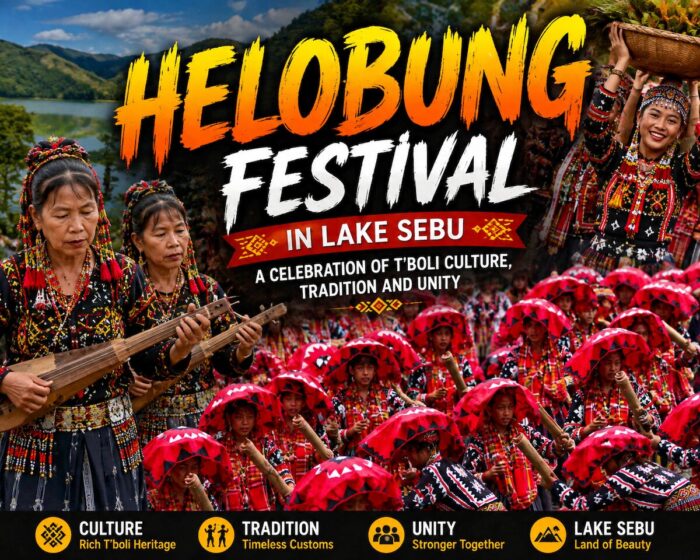
Helobung Festival in Lake Sebu
The word Helobung means “never-ending joy” in the T’boli language, an appropriate name for a celebration filled with traditional dances, indigenous music, cultural presentations, parades, community activities, and outdoor adventures.
Lake Sebu is also one of South Cotabato’s major eco-cultural tourism destinations. The festival complements the town’s spectacular lakes, waterfalls, forests, Indigenous communities, and renowned T’nalak weaving tradition.
What Is the Helobung Festival?
The Helobung Festival is the major cultural celebration of Lake Sebu, South Cotabato, highlighting the heritage and traditions of the T’boli community while commemorating the municipality’s founding.
The festival has traditionally been associated with the municipality’s foundation anniversary and has featured cultural performances, street dancing, Indigenous crafts, traditional sports, parades, food events, and community celebrations.
It is also regarded as one of the pioneering cultural festivals in Region XII and has helped promote Lake Sebu as an important destination for Indigenous culture and eco-tourism.
History of the Helobung Festival
Helobung grew as a celebration of Lake Sebu’s cultural identity and the traditions of its Indigenous communities, particularly the T’boli people.
Earlier editions of the festival were generally held in November, coinciding with the municipality’s anniversary of foundation. Historical festival programs featured cultural parades, T’boli dance presentations, traditional music, T’nalak exhibits, Indigenous games, tilapia-related food activities, and community celebrations.
Over the years, the festival has expanded into a broader tourism and cultural event. It has incorporated adventure activities such as eco-challenges, trekking, canoeing, fishing, cooking, bead-making, and activities connected with Lake Sebu’s natural attractions.
The festival also helps spotlight Lake Sebu’s cultural bearers. Recent celebrations have highlighted traditional artists and cultural masters, reinforcing Lake Sebu’s reputation as a home of living cultural treasures.
A Festival That Has Evolved
Travelers should note that the festival calendar has not always been the same. While earlier celebrations were typically held in November, more recent editions have been held in May.
Because dates and individual events can change from year to year, travelers should confirm the final program with the Lake Sebu tourism authorities before booking transportation and accommodation.
When Is the Helobung Festival?
The answer depends on the festival edition.
Historically, Helobung was strongly associated with November and Lake Sebu’s foundation anniversary. Older programs placed major celebrations around November.
More recently, however, the celebration has been staged in May, giving travelers a different opportunity to plan a Lake Sebu adventure around the festival.
For travelers planning a future trip, do not rely solely on older November schedules. Check the latest announcement from the Municipality of Lake Sebu or its tourism office before finalizing your itinerary.
Schedule of Activities
The exact program changes every year, but the festival traditionally combines cultural, recreational, sporting, and community events.
A typical Helobung program may include:
Opening Day
The celebration commonly begins with an opening ceremony featuring local officials, cultural groups, community representatives, traditional music, and performances.
Visitors can expect:
- Opening ceremonies
- Cultural presentations
- Indigenous music and dance
- Community activities
- Exhibits featuring local crafts
- Food and trade activities
Cultural and Indigenous Activities
One of the main reasons to attend Helobung is the opportunity to experience T’boli heritage.
Depending on the year’s program, activities may include:
- T’boli dance presentations
- Traditional music and chanting
- Cultural demonstrations
- T’nalak weaving exhibitions
- Indigenous crafts
- Beadwork demonstrations
- Traditional games and sports
- Indigenous Peoples’ activities
Street Dancing and Cultural Parade
The cultural parade and street-dancing activities are among the most anticipated portions of Helobung.
Previous programs have featured Madal Be Lan, or cultural street dancing, with performers wearing colorful traditional-inspired attire and presenting choreographed interpretations of T’boli culture.
For photographers and festival lovers, this is one of the best times to experience the celebration’s energy.
Lake and Eco-Adventure Activities
Helobung isn’t limited to performances.
Past programs have included eco-races, canoe or banca races, trekking, fishing, camping, traditional food activities, and other outdoor challenges.
Lake Sebu’s natural attractions provide a spectacular backdrop for these activities, making the festival especially appealing to travelers who enjoy combining cultural experiences with outdoor adventures.
Food and Tilapia Activities
Lake Sebu is famous for its freshwater tilapia, so food is naturally part of the festival experience.
Previous Helobung programs have featured events showcasing tilapia delicacies.
Expect local restaurants and food stalls to offer grilled and cooked tilapia alongside other Filipino and Mindanaoan dishes.
Evening Entertainment
Depending on the edition, nighttime activities can include:
- Cultural shows
- Musical performances
- Talent competitions
- Community nights
- Celebrity performances
- Fireworks
- Festival entertainment
The evening programs are usually a lively way to end a day of cultural sightseeing.
Things to Do and See During Helobung Festival
1. Watch the T’boli Cultural Performances
Make time for traditional music and dance presentations. These performances are more than entertainment—they provide visitors with a glimpse into the community’s history, identity, stories, and traditions.
2. Discover T’nalak Weaving
Lake Sebu is internationally recognized for its T’nalak weaving tradition.
T’nalak is a handwoven textile traditionally made from abaca fibers by T’boli weavers. Visiting weaving communities or cultural centers can give travelers a better appreciation of the skill, patience, symbolism, and cultural knowledge behind each piece.
Lake Sebu is home to several recognized cultural masters, including T’nalak weavers and other traditional artists.
3. Visit the Seven Falls
A trip to Lake Sebu would not be complete without seeing its famous waterfalls.
The Seven Falls area is one of the municipality’s signature attractions and has long been incorporated into eco-cultural tourism activities connected with Helobung.
For adventure lovers, the area is also known for the Seven Falls Zipline.
4. Explore Lake Sebu
Spend time beside the lake itself rather than treating it merely as a festival venue.
A boat ride offers a more relaxed way to appreciate the surrounding mountains, vegetation, fishing activities, and communities.
Early morning is particularly rewarding because of the cooler weather and misty atmosphere.
5. Try Local Tilapia Dishes
Lake Sebu’s tilapia is one of the local specialties visitors should try.
Ask restaurants and local food vendors about grilled tilapia, fried preparations, soups, and other regional dishes.
6. Visit the School of Living Traditions
A cultural visit can be one of the most meaningful parts of your trip.
The Lake Sebu School of Living Traditions provides opportunities to learn about Indigenous arts and cultural practices, including traditional instruments, weaving, crafts, and other forms of cultural knowledge.
7. Shop for Authentic Local Crafts
Helobung is a good opportunity to look for locally produced crafts, textiles, beadwork, accessories, and other Indigenous-made products.
When buying T’nalak or Indigenous crafts, ask about the maker and the cultural significance of the piece. Supporting legitimate local artisans helps ensure that tourism benefits the communities preserving these traditions.
How to Get to Lake Sebu
From Manila
The easiest option for many travelers from Manila is to fly to General Santos City.
From General Santos, travel overland toward Lake Sebu. The journey takes several hours, depending on traffic, road conditions, and your mode of transportation.
A practical route is:
Manila ? General Santos City ? Surallah ? Lake Sebu
You can take a bus, van, or private vehicle for the land portion of the trip.
From Davao City
Travelers from Davao can also travel overland to South Cotabato.
A common route is:
Davao City ? General Santos or South Cotabato ? Surallah ? Lake Sebu
Travel time varies depending on the route and transportation.
From General Santos City
General Santos is a convenient gateway for many visitors.
From the city, travel toward Surallah, then continue to Lake Sebu.
For first-time travelers, a private vehicle, hired car, or organized tour can be more convenient than relying entirely on public transportation, particularly if you plan to visit several attractions outside the town center.
Where to Stay
Accommodation options include resorts, inns, homestays, and smaller local establishments.
During the festival, room availability can be limited, especially around the major celebration dates.
If you’re traveling specifically for Helobung, book as early as possible.
Staying near the lake gives you easier access to scenic areas and lake activities, while staying closer to the town center can make it more convenient to attend festival events.
Important Travel Tips
1. Confirm the Festival Dates
This is perhaps the most important tip.
Older references frequently identify November as the festival period, but more recent celebrations have been held in May.
Always check the latest official announcement before booking flights and accommodations.
2. Book Accommodation Early
Festival periods can attract visitors from different parts of Mindanao and other regions.
Reserve your room in advance rather than expecting to find accommodation upon arrival.
3. Bring Light Rain Protection
Lake Sebu is a highland destination where the weather can change quickly.
Pack:
- Light rain jacket
- Umbrella
- Comfortable walking shoes
- Extra clothes
- Sun protection
- Reusable water bottle
4. Travel Light
Festival crowds can make large backpacks inconvenient.
A small crossbody bag or compact daypack is much easier to carry while watching performances, exploring attractions, and moving through crowded areas.
5. Respect Indigenous Culture
Remember that Helobung is a living cultural celebration, not simply a performance staged for tourists.
Ask permission before photographing people, particularly during cultural demonstrations and ceremonies.
Avoid touching traditional clothing, instruments, crafts, or ceremonial objects without permission.
6. Hire Local Guides for Cultural Experiences
A knowledgeable local guide can help explain the meaning behind traditional clothing, weaving patterns, dances, instruments, and places that you might otherwise overlook.
7. Bring Cash
Some small businesses and local vendors may not accept cards or digital payments.
Carry enough Philippine pesos for transportation, food, entrance fees, crafts, and other small expenses.
8. Allow Extra Time
Don’t plan your entire trip around the festival program.
Lake Sebu deserves at least a couple of days so you can combine the cultural celebration with the lakes, waterfalls, weaving communities, food, and other attractions.
Why You Should Experience Helobung Festival
For travelers who love festivals, the appeal of Helobung lies in the combination of culture and place.
Some festivals are primarily about watching a parade or attending a concert. Helobung feels different because the festival is deeply connected to the community and the environment around Lake Sebu.
You can watch T’boli cultural performances in the morning, explore a weaving tradition in the afternoon, eat freshly prepared tilapia, watch the sunset over the lake, and spend the following day exploring waterfalls and mountain landscapes.
It makes the festival an excellent destination for travelers who want more than a quick weekend event.
Most importantly, Helobung provides an opportunity to appreciate the T’boli people’s continuing efforts to preserve their cultural heritage while welcoming visitors to Lake Sebu.
Frequently Asked Questions About Helobung Festival
What does Helobung mean?
Helobung is a T’boli word commonly translated as “never-ending joy.”
Where is the Helobung Festival held?
The festival is held in Lake Sebu, South Cotabato, Philippines, with activities taking place at venues around the municipality.
When is the Helobung Festival celebrated?
Historically, Helobung was associated with November and the foundation anniversary of Lake Sebu. However, recent editions have been held in May.
Is Helobung Festival only about T’boli culture?
No. Although T’boli culture is at its heart, the celebration can include sports, environmental activities, food events, parades, entertainment, trade exhibits, and community programs.
What is Lake Sebu famous for?
Lake Sebu is known for its lakes, Seven Falls, T’boli culture, T’nalak weaving, Indigenous crafts, traditional music, and eco-cultural tourism.
Can I buy T’nalak during the festival?
Yes. Festival periods can be a good opportunity to discover locally made textiles and handicrafts. Whenever possible, buy directly from legitimate artisans or community-based sellers.
How many days should I spend in Lake Sebu?
For a festival-focused trip, three days and two nights is a good starting point. Travelers who want to explore the waterfalls, lakes, cultural attractions, and surrounding areas should consider staying longer.
Is Lake Sebu suitable for first-time travelers?
Yes, particularly for travelers interested in culture and nature. However, the journey is longer than a trip to more developed tourist destinations, so it pays to plan transportation and accommodation in advance.
What should I wear to Helobung Festival?
Wear lightweight, comfortable clothing and shoes suitable for walking. Bring rain protection and a light jacket because weather conditions can change.
Is photography allowed during the festival?
Photography is generally part of the festival experience, but visitors should be respectful. Ask permission before photographing individuals, cultural demonstrations, ceremonies, or private activities.
Final Thoughts
The Helobung Festival in Lake Sebu is one of those Philippine celebrations that reward travelers willing to go beyond the usual tourist destinations.
Its biggest attraction isn’t just the colorful street dancing or lively entertainment. It is a chance to experience a destination where Indigenous culture, nature, food, craftsmanship, and community life come together.
If you’re planning a Mindanao adventure, consider building your Lake Sebu trip around Helobung. Spend a few days experiencing the festival, learning about T’boli culture, discovering T’nalak weaving, tasting local tilapia, exploring the Seven Falls, and enjoying the peaceful beauty of the lake.
For a traveler who loves festivals, Helobung is a celebration that can turn a simple trip to South Cotabato into a memorable cultural journey.
Follow and subscribe to OutofTownBlog.com on Facebook, Twitter, Instagram, Pinterest, and YouTube for more Travel-related updates.
Read:
- Lang Dulay T’nalak Weaving Center in Lake Sebu
- Lake Sebu Travel Guide: DIY Itinerary, Hotels, Activities + How to get there and more
- Lake Sebu: South Cotabato’s Summer Capital
- Samporonia Madanlo: A master weaver of “Dagmay” – Mandaya Woven Textile
- Top 14 Best LAKE SEBU TOURIST SPOTS + Things to Do