

 Melo Villareal
Tenjin Matsuri Osaka: A Complete Guide to Japan’s Spectacular Summer Festival
For travelers who love discovering destinations through festivals, few experiences in Japan are as spectacular as Osaka’s Tenjin Matsuri. Held every year on July 24 and 25, this centuries-old celebration combines Shinto rituals, colorful processions, traditional music, boats, street festivities, food stalls, and spectacular fireworks.
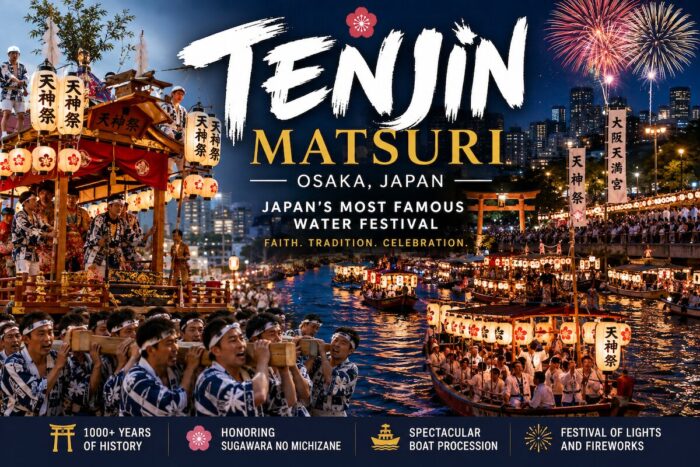
Tenjin Matsuri in Osaka
Often described as one of Japan’s three major festivals, alongside Kyoto’s Gion Matsuri and Tokyo’s Kanda Matsuri, Tenjin Matsuri transforms central Osaka into a huge celebration of history, faith, culture, and summer energy.
The festival is centered on Osaka Tenmangu Shrine and the Okawa River. Its grand finale on July 25 features the Rikutogyo land procession, the Funatogyo boat procession, and fireworks reflected on the river, creating one of Osaka’s most memorable summer scenes.
What Is Tenjin Matsuri?
Tenjin Matsuri is the annual festival of Osaka Tenmangu Shrine in Osaka’s Kita Ward. Although events and rituals take place over a longer period, the principal celebrations are held on July 24, known as Yoimiya, and July 25, known as Honmiya.
The festival is famous for its combination of land and water celebrations. Thousands of participants take part in the land procession, while more than 100 boats travel along the Okawa River during the Funatogyo. The evening festivities culminate in a large fireworks display.
Because lanterns, bonfires, boats, and fireworks illuminate the Okawa River after sunset, Tenjin Matsuri is often described as a festival of fire and water.
For visitors, the festival offers an opportunity to experience traditional Japanese culture while enjoying the lively atmosphere of Osaka’s neighborhoods, shopping streets, riverside parks, and food stalls.
History of Tenjin Matsuri
The story of Tenjin Matsuri is closely connected to Sugawara no Michizane, the revered scholar and court official associated with Tenjin, the deity of learning.
Osaka Tenmangu Shrine was established in 949. According to tradition, Michizane became associated with the site after his death and eventually came to be worshiped as a deity of scholarship, culture, and accomplishment.
The origins of Tenjin Matsuri are traditionally traced to 951, when the Hokonagashi Shinji ritual was performed. A sacred spear was placed in the river, and the location where it came ashore was designated as a temporary sacred site. Boats were later used to welcome the sacred object, evolving into the boat procession that has become one of the defining features of today’s festival.
Over the centuries, the celebration grew in scale. Processions became more elaborate, more boats joined the festivities, and fireworks were eventually incorporated into the festival. Although the event was interrupted during periods of political upheaval and during World War II, the tradition was revived and continues today.
More than a thousand years of history make Tenjin Matsuri much more than a fireworks festival. Its rituals, costumes, music, processions, and religious ceremonies are an important part of Osaka’s cultural heritage.
When Is Tenjin Matsuri?
The main festival is held every year on:
- July 23: Gyaru Mikoshi, a lively pre-festival event
- July 24: Yoimiya, or the eve of the main festival
- July 25: Honmiya, the main festival and grand finale
The July 23 Gyaru Mikoshi serves as an energetic prelude to the main celebrations, while July 24 and 25 feature the principal festival rituals and events.
Tenjin Matsuri Schedule of Activities
Exact timings can vary from year to year, so travelers should check the latest festival program before visiting. The following provides a useful guide based on the traditional festival program.
July 23 – Gyaru Mikoshi
The festivities begin with the Gyaru Mikoshi, traditionally held along the Tenjinbashisuji Shopping Street.
The event features women carrying a portable shrine and parading through the area while chanting energetically. It began in 1981 and has become a distinctive part of the modern Tenjin Matsuri experience.
It is a great option if you want to experience the festival atmosphere before the main religious celebrations begin.
July 24 – Yoimiya
Morning
The day begins with the Hokonagashi Shinji, one of the festival’s most important traditional rituals.
The ceremony takes place on the river and recalls the historical origins of Tenjin Matsuri.
Around noon
The Tenjinko Lion Dance and related traditional performances bring activity to the streets around Osaka Tenmangu.
Afternoon
The Otori Mikoshi and Tama Mikoshi processions add to the excitement around the shrine.
Evening
Food stalls, traditional performances, lanterns, and crowds create a lively summer atmosphere around the shrine and the Okawa River.
For visitors, July 24 is an excellent day for exploring the festival at a more relaxed pace before the much larger crowds arrive for the fireworks and boat procession on July 25.
July 25 – Honmiya
The main festival day is the biggest and most spectacular part of Tenjin Matsuri.
Morning to early afternoon
Shinto ceremonies take place at Osaka Tenmangu, where the sacred spirit of Sugawara no Michizane is transferred into the sacred palanquin.
Around 3:30 p.m.
The spectacular Rikutogyo, or land procession, begins. Around 3,000 participants in traditional clothing make their way through the city.
Around 6:00 p.m.
The procession reaches the Okawa River, where the festival transitions from land to water.
The Funatogyo, or boat procession, begins with more than 100 boats taking part in the river festivities.
Around 7:30 p.m.
The dedication fireworks begin. The fireworks illuminate the sky while lanterns and bonfires glow from the boats below.
The fireworks traditionally last around an hour and a half, although the exact schedule can vary from year to year.
Things to Do and See at Tenjin Matsuri
1. Watch the Rikutogyo Procession
The Rikutogyo is one of the best opportunities to see the traditional side of Tenjin Matsuri.
Thousands of participants dressed in historical-style costumes move through the streets accompanied by music, drums, portable shrines, and traditional performances.
Arrive early if you want a good viewing position, particularly near the procession’s starting areas.
2. See the Funatogyo Boat Procession
The Funatogyo is arguably the festival’s most iconic spectacle.
More than 100 boats travel along the Okawa River, carrying participants, musicians, religious objects, and guests. The boats are decorated and illuminated, creating a dramatic nighttime scene.
The river becomes a moving stage as boats pass one another, musicians perform, lanterns glow, and spectators gather along the banks.
3. Watch the Fireworks
The fireworks are the grand finale of Tenjin Matsuri.
The best experience comes from finding a riverside viewing area where you can see both the fireworks and the illuminated boats. The combination of fireworks overhead and lantern-lit boats on the water is what gives Tenjin Matsuri its distinctive atmosphere.
4. Visit Osaka Tenmangu Shrine
Take time to visit Osaka Tenmangu rather than treating the festival simply as an entertainment event.
The shrine is the spiritual heart of Tenjin Matsuri and has been associated with Sugawara no Michizane since the 10th century. It is also traditionally connected with scholarship and academic success.
5. Explore Tenjinbashisuji Shopping Street
Tenjinbashisuji is an excellent place to combine festival sightseeing with shopping and food.
The area around the shopping street becomes especially lively during the festival, making it a good place to sample Osaka snacks and experience the local atmosphere.
6. Try Japanese Festival Food
Look for classic matsuri street food, such as:
- Takoyaki
- Okonomiyaki
- Yakisoba
- Taiyaki
- Kakigori
- Grilled seafood
- Candied fruit
- Festival-style drinks and snacks
Eating from food stalls is part of the fun, especially when exploring the streets around the festival venues.
7. Experience Osaka in a Yukata
Wearing a yukata, a lightweight summer kimono, can make the festival experience feel even more special.
It is not necessary, but many visitors enjoy dressing for the occasion. Wear comfortable footwear underneath because you will likely spend hours walking and standing.
Best Places to Watch Tenjin Matsuri
Osaka Tenmangu Shrine
Choose the shrine area if you are interested primarily in the religious ceremonies, mikoshi, lion dances, and traditional elements of the festival.
Tenjinbashisuji Shopping Street
This is ideal for combining festival viewing with shopping, local food, and neighborhood atmosphere.
Okawa River
The riverbanks are among the best places to experience the Funatogyo.
Sakuranomiya Area
Sakuranomiya is particularly popular with visitors hoping to see the boat procession and fireworks. However, the area becomes extremely crowded, so arriving early is essential.
Kema Sakuranomiya Park
The park and surrounding riverside areas provide opportunities to experience the festival outdoors while enjoying views toward the river.
How to Get to Tenjin Matsuri
The festival is spread across several locations, so your best station depends on what you want to see.
From Osaka Tenmangu Station
Take the JR Tozai Line to Osaka Tenmangu Station.
The station is approximately a five-minute walk from Osaka Tenmangu Shrine.
This is one of the most convenient options if your priority is the shrine and the land-based festival activities.
From Minami-morimachi Station
Take the Osaka Metro Tanimachi Line or Sakaisuji Line to Minami-morimachi Station.
The shrine is also approximately a five-minute walk from the station.
From Sakuranomiya Station
The JR Osaka Loop Line is convenient for reaching the Sakuranomiya area.
This is particularly useful if you plan to watch the boat procession and fireworks along the Okawa River.
From Temma Station
JR Temma Station provides access to the Tenjinbashisuji Shopping Street area and is another useful option when exploring the festival.
Important Travel Tips
Arrive Early
This is perhaps the most important Tenjin Matsuri tip.
The festival attracts huge crowds, particularly on July 25. Popular riverside viewing areas can become packed well before the fireworks begin.
Use Public Transportation
Public transportation is strongly recommended during the festival. Parking can be difficult because of crowds, events, and road restrictions.
Expect stations to be crowded after the fireworks, and allow extra time for your journey back to your hotel.
Expect Extreme Summer Heat
Osaka in late July can be very hot and humid.
Bring water, wear breathable clothing, use sunscreen, and consider carrying a small towel or hand fan.
Wear Comfortable Shoes
You may walk several kilometers while moving between the shrine, procession route, riverbanks, food stalls, and railway stations.
Comfortable shoes are far more important than fashionable footwear.
Carry Cash
Although Japan is increasingly cashless, festival food stalls and small vendors may not always accept cards or mobile payments.
Having Japanese yen available is a good idea.
Reserve Accommodation Early
Hotel rooms in central Osaka can become more expensive and harder to find around major festival dates.
If Tenjin Matsuri is one of the main reasons for your trip, book accommodation well ahead of July.
Be Patient With Crowds
Tenjin Matsuri is both a local cultural celebration and a major tourist attraction.
Follow crowd-control instructions, avoid blocking procession routes, and respect shrine rituals and participants.
Check the Weather
Heavy rain or other severe weather can affect outdoor events. Check the latest official festival announcements shortly before traveling.
Where to Stay for Tenjin Matsuri
For convenience, consider staying in areas such as Umeda, Osaka Station, Tenma, Kitashinchi, or Namba.
Travelers who want to minimize transportation time can consider accommodation around Osaka Station or Tenma, while Namba is a good choice for visitors who also want to explore Osaka’s major nightlife, shopping, and dining districts.
The key is to stay near a railway or subway station rather than relying on taxis during the festival.
Is Tenjin Matsuri Worth Visiting?
Absolutely.
For travelers who love festivals, Tenjin Matsuri provides a rare combination of history, religion, traditional Japanese performance, street food, river scenery, and fireworks.
What makes it especially memorable is the way the festival takes over the city. Instead of being confined to a single festival ground, Tenjin Matsuri moves through streets, the shrine grounds, and the Okawa River.
The contrast between ancient rituals and modern Osaka creates much of the festival’s appeal.
Frequently Asked Questions About Tenjin Matsuri
When is Tenjin Matsuri held?
The main festival takes place every year on July 24 and July 25. July 24 is Yoimiya, while July 25 is Honmiya, the main festival. A Gyaru Mikoshi event traditionally takes place on July 23.
Where is Tenjin Matsuri held?
The festival centers on Osaka Tenmangu Shrine and extends toward the Okawa River, including areas around Tenjinbashisuji and Sakuranomiya.
Is Tenjin Matsuri free?
Many public viewing areas and festival activities can be enjoyed without an admission ticket. However, certain reserved viewing areas, boat experiences, or special events may require payment.
What time are the fireworks?
The dedication fireworks traditionally begin at approximately 7:30 p.m. on July 25 and continue for around an hour and a half. Times can change, so check the current schedule before attending.
How many boats are in the Tenjin Matsuri boat procession?
The festival’s Funatogyo features more than 100 boats, creating one of the most impressive river processions in Japan.
How many people participate in the land procession?
The Rikutogyo involves approximately 3,000 participants in traditional costumes and procession groups.
Where is the best place to see the fireworks?
The riverside areas around Sakuranomiya and the Okawa River are popular choices. Because these locations become extremely crowded, arrive early and be prepared to stand for an extended period.
Can tourists participate in Tenjin Matsuri?
Visitors can enjoy many public aspects of the festival, including watching processions, visiting the shrine, exploring food stalls, and viewing the boat procession and fireworks. Religious ceremonies should be observed respectfully rather than treated simply as entertainment.
Should I visit on July 24 or July 25?
If you have only one day, July 25 is the obvious choice for first-time visitors because it features the main procession, boat procession, and fireworks.
However, July 24 can be preferable if you want a more traditional and somewhat less overwhelming festival experience focused on the shrine and daytime rituals.
Is Tenjin Matsuri suitable for families?
Yes. Families can enjoy the processions, traditional performances, food stalls, and fireworks. However, the biggest crowds on July 25 can be challenging with young children, so choose your viewing area carefully and establish a meeting point in case members of your group become separated.
What should I bring?
Bring comfortable shoes, drinking water, sunscreen, a hat, a portable fan or towel, a small bag, some cash, and a fully charged smartphone. A portable power bank is also useful if you plan to spend most of the day outside.
Final Thoughts
Tenjin Matsuri is one of those festivals that deserve a place on the itinerary of anyone who loves travel, culture, and unforgettable experiences.
Its thousand-year history provides the foundation, but the combination of traditional processions, Osaka’s lively streets, hundreds of performers, illuminated boats, riverside crowds, food stalls, and fireworks makes the festival so captivating.
For a first visit, plan to spend July 25 in the afternoon experiencing the Rikutogyo before moving toward the Okawa River for the Funatogyo and fireworks. Arrive early, use public transportation, stay hydrated, and give yourself plenty of time to navigate the crowds.
Most importantly, don’t think of Tenjin Matsuri as simply another Japanese fireworks festival. It is a living cultural tradition that connects Osaka’s history, religious heritage, waterways, neighborhoods, and people—and experiencing it firsthand is one of the best ways to understand Osaka’s energetic character.
Osaka Travel Tour Packages You Should Try
Follow and subscribe to OutofTownBlog.com on Facebook, Twitter, Instagram, Pinterest, and YouTube for more Travel-related updates.
Read:
- The Ultimate List of the Best Osaka Luxury Hotels
- Ultimate List of The Best Hotels and Resorts in Osaka, Japan
- Osaka Museum of History: Explore the Rich Cultural Heritage of Osaka