

 Melo Villareal
What makes a plate of sisig different from the pinakbet or chicken inasal you might find elsewhere in the Philippines? Much of that difference comes from each province’s local ingredients, cooking methods, and culinary traditions. These regional influences give Filipino food its variety, with dishes reflecting the communities and places they come from. If you look for the top 10 Filipino dishes, you’ll often find familiar favourites such as adobo and sinigang. However, the country’s regional cuisine has many other specialities worth discovering.

Make Life Delicious with foodpanda
This guide explores 8 such dishes, covering their origins, distinctive flavours, and the provinces associated with them. From Ilocos in northern Luzon to Cebu in the Visayas, each dish offers a closer look at the Philippines’ food culture. If you’ve decided to call it a day while still wanting to try these regional favorites, you can find local kitchens serving these specialties and order them through food delivery on foodpanda.
Why Filipino Food Tastes Different From Region to Region
Filipino food varies by region because each province cooked with what it could grow, raise, or catch. Malay, Chinese, and Spanish influences then shaped those local ingredients, which is why the Philippines’ traditional food changes noticeably from one island group to the next. The 4 regions below show that contrast clearly:
- Ilocos: Cooking relies on vegetables and bagoong, a fermented fish paste.
- Bicol: Cooks favour coconut milk and chilli.
- The Visayas: Grilling and roasting do most of the work.
- Mindanao: Malay and Muslim traditions bring spices, turmeric, and coconut.
We’ve selected 8 dishes popular in their respective regions and arranged them from north to south, highlighting the variety of flavours and cooking traditions across Luzon and the Visayas.
8 Filipino Dishes and What Makes Them Stand Out
The regional differences across the Philippines become clearer when you look at the ingredients and preparation methods behind each dish. Some are everyday meals made with locally available produce, while other Philippines traditional foods have become closely associated with particular towns and culinary traditions.
Here’s a closer look at 8 Filipino dishes and what makes them a ‘must-try’:
Vigan Empanada: A Crisp Snack From Ilocos Sur
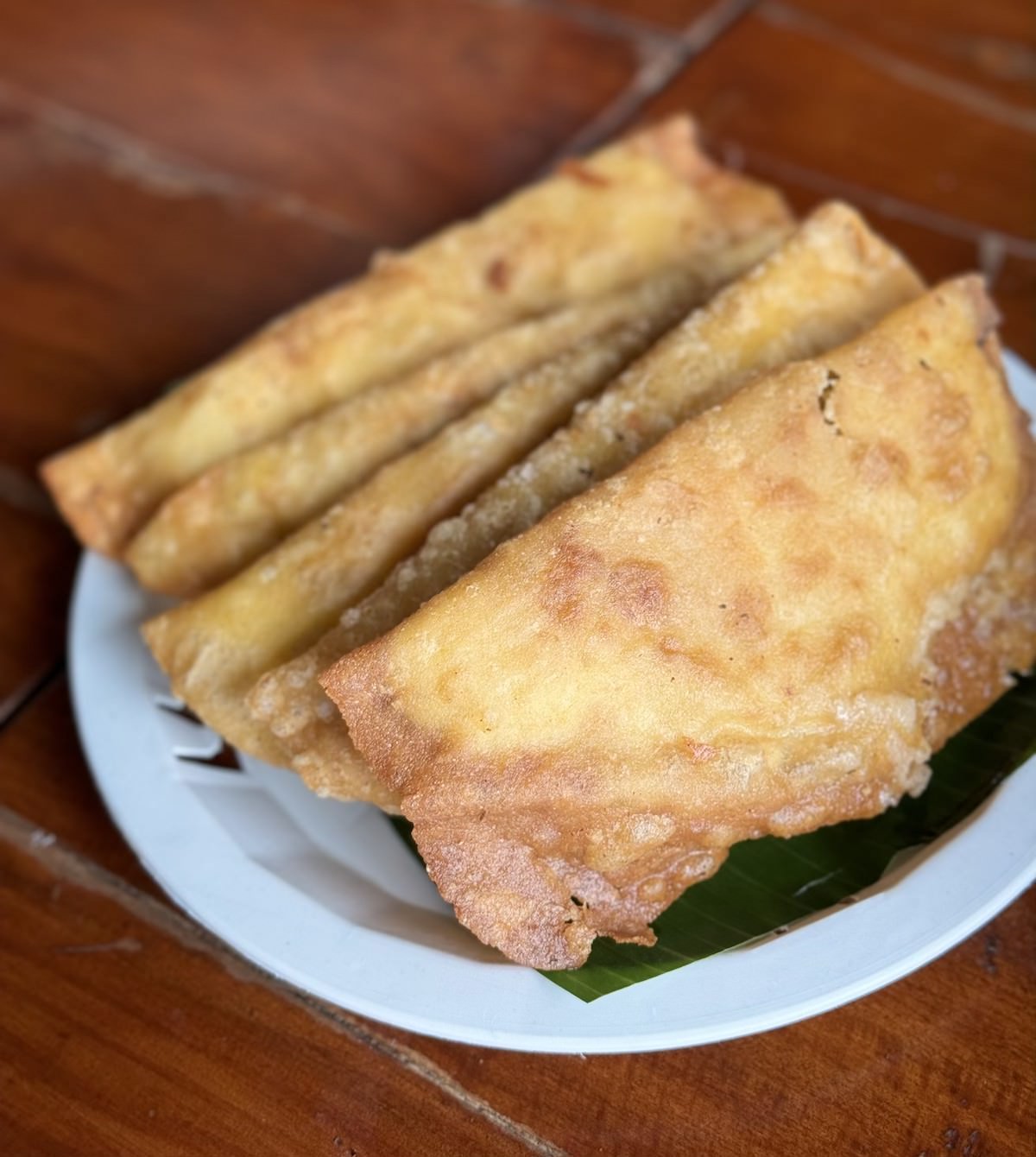
The route begins in Vigan, a Spanish colonial town listed by UNESCO, where empanada is a common street snack. A thin rice flour shell is deep-fried and filled with grated green papaya, egg, and garlicky Vigan longganisa.
The shell stays pale in Vigan, while the bright orange version comes from Batac in Ilocos Norte, so it helps to know which style you are ordering. Locals dip each bite in sukang Iloko, a spiced cane vinegar that cuts through the filling’s richness. Because the shell softens quickly, reheat it in an oven or air fryer rather than a microwave, and serve it as merienda to start the meal.
Pinakbet: The Vegetable Stew That Shrinks as It Cooks
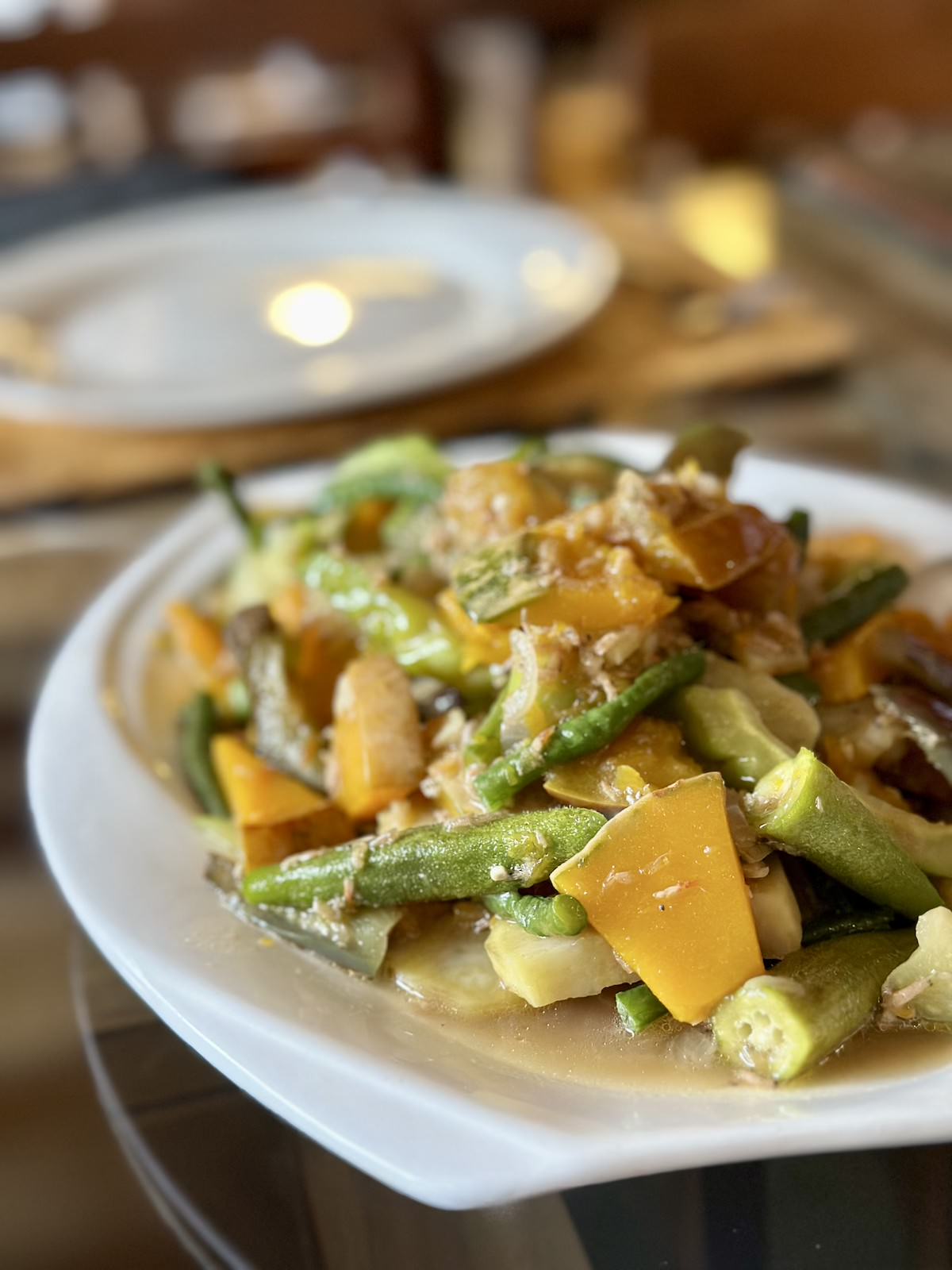
After a snack, the next dish stays in Ilocos but moves to the home kitchen. Pinakbet takes its name from “pinakebbet,” from “kebbet,” meaning shrivelled, which describes how the vegetables look once cooked. Bitter melon, eggplant, okra, string beans, and tomatoes simmer with bagoong, and squash often joins them. The original uses fermented fish bagoong, although shrimp paste is a common substitute today and gives a slightly milder result.
The stew is savoury, lightly bitter, and earthy, often topped with crispy pork. Since it is lighter than most meat dishes, it pairs well with fried fish and rice, adding balance to a heavier meal.
Sisig: Pampanga’s Sizzling Pork Plate
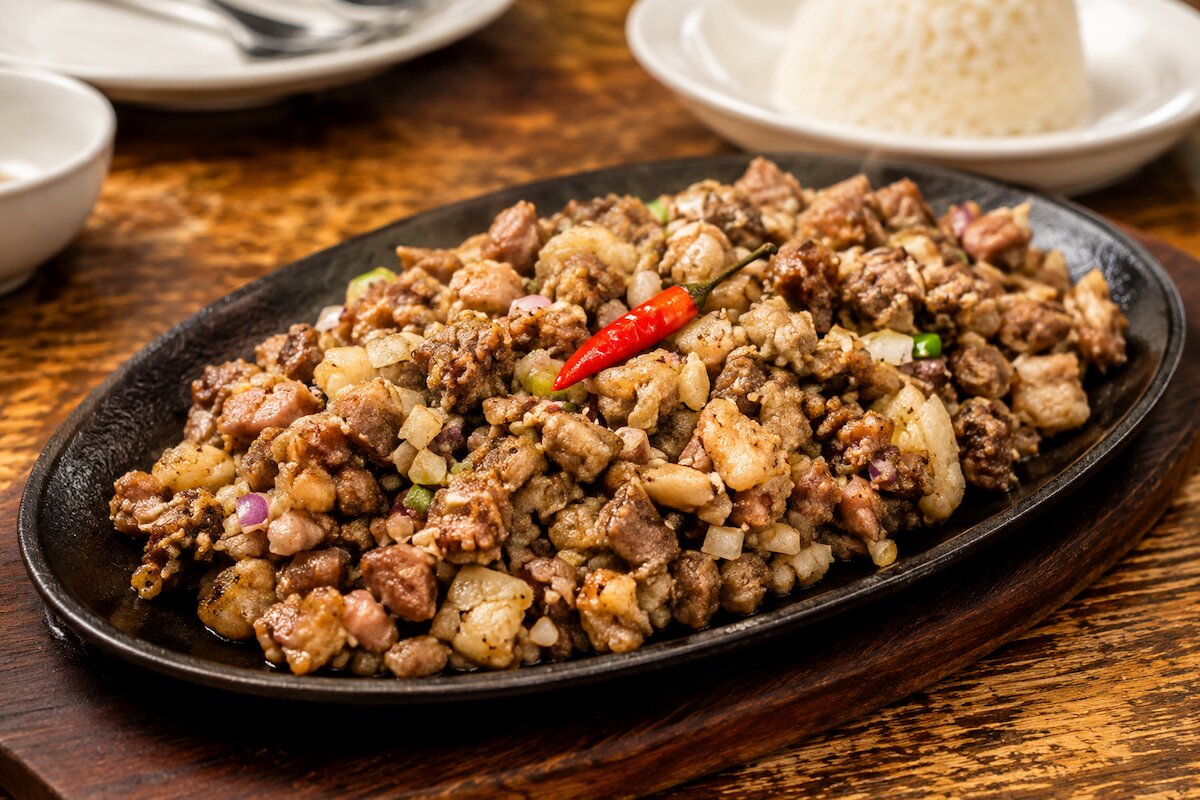
From Ilocos, the route heads south to Pampanga, often called the culinary capital of the Philippines. Sisig appears in a 1732 Kapampangan dictionary by friar Diego Bergaño, although it then meant a sour salad of green papaya or guava. The sizzling pork version is credited to Lucia Cunanan, known as Aling Lucing, of Angeles City, in 1974.
Chopped pork cheeks, ears, and liver are seasoned with calamansi, onions, and chilli, then served on a hot plate. Many people order it as pulutan, but with a serving of rice it also works as a filling Filipino main dish.
Bulalo: A Marrow-Rich Soup From Batangas and Cavite
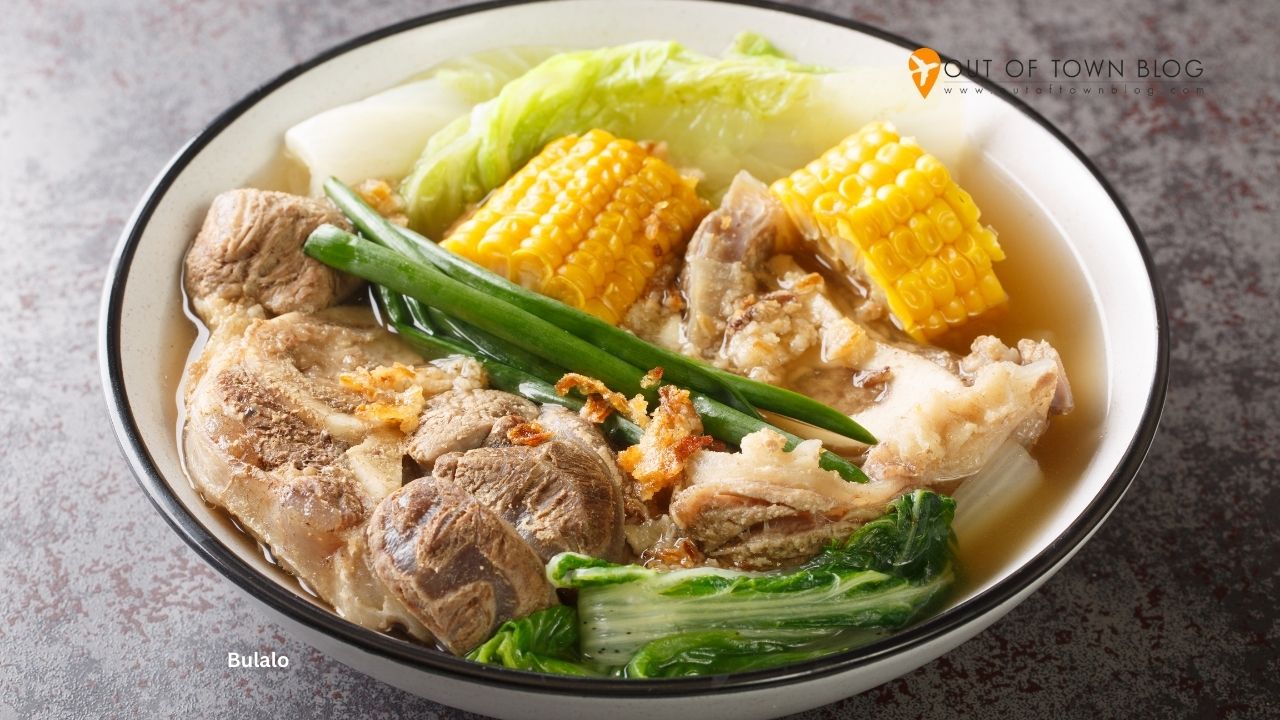
Continuing south, bulalo comes from Southern Luzon, mainly Batangas and Cavite, and Tagaytay serves it with a view of Taal Lake. Beef shanks and marrow bones simmer for hours with corn on the cob, pechay or cabbage, onions, and fish sauce. This is what separates it from nilagang baka, since bulalo always includes bone marrow, which gives the clear broth its depth. It is among the better-known examples of Philippine traditional food built on patient cooking rather than heavy seasoning.
Serve it with rice and a dip of patis with calamansi or chilli, preferably on a rainy evening when a hot soup suits the weather.
Bicol Express: Creamy Pork With a Slow Burn
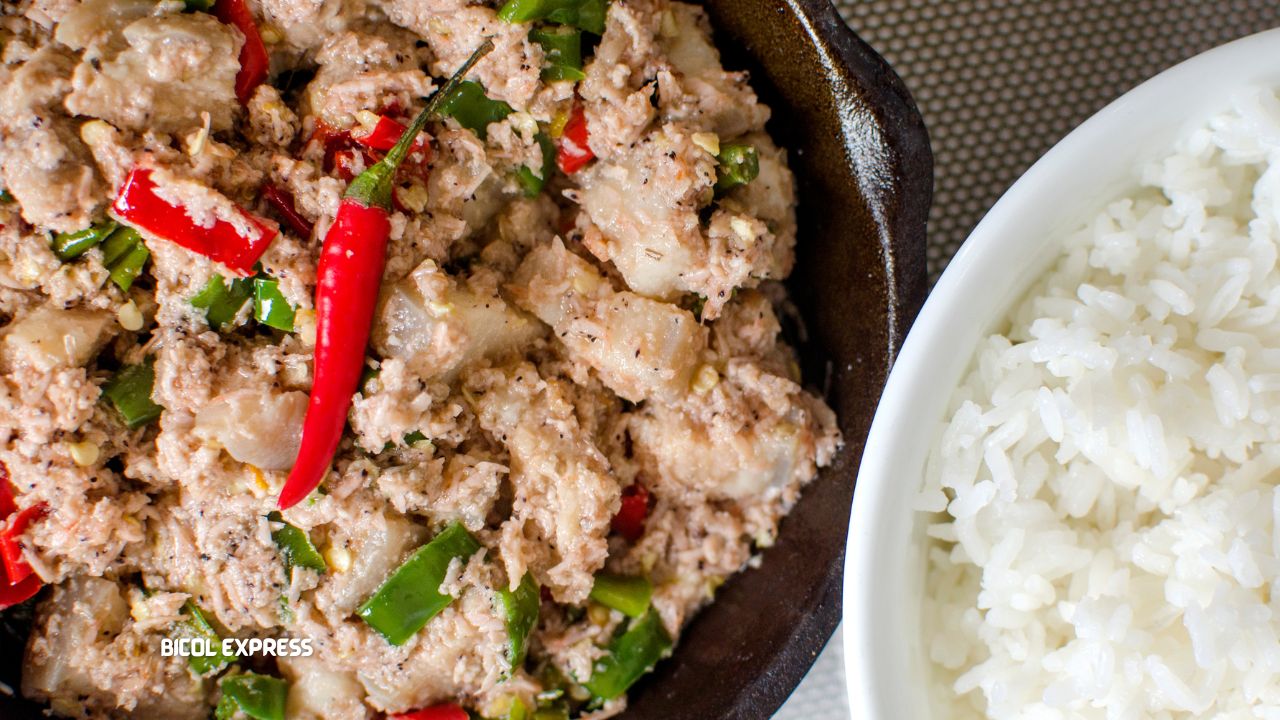
In Southeast Batangas, Bicolano cooks often pair coconut milk with chilli; a similar local dish is called sinilihan, meaning spiced with chilli. The name Bicol Express came later. In the 1970s, Cely Kalaw served the dish at her restaurant in Malate, Manila, and named it after the train that ran from Manila to Bicol.
Pork simmers in coconut milk with bagoong alamang, garlic, onion, and plenty of long green chillies. The result is creamy, salty, and hot at the same time, so it is best eaten with a generous portion of steamed rice to temper the heat.
Chicken Inasal: Charcoal-Grilled Chicken From Bacolod

Crossing into the Visayas, the cooking shifts from stews to the grill. In Hiligaynon, inasal means cooked over fire, and Bacolod is its best-known home, with a market area called Manokan Country dedicated to it. The chicken is marinated in calamansi, vinegar, pepper, and annatto—often with lemongrass, ginger, and garlic—then grilled over charcoal and basted until golden.
For the Bacolod experience, eat it with rice, chicken oil, soy sauce, calamansi, and sinamak, a spiced vinegar.
La Paz Batchoy: A Noodle Soup From an Iloilo Market
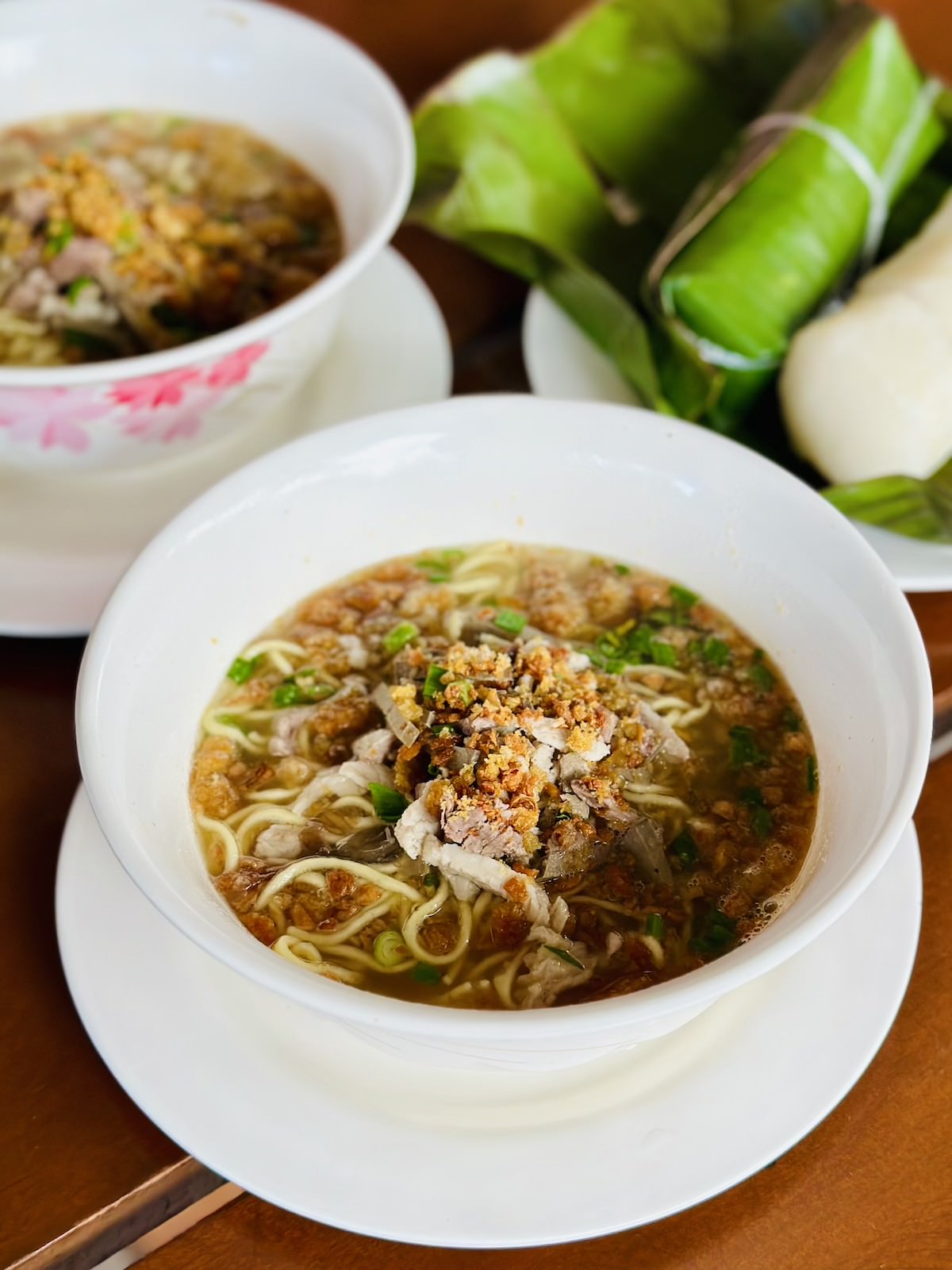
Also in the Visayas, batchoy offers a warm noodle soup after the grill. It comes from the La Paz district of Iloilo City, where stalls around the public market have served it since at least the 1930s, and several of them still claim to have made the first bowl. The name likely comes from Hokkien Chinese and is linked to minced meat or meat broth. Egg noodles sit in a rich pork broth with pork offal, crushed chicharon, and spring onions.
If you order it for delivery, ask for the broth and toppings packed separately, since this keeps the noodles and chicharon firm until you assemble the bowl.
Cebu Lechon: The Roast Pig That Ends the Route
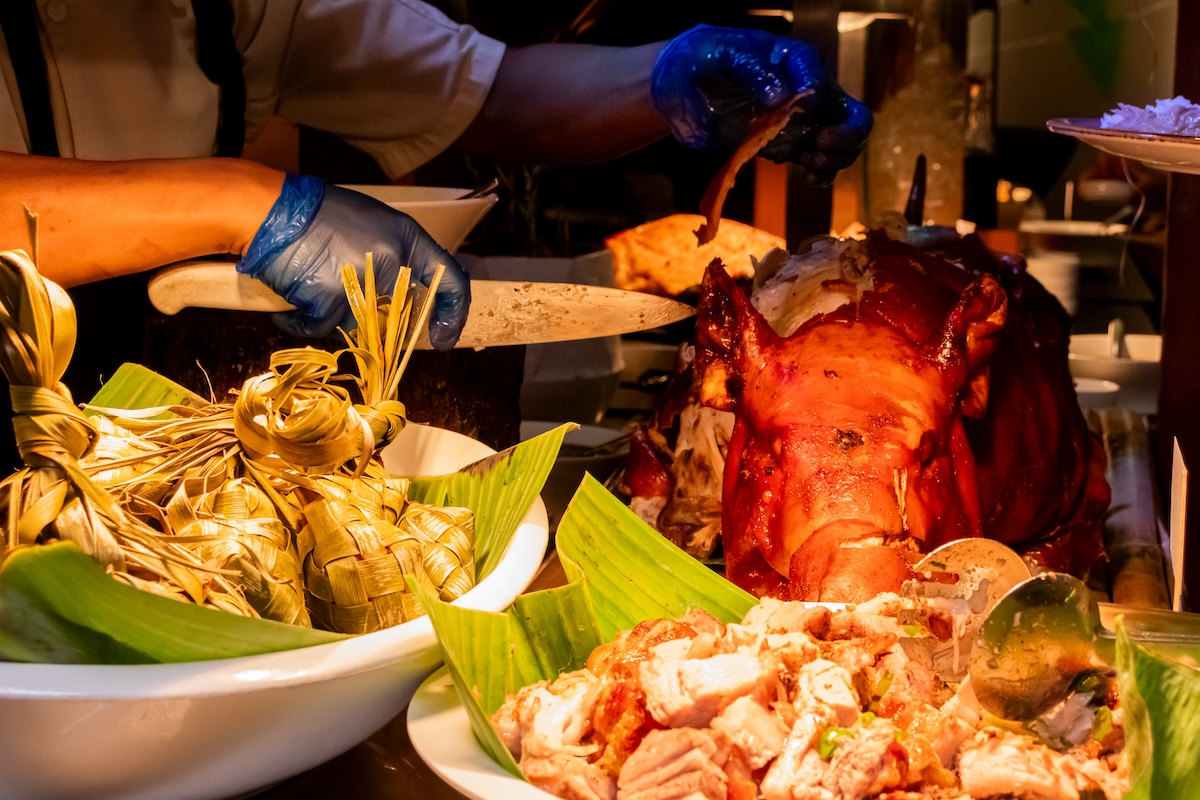
The route ends in Cebu, where Anthony Bourdain called the lechon the “best pig ever” on No Reservations. A whole pig is stuffed with lemongrass, garlic, green onions, and spices, then roasted slowly over charcoal.
The skin crackles, and the meat stays juicy and well seasoned, which is why Cebu lechon is often eaten without any sauce. For a small family meal, rolled lechon belly is a practical choice, giving you the same flavour without ordering a whole pig.
How to Plan Your Own Filipino Food Trip
You don’t have to travel across the Philippines to try its regional specialities. You can recreate a Filipino food trip at home by picking a few dishes from different provinces. Start with a Vigan empanada and some Pampanga sisig, then add Bicol Express for its coconut-rich, spicy flavours. If you’d like to try Visayan cooking too, include chicken inasal or Cebu lechon. Pinakbet and bulalo are good options if you’d like a vegetable dish or a bowl of soup alongside the meat.
Not in the mood to cook? Browse foodpanda for local restaurants serving these specialties and order a few dishes to share. It’s a simple way to try different preparations and discover what makes Filipino food distinct across regions.
Follow and subscribe to OutofTownBlog.com on Facebook , Twitter, Instagram, Pinterest, and YouTube for more Travel-related updates.
Read:
- FILIPINO FOOD: 42 Tasty Dishes You Should Be Eating Now
- Traveling for Food: The Filipino Foodie Map
- The Mall-NUSTAR Cebu: The new luxury shopping destination in the Philippines.
- LIST: 2027 Philippine Holidays and Long Weekends
- WALANG PASOK: Nov. 16 to 18, 2026 are special non-working days in NCR due to ASEAN Summit 2026
- foodpanda Philippines Supports Food Security and Community Development Through ‘Let’s Do Our PAU-rt’
- foodpanda Celebrates Filipino Christmas Hosts with Make Christmas Delicious Campaign

