

 Elina Pedersen
Weirdest Eastern European foods you should try at least once
As a native Estonian living in London and constantly traveling, I’ve realized that the definition of ‘weird’ varies widely.
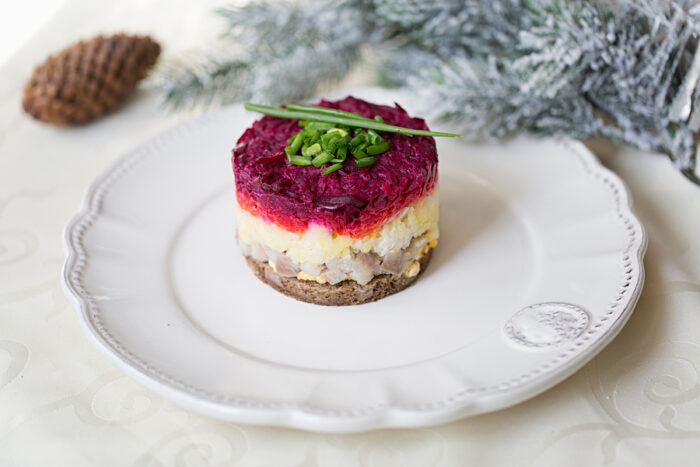
Russian traditional salad, dressed herring under fur coat – Weirdest Eastern European foods
Asian food seems weird to Europeans, while Europeans consider their own food normal. But some parts of Europe are used to dishes that seem strange even to the rest of Europe.
I’m talking about Eastern European food, which I personally love. Well, most of it.
Herring under a Fur Coat
One of the strangest combinations of ingredients is found in the most popular Russian salad, commonly known as Herring under a Fur Coat, or Dressed Herring.
Somehow Russians and their neighbours (Belarus, Ukraine, Latvia and Lithuania) find it tasty to have a layer of chopped herring mixed with onions at the bottom of a plate covered with layers of grated boiled beetroot, potato and carrot.
Now, the key idea is to smear mayonnaise thoroughly on each layer. Beetroot goes on top, thus giving the dish the look of a dessert. But it is not!
Cold borscht
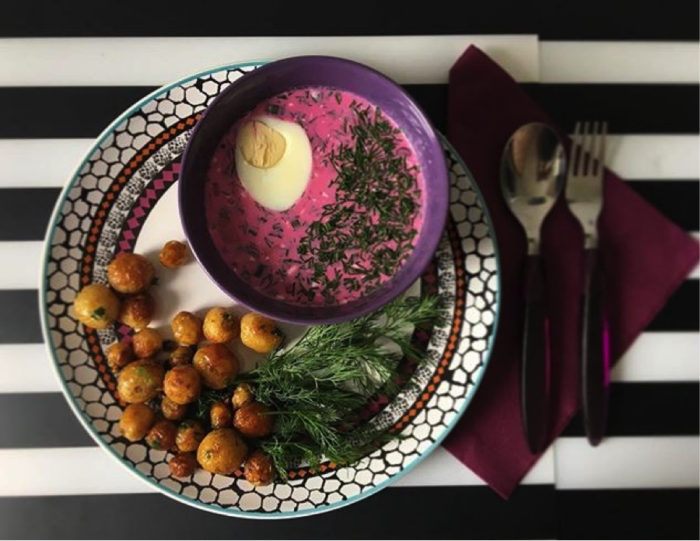
Cold borscht, also known as Lithuanian šaltibarš?iai or cold beet soup, is one of Eastern Europe’s most unusual traditional dishes. Its vibrant pink color and icy temperature make it an unforgettable culinary experience.
The soup is typically made with cooked or pickled beets, kefir or buttermilk, cucumbers, fresh dill, green onions, and hard-boiled eggs. Some recipes include sour cream for additional richness. To prepare it, mix grated or chopped beets with kefir, diced vegetables, herbs, and seasonings. The mixture is chilled before serving, usually alongside hot boiled potatoes.
What makes cold borscht particularly strange to first-time diners is its bright pink appearance, creamy texture, and combination of cold soup with warm potatoes. Unlike conventional soups, it is refreshing rather than comforting.
The taste is tangy, slightly sweet, creamy, and earthy, with crisp cucumbers adding freshness. It is surprisingly light and satisfying.
You can find cold borscht in Lithuania, Latvia, Poland, and other Eastern European countries, particularly during summer. Traditional Lithuanian restaurants, local markets, and Eastern European specialty restaurants are excellent places to try this distinctive dish.
Fat (Salo)
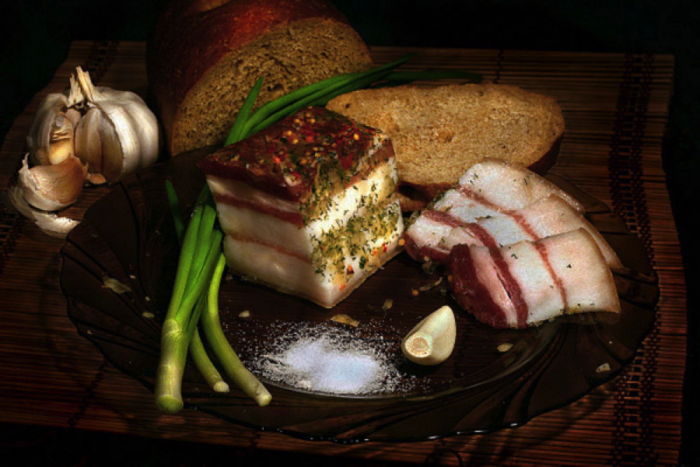
Fat, locally known as salo, is a traditional Ukrainian delicacy made from cured pork fatback. Often considered one of the world’s weirdest foods, it consists primarily of thick slabs of pork fat, sometimes with the skin attached. The preparation typically involves rubbing the fat with salt, garlic, black pepper, and spices, then curing it for several days or weeks. Some varieties are smoked, while others are served uncooked after curing.
Despite its unusual appearance, salo is surprisingly flavorful. It has a rich, buttery texture that melts in your mouth, with a salty, garlicky taste and subtle pork flavor. Ukrainians traditionally enjoy thin slices of salo with rye bread, pickles, onions, or vodka.
You can find salo in Ukrainian markets, traditional restaurants, specialty Eastern European grocery stores, and delicatessens. In Ukraine, it is widely available and considered a beloved national food. For adventurous food travelers, trying salo offers an authentic taste of Ukrainian culinary culture.
Meat jelly (Kholodets)
When foreigners first see meat jelly, they are so confused that it’s hard to explain to them that it’s actually food.
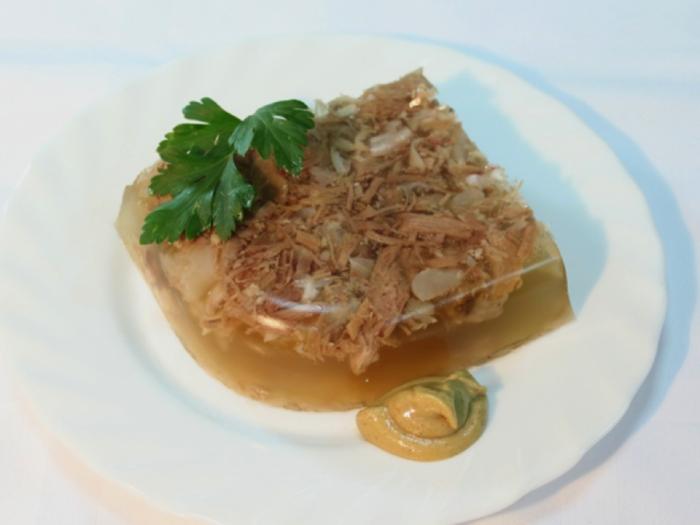
It has a long, complicated preparation process: first you have to boil the meat for about 4 hours. It has to be some part of a pig or a chicken with lots of bones – like pork legs or chicken neck. Sometimes they use pig ears and beef tails, as they also contain a lot of jelly.
They add salt, pepper, and some herbs at the end of cooking. Then you have to separate the meat from the bones, and that’s when the hard work begins.
I remember, as a little girl, helping my Granny in the kitchen. This process was a nightmare for me, and it took about an hour or so!
Then you have to chop all the meat, mix it with the broth it was boiling in, and put it in the fridge until it turns into jelly.
Kissel

Kissel is a traditional Eastern European dessert that looks more like a bowl of jelly, fruit soup, or thickened sauce than an ordinary sweet treat. Popular in countries such as Russia, Poland, Ukraine, and Lithuania, it is typically made by simmering berries, cherries, cranberries, or other fruits with sugar and thickening the mixture with potato starch or cornstarch.
What makes kissel one of the weirdest foods for first-time visitors is its unusual texture. Depending on how it is prepared, it can be a refreshing drink, a thick soup, or a wobbly, jelly-like dessert. Its consistency may feel unfamiliar, especially when served warm or poured over other desserts.
The taste is generally sweet, fruity, and slightly tart, similar to fruit juice or berry compote, but with a slippery, pudding-like texture.
You can find kissel in traditional restaurants, supermarkets, and cafes across Eastern Europe, particularly in Russia, Poland, and Ukraine. Some restaurants serve it as a dessert, while others offer it as a nostalgic homemade drink.
Check out our complete list of affordable hotels and resorts on Agoda, or look for available Airbnb properties in the city.
Want more stories like this? Please follow #TeamOutofTown on Facebook, Twitter, Instagram, and Pinterest for more travel ideas.
Also read: 5 Traditional Foods Germany Does Best