Team Out of Town
The Philippines is the rare destination that actually gets cheaper the more you move. With more than 7,000 islands, the country rewards slow, flexible travel: ferries instead of flights, dorm beds instead of resorts, and street food instead of tourist menus. On a student budget, that is good news. A careful traveller can island-hop for weeks on what a single resort weekend would cost elsewhere — as long as the money goes to boats and beds, not to convenience.
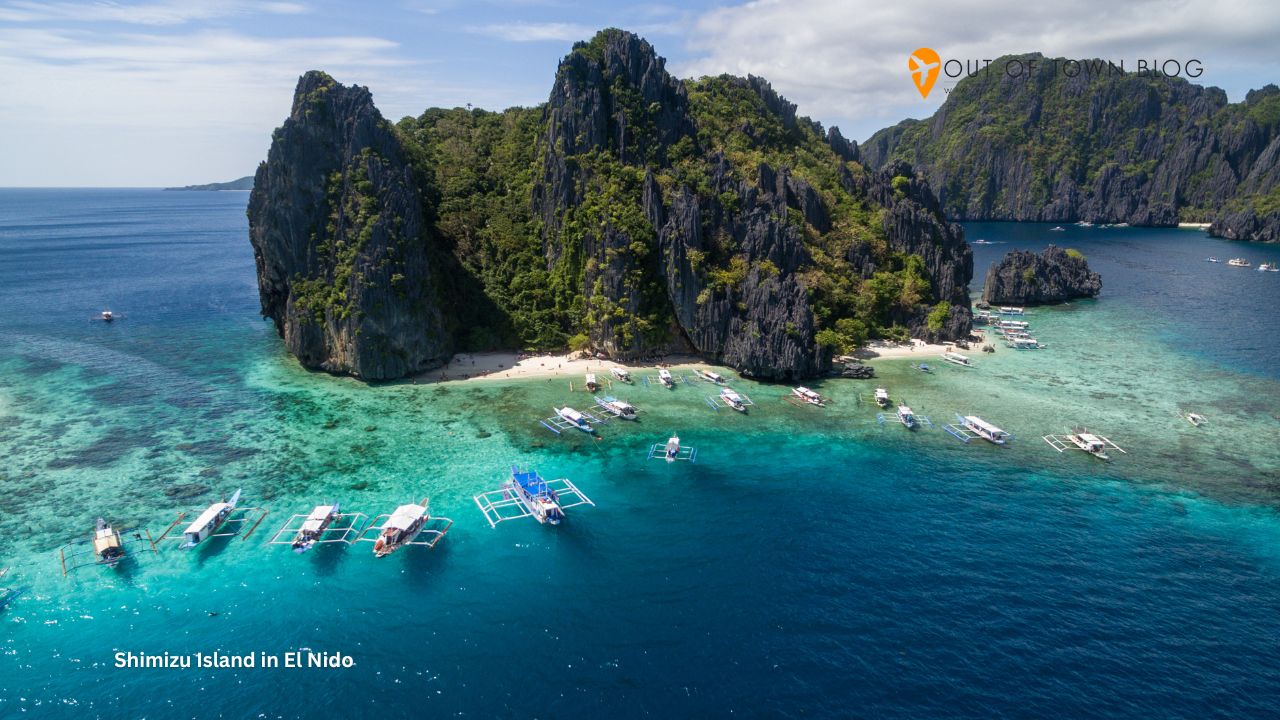
Shimizu Island in El Nido
The trick is to plan around the ferries, not around a fixed itinerary. The classic student routes — Cebu to Bohol, El Nido to Coron, Manila to Batangas and on to Puerto Galera — are all served by regular ferries and fast craft, and a ferry ticket usually costs a fraction of the equivalent domestic flight. Book the slow ferry when time allows and the fast craft only when a connection demands it; the price difference on a single crossing can cover a night in a hostel. Overnight ferries are worth knowing about too: a bunk on an overnight sailing is both transport and accommodation in one ticket, and you wake up at your next island.

Island-hopping tours look expensive at first glance, until you price them per stop. A shared group boat in El Nido or Coron, split between six or eight travellers, typically costs far less than hiring a private bangka — and the shared boats follow the same lagoons, snorkelling spots, and hidden beaches. Go early, when the boats leave before the day-trippers arrive, and you get the same water with fewer people in it. Bring your own snorkel mask if you have one: rental fees are small, but they add up over a week of daily swims, and a mask that fits is worth more than a cheap one that leaks.
Hostels are where the budget really holds together. Dorm beds in Cebu City, El Nido, Moalboal, or Siargao are routinely the cheapest in town, and the good ones come with what a student actually needs: reliable Wi-Fi, a kitchen, lockers, and other travellers to split a boat or a tricycle with. Staying slightly outside the main strip — a ten-minute walk from the beachfront — often cuts the nightly rate noticeably without changing the trip at all. If you are travelling with a friend, compare the dorm price with a basic fan double room: two people splitting a private room sometimes pay less per person than two dorm beds, and you get a lockable door.

Food is the easiest part of the budget, because the best food is also the cheapest. A carinderia — a small eatery with trays of cooked dishes behind glass — serves a full rice meal for very little, and it is where local workers eat, which is always a good sign. Barbecue stalls, with skewers of chicken, pork and fish grilling over charcoal, are dinner for the price of a coffee back home. In the mornings, look for pan de sal from a neighbourhood bakery and strong local coffee. Save restaurant meals for one treat per island, not one per day, and the food budget stops being a worry.
A realistic daily budget helps more than any single tip. As a rough guide, a careful student can aim for something like this: a dorm bed, three carinderia or street-food meals, one shared boat or ferry crossing averaged across the week, and local transport by jeepney or tricycle. That usually lands well below what most travellers expect from a tropical island trip — and the number drops further the slower you go, because every extra night in one place is a night without a transport ticket. The expensive days are the moving days, so cluster your moving days and let the still days be cheap.

A few practical habits protect the budget better than any spreadsheet. Carry cash in small notes, because island ATMs run out and many small places don’t take cards; withdraw in the city before heading to a smaller island. Buy a local SIM at the airport or in a mall — data is cheap, and it replaces guidebooks, maps and the need to pay for hostel Wi-Fi. Pack light enough to walk with your bag: every tricycle you don’t need is money saved, and the Philippines is best explored on foot once you are off the boat. And travel in the shoulder season if your term dates allow it — the weeks just before or after the peak crowds bring lower room rates and quieter boats, with the same sea.
None of this requires roughing it. Student-budget travel in the Philippines isn’t about suffering; it is about choosing the version of the trip locals already use. The ferry instead of the flight, the carinderia instead of the resort restaurant, the dorm with a kitchen instead of a room with a minibar — each swap saves money and, more often than not, gives you a better story. The islands do the rest: the water is the same colour whether you arrive on a budget ferry or a private boat, and the sunset doesn’t check what you paid for your bed.
So go slowly, eat where the workers eat, and let the boats set your pace. The Philippines is built for exactly this kind of trip — and on a student budget, it is one of the few places where travelling further actually costs less.
Author bio:
Job Haze Ltd publishes Budget Travel for Students, a blog about travelling well on a tight student budget — cheap routes, honest costs and practical tips for students. You can find more student-budget guides there at https://studenttravelbudget.blogspot.com/.
El Nido Travel Tour Packages You Should Try
Follow and subscribe to OutofTownBlog.com on Facebook , Twitter, Instagram, Pinterest, and YouTube for more Travel-related updates.
Read:
- How to Travel to El Nido, Palawan: A Complete Travel Guide
- EL NIDO TO CORON: What are the transportation options?
- Coron VS. El Nido: Which is truly better?
- Island Hopping in El Nido Palawan
- EL NIDO TRAVEL GUIDE: Best Islands, Beaches, Hotels & Local Tips