Melo Villareal
Must-See Historic Photos of the Philippines
The Philippines stands out as one of the most culturally and geographically diverse countries in Asia. It’s more than 7,000 islands that are home to hundreds of languages and dialects, a mosaic of ethnic groups, and a vibrant mix of religions. Shaped by centuries of indigenous traditions, colonization, and encounters with neighboring cultures, the Philippines boasts a rich and colorful history. Explore these fascinating vintage photographs to discover unique moments and stories from Philippine history.

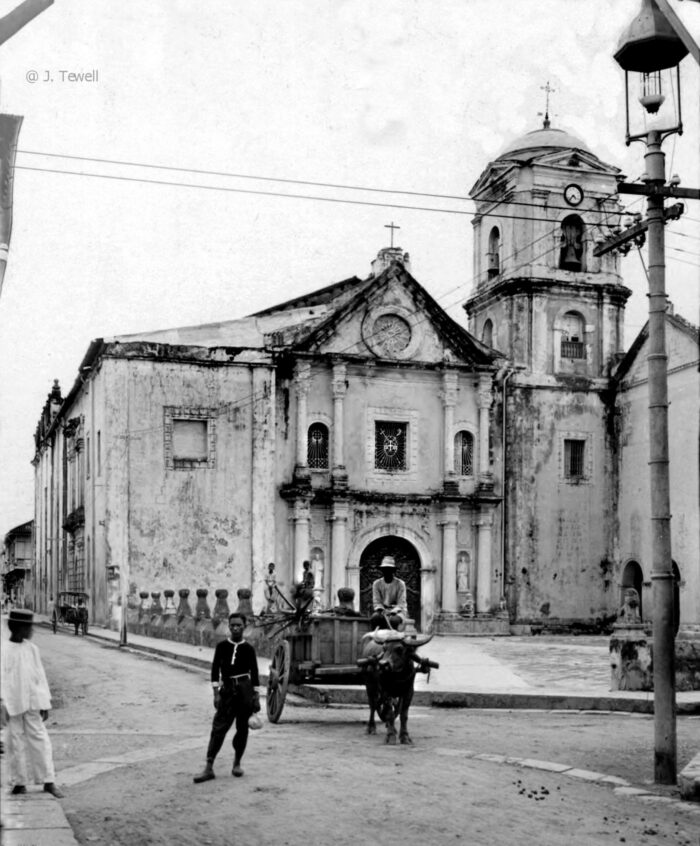
Cavite Circa 1930 Photo credit: J. Tewell / Foter / CC BY-NC
Old Street in Cavite
Cavite, known as the Land of Heroes, is a province in the Philippines with deep historical significance. It was the site where Philippine Independence was proclaimed on June 12, 1898, marking the country’s freedom from Spanish rule. Cavite also holds further historical importance as Kawit, a municipality within the province, is the birthplace of Emilio Aguinaldo, the first President of the Philippines.
The accompanying 1930 photograph shows a street scene in Cavite, reflecting the area’s historical ambiance, although the specific location within Cavite is not identified.
Binondo Church pre-war Photo

In this picture, the iconic San Fernando Bridge gracefully spans the river, leading the eye toward the majestic façade of the historic Binondo Church, whose centuries-old bell tower stands proudly above the surrounding district. To the left, a charming, timeworn panciteria invites passersby with its wooden signage and inviting aroma of freshly cooked noodles. Encircling the church are several stately Bahay na Bato—traditional Filipino stone houses with their wide capiz shell windows and elegant Spanish-inspired architecture—each adding to the area’s vibrant tapestry of cultural heritage.
Notably, the Pansiteria de Macanistay Ruemcustu, a renowned eatery mentioned twice in Jose Rizal’s acclaimed novels, was a popular meeting place for intellectuals and locals alike, its legacy woven into the pages of Philippine history.
During this era, most people strolled along bustling cobblestone streets on foot. For longer journeys, horse-drawn and carabao-drawn carriages clattered over the thoroughfares, their rhythmic sounds blending with the city’s lively atmosphere.
Fort Santiago Pre-war photo

Gaze upon the breathtaking view of Fort Santiago as it rises gracefully from the edge of the Pasig River. This historic stone fortress once thrived as a vibrant hub of commerce and cultural exchange in pre-war Manila, with its towering walls safeguarding the pulse of the city. Although the prominent structure captured in this photograph has long disappeared, the weathered ramparts remain, silent witnesses to Manila’s storied history and enduring spirit, evoking memories of a time when the fort played a pivotal role in the city’s prosperity and defense.
Two Filipino Mestiza’s Circa 1899

In 1899, a striking photograph immortalized two young Filipino-Spanish mestizas elegantly attired in traditional Filipiniana dresses. They posed gracefully within the sumptuous interiors of a grand ancestral home in Ermita, Manila, surrounded by ornate wooden furniture, intricate capiz shell windows, and delicate lace curtains that reflected the era’s refined sensibilities.
Flood in Manila Circa 1905

The image shows the bustling streets of Manila almost completely submerged beneath murky floodwaters following a devastating typhoon. Wooden carriages, pedestrians, and buildings stand partly immersed, while people wade through knee-deep water, their belongings precariously balanced on their heads or shoulders. Palm trees sway in the background beneath a gray, overcast sky, hinting at the lingering effects of the storm. This haunting snapshot captures Manila’s resilience around the year 1905, as residents navigate the aftermath of nature’s fury.
Vintage Bird’s eye view photo of Beautiful Manila Circa 1941

A stunning bird’s eye view reveals Manila’s vibrant skyline, bustling streets, and historic architecture, all basking in serene beauty before Japanese bombers brought unprecedented devastation to the city.
Manila Cathedral Circa 1929

From December 11 to 15, 1929, the historic Manila Cathedral played host to the very first National Eucharistic Congress, marking a significant event in religious history within its revered walls. Decades later, in 1981, during his pastoral visit to the Philippines, Pope John Paul II elevated Manila Cathedral to the status of a minor basilica, further solidifying its importance as a spiritual and cultural landmark in the country.
Manila after World War II

A photograph captures the devastation of Manila following relentless bombings during World War II. When General Douglas MacArthur surveyed the city after the protracted and brutal battle, he remarked that Manila had become the second most destroyed city in the world, surpassed only by Warsaw.
Native Beautiful Filipina circa 1899

A stunning native Filipina stands gracefully, draped in traditional Filipiniana attire that embodies the elegance of the late 19th century. Her dress features delicate, translucent butterfly sleeves made from piña fabric, meticulously hand-embroidered with floral patterns. The bodice is snug and intricately designed, complemented by a flowing, ankle-length skirt that moves softly with each step. Her hair is styled in a neat bun, adorned with a decorative comb or native flowers, reflecting her dignified bearing. The photograph, taken circa 1899, captures the timeless beauty, poise, and cultural pride of a Filipina woman in the waning days of Spanish colonial rule in the Philippines.
Battle of Manila circa 1945

During the Battle of Manila, Japanese soldiers deliberately set large parts of the city ablaze on February 2, 1945. As raging fires consumed homes and businesses, thousands of innocent civilians were caught in the devastating chaos, left with nothing but slim chances for survival. This powerful photograph was taken along Gandara—now known as Sabino Padilla Street—in the historic district of Binondo, Manila, and captures the harrowing reality that city residents faced during those dark days.
Manila Central Post Office Pre-war photo

The Manila Central Post Office was originally located in the bustling business district of Escolta, serving as an important hub for mail and communication in early Manila. In 1936, an imposing neoclassical building was constructed along the banks of the Pasig River to house the central office. This architectural landmark was heavily damaged during the Battle of Manila in World War II. However, in 1946, the post office was meticulously reconstructed, faithfully retaining much of its original grand design and restoring its prominence in the capital city’s landscape.
Minor Basilica of St. Michael the Archangel in Tayabas Circa 1901

The Minor Basilica of St. Michael the Archangel, renowned as one of the Philippines’ largest and most stunning churches, stands majestically in the historic City of Tayabas. This grand basilica is celebrated for its centuries-old Spanish colonial architecture, intricate facade, and beautifully preserved interiors that reflect a rich religious history. Tayabas, now officially recognized as Tayabas City, once served as the capital of Quezon Province, adding to the city’s historical significance and the church’s prominence as a cherished landmark.
Filipino-Chinese Banana Street Vendors circa 1900s

Photograph of Tsinoy (Filipino-Chinese) banana street vendors taken between 1900 and 1902, showing several vendors in traditional attire standing beside their displays of ripe bananas on a bustling street in the Philippines.
Typical Market Day in Ermita Manila

An early 20th-century photograph capturing a bustling market day in Ermita, Manila, shows local vendors displaying their goods and townspeople mingling under the tropical sun.
Escolta Street Vintage Photo

Before Ayala Avenue transformed into Makati’s bustling commercial heart and prior to the rise of other renowned shopping districts in Metro Manila, Escolta stood proudly as the city’s premier shopping destination, famous for its Art Deco buildings, fashionable boutiques, luxury cinemas, and elegant cafés that attracted Manila’s elite and cosmopolitan crowds.
San Agustin Church in Manila circa 1945
The San Agustin Church and its adjoining convent in Intramuros, Manila, suffered extensive damage during World War II. This photograph, taken around 1945, captures the destruction inflicted upon these historic structures during the battle for Manila.
Kalinga Women Circa 1921

In Kalinga, in the northern Cordillera region of the Philippines, women should use banga (pronounced ba-nga), which are earthen pots, to fetch and store water. The traditional water storage pots, known locally as immosso, are essential for daily water collection tasks.
Tattooed Ifugao of Kababuyan District in Benguet

A 1903 photograph captures a tattooed Ifugao man from the Kababuyan District, nestled within the Cordillera Mountains of Benguet. His skin is adorned with intricate traditional tattoos, each pattern telling its own story. Animal motifs such as dogs and eagles, along with centipedes and scorpions, are inked across his body, symbolizing strength, bravery, and protection. Other designs, such as bold zigzag lines representing lightning and depicted shields, further showcase the cultural significance and artistry of Ifugao tattooing traditions.
Need vintage photos for your printing needs? See Canvas Prints and download them easily!
Want more updates about tourist attractions in the Philippines? Follow #TeamOutofTown, on Facebook, Twitter, Instagram, and Pinterest for more travel ideas.
Also read:
- Things To Do And Places To Visit In Taal, Batangas
- Things To Do And See In Tayabas City
- Top Ten Places To Visit In Camarines Sur
- Lake Holon Travel Guide: A Serene Destination In Mindanao