Melo Villareal
My Son Sanctuary in Da Nang, Vietnam: History, Culture, and Significance
During our recent trip to Da Nang, Vietnam, graciously arranged by Cebu Pacific and Da Nang City Tourism, we had the incredible opportunity to explore the ancient and atmospheric My Son Sanctuary—a UNESCO World Heritage Site renowned for its impressive Hindu temple ruins nestled amidst lush, forested mountains.

My Son Sanctuary Drone Shot
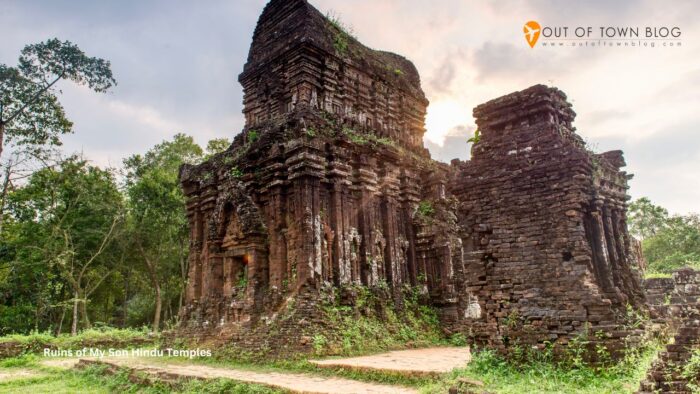
Tucked within a serene, lush valley approximately 40 kilometers southwest of Da Nang, My Son Sanctuary is counted among Vietnam’s most significant cultural and historical landmarks. Established between the 4th and 14th centuries, it served as the spiritual and political heart of the Champa Kingdom—an ancient civilization known for its unique blend of Hindu influences and indigenous traditions. Today, visitors can admire the sanctuary’s intricate red-brick towers and temples, many adorned with elaborate carvings depicting deities, sacred animals, and mythological scenes. Over centuries, these structures were both gathering places for religious ceremonies dedicated to Hindu gods such as Shiva and royal burial sites. As a designated UNESCO World Heritage Site, My Son Sanctuary not only preserves the architectural legacy but also reveals the Champa people’s sophisticated artistry, religious practices, and resilient history, despite centuries of natural decay and wartime damage.

Visitors often find the sanctuary’s breathtaking setting just as captivating as its ancient ruins. The My Son Sanctuary is nestled within a lush, verdant valley surrounded by rolling mountains, and is embraced by the tranquil, life-giving Thu Bon River, which was considered sacred by the local populace. This natural enclosure provided both security and seclusion for the Cham civilization, while the river allowed for connection with nearby communities, facilitating trade and cultural exchange. The temples themselves, built between the 4th and 13th centuries to honor Hindu deities such as Shiva, were constructed with exquisite red bricks and decorated with intricate sandstone bas-reliefs depicting Hindu mythological stories. These structures showcase a fascinating blend of indigenous Cham craftsmanship and the profound influence of Indian religion, art, and architectural techniques, which dominated the region for hundreds of years and played a crucial role in shaping its cultural landscape.

Today, My Son Sanctuary draws travelers from around the world who seek to immerse themselves not just in the weathered stones, but in the living traditions and legends that surround them. The site is a UNESCO World Heritage Site, featuring well-preserved ruins, interpretive signs, and regular cultural performances that bring the Cham heritage to life. Its harmonious fusion of history, unique architectural styles, and pristine natural surroundings offers visitors a vibrant window into Vietnam’s ancient past. Conveniently located within easy reach of both Da Nang, a major coastal city, and the historic trading port of Hoi An, My Son makes an ideal day trip for those eager to explore Vietnam’s spiritual and cultural heritage firsthand.

Location and Accessibility
My Son Sanctuary lies in central Vietnam within Quang Nam Province. It sits in a valley surrounded by mountains and is reachable from both Da Nang and Hoi An, making it a convenient day trip for visitors staying in either city.
Cebu Pacific offers direct flights from Manila’s Ninoy Aquino International Airport (NAIA) to Da Nang International Airport in Vietnam. These flights are a convenient option for travelers looking to visit Da Nang directly from the Philippines’ capital city, eliminating the need for layovers or connecting flights.
Geographic Setting and Surroundings
The sanctuary is located in Duy Phu Commune, Duy Xuyen District, Quang Nam Province, about 65–70 kilometers southwest of Da Nang. The site rests in a narrow valley, giving it natural protection and a secluded atmosphere.
The valley is bordered by dense hills and forests, which add to its quiet setting. A branch of the Thu Bon River flows nearby, linking the site historically to Hoi An, a trading port that helped connect the Champa Kingdom with other regions.
Unlike other Cham temples often built on hilltops, My Son was placed in a valley. This location made it easier to access while still offering a sense of sacred isolation. The natural landscape continues to frame the ruins today, providing a clear view of how geography shaped its history.

How to Get to My Son Sanctuary
Travelers can reach My Son Sanctuary by road, with most routes starting from either Da Nang or Hoi An. The distance from Da Nang to My Son is approximately 65 to 70 kilometers, while from Hoi An it is about 45 kilometers. Typically, the journey takes between 1 to 1.5 hours, depending on the departure point, traffic conditions, and mode of transportation.
Visitors have several travel options: by private car or taxi, which offers the most convenience and flexibility; by motorbike for those seeking a more adventurous and scenic ride; or by joining guided bus tours that include pick-up at hotels and provide historical context during the trip. The most common route from Da Nang is via National Route 1A, then turning onto Route 610, which leads directly to the sanctuary.
From Hoi An, travelers follow DT610 through the countryside, passing rice paddies and traditional villages. Road conditions are generally good, but caution is advised during the rainy season, as some sections might become slippery.
Common options include:
- Private car or taxi – fastest and most flexible.
- Motorbike rental – affordable and popular with independent travelers.
- Guided tours by bus or minivan – convenient for those who prefer organized transport.
The final stretch of the trip passes through rural villages and farmland before reaching the entrance gate. From there, visitors often take a short shuttle ride or walk into the main temple area.
Nearby Cities and Transport Options
Da Nang serves as the largest nearby city with an international airport and train station, making it the main entry point for long-distance travelers. From there, buses, taxis, and private transfers connect to My Son.
Hoi An, only 45 kilometers away, is another common base. Many visitors stay in Hoi An and book half-day tours that include transport to the sanctuary. The route from Hoi An is shorter and passes through countryside landscapes.
Public transport to My Son is limited, so most travelers rely on private or tour services. For those seeking flexibility, renting a motorbike in either Da Nang or Hoi An remains a practical and cost-effective choice.


Historical Significance
Origins and Foundation of My Son Sanctuary
The construction of My Son began in the 4th century under the Cham people. They built the first temples in honor of the Hindu god Shiva, whom they regarded as their protector. Later rulers expanded the complex with red brick towers and sandstone carvings.
Over time, My Son became a sacred valley surrounded by mountains. Its temples were not only places of worship but also symbols of royal authority. The Cham kings commissioned new shrines to mark victories, reigns, or dynastic changes.
The architecture shows a mix of local techniques and Indian influence. Builders used baked brick joined without mortar, a method that still puzzles researchers. Decorative motifs included dancing figures, lotus patterns, and images of Hindu deities.
Role in the Champa Kingdom
For nearly a thousand years, My Son served as the spiritual and political center of the Champa Kingdom. Kings held ceremonies here to legitimize their rule and connect their authority to divine power. The temples also functioned as royal burial grounds.
The sanctuary highlighted the close link between religion and governance. By dedicating temples to Shiva, rulers reinforced their role as both political leaders and spiritual guardians of the Cham people.
The site grew into a complex of more than 70 structures. Each group of temples reflected different historical periods, showing how Cham art and architecture changed between the 4th and 14th centuries. This long span makes My Son one of the most important records of Cham civilization.
Rediscovery and Conservation Efforts
After the decline of the Champa Kingdom in the 15th century, My Son fell into disuse. Dense vegetation covered much of the site, and many temples collapsed. French scholars rediscovered the ruins in the late 19th century and began the first studies and restoration work.
During the Vietnam War, the sanctuary suffered heavy damage from bombing raids. Several towers were destroyed, and others were left in ruins. Despite this, many important structures and carvings survived.
Since its recognition as a UNESCO World Heritage Site in 1999, conservation has focused on stabilizing the remaining temples. Restoration teams from Vietnam and international partners continue to repair damaged areas, document Cham inscriptions, and protect the site from further erosion.
Today, My Son stands as both a cultural record and an active preservation project. It provides insight into Cham history while also showing the challenges of protecting ancient monuments in modern times.

Architectural Features
Tower Temples and Kalan Structures
The main structures at My Son are tower temples, known as kalan. These brick-built sanctuaries served as places of worship for Hindu deities, most often Shiva. The kalan usually stood at the center of a group of smaller auxiliary buildings.
Builders used fired red bricks without visible mortar, a technique that remains a subject of study. The towers feature curved roofs, pointed arches, and tiered bases that increase in height to represent a sacred mountain.
The layout often followed a symbolic plan. The kalan represented Mount Meru, the mythical center of the universe in Hindu belief. Smaller towers around it served ritual or functional purposes, such as storing offerings or housing priests.
Bas-Reliefs and Decorative Art
The temples display detailed bas-reliefs carved directly into brick and sandstone. These carvings show dancers, priests, and warriors, as well as animals like elephants and lions. Many panels depict religious ceremonies and daily life of the Champa kingdom.
Decorative art also included floral and geometric motifs. Lotus flowers, vines, and repeating patterns filled doorways and wall panels. These designs softened the heavy structure of the temples and added symbolic meaning linked to purity and fertility.
Many sculptures were placed in niches on the tower walls. Figures of Hindu gods and guardians stood at entrances, believed to protect the sacred space. Despite centuries of weathering, many carvings still show fine detail and craftsmanship.
Symbolism and Hindu Mythology
The architecture of My Son reflects deep ties to Hindu mythology. The central kalan symbolized Mount Meru, the cosmic mountain at the heart of the universe. Each temple was dedicated to a deity, most often Shiva, shown through lingam-yoni shrines inside the sanctuaries.
My Son temples also incorporated stories from Hindu epics. Bas-reliefs and sculptures illustrated tales from the Ramayana and Mahabharata. These images reinforced the religious authority of Cham kings, who linked their rule with divine protection.
The spatial arrangement of the sanctuary mirrored Hindu cosmology. Towers aligned with natural features like rivers and mountains, creating a sacred landscape that combined spiritual meaning with practical placement near trade routes.

Temple Groups and Main Sites
Group B and Group C Highlights
Group B and Group C form the core of the My Son ruins and hold some of the most studied temples. These structures once served as the religious center of the sanctuary and were dedicated to Hindu deities, mainly Shiva.
The towers in these groups show detailed brickwork and sandstone carvings. Many of the reliefs depict mythological scenes and sacred symbols. Despite damage from time and war, the outlines of the towers remain clear and give insight into Cham construction methods.
Visitors often notice the tall kalan (main sanctuary tower) in Group B, which was the central place of worship. Group C includes auxiliary buildings such as mandapas (halls) and smaller shrines, showing how the site functioned as both a religious and political hub.
Group G and Restoration Projects
Group G is one of the most active areas for archaeological research and restoration. Many of the temples here were heavily damaged, but they provide valuable information about Cham engineering and religious practices.
International teams have worked to stabilize the structures and conserve remaining carvings. Restoration projects often use original techniques, such as fitting bricks without mortar, to stay true to Cham methods.
Group G also contains inscriptions that help historians understand the political and cultural role of My Son Sanctuary. These records highlight the link between the Cham rulers and their devotion to Hindu gods, especially Shiva. The ongoing preservation work makes this group a key site for both scholars and visitors.
Other Notable Structures
Beyond the main temple groups, My Son Sanctuary includes smaller but important ruins scattered across the valley. Some of these are isolated towers that may have served as burial sites for Cham royalty or honored heroes.
Several structures stand out for their unique layouts or decorative details. For example, certain towers feature lingas and yonis, symbols of fertility and creation in Hindu belief. Others contain simple but well-preserved reliefs that show everyday Cham artistic style.
The sanctuary also holds stone steles with inscriptions in Sanskrit and Cham, which provide direct written evidence of the kingdom’s history. These scattered remains, though less imposing than the main groups, complete the picture of My Son as both a spiritual and cultural center.

Cultural Heritage and Traditions
Cham People and Religious Practices
The Cham people built My Son Sanctuary between the 4th and 13th centuries as a center for Hindu worship. They dedicated most temples to Shiva, who they regarded as their protector and the supreme deity. Kings often commissioned new towers to mark their reign and to honor the gods.
Religious ceremonies included offerings of rice, flowers, and incense. Priests performed sacred rituals inside the towers, while the community gathered outside. These practices reinforced the link between political authority and divine power.
The sanctuary also served as a burial site for Cham royalty and honored national heroes. This dual role as a religious and political space made it the most important spiritual site of the Champa Kingdom. The traditions practiced there reflect a strong blending of Indian Hinduism with local Cham beliefs.
Key elements of Cham worship at My Son:
- Dedication to Hindu gods, especially Shiva
- Construction of brick towers as sacred monuments
- Royal ceremonies marking new reigns
- Use of the sanctuary for both worship and burial
Apsara Dance and Intangible Heritage
Alongside temple rituals, the Cham people developed rich artistic traditions. The Apsara dance remains one of the most recognized forms of Cham cultural expression. Originating from Hindu mythology, it depicts celestial dancers who symbolize beauty, grace, and spiritual devotion.
Apsara dancers wear ornate costumes, often with tall headdresses and flowing skirts. Their movements are slow, deliberate, and symbolic, with hand gestures that represent natural elements or spiritual concepts.
The dance was performed during religious ceremonies at My Son and continues today as part of Cham festivals. It is considered intangible heritage, since it preserves cultural memory through performance rather than physical structures.
By keeping the Apsara dance alive, the Cham people maintain a living link to their ancestors. It also allows visitors to experience traditions that once accompanied temple worship, giving insight into the cultural life of the Champa Kingdom.
Visitor Experience and Practical Information
Best Times to Visit and Climate
The sanctuary lies in a tropical region, so weather plays a key role in planning. The dry season, from February to August, offers clearer skies and easier walking conditions. Morning visits are best, as temperatures rise quickly by midday.
The rainy season, from September to January, brings heavy showers that can flood paths and limit access. However, fewer tourists visit during this time, which allows for a quieter experience. Travelers should bring rain gear if visiting in these months.
Heat and humidity are strong in summer, especially in June and July. Carrying water, sunscreen, and light clothing helps make the visit more comfortable. Early arrivals also provide the chance to see the ruins before large tour groups arrive.
Tickets, Hours, and Regulations
The site is open daily, usually from 6:00 AM to 5:00 PM. Ticket prices are modest and include access to the temple complex and the small on-site museum. Discounts may apply for children or students with valid identification.
Tickets can be purchased at the entrance gate in Duy Phu Commune. Payment is typically accepted in Vietnamese dong, though some vendors nearby may take cards.
Visitors should follow posted rules to help protect the ancient structures. Climbing on towers or touching carvings is not allowed. Dress should be respectful, as the site was once a sacred religious center. Photography is permitted, but drones often require special approval.
On-Site Museums and Exhibitions
A small My Son Museum near the entrance displays artifacts found during excavations. Items include sandstone statues, decorative carvings, and tools from the Champa period. Exhibits explain restoration efforts and the role of the temples in religious life.
In Da Nang, the Museum of Cham Sculpture offers a larger collection. It houses over 300 pieces, many relocated from My Son for preservation. This museum provides context on Cham history and architecture, making it a useful stop before or after visiting the sanctuary.
Together, the on-site museum and the Da Nang museum give visitors a clearer picture of the Champa Kingdom. They highlight how My Son was both a political and spiritual center for centuries.
Tips for a Meaningful Visit
Arriving early in the morning helps avoid crowds and heat. Many visitors choose guided tours, which provide historical background and make navigation easier.
Comfortable walking shoes are important, as paths can be uneven. Bringing water and light snacks is recommended since food options inside the site are limited.
Those with extra time may combine the trip with nearby Hoi An or Da Nang, creating a broader cultural itinerary. Visiting both the sanctuary and the Museum of Cham Sculpture deepens understanding of the region’s heritage.
Respectful behavior, quiet exploration, and attention to preservation rules ensure the visit remains meaningful for both travelers and future generations.
Frequently Asked Questions
What is the entrance fee for My Son Sanctuary?
The entrance fee is about 150,000 VND per person. This ticket includes access to the site and the small museum near the entrance.
How can one travel from Da Nang to My Son Sanctuary?
Travelers can reach My Son Sanctuary by car, motorbike, or bus. The distance is about 69 km from Da Nang, and the trip usually takes 1.5 to 2 hours.
What is the historical significance of My Son Sanctuary?
My Son Sanctuary was the religious and political center of the Champa Kingdom between the 4th and 13th centuries. It contains Hindu temples dedicated to Shiva and shows the architectural and cultural achievements of the Cham people.
Is My Son Sanctuary close to Hoi An, and can it be visited from there?
Yes, the sanctuary is about 45 km from Hoi An, making it a popular half-day trip. Many visitors choose guided tours or private cars from Hoi An for convenience.
In which year was My Son Sanctuary recognized by UNESCO as a World Heritage Site?
UNESCO recognized My Son Sanctuary as a World Heritage Site in 1999. This recognition highlighted its cultural importance in Southeast Asia.
What are the photography guidelines for visitors at My Son Sanctuary?
Photography is allowed throughout the site. Visitors should avoid climbing on the ruins or entering restricted areas to protect the structures. Tripods and drones may be limited depending on local regulations.
Da Nang Travel Tour Packages You Should Try
Follow and Subscribe to OutofTownBlog.com on Facebook, Twitter, Instagram, Pinterest, and YouTube for more Travel related updates.
Read:
- Top 17 Best Things to do in Hoi An, Vietnam
- 11 of the Best Hotels in Hoi An, Vietnam
- Top 24 Best DA NANG TOURIST SPOTS + Things to Do & Places to Visit
- Da Nang Travel Guide: Things To Do, Places to Stay, Tours, & More!
- The Da Nang Museum of Cham Sculpture