

 Melo Villareal
Bringing Mango Sticky Rice Home From Thailand? Here’s What Travelers Need to Know
If you have ever visited Bangkok, chances are mango sticky rice became one of your favorite Thai food discoveries. The combination of sweet mangoes, sticky rice, and creamy coconut sauce makes it a popular dessert among Filipino travelers.
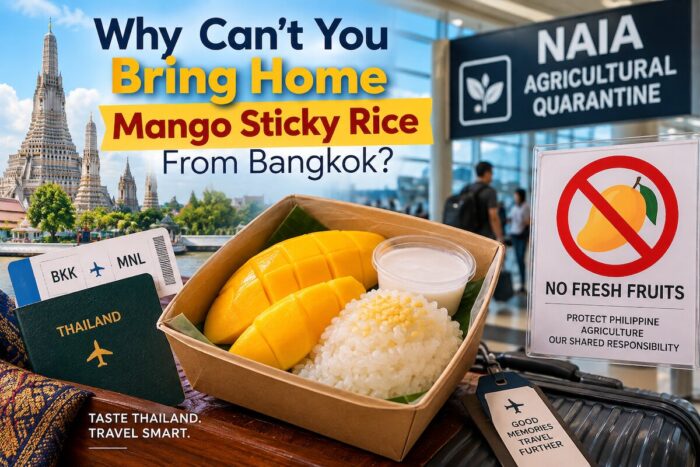
Why Can’t You Bring Home Mango Sticky Rice From Bangkok?
However, bringing a box of mango sticky rice home to the Philippines is a different matter. The concern is not the sticky rice itself. The fresh mango is the main issue.
Why Is Mango Sticky Rice Restricted at NAIA?
Fresh fruits and other plant materials entering the Philippines are subject to agricultural quarantine rules. The Philippine government regulates these products because they can potentially carry insects, pests, diseases, or other organisms that could affect local agriculture.
Fresh mangoes fall under these agricultural controls. Even if the mango comes from a reputable restaurant or food stall in Bangkok, its origin does not automatically make it acceptable for entry into the Philippines.
This means a traveler carrying mango sticky rice with fresh mango pieces may be asked to surrender the mango component during inspection at Ninoy Aquino International Airport (NAIA).
Yes. I’d make the NAIA section more precise: don’t imply that every passenger carrying mango sticky rice will automatically be stopped. The key point is that fresh mango is a plant product subject to Philippine quarantine controls, and arriving baggage can be inspected.
What Actually Happens at NAIA?
Arriving at Ninoy Aquino International Airport (NAIA) with mango sticky rice does not necessarily mean you will be stopped. However, your baggage can be inspected, and fresh fruits and other plant products are subject to Philippine agricultural quarantine rules.
If an officer finds fresh mango in your luggage, you may be asked about the product and whether you have the required clearance or permit. Philippine Customs classifies regulated imports as goods that require the necessary approvals from agencies such as the Bureau of Plant Industry (BPI).
If the mango does not meet the applicable requirements, authorities can refuse its entry or confiscate it. Philippine law gives plant quarantine officers the authority to inspect passenger luggage and to confiscate or destroy prohibited plant products.
In practice, this means your box of mango sticky rice isn’t necessarily going to trigger an automatic confiscation at the airport. But if the fresh mango is inspected and does not satisfy Philippine quarantine requirements, you should be prepared to surrender it rather than take it through.
The simple traveler takeaway
The sticky rice isn’t the main concern—the fresh mango is. If you’re unsure whether a particular food product can be brought into the Philippines, declare it and ask the appropriate airport officer rather than assuming that a small, ready-to-eat portion is exempt.
Recent NAIA enforcement actions show that agricultural products without the required clearances can be seized during baggage inspections.
Can You Bring the Sticky Rice and Coconut Sauce?
Sticky rice and coconut sauce generally pose different regulatory concerns than fresh mangoes because they are processed food products. However, travelers should still expect their food items to be inspected when necessary.
If you want to bring home a taste of Thailand, commercially packaged and processed food products are generally more practical souvenirs than fresh fruits. Keep the original packaging and receipts when possible, especially for commercially produced products.
What About Dried Mangoes?
Dried mangoes are also different from fresh mangoes because they have undergone processing. However, travelers should still check the latest Philippine quarantine requirements before bringing agricultural products into the country.
Do not assume that every processed fruit product is automatically allowed. Packaging, processing, quantity, and other requirements can affect whether an item can enter the Philippines.
What Should Filipino Travelers Do?
If you are flying from Bangkok to Manila, the safest approach is to avoid carrying fresh mangoes or dishes containing fresh mangoes unless you have confirmed that you meet the applicable Philippine quarantine requirements.
If you want to enjoy mango sticky rice, eat it during your Bangkok trip instead. You can also look for commercially packaged Thai snacks that are easier to transport and declare when necessary.
When in doubt, declare the agricultural product and ask the quarantine officer. Attempting to conceal a restricted agricultural product can cause more problems than simply surrendering it during inspection.
Why These Rules Matter
Philippine agricultural quarantine regulations help protect local crops and the country’s agricultural industry from foreign pests and plant diseases. Fresh fruits can serve as potential pathways for organisms that are difficult to detect without proper inspection.
For travelers, the rule can feel surprising, especially when the item is simply a popular dessert purchased from a Bangkok restaurant. However, airport quarantine regulations focus on the agricultural product itself and its potential risk, rather than whether the food is a souvenir or a ready-to-eat meal. Before your next trip to Bangkok, check the latest Philippine Bureau of Quarantine requirements if you plan to bring fresh fruit or agricultural products home.
For mango sticky rice, the easiest option is simple: enjoy the dessert in Thailand and leave the fresh mango behind when you fly home.
Bangkok Travel Tour Packages You Should Try
Follow and subscribe to OutofTownBlog.com on Facebook , Twitter, Instagram, Pinterest, and YouTube for more Travel-related updates.
Read:
- Top 10 Best Hotels and Resorts in Chiang Mai, Thailand
- These captivating vintage photos of Manila showcase its timeless charm, despite its dark past.
- Best Night Markets in Bangkok: Ultimate Guide to Street Food, Shopping & Nightlife