

 Team Out of Town
Earthquake in Manila: What to Do Before, During, and After an Earthquake
An earthquake in Manila can happen with little or no warning, which is why preparation is one of the most important ways to reduce injuries, property damage, and confusion during a disaster. Metro Manila is exposed to several earthquake hazards, including strong ground shaking, liquefaction, and ground rupture associated with active faults.
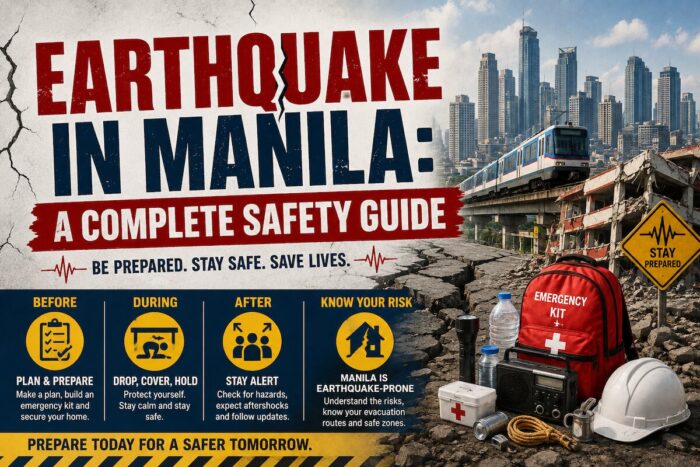
Earthquake in Manila: A Complete Safety Guide
The possibility of a major Manila earthquake is not something residents, workers, and visitors should ignore. The Philippine Institute of Volcanology and Seismology (PHIVOLCS) identifies the West Valley Fault as an important earthquake source affecting the Greater Metro Manila Area. Its earthquake scenarios are designed to help communities prepare for potentially damaging events, rather than predict when an earthquake will happen.
This guide explains earthquake safety Manila residents and visitors should know, from preparing an earthquake emergency kit to knowing what to do during an earthquake, how to evacuate safely, and what to do after the shaking stops.
Is Manila at Risk of an Earthquake?
Yes. Earthquake risk in Manila is significant because the Philippines is located in a tectonically active region and Metro Manila is near active faults.
Strong ground shaking can damage or collapse structures, topple furniture and other objects, cause fires, and trigger hazards such as liquefaction and landslides.
Metro Manila also has mapped active faults, including the West Valley Fault and East Valley Fault. Understanding the earthquake hazards in your particular neighborhood is an important part of disaster preparedness.
This means earthquake preparedness should be part of everyday life in Manila—not something people think about only after an earthquake occurs.
What Is the West Valley Fault?
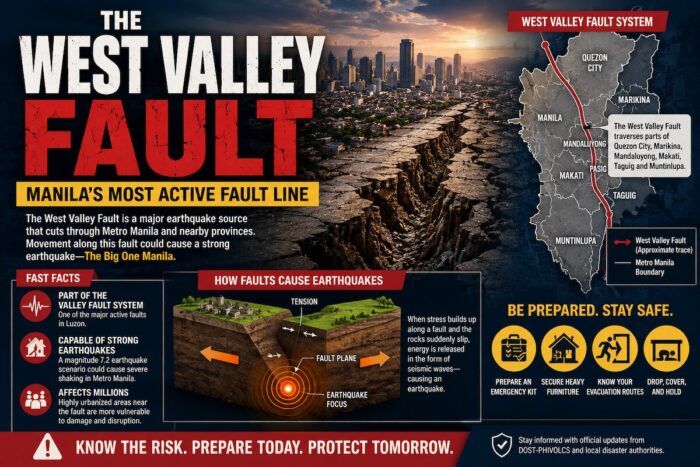
The West Valley Fault is part of the Valley Fault System and is one of the major sources of active earthquakes near Metro Manila.
It extends through parts of eastern and southern Metro Manila and nearby provinces. The fault has been mapped by PHIVOLCS, allowing residents to determine whether their properties are close to an active fault.
For homeowners, renters, businesses, and travelers, the important lesson is not simply knowing where the fault is. It is understanding the earthquake hazards associated with your specific location and making an emergency plan.
What Is “The Big One” in Manila?
The Big One Manila is a commonly used term for a possible major earthquake scenario associated with movement of the West Valley Fault.
It is important to understand that The Big One is a scenario, not an earthquake prediction. Scientists cannot reliably determine the exact date, time, and location of a future major earthquake.
One PHIVOLCS Metro Manila earthquake scenario considers a magnitude 7.2 earthquake generated by the West Valley Fault. The scenario is intended to help government agencies and communities understand potential hazards and develop contingency and preparedness plans.
The best response to the possibility of a major earthquake is therefore preparedness rather than panic.
Manila Earthquake Preparedness: What to Do Before an Earthquake
The most effective earthquake safety measures are taken before the ground starts shaking.
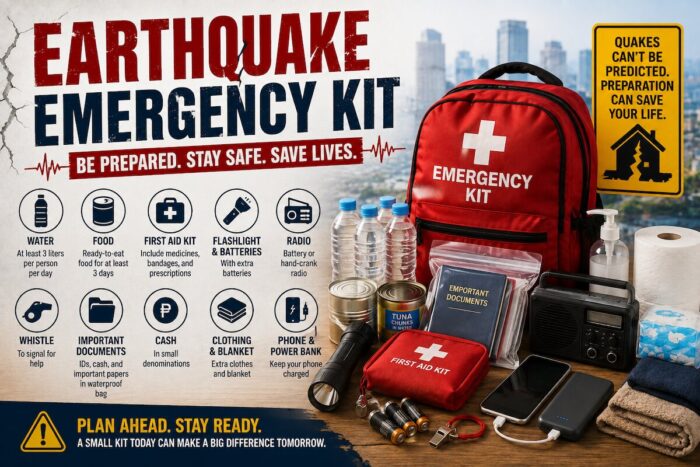
1. Prepare an Earthquake Emergency Kit
Every household, office, school, and vehicle should have an earthquake emergency kit containing basic supplies to use if electricity, water, transportation, or communication services are disrupted.
A useful earthquake emergency kit can include:
- Drinking water
- Ready-to-eat food
- Flashlight
- Extra batteries
- Power bank
- First-aid supplies
- Essential medicines
- Whistle
- Face masks
- Hand sanitizer
- Important documents in waterproof packaging
- Cash in small denominations
- Battery-powered or hand-crank radio
- Extra clothes
- Blankets
- Basic hygiene supplies
- Sturdy shoes
- Multi-purpose tool
- Emergency contact information
Keep supplies somewhere that is easy to reach after an earthquake. Avoid placing your emergency kit in a place where falling furniture could block access to it.
2. Secure Heavy Furniture
Large cabinets, bookshelves, televisions, refrigerators, and other heavy objects can fall during strong shaking.
Secure heavy furniture to walls where appropriate and keep heavy objects on lower shelves. Hanging objects should also be properly fastened.
These simple precautions can reduce the possibility of objects falling on people during an earthquake.
3. Identify Safe Places
Look around your home, hotel, office, or school and identify areas where you can take cover.
A sturdy table or desk can provide protection from falling objects. Stay away from windows, glass, unsecured shelves, mirrors, and large objects that could topple.
4. Know Your Building’s Evacuation Routes
Find the nearest:
- Emergency exits
- Stairways
- Fire exits
- Open areas
- Assembly points
- Emergency equipment
If you live or work in a high-rise building, know the evacuation procedures before an earthquake occurs.
Do not assume that the elevator will be available after a major earthquake.
5. Make a Family Communication Plan
Mobile networks may become congested after a major disaster. Establish an emergency contact outside your immediate area and agree on a meeting place for family members if you become separated.
Children should know their parents’ names, emergency contact numbers, and the family’s meeting location.
What to Do During an Earthquake
When an earthquake starts, do not immediately run outside. Falling glass, concrete, signs, ceilings, electrical lines, and other objects can make outdoor areas dangerous during the shaking.
The most important earthquake safety action is:
Drop, Cover and Hold
DROP to your hands and knees.
COVER your head and neck and get underneath a sturdy table or desk if one is nearby.
HOLD ON to your shelter until the shaking stops.
If there is no sturdy table nearby, protect your head and neck with your arms and move away from windows and other hazards.
If You Are Indoors
Stay inside while the shaking is occurring.
Move away from:
- Windows
- Glass doors
- Mirrors
- Tall cabinets
- Hanging objects
- Unsecured appliances
- Shelves
Do not use an elevator during an earthquake.
If you are in bed, stay there and protect your head with a pillow unless you are directly beneath something that could fall.
If You Are in an Office or High-Rise Building
Remain inside during the shaking and follow the building’s emergency procedures.
Do not rush toward elevators or stairways while the building is moving. Once the shaking has stopped and evacuation is instructed or necessary, use designated emergency stairs rather than elevators.
Be prepared for aftershocks.
If You Are Outdoors
Move toward an open area away from:
- Buildings
- Electrical poles
- Trees
- Bridges
- Signboards
- Walls
- Other structures that could fall
Protect your head and neck until the shaking stops.
If You Are Driving
Slow down and safely pull over when possible. Avoid stopping beneath bridges, overpasses, power lines, trees, signs, or buildings.
Remain inside the vehicle until the shaking stops and it is safe to continue.
Earthquake Manila Today: What Should You Do?
People searching for earthquake information in Manila today should rely on official sources rather than social media rumors.
If you have just felt an earthquake in Manila:
- Protect yourself immediately.
- Wait until the shaking stops.
- Check yourself and others for injuries.
- Look for immediate hazards such as fire, gas leaks, broken glass, or structural damage.
- Follow official advisories.
- Be prepared for aftershocks.
- Do not enter a severely damaged building.
- Check official sources before sharing earthquake information online.
Avoid relying on posts claiming that another earthquake will occur at a specific time. Earthquake prediction is not currently possible.
What to Do After an Earthquake
The end of the shaking does not necessarily mean the danger is over.
Aftershocks can occur following a major earthquake and may cause additional damage to already weakened structures.
1. Check for Injuries
Help injured people if you can do so safely. Give first aid when appropriate and seek professional medical assistance for serious injuries.
2. Check for Fire and Gas Leaks
Look for signs of fire, damaged electrical wiring, broken gas lines, or spilled hazardous materials.
If you smell gas, avoid creating sparks and follow your building’s emergency procedures.
3. Expect Aftershocks
Move away from damaged structures and be prepared to Drop, Cover, and Hold again if another strong earthquake occurs.
Buildings weakened by an initial earthquake may be more vulnerable to additional shaking.
4. Do Not Enter Damaged Buildings
A building that appears to have survived an earthquake may still have serious structural problems.
If a building has visible damage, seek guidance from the appropriate local authorities and qualified building professionals before returning.
5. Check Official Information
Use reliable government sources for information about:
- Aftershocks
- Road closures
- Evacuation orders
- Building safety
- Public transportation
- Emergency services
- Tsunami advisories, when applicable
Avoid spreading unverified information.
Manila Earthquake Evacuation Guide
A Manila earthquake evacuation should be planned in advance.
During the shaking, your priority is to protect yourself from falling objects. After the shaking stops, determine whether evacuation is necessary based on the condition of the building, official instructions, the presence of fire or other hazards, and the availability of safe routes.
If evacuation is necessary:
- Take your emergency kit if it is safe to do so.
- Use stairs instead of elevators.
- Follow designated evacuation routes.
- Stay away from damaged buildings.
- Avoid downed electrical wires.
- Follow instructions from emergency personnel.
- Go to the designated assembly area.
- Keep roads clear for emergency vehicles.
Do not rush blindly into the street immediately after an earthquake. Falling debris and damaged infrastructure can create additional hazards.
Earthquake Evacuation for High-Rise Buildings
People in high-rise buildings should follow the building’s emergency plan.
If evacuation is required, use designated stairs and avoid elevators. Move calmly and avoid pushing or running.
Building managers should clearly mark emergency exits and assembly areas and regularly conduct emergency drills.
Earthquake Safety Manila: What Travelers Should Know
Visitors staying in Manila hotels, condominiums, hostels, and serviced apartments should take a few minutes after checking in to identify the nearest emergency exit.
Before sleeping, make sure you know:
- Where the emergency exit is
- Where the stairs are located
- Where the fire exits lead
- Where the building’s assembly point is
- How to contact the front desk or security
- Where your shoes and phone are located
If an earthquake occurs while sightseeing, follow the same basic earthquake safety Manila procedures: protect yourself during the shaking, avoid dangerous structures afterward, and follow official instructions.
Tourists should also keep their passport, identification, medication, phone, power bank, and some cash easily accessible.
Earthquake Safety Tips Philippines
The following earthquake safety tips Philippines residents and travelers can follow are simple but important:
- Prepare an emergency kit.
- Secure heavy furniture and appliances.
- Know your building’s emergency exits.
- Practice Drop, Cover, and Hold.
- Keep away from windows during shaking.
- Never use an elevator during an earthquake.
- Prepare for aftershocks.
- Stay away from damaged structures.
- Keep emergency contact information accessible.
- Follow official government advisories.
- Do not spread unverified earthquake predictions.
- Learn the earthquake hazards in your neighborhood.
- Know your family’s emergency meeting place.
- Keep sturdy shoes near your bed.
- Maintain a flashlight and power bank.
- Participate in earthquake drills.
How to Check Your Local Earthquake Risk
Because earthquake hazards vary from one location to another, residents should investigate their specific neighborhood rather than relying only on general information about Metro Manila.
PHIVOLCS provides tools that allow residents to learn about active faults and earthquake hazards, including ground rupture, ground shaking, liquefaction, and earthquake-induced landslides.
This can be especially useful when choosing a home, office, school, hotel, or other property.
Frequently Asked Questions About Earthquake in Manila
Is Manila prone to earthquakes?
Yes. Manila and the wider Metro Manila area are exposed to earthquake hazards because of the Philippines’ active tectonic setting and the presence of active faults in and around the region.
Is The Big One Manila going to happen?
A major earthquake is a possibility, but no one can reliably predict its exact date or time. The Big One Manila refers to a major earthquake scenario used for preparedness planning, not a prediction of an upcoming earthquake.
What should I do during an earthquake?
The recommended action is Drop, Cover, and Hold. Protect your head and neck, take cover beneath a sturdy table or desk when possible, and stay away from windows and objects that could fall.
What should be included in an earthquake emergency kit?
An earthquake emergency kit should include water, food, a flashlight, batteries, a first-aid kit, medicines, a power bank, a whistle, cash, important documents, hygiene supplies, and other necessities your household may require.
Should I evacuate immediately during an earthquake?
Not necessarily. During the shaking, protect yourself first with Drop, Cover, and Hold. After the shaking stops, evacuate if the building is unsafe, there is a fire or other immediate danger, or authorities instruct you to evacuate.
Where can I check earthquake information?
DOST-PHIVOLCS is the appropriate government agency for official information on earthquakes, earthquake hazards, and related advisories.
Final Thoughts
An earthquake in Manila could disrupt transportation, communications, utilities, buildings, and everyday life. While nobody can predict exactly when a major earthquake will strike, residents and visitors can significantly improve their safety through preparation.
Understanding earthquake risk in Manila, learning about the West Valley Fault, preparing an earthquake emergency kit, securing furniture, knowing evacuation routes, and practicing Drop, Cover, and Hold are practical steps everyone can take today.
Most importantly, don’t wait for The Big One Manila to become a trending topic before preparing. Earthquake preparedness is most effective when it becomes part of everyday life.
For earthquake Manila today information, rely on official DOST-PHIVOLCS updates and verified local disaster authorities rather than unconfirmed social media posts.
Follow and subscribe to OutofTownBlog.com on Facebook , Twitter, Instagram, Pinterest, and YouTube for more Travel-related updates.
Read:
- Is the Philippines ready for the Big One?
- Marikina Valley Fault System Map: Are you living in an earthquake zone?
