

 Melo Villareal
Exploring the Mystical Wonders of the Philippines
The Philippines is a country that is rich in natural beauty and cultural heritage. It is home to over 7,000 islands, each with its unique attractions. Some places are associated with more than their natural beauty or fascinating architecture. They are places of legend and wonder that have captured Filipinos’ imaginations for generations.

Experience the Puerto Princesa Underground River via The Funny Lion Puerto Princesa
From the magical stories of our childhood to the allure of mythical realms, storytelling has captivated us for generations. And when it comes to enchanted destinations, the Philippines boasts a treasure trove of awe-inspiring locales. With its archipelago of 7,641 islands and a tapestry woven with native and colonial history, this country offers more than breathtaking landscapes and mesmerizing architecture. As summer fades away, fear not, for the Philippines beckons you to embark on a journey of adventure and exploration. Whether you opt for a thrilling trek, an invigorating hike, or a leisurely drive, a world of legends awaits.
Imagine standing in awe of the Puerto Princesa Underground River or Subterranean River National Park, a site that has earned the esteemed title of a UNESCO World Heritage Site. Venture within its mysterious depths to uncover an ancient hideaway that reverberates with tales untold. Or behold the magnificent wonder of the Banaue Rice Terraces, a marvel that stretches across the horizon and could seemingly wrap the world in its verdant embrace. These legendary places not only captivate with their unparalleled beauty but also carry immense cultural and historical significance. Each one serves as a testament to the Philippines’ remarkable past and its vibrant tapestry of traditions.
For those seeking to immerse themselves in the sheer brilliance and wonder that this country has to offer, these enchanting destinations are a pilgrimage of unrivaled delights. A voyage that will not only unveil the captivating allure of the Philippines but also leave you enriched by its history, culture, and overwhelming natural splendor.
Geographical Wonders of the Philippines
The Philippines is home to some of the world’s most beautiful natural wonders. From the stunning Chocolate Hills in Bohol to the pristine environments of Palawan, the country boasts a wealth of geographical wonders that will leave visitors in awe.

Chocolate Hills: Bohol’s Natural Marvel
One of the most famous natural wonders in the Philippines, the Chocolate Hills in Bohol are a sight to behold. These unique geological formations are composed of over 1,200 hills spread over an area of more than 50 square kilometers. The hills are covered with grass that turns brown during the dry season, making them giant chocolate mounds. Visitors can climb to the top of the hills to get a panoramic view of the countryside.

The Enigmatic Rice Terraces
The rice terraces of Ifugao are a UNESCO World Heritage Site and one of the world’s most impressive feats of engineering. The terraces were built over 2,000 years ago by the region’s indigenous people and are still in use today. The terraces are carved into the sides of mountains and are irrigated by a complex system of canals and aqueducts. The result is a breathtaking landscape of cascading rice paddies that stretch as far as the eye can see.
The Ifugao province in the northern part of the Philippines is known for its stunning rice terraces, which are recognized as a UNESCO World Heritage Site. The rice terraces were built by the Ifugao people over 2,000 years ago and are considered one of the world’s most impressive feats of engineering.
Aside from the rice terraces, Ifugao is also known for its rich culture and traditions, which are still practiced by the locals today. Visitors can witness the Ifugao’s living traditions through various cultural activities, such as the Imbayah Festival, which celebrates the Ifugao’s agricultural practices and way of life.

Palawan’s Pristine Environments
Palawan is home to some of the most pristine environments in the world. The island boasts a wide range of natural wonders, from the Puerto Princesa Underground River to the Tubbataha Reef, one of the most biodiverse coral reefs in the world. Visitors can explore the island’s lush forests, crystal-clear waters, and white-sand beaches, all while experiencing the unique culture and hospitality of the local people.

Mayon Volcano: Albay’s Perfect Cone
Rising 2,463 meters above sea level, Mayon Volcano is one of the most iconic natural wonders in the Philippines. Located in the province of Albay, the volcano is known for its nearly perfect cone shape and is considered one of the most active volcanoes in the country. Visitors can hike up the volcano to get a closer look at its crater and enjoy stunning views of the surrounding landscape.
Cultural and Historical Landscapes
The Philippines is rich in culture and tradition, and its history is reflected in its various landmarks and historical sites. Here are two must-visit destinations that showcase the country’s cultural and historical heritage.

Intramuros: The Walled City of Manila
Intramuros, also known as the Walled City, is a historic district in the heart of Manila City. The Spaniards built the district in the 16th century and served as the center of political, religious, and military power during the Spanish colonial period. The walls of Intramuros were built to protect the city from foreign invaders and natural disasters.
Today, Intramuros is one of Manila’s most popular tourist destinations, where visitors can explore the city’s rich history through its various landmarks and historical sites. The district is home to several important landmarks, including the San Agustin Church, a UNESCO World Heritage Site, and a National Cultural Treasure that dates back to the 16th century. The church is known for its Baroque architecture and houses several important relics and artifacts.

Cultural Center of the Philippines (Manila)
The value of the real estate in Metro Manila in both the residential and commercial sectors has been steadily becoming stronger. More and more property investors like Lamudi and SM are devoting resources to hop on this growth. With Metro Manila as the political, educational, and financial capital of the Philippines, it is no surprise that also as the country’s cultural center, people from the provinces and from all over the world are relocating to this cosmopolis.
This is the place to experience Philippine urban living at its finest.
The Cultural Center of the Philippines was built in 1969 by National Artist Leandro V. Locsin during President Ferdinand Marcos’ administration. The entire complex stands at 88 hectares of land and is made mostly of concrete. The building itself is square-shaped; however, its support structures are arched. In front of it, by the main entrance, is an octagonal pool with fountains and lights. From an aerial point of view, it also looks like a grand and spectacular… toilet bowl.
Rumor has it that architect Leandro Locsin was against the Marcos administration, especially as it was consigned by the infamous First Lady, Imelda Marcos. The initial cost of the construction was projected at P15 million, but it reached almost P50 million. Imelda Marcos and the CCP board then had to borrow $7 million to realize their vision of a national center of arts and culture. This move was highly criticized by the people, including Locsin, as this was seen more as an institution for the elite. In protest of this extravagance, Locsin designed the CCP to be shaped like a magnificent toilet bowl. Talk about strong symbolism.
Marine Biodiversity Hotspots
The Philippines is one of the world’s top marine biodiversity hotspots, boasting diverse marine life and coral reefs. Two of the most notable hotspots in the country are Tubbataha Reefs Natural Park and Apo Island.

Tubbataha Reefs Natural Park
Tubbataha Reefs Natural Park is a UNESCO World Heritage Site in the Sulu Sea. It is home to over 600 species of fish, 360 species of coral, and various other marine life, including sea turtles, dolphins, and sharks. The park is also known for its tuna and other pelagic species, making it a popular destination for snorkeling and diving enthusiasts.
The park has several dive sites that offer unique experiences, such as the South Atoll, known for its steep walls and strong currents, and the Amos Rock, home to large schools of fish and colorful corals. Tubbataha Reefs Natural Park visitors can also participate in conservation efforts, such as reef monitoring and clean-up activities.

Apo Island: A Diver’s Paradise
Apo Island, located off the coast of Negros Oriental, is a small volcanic island that has become a popular destination for divers. It is home to over 650 fish and 400 species of coral, including some rare and endangered species. The island is also known for its sea turtles, which can often be seen swimming around the coral reefs.
The island has several dive sites that offer unique experiences, such as Chapel Point, known for its colorful soft corals and schools of fish, and Coconut Point, home to large schools of jacks and snappers. Visitors to Apo Island can also participate in conservation efforts, such as turtle monitoring and reef restoration activities.
Legends and Mythical Tales
The Philippines is a land of legends and mythical tales. The country is rich in folklore and traditions, passed down from generation to generation. Some of the most fascinating legends and tales are associated with the local landmarks, mountains, and islands.

The Legend of the Great Santa Cruz Island
One of the most famous legends in the Philippines is the legend of the Great Santa Cruz Island. According to the legend, the island was once beautiful and peaceful. However, the peace was disturbed by pirates coming to the island to loot and plunder. The pirates were ruthless, and they killed many of the island’s inhabitants.
The people of the island prayed to the heavens for help. Their prayers were answered when a powerful eagle appeared from the skies. The eagle was none other than the Philippine Eagle, the national bird of the Philippines. The eagle fought the pirates and drove them away from the island. The people of the island were grateful to the eagle, and they decided to honor it by making it their guardian.

Tales of Mount Hamiguitan
Mount Hamiguitan is a mountain range in the Davao Oriental province of the Philippines. It is a UNESCO World Heritage Site home to diverse flora and fauna, including the Philippine Eagle.
According to local legends, Mount Hamiguitan was once a powerful kingdom ruled by a beautiful queen. The queen was loved by her people, and she ruled the kingdom with wisdom and fairness. However, a neighboring kingdom invaded her kingdom, and she was forced to flee to the mountains.
The queen and her people made a new home in the mountains and lived there for many years. The queen became known as a great healer, and she was revered by the people of the mountains. Today, Mount Hamiguitan is a popular destination for hikers and nature lovers. Visitors can see the diverse flora and fauna of the mountain range and learn about the legend of the queen.

Mount Makiling (Laguna)
Probably one of the most well-known myths, the dormant volcano (Yes, it is actually a volcano, not a mountain) of Mount Makiling is said to be named after a diwata (forest nymph) named Maria Makiling.
With no specific point of reference, the peaks of the volcano are supposed to be Maria’s face and breasts, with her long hair cascading downwards away from her body. It looks pretty much like a woman lying down.
Men are warned when trekking Mount Makiling. When Maria falls in love with a man, she takes him to her hut deep inside the forest never to be seen again. Even today, men who disappeared while visiting the volcano are attributed to Maria taking them to be her husband.
Adventures and Eco-Tourism
The Philippines is a country of natural wonders, and there are plenty of opportunities for nature lovers to explore its stunning landscapes. From trekking through the mountains to riding a habal-habal (motorcycle taxi) through the countryside, there are plenty of ways to experience the beauty of the Philippines up close and personal. In this section, we’ll look at two popular destinations for adventure and eco-tourism: Surigao del Sur and Carmen’s Limestone Karst Landscapes.

Surigao del Sur: Nature’s Playground
Surigao del Sur is a province in the northeastern part of Mindanao known for its breathtaking natural beauty. The province is home to several waterfalls, rivers, and beaches perfect for adventure-seekers and nature-lovers alike. One of the most popular destinations in Surigao del Sur is Tinuy-an Falls, a three-tiered waterfall often called the “Niagara Falls of the Philippines.” Visitors can swim in the crystal-clear waters at the base of the falls or take a bamboo raft to the foot of the cascading water.
Another popular destination in Surigao del Sur is the Enchanted River, a deep blue river that is said to be home to mystical creatures. Visitors can take a dip in the river’s cool waters, or watch as local divers perform daring feats from the river’s towering cliffs.

Maria Cristina Falls (Iligan)
Located in Lanao del Norte, the waterfalls are 98 meters high and are actually the primary hydroelectric power source of Mindanao. With two plunges of water next to each other, the Maria Cristina Falls is known as “twin falls” not only because its flow is separated vertically by a rock but also because it is said to be a petrified beautiful maiden with never-ending tears coming from her eyes.
According to one version, Maria Cristina, the adopted daughter of a Sultan, fell in love with a prince. Long story short, they were engaged, and a big wedding feast was soon set. Unbeknown to both was a witch who was also in love with the prince and jealous of Maria Cristina’s beauty.
A few days before the wedding, Maria Cristina remembered her biological mother and was saddened because she missed her. She went to her favorite river to cry away the sadness inside her, but in an unfortunate circumstance, the witch found her in such a state and, vowing that her wedding to the prince would never take place, turned her into stone.
Beaches and Coastal Wonders
The Philippines has some of the world’s most beautiful beaches and coastal wonders. From the pristine white-sand beaches of Boracay to the stunning limestone cliffs of El Nido, there is no shortage of breathtaking coastal destinations to explore.

Boracay: White-Sand Beaches
Boracay is a small island located in the Western Visayas region of the Philippines. It is known for its stunning white-sand beaches, crystal-clear waters, and vibrant nightlife. The most famous beach on the island is White Beach, a 4-kilometer stretch of powdery white sand and turquoise waters. Visitors can also explore other beaches on the island, such as Puka Beach and Bulabog Beach.
Aside from its beaches, Boracay is also home to a diverse range of marine life and coral reefs. Visitors can go snorkeling or scuba diving to explore the underwater world. The island also offers a range of other activities, such as parasailing, kayaking, and windsurfing.
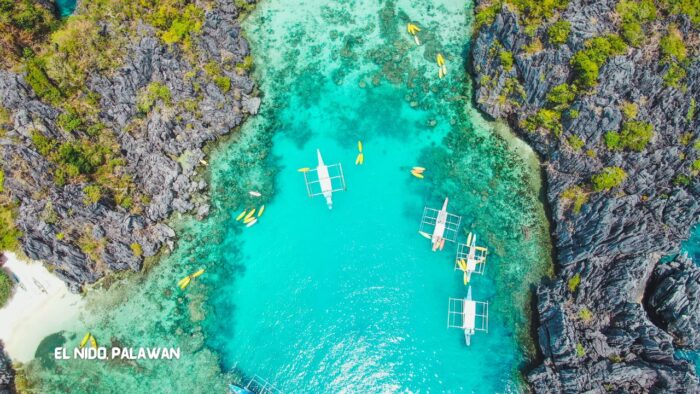
El Nido: Island Hopping Haven
El Nido is a small town in the northern part of Palawan, a province in the Philippines. It is known for its stunning limestone cliffs, crystal-clear waters, and pristine beaches. The town is the gateway to the Bacuit Archipelago, a group of islands and islets offering some of the country’s best island-hopping experiences.
Visitors can explore the archipelago’s hidden lagoons, secret beaches, and towering limestone cliffs. Some popular destinations include Big Lagoon, Small Lagoon, and Secret Beach. Visitors can also go snorkeling or scuba diving to explore the underwater world and see diverse marine life.
Aside from island hopping, visitors can also explore other attractions in El Nido, such as Nacpan Beach and Taraw Cliff. Nacpan Beach is a stunning 4-kilometer stretch of white sand and turquoise waters, while Taraw Cliff offers panoramic views of the town and the surrounding islands.
Underwater Treasures
The Philippines is a treasure trove of underwater wonders, offering its visitors a variety of marine life and stunning coral reefs. Two of the most popular destinations for underwater exploration are Puerto Princesa’s Subterranean River and Mindanao’s Rich Coral Gardens.

Puerto Princesa’s Subterranean River
Puerto Princesa’s Subterranean River, also known as the Puerto Princesa Underground River or the Subterranean River National Park, is a UNESCO World Heritage Site and one of the New Seven Wonders of Nature. Visitors can explore the river’s underground cave system by boat and witness the impressive stalactites and stalagmites formations. The river is also home to various species of bats, birds, and reptiles.
Mindanao’s Rich Coral Gardens
Davao Oriental, Pagudpud, and Zamboanga City are just a few of the many locations in Mindanao where visitors can experience the rich coral gardens. These coral gardens are home to a diverse range of marine life, including turtles, whale sharks, and barracudas. Snorkeling and diving guides are available in most locations to ensure a safe and enjoyable experience for visitors.
Iconic Landforms and Ecosystems
The Philippines is home to some of the world’s most beautiful and diverse natural wonders. From the Hundred Islands Phenomenon to Mount Hamiguitan’s Diverse Habitats, there is something for everyone to enjoy.

The Hundred Islands Phenomenon
Located off the coast of Alaminos in the Pacific Ocean, the Hundred Islands is a phenomenon that is unique to the Philippines. This group of islands is made up of over a hundred small islands and islets, each with its own unique ecosystem and biodiversity. The Hundred Islands National Park is a popular tourist destination that offers visitors a chance to explore the islands and experience the beauty of nature up close.
Historical Significance in War and Peace
The Philippines has a rich and complex history, with a significant portion of it marked by war and conflict. This section will explore two key locations in the Philippines that played a critical role in World War II and the country’s history.

Corregidor Island’s World War II Heritage
Corregidor Island is a small rocky island located at the entrance of Manila Bay. During World War II, it served as a key strategic location for the Allied forces, particularly the United States, against the Japanese invasion. The island is home to numerous military installations and fortifications that were built during the war, including gun batteries, barracks, and tunnels.
Deep beneath the surface of the island lies a mysterious network of tunnels. These dark passageways were once bustling with soldiers, buzzing with anticipation of the impending battles. But that’s not all that intrigues the adventurous souls who visit Corregidor Island.
Legend has it that hidden within these ancient tunnels lies a secret vault. And what is this vault hiding? None other than stacks upon stacks of gold bars, each worth a staggering $23,000! It’s a treasure hunt waiting to happen.
The backstory behind this hidden wealth adds an additional layer of fascination. In times of great peril, when the Japanese siege of Manila and Bataan threatened the safety of American and Filipino troops, military strategists devised a plan to protect their wealth and assets. They moved it all to Corregidor Island, a fortress amidst the chaos.
The details surrounding the fate of this treasure are shrouded in mystery. Some say the gold was whisked away on the USS Trout SS-202 submarine, vanishing into the ocean’s depths. But others argue this was just a smokescreen and that the gold remains untouched and waiting to be discovered.
Today, Corregidor Island is a haven for history enthusiasts and military aficionados. The relics of war pepper the landscape, offering glimpses into the past. But the true highlight is the infamous Malinta Tunnel. Once a bustling hospital and command center during the war, it beckons intrepid explorers to delve into its depths.
Lingayen Gulf’s Historical Battles
Lingayen Gulf is a large body of water located in the northwestern part of the Philippines. It played a significant role in the country’s history, particularly during World War II. The gulf was the site of the Battle of Lingayen Gulf, which was one of the largest naval battles in the war. It was fought between the Allied forces, led by the United States, and the Japanese Imperial Navy.
The battle resulted in the liberation of the Philippines from Japanese occupation. Today, Lingayen Gulf is a popular tourist destination for history enthusiasts. Visitors can explore the numerous war relics and monuments that dot the area, including the Lingayen Gulf War Memorial and the Veterans Memorial Park.
Frequently Asked Questions
What are some notable legends associated with places in the Philippines?
The Philippines is rich in culture and history, and many of its landmarks and natural wonders have fascinating legends associated with them. For example, the Chocolate Hills in Bohol are said to have been formed by two giants throwing mud and rocks at each other. Another legend tells the story of the Hinulugang Taktak waterfall in Rizal, which is said to have been created by a giant who cried tears of blood over the death of his wife.
Can you provide an overview of Filipino creation myths?
Filipino creation myths vary across different regions, but many share similar themes. One common element is the belief that the first people were created by a deity or deities. In some myths, the first people were created from bamboo or reeds, while in others, they emerged from the earth or the sea. Many myths also feature a great flood or deluge that destroyed the world, but a few survivors were able to repopulate the earth.
What are some examples of urban legends in the Philippines?
Urban legends are popular in the Philippines and often involve ghost stories or supernatural occurrences. One example is the “White Lady” of Balete Drive in Quezon City, who is said to haunt the area and cause accidents. Another urban legend is the “tikbalang,” a half-man, half-horse creature that is said to lure travelers off the road and into the forest.
Could you list five creatures from Philippine mythology?
Philippine mythology is full of fascinating creatures, many of which are unique to the region. Here are five examples:
- Aswang – a shape-shifting creature that can take on the form of a human or animal.
- Kapre – a giant, cigar-smoking tree spirit that is said to live in large trees.
- Tikbalang – a half-man, half-horse creature that is often depicted with glowing eyes.
- Manananggal – a female monster that can detach its upper body from its lower half and fly.
- Duwende – a mischievous dwarf-like creature that lives in the forest and can bring good or bad luck to humans.
How do Philippine historical myths shape the country’s culture?
Philippine historical myths have played a significant role in shaping the country’s culture and identity. These myths often celebrate the bravery and resilience of the Filipino people in the face of adversity, and many are centered around heroes and revolutionary figures. By passing down these stories from generation to generation, Filipinos are able to connect with their history and maintain a strong sense of national pride.
What are the most famous mythical places known in the Philippines?
The Philippines is home to many famous mythical places, including:
- Mount Mayon – a perfectly symmetrical volcano that is said to be the home of the goddess Daragang Magayon.
- Mount Makiling – a mountain that is said to be the home of the goddess Maria Makiling.
- Lake Sebu – a lake in South Cotabato that is said to be inhabited by seven giant fish.
- Taal Volcano – a volcano that is said to be the home of the god Tagalog.
- Hinulugang Taktak – a waterfall in Rizal that is said to have been created by a giant who cried tears of blood.
Like, Follow, and Subscribe to OutofTownBlog.com on Facebook, Twitter, Instagram, and Pinterest, and Team out Of Town on YouTube for more updates.
Read: Mayon Volcano: Legend and awesome reality


