Melo Villareal
Travel Guide to the Fushimi Inari Shrine
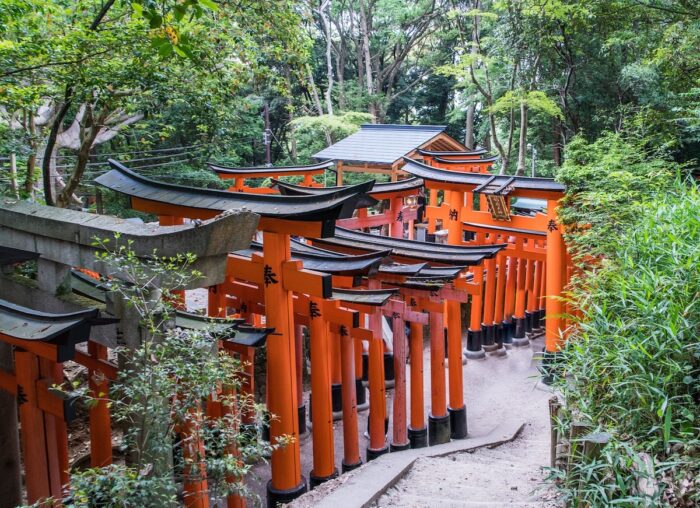
Fushimi Inari-taisha is a Shinto shrine located in Fushimi-ku, Kyoto, Japan. It is one of the most famous and important shrines in the country, attracting millions of visitors every year. The shrine is dedicated to Inari, the god of rice, sake, and prosperity, and is known for its thousands of vermilion torii gates that straddle a network of trails behind its main buildings.

Kyoto, Japan
The torii gates lead into the wooded forest of the sacred Mount Inari, which stands at 233 meters and belongs to the shrine grounds. The trails are lined with numerous smaller shrines and statues, making it a popular destination for tourists and pilgrims alike. Visitors can also enjoy the stunning views of Kyoto from the top of the mountain, which is accessible by hiking the trails or taking a cable car.
Fushimi Inari-taisha has a long and rich history, dating back to the 8th century when it was founded by the Hata clan. It has since become an important cultural and religious landmark, with its iconic torii gates and mountain trails attracting visitors from all over the world. Whether you are a history buff, a nature lover, or a spiritual seeker, Fushimi Inari-taisha is definitely worth a visit when in Kyoto.
History
Fushimi Inari-taisha is a Shinto shrine located in Fushimi-ku, Kyoto, Japan. It is the head shrine of the kami Inari, who is the god of fertility, agriculture, foxes, industry, and worldly success. The shrine was founded on Inariyama hill in southwestern Kyoto by the Hata family in 711, making it one of Kyoto’s oldest and most historic landmarks. It was later moved to its present location in 816.
Edo Period
During the Edo period (1603-1868), Fushimi Inari-taisha became a popular pilgrimage spot and was visited by many people, including Toyotomi Hideyoshi, a powerful daimyo who played a significant role in the unification of Japan. The shrine’s popularity continued to grow, and by the end of the Edo period, it had become one of the most important shrines in Japan.
Day of the Horse
The Day of the Horse, also known as Hatsu Uma no Hi, is a festival that takes place at Fushimi Inari-taisha every year on February 6th. It is one of the most important festivals at the shrine and is celebrated with various events, including horse races and a ceremony to purify the horses. The festival dates back to the Nara period (710-794) and is believed to have originated from a tradition of praying for a good harvest.
According to the Yamashirokoku Fudoki, an ancient report on provincial culture, geography, and oral tradition, Irogu no Hatanokimi, an ancestor of Hatanonakatsue no Imiki, shot a rice cake, which turned into a swan and flew away. The swan led him to a sacred mountain, where he discovered a sword and other treasures. He then enshrined the god Inari on the mountain, and the shrine became known as Fushimi Inari-taisha.
Architecture
Fushimi Inari-taisha is known for its unique architecture, which includes a main shrine, torii gates, and fox statues.
Main Shrine
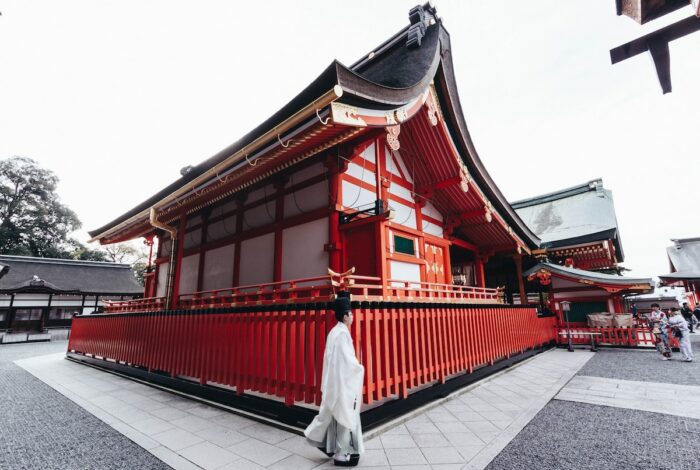
The main shrine, also known as the honden, is the central building of Fushimi Inari-taisha. It is where the kami Inari, the god of rice, sake, and prosperity, is enshrined. The honden is a traditional Japanese building made of wood and features a distinctive curved roof. Visitors can see the honden from a distance as they approach the shrine.
Torii Gates
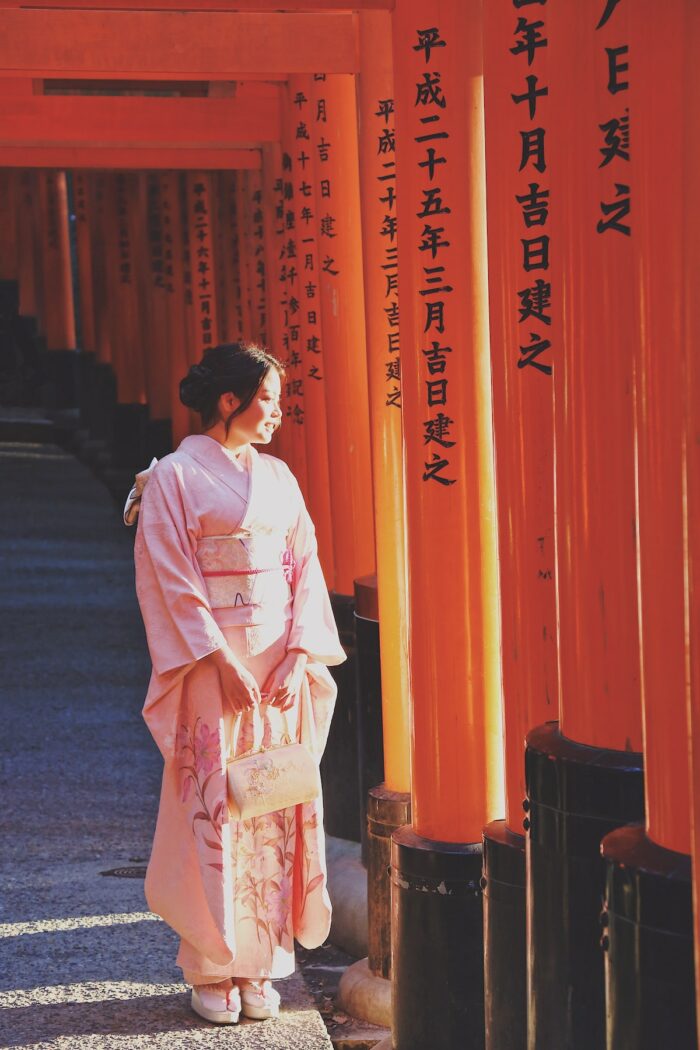
One of the most iconic features of Fushimi Inari-taisha is its thousands of torii gates. The Senbon Torii, or thousand torii gates, is a series of bright orange gates that line the trails leading up to Mount Inari. The torii gates are donated by individuals or companies as a way to show their respect for Inari, the god of business and prosperity. The Romon Gate is another notable torii gate at Fushimi Inari-taisha. It is the gateway to the inner shrine and features two large pillars with a roof that covers the entire structure.
Fox Statues
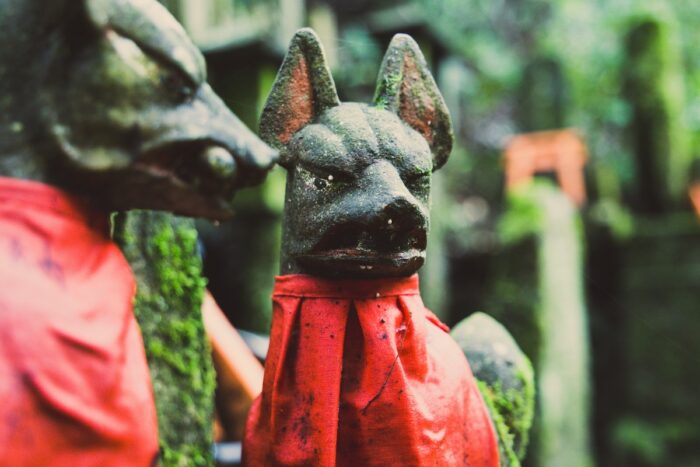
Another important feature of Fushimi Inari-taisha is the fox statues. The fox is believed to be the messenger of Inari, and there are numerous fox statues throughout the shrine. The statues are often depicted holding a key in their mouth, which symbolizes the key to the rice granary. Visitors can also see fox statues with a scroll, which represents the teachings of Inari.

Religious Significance
Fushimi Inari-taisha is a Shinto shrine that is dedicated to the kami Inari, who is the god of rice, agriculture, and prosperity. The shrine is located in Fushimi-ku, Kyoto, Kyoto Prefecture, Japan. It is one of the most important shrines in Japan and attracts a large number of worshippers every year.
Inari Okami
Inari Okami is the main deity worshipped at Fushimi Inari-taisha. The deity is believed to be the god of rice, agriculture, and prosperity. The shrine is dedicated to Inari Okami, and it is believed that the deity has the power to grant wishes related to business prosperity, safety for family members, and great harvest.
Prayer and Wishes
Worshippers come to Fushimi Inari-taisha to pray and make wishes to Inari Okami. The shrine is famous for its ema, which are wooden plaques that worshippers can write their wishes on. The ema are then hung up at the shrine, and it is believed that Inari Okami will grant the wishes. The shrine also has a number of fox statues, which are believed to be messengers of Inari Okami.

Visiting Fushimi Inari-taisha
Access and Hours
Fushimi Inari-taisha is located in southern Kyoto, and can be reached by either the JR Nara Line or the Keihan Main Line. Visitors can get off at either JR Inari Station or Fushimiinari Station respectively, and both stations are a short walk away from the shrine. Alternatively, visitors can take a bus or taxi to the shrine entrance.
Entrance Fee
The shrine is open 24 hours a day, 365 days a year, and there is no entrance fee to visit. However, visitors should be mindful of the fact that the shrine can get very crowded during peak tourist season, so it is advisable to visit early in the morning or late in the afternoon to avoid the crowds.
Hiking Mount Inari
One of the main attractions of Fushimi Inari-taisha is the hiking trail that leads up Mount Inari. The trail begins at the Yotsutsuji Intersection, which is located just inside the shrine grounds, and winds its way up the mountain through a series of torii gates and other shrines.
The hike to the summit of Mount Inari takes around 2-3 hours round trip, and is suitable for visitors of all ages and fitness levels. Along the way, visitors will be treated to stunning views of Kyoto and the surrounding countryside, as well as the opportunity to explore some of the smaller shrines and temples that are scattered throughout the mountain.
Visitors who are short on time or prefer not to hike can still enjoy the beauty of Fushimi Inari-taisha by taking a shorter walk along the lower sections of the trail. There are also a number of restaurants and souvenir shops located near the shrine entrance, making it a great place to spend a day or half-day exploring.
Visitors can check out the shrine’s official website for more information about Fushimi Inari-taisha, including hours of operation and hiking trail maps.
Cultural Influence
Fushimi Inari-taisha has had a significant cultural influence on the region and beyond. The shrine is dedicated to Inari, the Shinto god of rice, sake, and prosperity, and has been a place of worship for over a thousand years. Its influence can be seen in various aspects of Japanese culture, including food, architecture, and festivals.
Inari Sushi and Kitsune Udon
Inari sushi is a popular dish in Japan that is named after the shrine. It is a type of sushi that consists of sushi rice wrapped in aburaage (deep-fried tofu) and shaped like a pouch. The dish is said to have originated from the practice of offering rice to the gods in the form of aburaage pouches. Kitsune udon, another popular dish, is named after the foxes (kitsune) that are said to be the messengers of Inari. It is a type of udon noodle soup that is served with aburaage.
Nearby Attractions
Fushimi Inari-taisha is located at the base of Inariyama, a mountain that is also named after the god Inari. The mountain has numerous smaller Inari shrines and granaries that are connected by a network of trails. The trails are lined with thousands of torii gates that have been donated by worshippers over the years. The torii gates are painted in vermilion, the color that is associated with Inari.

Visitors to Fushimi Inari-taisha can also explore nearby attractions such as Kiyomizu-dera Temple, one of the most famous temples in Kyoto, and Nishiki Market, a bustling food market that offers a wide variety of local specialties. The shrine is also a popular destination during the annual Setsubun festival, when worshippers throw lucky beans to drive away evil spirits.

Frequently Asked Questions
How many torii gates are at Fushimi Inari?
Fushimi Inari Taisha is famous for its thousands of vermilion torii gates. In total, there are over 10,000 torii gates at the shrine, which were donated by individuals and businesses over the years. The torii gates form a network of trails that lead up to the summit of Mount Inari.
What is the landmark fact of Fushimi Inari Taisha?
The most iconic feature of Fushimi Inari Taisha is the thousands of vermilion torii gates that line the trails leading up to Mount Inari. The shrine is also known for its fox statues, which are believed to be the messengers of the god Inari.
What do the red gates in Kyoto mean?
The red gates in Kyoto, particularly at Fushimi Inari Taisha, are torii gates that symbolize the transition from the profane to the sacred. Passing through the gates is believed to purify the spirit and bring good fortune.
What is Fushimi Inari also known as?
Fushimi Inari Taisha is also known as the “O-Inari-san of Fushimi” and is the head shrine of Inari, the Shinto god of rice, fertility, and foxes. It is located in Fushimi-ku, a southern district of Kyoto.
How can I get from Kyoto Station to Fushimi Inari?
The easiest way to get from Kyoto Station to Fushimi Inari Taisha is by taking the JR Nara Line to Inari Station, which is just a few minutes’ walk from the shrine. Alternatively, you can take the Keihan Main Line to Fushimi-Inari Station, which is also a short walk away.
What are some reviews of Fushimi Inari Taisha?
Fushimi Inari Taisha is one of the top-rated attractions in Kyoto, with many visitors praising the beautiful torii gates and peaceful atmosphere. Some reviewers recommend visiting early in the morning to avoid the crowds, while others suggest taking the time to explore the hiking trails and enjoy the stunning views from the summit of Mount Inari.
Kyoto Travel and Tour Packages
Avoid the hassle! Find the best places to stay in Kyoto, Japan, and book your accommodation with Booking and Agoda!
Want more updates about new package tours and tourist attractions in Kyoto, Japan, that you can add to your itinerary?
Like, Follow, and Subscribe to OutofTownBlog.com on Facebook, Twitter, Instagram, and Pinterest, and Team Out Of Town on YouTube for more updated Travel Guide to Kyoto.
Read:
- Temples, Matcha, and Bamboo Pathways: My Kyoto Bus Tour Experience via KKday
- Tour Itinerary: One Day Trip in Kyoto via KKday
- Yutoku Inari Shrine: Discovering One of the 3 Most Famous Inari Shrines in Japan
- Top 15 Best Things to Do in Kyoto, Japan
- Exploring KYOTO: Travel Guide for First-Time Visitors