

 Team Out of Town
The 28 BEST Filipino Desserts
Throughout the Philippines, people savor a variety of delectable desserts across different regions. Each area’s sweet treats often highlight the fruits and crops most abundant locally, reflecting the region’s distinct flavors and culinary traditions. Some of the most beloved include:

Sorbetes
Sorbetes, a beloved Filipino dessert affectionately called “dirty ice cream,” is renowned for its creamy texture and nostalgic charm. Typically made from rich carabao’s milk, vendors sell it from colorful carts or on busy street corners. Served in a crispy cone or a simple cup, it entices with a variety of flavors, including classic vanilla, decadent chocolate, and sweet mango.
During the rainy season, seasonal flavors like smooth, buttery avocado appear, adding a special twist. Sorbetes is a common everyday delight cherished by Filipinos, especially as a cooling treat during the hot summer months.

Halo-halo
Halo-halo is probably the most popular Filipino dessert you can find in any Filipino restaurant. The word Halo-halo translates to “mix-mix” in English. It is a dessert made with shaved ice and various ingredients, such as sweetened beans, fruit, jellies, and ice cream. It’s then topped with evaporated milk and sometimes a scoop of ube (purple yam) ice cream.
The ingredients and toppings may vary by location. Popular ingredients include red bean, mung bean, sweet corn, sago, langka, nata de coco, and leche flan.
Halo-halo is a popular dessert in the Philippines, particularly during hot weather. It’s a refreshing, satisfying dessert that people of all ages can enjoy. It’s perfect after a heavy meal and a great way to cool down on a hot day. It’s also colorful and visually appealing.

Puto
Puto is a traditional Filipino steamed rice cake often served as a dessert or snack. It is made from glutinous rice flour, sugar, and coconut milk, and is typically flavored with vanilla or pandan leaves. The mixture is poured into small molds, then steamed until cooked through. Puto can also be flavored with other ingredients, such as ube (purple yam) or cheese.
Puto is often eaten on its own, but it can also be paired with other dishes, such as dinuguan (pork blood stew), and eaten as a side. It’s also popularly served with sweet coconut cream or grated cheese on top. Puto is a versatile, beloved dessert that can be enjoyed in many ways.

Leche flan
Leche flan is a traditional Filipino dessert made from eggs, sweetened condensed milk, and evaporated milk. It is a custard-like dessert with a rich and creamy texture and caramelized sugar syrup on top. The ingredients are mixed together, poured into a flan mold or “llanera,” and steamed over low heat.
The dessert is then chilled, turned upside down, and the caramelized sugar syrup is poured over the custard. It is a very popular dessert in the Philippines, often served on special occasions and celebrations. It’s also popular in other countries, such as Spain, where it is known as “creme caramel” or “Flan.”

Buko pandan
Buko Pandan is a popular Pinoy dessert made from young coconut meat, also known as “buko,” and pandan leaves. The pandan leaves give the dessert a unique sweet aroma and a vibrant green color. The dessert is made by mixing coconut meat, pandan juice, sweetened condensed milk, and sometimes coconut cream.
It is then chilled before being served. Buko Pandan is a refreshing, delicious dessert often served on special occasions and celebrations in the Philippines. It’s a perfect dessert to cool down on a hot day.

Turon
Turon is a popular Pinoy dessert made from thinly sliced ripe plantains and saba bananas, wrapped in a spring roll wrapper and deep-fried to a golden brown. It is often filled with jackfruit or langka, and sometimes with brown sugar, cinnamon, or condensed milk for extra sweetness.
It is a simple yet delicious dessert that is available from most street vendors and at local fairs. It is also a typical dessert in Filipino homes, especially during special occasions and celebrations. It’s a great way to enjoy the natural sweetness of plantains and bananas.

Ube halaya
Ube halaya is a popular Filipino dessert made from purple yam (ube), mashed and cooked with milk, sugar, and butter. It is a thick, creamy purple-colored spread or jam often used as a filling or topping for various desserts. It is commonly used to make traditional Filipino desserts such as ube cake, ube hopia, and ube ice cream. It can also be spread on toast or used as a filling in pastries and doughnuts.
Ube halaya is a staple of Filipino cuisine; it’s a sweet, creamy treat enjoyed by many Filipinos. It is also used in many other countries, particularly in Asia, where it appears in various traditional desserts.

Kutsinta
Kutsinta is a traditional Filipino dessert made from glutinous rice flour, brown sugar, and lye water. The ingredients are mixed, poured into small cups or molds, and steamed until cooked. The resulting texture is soft, chewy, and translucent, with a slightly sweet taste. It is often topped with grated coconut before being served.
Kutsinta is a popular dessert in the Philippines, often found at street vendors and local fairs, and it is also common in Filipino homes, especially during special occasions and celebrations. It is similar to other glutinous rice cakes, such as palitaw and puto, but has a distinct texture and flavor.

Bibingka
Bibingka is a traditional Filipino rice cake made from glutinous rice, coconut milk, and sugar. It is traditionally cooked in a clay pot lined with banana leaves and is often served during the Christmas season in the Philippines. The rice cake is often topped with grated coconut, cheese, salted egg, or butter before being cooked.
It can also be topped with sugar or condensed milk after it’s cooked to give it a sweet, caramelized crust. Bibingka is a popular dessert in the Philippines, and it is typically enjoyed with a cup of hot chocolate or coffee. Street vendors often sell it, especially during Christmas.

Sapin-Sapin
Sapin-Sapin is a traditional Filipino layered glutinous rice cake made from glutinous rice flour, coconut milk, and sugar. It is often colored with natural food coloring such as purple yams, pandan leaves, or annatto. The ingredients are mixed, portioned, colored, and layered in a round or rectangular mold. It is steamed until cooked, then chilled before serving.
Sapin-Sapin is typically topped with latik, a sweet, crispy coconut curd, and grated coconut before serving. It is a very popular dessert in the Philippines, often found at street vendors and local fairs, and it is also a common dessert served in Filipino homes, especially during special occasions and celebrations.

Mango float
Mango float is a popular Filipino dessert made from layers of crushed graham crackers, fresh mango slices, and whipped cream. The ingredients are layered in a dish or bowl: graham crackers on the bottom, mango slices, and whipped cream, then repeated until all the ingredients are used.
Chill the dessert in the refrigerator for a few hours before serving to let the flavors meld. The result is a sweet and creamy dessert with a crunchy texture from the graham crackers. It’s perfect for a hot summer day and is often served during special occasions and celebrations in the Philippines.

Kakanin
Kakanin is a general term in the Philippines for a wide variety of traditional desserts made from glutinous rice, sweet potatoes, and other root crops. These desserts are typically made from a mixture of glutinous rice flour, coconut milk, and sugar, and then cooked by steaming or boiling.
Some examples of kakanin are: bibingka, puto, kalamay, biko, and many others. These desserts can be enjoyed as a sweet snack or as a dessert and are often served during special occasions and celebrations in the Philippines. They are typically found at street vendors, local fairs, and Filipino homes.

Taho
Taho is a popular Filipino street food made from silken tofu, also known as “soft tofu,” and a sweet syrup made from brown sugar. The silken tofu is cooked with a small amount of water and then sweetened with the syrup. Vendors serve it in a cup or small plastic container, then top it with sago (small pearls made from tapioca) and arnibal (vanilla-flavored syrup).
Street vendors typically sell it from a large metal container or bucket, and it is usually served early in the morning or in the afternoon. Taho is a sweet, refreshing, and satisfying snack that is enjoyed by many Filipinos, and it is commonly found from street vendors or small stores.
Banana cue
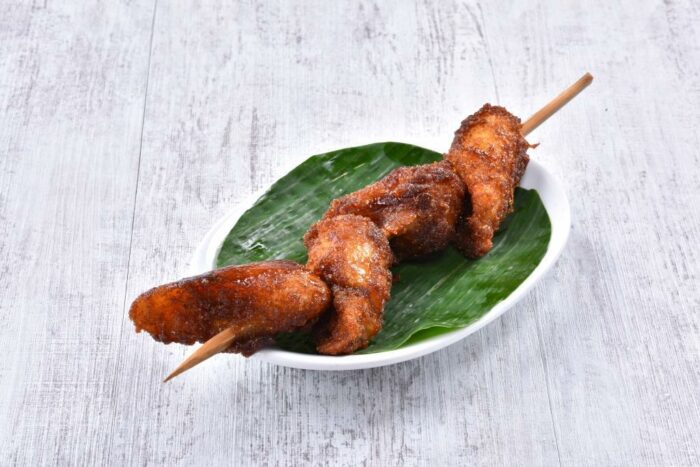
Banana cue is a popular Filipino street food made from deep-fried saba bananas coated in caramelized brown sugar. The bananas are skewered on bamboo sticks, dipped in a mixture of flour, sugar, and sometimes coconut milk, and then deep-fried until golden brown. They are then rolled in caramelized brown sugar while still hot, creating a sweet and crispy coating.
Street vendors typically sell it, and it’s a popular snack or dessert enjoyed by many Filipinos. It’s a perfect treat for a snack, dessert, or even breakfast. Banana cue is often found at street vendors or small stores, and it’s a simple yet satisfying way to enjoy the natural sweetness of bananas.

Cassava cake
Cassava cake is a beloved Filipino dessert made from freshly grated cassava, coconut milk, condensed milk, eggs, sugar, and butter, baked until soft and golden. It has a moist, slightly chewy texture with a rich, creamy sweetness balanced by cassava’s natural earthiness. Topping it with custard or cheese makes it even more indulgent.
In Tayabas, cassava cake is famously known as budin. The Budin of Tayabas is thicker, denser, and more rustic than most versions, often baked in traditional ovens and wrapped in banana leaves to enhance its aroma. Its flavor is deeply coconutty, mildly caramelized, and comforting.
This regional specialty reflects local craftsmanship and pride, making it a must-try for visitors to Quezon and the Philippines, where food is closely tied to community and tradition.

Maja Blanca
Maja Blanca is a traditional Filipino dessert made from coconut milk, cornstarch, and sugar. It is similar to a custard and has a thick, creamy texture. The dessert is typically flavored with vanilla, but it can also be flavored with other ingredients, such as pandan leaves or ube (purple yam), for a different color and taste. The dessert is usually garnished with latik (coconut curds) on top before serving.
Maja Blanca is a popular dessert in the Philippines, often served during special occasions and holidays. It’s a sweet, creamy dessert that people of all ages enjoy. It is also a gluten-free, vegetarian-friendly option. Maja Blanca is easy to make at home; the ingredients are readily available, and the process is relatively straightforward.
Yema
Yema is a traditional Filipino sweet made from condensed milk, egg yolks, and butter. It is similar to the Spanish and Latin American sweet called “cajeta” or “dulce de leche”. The mixture is cooked over low heat and stirred continuously until it thickens to a caramel-like consistency. It can be served as a dessert or as a sweet treat.
Yema is often shaped into small balls wrapped in cellophane or banana leaves. It can also be used as a filling for cakes and pastries. Yema is a popular sweet in the Philippines and can be found in most Filipino sweet shops and bakeries. Yema’s sweet, creamy, rich flavor is a perfect balance of sweet and salty. It’s a great snack to enjoy with coffee or tea.

Buko Salad
Buko salad is a popular Filipino dessert made from young coconut meat, also known as “buko” in Filipino. The salad is made by mixing shredded young coconut meat with a sweet mixture of milk, cream, and condensed milk. The mixture is then chilled and garnished with sweetened cream, nata de coco (coconut gel), and a fruit cocktail. Some variations of Buko salad include adding small tapioca pearls (sago) and/or sweetened jackfruit (langka) to the mixture.
Buko salad is a refreshing and sweet dessert that is perfect for hot weather. Combining creamy coconut and sweet fruit is a great way to cool down and refresh the palate. It is also commonly served at special occasions and parties because it is easy to make in large quantities. Buko salad is also a gluten-free and vegetarian-friendly alternative.

Pastillas
Pastillas is a traditional Filipino sweet made from carabao’s milk (a native Filipino cattle breed) and sugar; it is also known as “pastillas de leche” or “pastillas de carabao”. The sweet is made by boiling carabao’s milk until it thickens, then rolling it into small balls. It is then coated with sugar before it is packaged and sold. Pastillas have a smooth, creamy texture and a sweet, milky taste with a perfect balance of sweetness.
Pastillas are a popular sweet treat in the Philippines and are often found in local sweet shops or bakeries. They’re a popular pasalubong (gift) for friends and family, especially for those who come from the provinces where carabao’s milk is abundant. In some places, Pastillas de Leche is also used as a filling for other desserts, such as cakes and pastries. It’s a delicious, traditional sweet that people of all ages enjoy.

Pichi-Pichi
Pichi-pichi is a traditional Filipino dessert made from grated cassava (yucca root), sugar, and coconut milk. It is usually shaped into small balls and steamed until cooked through. The texture is typically chewy and can be served with various toppings such as grated coconut or latik (coconut curds).
Pichi-pichi is a sweet and chewy dessert popular in the Philippines, especially in the Visayas and Mindanao regions, where cassava is widely grown. It’s a traditional and popular dessert often served during special occasions such as birthdays and holidays. Pichi-pichi can be flavored with ingredients such as cheese or ube (purple yam) for a different taste and color. It’s a gluten-free and vegetarian-friendly alternative.

Polvoron
Polvoron is a traditional Filipino shortbread cookie made from toasted flour, powdered milk, and sugar. It is usually shaped into small balls and wrapped in cellophane or wax paper. Some variations of polvoron include chopped nuts, chocolate, or ube (purple yam) for different flavors and textures.
Polvoron is a popular Filipino sweet treat in local sweet shops or bakeries. It’s a crumbly, buttery cookie that melts in your mouth— a sweet, creamy treat you can enjoy as dessert or a snack. It’s also commonly given as a gift or pasalubong, especially during Christmas. Polvoron is easy to make at home and can be a fun activity with family and friends; it is also a great way to use any leftover powdered milk.

Suman
Suman is a traditional Filipino cake made from glutinous rice wrapped in banana leaves and steamed until cooked. It is sweetened with sugar and sometimes flavored with coconut milk or pandan leaves. It can be served plain or with a sweet dip made from coconut milk and brown sugar.
Suman is a popular dessert in the Philippines, often served as a snack or dessert. It’s a traditional and beloved delicacy enjoyed by people of all ages. It’s also a perfect companion to coffee or tea and a popular pasalubong (gift) for friends and family. Suman can be made in various ways: steamed, fried, or grilled. Some regions also have their own versions of suman, unique to their area.

Puto Bumbong
Puto bumbong is a traditional Filipino dessert made from glutinous purple rice, ground into a fine powder and mixed with sugar and other ingredients, such as coconut milk, vanilla, and salt. It is then steamed in bamboo tubes, called “bumbong” in Tagalog, which gives it its name. Puto bumbong is usually served with butter, shredded coconut meat, and a sweet syrup made from sugar and vanilla.
Puto bumbong is a popular dessert in the Philippines, especially during Christmas and religious festivals. It’s a traditional and beloved delicacy enjoyed by people of all ages. You’ll typically find it at street vendors or local eateries, often served with hot drinks like cocoa or coffee, making it a perfect holiday-season dessert.
Sans Rival
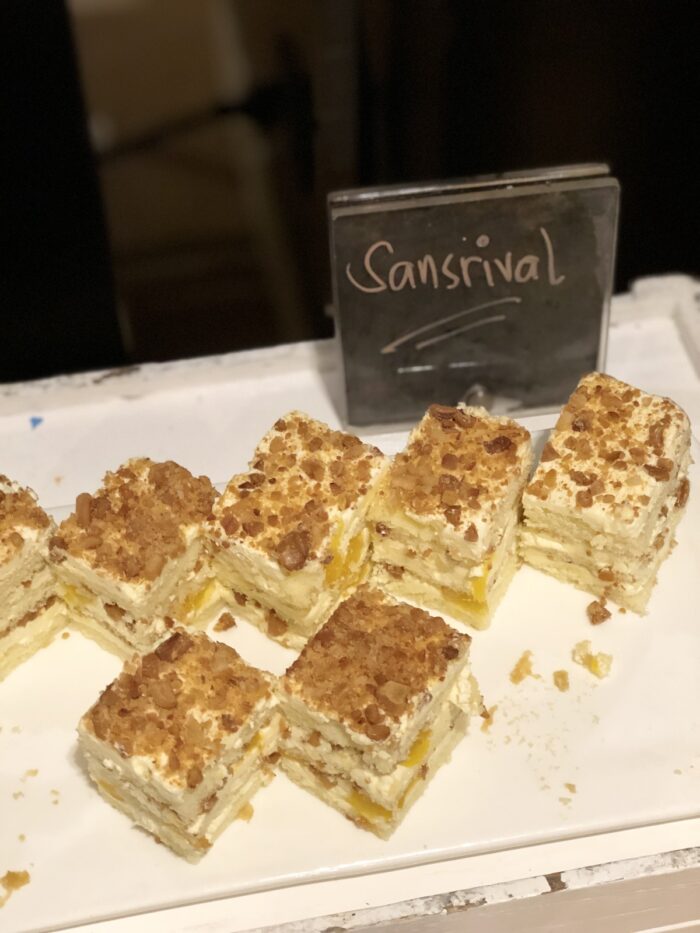
Sans Rival is a traditional Filipino dessert made from layers of meringue wafers, alternated with a buttercream filling made of butter, condensed milk, and cream. The dessert is typically flavored with vanilla, but it can also include other ingredients such as nuts, chocolate, or ube (purple yam). The dessert is usually garnished with chopped nuts on top before serving.
Sans Rival is a popular dessert in the Philippines, often served during special occasions and holidays. It’s a sweet, rich, creamy dessert that people of all ages enjoy. The name “Sans Rival” means “without rival” in French, reflecting the dessert’s rich, indulgent taste. It’s a perfect dessert to be served after a heavy meal. The recipe for Sans Rival is quite complex; it’s a delicate and time-consuming dessert to make, but the result is worth it.
Lengua de Gato
Lengua de Gato is a popular Filipino cookie also known as the “cat’s tongue” cookie. It is a thin, crisp, and buttery cookie, shaped like a cat’s tongue. The cookie is made from flour, butter, sugar, and eggs.
They come in different flavors; vanilla and chocolate are the most common. They are traditionally served with tea or coffee, and are sometimes given as gifts. They are a popular treat in the Philippines and are available in most bakeries.
Mais con Yelo
Mais con Yelo is a popular Filipino dessert made from sweet corn and shaved ice. It is especially popular during the hot summer. The sweet corn is cooked and served with a generous amount of shaved ice, sweetened condensed milk, and sometimes a touch of vanilla.
It can also include toppings such as leche flan, nata de coco, and other colorful ingredients. Some street vendors also add shaved ice to it to make it more refreshing. It is a simple yet satisfying dessert that’s enjoyed by many Filipinos.
Minatamis na Saging
Minatamis na saging, also known as “sweetened banana,” is a popular Filipino dessert made from ripe saba bananas cooked in syrup made from brown sugar, water, and sometimes a touch of vanilla or cinnamon. The bananas are cooked until soft and tender, and the syrup thickens into a glossy, caramel-like consistency.
It is often served as a dessert or a side dish with a main meal. It can be eaten as is or with a scoop of ice cream for extra flavor. Minatamis na saging is a simple yet delicious and comforting dessert enjoyed by many Filipinos.

Palitaw
Palitaw is a traditional Filipino sweet glutinous rice cake. The name “palitaw” comes from the Tagalog word “litaw,” meaning “to float,” because the cakes are traditionally made by shaping dough into small, flat disks and dropping them into boiling water, where they float to the surface when done.
The dough is made from glutinous rice flour, sugar, and sometimes coconut milk or grated coconut. They are then topped with sugar, sesame seeds, and sometimes grated coconut before being served. Palitaw is a sweet, chewy, and satisfying snack or dessert popular in the Philippines.
These are just a few examples of the many delicious and diverse desserts found in the Philippines. Each region in the Philippines has its own traditional dessert. Most of these desserts are available across provinces, but some are prepared differently, and the names may vary.
Follow Out of Town Travel Blog on Facebook, Twitter, Instagram, and Pinterest for more travel and food-related updates.
Read: