Melo Villareal
Best Hybrid Cars in the Philippines 2026: A Complete Guide for Filipino Car Buyers
Hybrid cars are increasingly attractive to Filipino motorists seeking better fuel economy, a comfortable driving experience, and lower fuel costs. With fluctuating gasoline prices and traffic congestion affecting daily commutes, hybrid vehicles offer an alternative to conventional gasoline-powered cars without requiring drivers to rely entirely on charging stations.

Best Hybrid Cars to Buy in the Philippines
The Philippine hybrid car market has expanded beyond established Japanese manufacturers. Chinese automotive brands are introducing plug-in hybrid vehicles with competitive pricing, modern technology, and electric driving capabilities. Meanwhile, Toyota, Honda, Suzuki, Nissan, and Hyundai continue offering hybrid models designed for different driving needs.
In 2026, Filipino buyers can choose from hybrid sedans, compact SUVs, family crossovers, MPVs, and premium vehicles. Options range from relatively affordable models to sophisticated hybrid SUVs with advanced safety systems and electric-assisted performance.
However, choosing the best hybrid car involves more than comparing fuel consumption. Buyers should consider the purchase price, battery warranty, maintenance costs, dealership availability, resale value, vehicle size, and driving requirements.
This guide explores 12 of the best hybrid cars in the Philippines in 2026, including conventional hybrids, mild hybrids, and plug-in hybrid electric vehicles. It also compares their estimated prices, fuel economy, specifications, advantages, and disadvantages to help Filipino motorists make informed decisions.
Price and availability note: Philippine SRPs, promotions, and specifications may change. Some imported or gray-market models have different specifications and warranty coverage. Verify current details with the authorized dealership or importer before purchasing.
Understanding Hybrid Cars in the Philippines
Before choosing a vehicle, it is important to understand the different types of hybrid technologies available.
1. Mild Hybrid Electric Vehicle (MHEV)
A mild hybrid uses a small electric motor and battery to assist the gasoline engine. It can improve efficiency during acceleration, braking, and engine start-stop operations.
However, most mild hybrids cannot drive using electric power alone.
2. Hybrid Electric Vehicle (HEV)
A conventional hybrid combines a gasoline engine with an electric motor and battery.
The battery is charged through regenerative braking and the gasoline engine. Drivers generally do not need to plug the vehicle into an electrical outlet.
Toyota, Honda, and Nissan offer hybrid technologies in this category, although Nissan e-POWER uses a distinctive series-hybrid configuration.
3. Plug-in Hybrid Electric Vehicle (PHEV)
A plug-in hybrid has a larger battery that can be charged using an external power source.
Depending on the model, a PHEV can travel a meaningful distance using electricity alone before switching to hybrid operation.
PHEVs are particularly attractive for drivers with home charging access and predictable daily commutes.
Comparison Table: 12 Best Hybrid Cars in the Philippines in 2026
| Hybrid car | Category | Hybrid type | Indicative price |
|---|---|---|---|
| Suzuki Dzire Hybrid | Sedan | Mild hybrid | Around PHP 920,000 |
| BYD Seal 5 DM-i | Sedan | PHEV | Around PHP 948,000 |
| Suzuki Ertiga Hybrid | MPV | Mild hybrid | Around PHP 1.178 million |
| Nissan Kicks e-POWER | SUV | Series hybrid | Around PHP 1.5 million |
| Toyota Yaris Cross HEV | Crossover | HEV | Around PHP 1.5 million |
| BYD Sealion 5 DM-i | SUV | PHEV | Around PHP 1.268 million |
| Hyundai Kona Hybrid | Crossover | HEV | Around PHP 1.528 million |
| Toyota Corolla Cross HEV | SUV | HEV | Around PHP 1.5 million to PHP 1.9 million |
| Toyota Corolla Altis HEV | Sedan | HEV | Around PHP 1.5 million to PHP 1.8 million |
| Honda Civic e | Sedan | HEV | Around PHP 1.8 million to PHP 2 million |
| Toyota Innova Zenix HEV | MPV | HEV | Around PHP 1.7 million to PHP 2 million |
| Honda CR-V e | SUV | HEV | Around PHP 2.4 million to PHP 2.8 million |
Prices are indicative and not guaranteed November 2026 quotations. Some prices reflect recent official or automotive listings, while others are approximate and should be checked against current dealership quotations. Confirm the Suzuki Dzire Hybrid’s classification and local availability with Suzuki Philippines.
1. Suzuki Dzire Hybrid
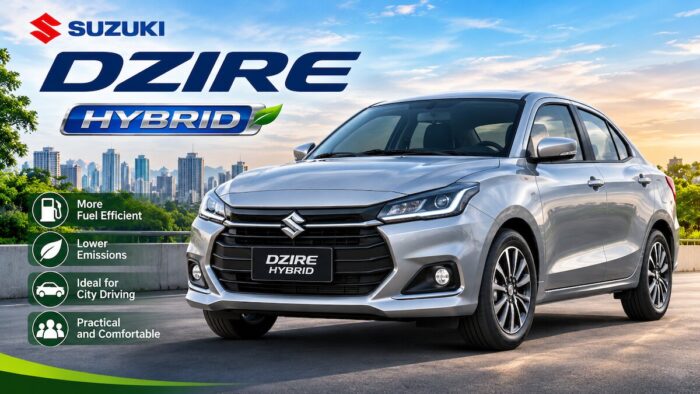
The Suzuki Dzire Hybrid is an appealing option for motorists looking for a relatively affordable sedan with improved fuel efficiency. Its compact dimensions make it well-suited for urban driving, tight parking, and congested Metro Manila roads.
The Dzire’s mild-hybrid system assists the gasoline engine during acceleration and helps improve efficiency. It does not offer the electric-only driving capability of a conventional full hybrid or plug-in hybrid.
Key Specifications
- Vehicle type: Compact sedan
- Hybrid technology: Mild hybrid, subject to local variant confirmation
- Engine: Small-displacement gasoline engine
- Transmission: Automatic or manual depending on market and variant
- Price reference: Around PHP 920,000 in some 2026 listings
- Fuel economy: Potentially economical in city driving, depending on traffic and driving conditions
Features and Comfort
The Dzire is designed for practical everyday transportation. Its compact body, relatively accessible price, and sedan layout make it suitable for individuals, couples, and small families.
Depending on the variant, buyers may find touchscreen infotainment, smartphone connectivity, automatic climate control, and modern safety equipment.
Pros
- Relatively affordable entry into hybrid-assisted motoring
- Compact dimensions for city driving
- Practical sedan configuration
- Potentially lower fuel consumption than comparable conventional sedans
Cons
- Mild hybrid technology offers limited electric assistance
- Smaller cabin than compact SUVs
- Features and specifications vary by market
- Local hybrid variant availability should be verified
Best for: First-time car buyers and motorists seeking an economical sedan for daily commuting.
2. BYD Seal 5 DM-i
The BYD Seal 5 DM-i is one of the most interesting hybrid sedans in the Philippine market because it combines plug-in hybrid technology with a relatively accessible starting price.
Its gasoline engine and electric motor offer flexibility for drivers who want electric-assisted driving without relying entirely on charging infrastructure.
Key Specifications
- Vehicle type: Compact sedan
- Hybrid technology: Plug-in hybrid
- Powertrain: Gasoline engine and electric motor
- Charging: External charging capability
- Price reference: Starting around PHP 948,000
- Fuel economy: Highly dependent on battery charging frequency and driving conditions
Features and Comfort
The Seal 5 DM-i offers a modern cabin, digital displays, and contemporary styling. Depending on the Philippine variant, buyers may find smartphone connectivity, advanced infotainment, and driver assistance technologies.
Its sedan configuration appeals to motorists who prefer a conventional car body over an SUV.
Pros
- Competitive entry price for a PHEV
- Potentially low fuel consumption when regularly charged
- Modern technology and styling
- Electric driving capability for selected trips
Cons
- Requires charging to maximize its advantages
- Battery range varies by variant and conditions
- Buyers must check charging compatibility
- Resale value and long-term ownership experience are still developing
Best for: Budget-conscious buyers who want plug-in hybrid technology and have access to home charging.
3. Suzuki Ertiga Hybrid
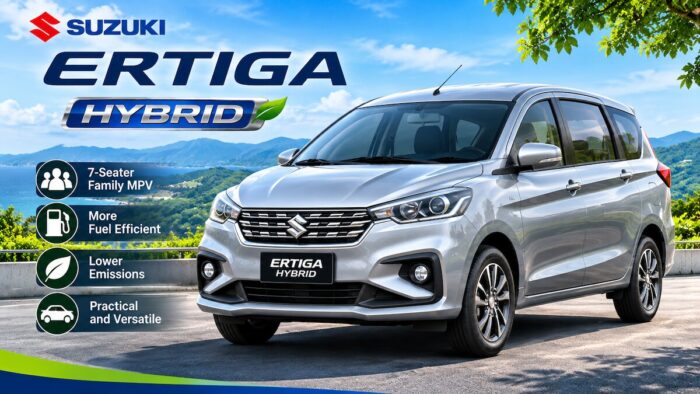
The Suzuki Ertiga Hybrid is an affordable family-oriented MPV with mild-hybrid assistance. Its seven-seat configuration suits families, small businesses, and motorists who regularly transport passengers.
The Ertiga Hybrid is particularly attractive to buyers who need extra seating but don’t want to spend as much as on larger premium MPVs.
Key Specifications
- Vehicle type: Seven-seat MPV
- Hybrid technology: Mild hybrid
- Engine: 1.5-liter gasoline engine in relevant Ertiga variants
- Transmission: Automatic or manual depending on variant
- Price reference: Approximately PHP 1.178 million
- Fuel economy: Designed for economical everyday driving
Features and Comfort
The Ertiga’s main advantage is its practical cabin. Its three-row seating arrangement accommodates larger families, while its compact dimensions make it easier to maneuver than many full-size MPVs.
Depending on the variant, features may include touchscreen infotainment, smartphone connectivity, automatic climate control, and convenience equipment.
Pros
- Seven-seat configuration
- Relatively affordable family transportation
- Compact MPV dimensions
- Mild-hybrid assistance
- Suitable for city and provincial driving
Cons
- Mild hybrid system is less sophisticated than a full hybrid
- Third-row space is limited compared with larger MPVs
- Performance may feel modest when fully loaded
Best for: Families looking for affordable seven-seat transportation with fuel-saving assistance.
4. Nissan Kicks e-POWER
The Nissan Kicks e-POWER is an appealing hybrid crossover for Filipino motorists who want an electric-car-like driving experience without needing to plug in.
Unlike conventional hybrids, Nissan’s e-POWER system uses the gasoline engine primarily to generate electricity. The electric motor drives the wheels.
This arrangement delivers smooth acceleration and an electric-style driving feel, making the Kicks particularly suitable for urban commuting.
Key Specifications
- Vehicle type: Compact crossover SUV
- Hybrid technology: Series hybrid
- Powertrain: Gasoline engine acting primarily as a generator
- Wheel drive: Front-wheel drive in relevant Philippine variants
- Price reference: Around PHP 1.5 million, depending on variant
- Charging: No external charging required
Features and Comfort
The Kicks offers a modern crossover cabin, elevated driving position, and compact dimensions.
Depending on the trim, equipment may include touchscreen infotainment, smartphone connectivity, driver assistance features, and Nissan’s e-Pedal technology.
Pros
- Smooth electric-motor driving experience
- No charging infrastructure required
- Suitable for urban traffic
- Compact SUV dimensions
- Regenerative braking
Cons
- Fuel economy varies considerably with driving conditions
- Not a plug-in hybrid
- Smaller cabin than larger SUVs
- Battery and hybrid system repair costs should be considered
Best for: Metro Manila commuters who want electric-style driving without charging their vehicle.
5. Toyota Yaris Cross HEV
The Toyota Yaris Cross HEV is a strong choice for motorists who want a compact SUV with hybrid technology.
Its SUV styling, manageable dimensions, and Toyota’s established hybrid technology make it particularly appealing to Filipino buyers.
Key Specifications
- Vehicle type: Subcompact crossover
- Hybrid technology: HEV
- Engine: 1.5-liter gasoline engine in relevant hybrid versions
- Transmission: Hybrid e-CVT
- Price reference: Approximately PHP 1.5 million to PHP 1.7 million for hybrid variants
- Fuel economy: Designed to deliver efficient urban driving
Features and Comfort
The Yaris Cross combines a raised driving position with a compact body. It suits city driving while offering more flexibility than a conventional sedan.
Depending on the variant, equipment may include Toyota Safety Sense, infotainment with smartphone connectivity, digital displays, and convenience features.
Pros
- Compact SUV practicality
- Toyota hybrid technology
- Good maneuverability in city traffic
- Elevated seating position
- Established dealership and service network
Cons
- Higher purchase price than non-hybrid alternatives
- Rear-seat and cargo space are limited compared with larger SUVs
- Equipment varies by trim
Best for: Young professionals, couples, and small families looking for a compact hybrid SUV.
6. BYD Sealion 5 DM-i
The BYD Sealion 5 DM-i offers plug-in hybrid technology in a compact SUV package.
It is particularly interesting for buyers who want the practicality of an SUV while maintaining the option of electric driving for selected trips.
Key Specifications
- Vehicle type: Compact SUV
- Hybrid technology: Plug-in hybrid
- Powertrain: Gasoline engine and electric motor
- Charging: External charging capability
- Price reference: Approximately PHP 1.268 million
- Fuel economy: Depends heavily on charging frequency and driving conditions
Features and Comfort
The Sealion 5 DM-i offers SUV practicality, modern infotainment, and a contemporary interior.
Depending on the variant, equipment may include digital displays, smartphone connectivity, driver assistance systems, and advanced convenience features.
Pros
- SUV body with plug-in hybrid technology
- Competitive pricing within its category
- Potentially low fuel consumption when charged regularly
- Modern interior and technology
Cons
- Requires regular charging to maximize fuel savings
- Long-term resale value remains uncertain
- Service experience depends on dealer coverage
- Buyers should verify warranty and battery coverage
Best for: Families who want an SUV and can charge at home or work.
7. Hyundai Kona Hybrid
The Hyundai Kona Hybrid is a compact crossover designed for buyers who want modern styling, technology, and hybrid efficiency.
Its compact proportions suit urban driving, while the hybrid powertrain helps reduce fuel consumption.
Key Specifications
- Vehicle type: Compact crossover
- Hybrid technology: HEV
- Engine: Small-displacement gasoline engine combined with an electric motor
- Transmission: Hybrid transmission, depending on specification
- Price reference: Around PHP 1.528 million
- Fuel economy: Efficient in urban and mixed driving when operated appropriately
Features and Comfort
The Kona offers contemporary styling, digital displays, smartphone connectivity, and a modern cabin.
Depending on the variant, safety and convenience equipment may include driver assistance systems, parking sensors, and advanced infotainment.
Pros
- Modern styling
- Hybrid efficiency
- Compact dimensions
- Contemporary interior and technology
- Suitable for city driving
Cons
- Dealer and service coverage should be considered
- Rear-seat space is more limited than larger SUVs
- Hybrid components may increase repair complexity outside warranty
Best for: Urban motorists looking for a stylish hybrid crossover.
8. Toyota Corolla Cross HEV
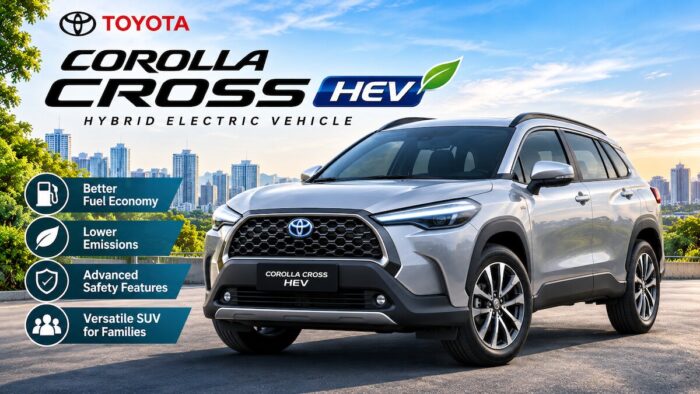
The Toyota Corolla Cross HEV is one of the most practical hybrid SUVs for Filipino buyers. It combines compact SUV dimensions, comfortable seating, and Toyota’s conventional hybrid technology.
Unlike plug-in hybrids, the Corolla Cross HEV does not require external charging. It charges its battery through regenerative braking and the hybrid system.
Key Specifications
- Vehicle type: Compact SUV
- Hybrid technology: HEV
- Engine: 1.8-liter gasoline engine in relevant hybrid variants
- Transmission: Hybrid e-CVT
- Price reference: Approximately PHP 1.5 million to PHP 1.9 million
- Fuel economy: Strong potential for city driving and mixed conditions
Features and Comfort
The Corolla Cross offers a practical cabin, comfortable seating, and useful cargo space for daily errands and weekend trips.
Depending on the variant, features may include Toyota Safety Sense, touchscreen infotainment, smartphone connectivity, digital displays, and convenience equipment.
Its elevated seating position and compact SUV body make it easier to drive than larger family SUVs.
Pros
- Toyota hybrid reliability reputation
- No external charging required
- Practical SUV body
- Good everyday usability
- Established dealership and service network
Cons
- More expensive than comparable gasoline crossovers
- Hybrid variants may have different equipment levels
- Not as spacious as larger SUVs
Best for: Families and commuters looking for a dependable, practical hybrid SUV.
9. Toyota Corolla Altis HEV
The Toyota Corolla Altis HEV is a compelling choice for Filipino motorists who prefer sedans over SUVs.
Its conventional hybrid system combines a gasoline engine with an electric motor to improve efficiency, especially during stop-and-go traffic.
Key Specifications
- Vehicle type: Compact sedan
- Hybrid technology: HEV
- Engine: 1.8-liter hybrid gasoline engine
- Transmission: Hybrid e-CVT
- Price reference: Approximately PHP 1.5 million to PHP 1.8 million
- Fuel economy: Designed for efficient city and highway driving
Features and Comfort
The Corolla Altis provides a comfortable cabin for daily commuting and longer drives.
Depending on the variant, features include a touchscreen infotainment system, smartphone connectivity, digital displays, and Toyota Safety Sense.
The GR-S HEV offers sportier styling and more equipment than lower variants.
Pros
- Comfortable sedan driving experience
- Toyota hybrid technology
- No external charging required
- Good fuel economy potential
- Established maintenance network
Cons
- Less cargo flexibility than SUVs
- Higher purchase price than gasoline variants
- Hybrid variants may be limited by dealership stock
Best for: Professionals, commuters, and small families who prefer a fuel-efficient sedan.
10. Honda Civic e
The Honda Civic e combines sporty styling with sophisticated hybrid technology.
Honda’s hybrid system typically uses the electric motor to drive the vehicle in many conditions, with the gasoline engine generating electricity or directly driving the wheels when appropriate.
Key Specifications
- Vehicle type: Compact sedan
- Hybrid technology: HEV
- Engine: 2.0-liter gasoline engine in relevant e versions
- Transmission: Electronic hybrid drive
- Price reference: Approximately PHP 1.8 million to PHP 2 million, depending on variant
- Fuel economy: Efficient for its performance-oriented segment
Features and Comfort
The Civic offers a modern cabin, comfortable seating, and a more engaging driving experience than many economy-oriented hybrids.
Depending on the variant, equipment may include Honda SENSING, touchscreen infotainment, smartphone connectivity, and premium interior finishes.
Pros
- Sporty styling
- Sophisticated hybrid technology
- Comfortable cabin
- Strong balance of efficiency and performance
- Honda SENSING safety features
Cons
- Higher purchase price than budget hybrids
- Sedan body limits cargo flexibility
- Premium trim may be expensive to maintain outside warranty
Best for: Professionals and enthusiasts who want an efficient sedan with sporty character.
11. Toyota Innova Zenix HEV
The Toyota Innova Zenix HEV is a strong choice for families who need space, comfort, and fuel efficiency.
Its hybrid powertrain offers a more efficient alternative to traditional gasoline-powered family MPVs, particularly for motorists who frequently drive in congested urban areas.
Key Specifications
- Vehicle type: Family MPV
- Hybrid technology: HEV
- Engine: 2.0-liter hybrid gasoline engine in relevant variants
- Transmission: Hybrid e-CVT
- Price reference: Approximately PHP 1.7 million to PHP 2 million
- Fuel economy: Efficient for a vehicle of its size, particularly in urban use
Features and Comfort
The Innova Zenix offers a spacious cabin, comfortable seating, and family-oriented practicality.
Depending on the variant, features may include captain’s chairs, touchscreen infotainment, smartphone connectivity, rear passenger comfort features, and Toyota Safety Sense.
It is particularly attractive for families who regularly travel with children, elderly passengers, or multiple occupants.
Pros
- Spacious family cabin
- Hybrid technology
- Comfortable long-distance driving
- Practical seating configuration
- Established Toyota dealership network
Cons
- Higher purchase price than conventional MPVs
- Larger body requires more parking space
- Hybrid battery and system repair costs should be considered
Best for: Families, business owners, and motorists who regularly transport several passengers.
12. Honda CR-V e
The Honda CR-V e is a premium hybrid SUV designed for buyers who want comfort, performance, and fuel efficiency in a larger vehicle.
It is particularly suitable for families who frequently travel between cities, take provincial road trips, or need additional cabin space.
Key Specifications
- Vehicle type: Mid-size SUV
- Hybrid technology: HEV
- Engine: 2.0-liter hybrid gasoline engine in relevant e variants
- Transmission: Electronic hybrid drive
- Price reference: Approximately PHP 2.4 million to PHP 2.8 million
- Fuel economy: Efficient for a premium SUV, depending on driving conditions
Features and Comfort
The CR-V offers a spacious cabin, comfortable seating, and a refined driving experience.
Depending on the variant, equipment may include Honda SENSING, advanced infotainment, smartphone connectivity, premium interior finishes, and additional driver assistance technologies.
Its size makes it suitable for family travel and long-distance driving.
Pros
- Spacious cabin
- Premium interior
- Hybrid efficiency
- Comfortable ride
- Advanced safety features
Cons
- Higher purchase price
- Larger dimensions can make parking challenging
- Premium maintenance and replacement parts may cost more
Best for: Families seeking a premium hybrid SUV for daily driving and long-distance travel.
Fuel Economy: Official Figures and Realistic Philippine Driving Estimates
Fuel efficiency is a key reason buyers consider hybrid cars. However, published fuel economy figures don’t always match actual consumption on Philippine roads.
The following ranges are illustrative planning estimates, not verified manufacturer test results. Actual performance depends on vehicle variant, traffic, temperature, road conditions, passenger load, tire pressure, and driving habits.
| Hybrid model | Indicative real-world fuel economy |
|---|---|
| Suzuki Dzire Hybrid | Confirm local variant and independent test data |
| BYD Seal 5 DM-i | Highly dependent on battery charge and driving pattern |
| Suzuki Ertiga Hybrid | Approximately 12–18 km/L |
| Nissan Kicks e-POWER | Approximately 14–20 km/L |
| Toyota Yaris Cross HEV | Approximately 18–25 km/L |
| BYD Sealion 5 DM-i | Highly dependent on charging frequency |
| Hyundai Kona Hybrid | Approximately 16–22 km/L |
| Toyota Corolla Cross HEV | Approximately 17–23 km/L |
| Toyota Corolla Altis HEV | Approximately 18–25 km/L |
| Honda Civic e | Approximately 16–22 km/L |
| Toyota Innova Zenix HEV | Approximately 14–20 km/L |
| Honda CR-V e | Approximately 13–19 km/L |
These are broad, non-guaranteed estimates for planning purposes. Obtain official fuel consumption data and independent local tests for the exact variant before making a purchase decision.
You can’t meaningfully compare PHEV fuel economy with HEV km/L figures without accounting for electricity consumption and charging frequency.
Why Hybrid Fuel Economy Varies in the Philippines
Metro Manila traffic: Hybrid vehicles can benefit from frequent braking because regenerative braking recovers some energy. However, air-conditioning demand and prolonged idling can affect consumption.
Highway driving: Conventional hybrids may lose some of their urban efficiency advantage at sustained highway speeds, although they can still be economical.
Provincial driving: Mixed driving at moderate speeds can deliver strong efficiency.
Battery charging: PHEVs generally deliver their strongest fuel savings when drivers regularly charge the battery and use electric driving for shorter trips.
Which Hybrid Car Is Best for Different Filipino Buyers?
The best hybrid vehicle depends on your budget, driving habits, and passenger requirements.
Best Hybrid for First-Time Car Buyers
Suzuki Dzire Hybrid, subject to confirmation of Philippine availability and variant specifications.
Its compact dimensions and relatively affordable positioning make it attractive to buyers who want practical transportation.
Best Hybrid Sedan for Commuters
Toyota Corolla Altis HEV
The Corolla Altis combines sedan comfort with Toyota’s established hybrid technology. It is a practical choice for professionals and motorists who spend considerable time in traffic.
Best Hybrid SUV for Small Families
Toyota Yaris Cross HEV
Its compact size, elevated driving position, and hybrid powertrain make it attractive for urban families.
Best Hybrid for Larger Families
Toyota Innova Zenix HEV
Its spacious interior and family-oriented layout suit households that need more seating and cargo flexibility.
Best Plug-in Hybrid for Budget-conscious Buyers
BYD Seal 5 DM-i
Its relatively competitive starting price makes plug-in hybrid technology more accessible. Buyers should consider charging access and local service coverage.
Best Hybrid for Electric-style Driving
Nissan Kicks e-POWER
The Kicks offers electric-motor-driven performance without requiring external charging.
Best Premium Hybrid SUV
Honda CR-V e
The CR-V is a strong contender for buyers prioritizing comfort, space, and advanced safety equipment.
Best Hybrid for City Driving
Toyota Corolla Cross HEV
Its compact SUV format, hybrid technology, and established service network make it suitable for urban and suburban motorists.
Things to Consider Before Buying a Hybrid Car in the Philippines
1. Calculate Your Expected Fuel Savings
Do not buy a hybrid solely because it promises better fuel economy.
Compare the price difference between the hybrid and gasoline variants. Estimate how much you drive each month and calculate potential savings.
For example, a driver covering 1,500 kilometers monthly may benefit more from a hybrid than someone driving only 300 kilometers monthly.
The payback period depends on fuel prices, actual consumption, purchase price difference, and maintenance expenses.
2. Check Hybrid Battery Warranty
Hybrid batteries are designed for long-term use, but replacement can be expensive.
Before buying, confirm:
- Battery warranty duration
- Mileage limits
- Coverage exclusions
- Warranty transferability
- Battery replacement cost after warranty
- Availability of replacement components
Do not assume every hybrid brand offers the same battery warranty.
3. Consider Dealership and Service Availability
A vehicle may have excellent specifications but limited after-sales support.
Before purchasing, check whether the brand has authorized service centers near your home or workplace.
This is especially important for imported and gray-market hybrid vehicles.
4. Understand the Difference Between HEV and PHEV
A conventional HEV does not require external charging.
A PHEV offers electric driving capability but delivers its strongest fuel savings when regularly charged.
If you live in a condominium without charging access, a conventional hybrid may be more convenient.
5. Check Resale Value
Toyota and Honda have established reputations in the Philippine automotive market.
However, resale values depend on demand, maintenance history, mileage, battery condition, brand perception, and warranty coverage.
Newer hybrid brands may offer attractive prices, but their long-term resale performance remains less established.
6. Verify the Vehicle’s Classification
Some vehicles marketed as hybrid may use mild-hybrid technology, while others are full hybrids or plug-in hybrids.
This distinction matters when comparing fuel economy, electric driving capability, and ownership costs.
7. Verify Imported and Gray-market Vehicles
Imported vehicles may differ from official Philippine models in specifications.
Before purchasing, verify:
- Vehicle registration eligibility
- Warranty coverage
- Parts availability
- Hybrid battery specifications
- Service support
- Charging compatibility for PHEVs
- Safety equipment and airbags
- Right-hand-drive or left-hand-drive configuration
A low purchase price does not necessarily mean lower long-term ownership costs.
Frequently Asked Questions About Hybrid Cars in the Philippines
1. What is the best hybrid car in the Philippines in 2026?
The best hybrid car depends on your budget, driving habits, and passenger requirements. The Toyota Corolla Cross HEV is a strong all-around option for motorists who want an SUV with conventional hybrid technology. The Toyota Corolla Altis HEV suits sedan buyers, while the Innova Zenix HEV appeals to larger families. Buyers interested in plug-in hybrids may consider BYD’s DM-i lineup. Compare purchase price, warranty, fuel economy, and dealership coverage before deciding.
2. What is the cheapest hybrid car in the Philippines?
The cheapest hybrid vehicle depends on whether you include mild hybrids, conventional hybrids, and plug-in hybrids. Some mild-hybrid vehicles start at lower prices than full hybrids because their electric systems assist rather than enable independent electric driving. The BYD Seal 5 DM-i has also introduced relatively affordable plug-in hybrid pricing in the Philippine market. Always check current SRPs, promotions, and variant availability because prices can change. Confirm whether the vehicle is officially sold locally or imported.
3. Are hybrid cars worth buying in the Philippines?
Hybrid cars can be worth buying if you regularly drive long distances or spend considerable time in traffic. Their fuel savings may offset part of the higher purchase price over several years. However, motorists who drive infrequently may not recover the price difference quickly. Consider your monthly mileage, fuel expenses, vehicle ownership period, and maintenance costs. Hybrid technology is particularly attractive for urban commuters, but the financial benefit depends on the specific model and actual driving conditions.
4. Do hybrid cars need to be charged?
Conventional hybrid vehicles generally do not require external charging. Their batteries receive energy through regenerative braking and the gasoline engine. Plug-in hybrids, on the other hand, have larger batteries that can be charged using an external power source. A PHEV can operate using electricity for selected trips before switching to hybrid operation. If you cannot charge at home or work, a conventional HEV may be more convenient than a plug-in hybrid.
5. How long do hybrid car batteries last?
Hybrid battery lifespan depends on the manufacturer, battery chemistry, operating conditions, maintenance, and usage patterns. Many hybrid batteries are designed to last for years, but no universal lifespan applies to every model. Buyers should review the manufacturer’s warranty and understand its mileage and time limits. Ask dealerships about battery inspection procedures, replacement costs, and availability. Regular maintenance and proper cooling-system care can help protect hybrid components throughout the vehicle’s ownership period.
6. Are hybrid cars expensive to maintain?
Hybrid maintenance costs vary by brand and model. Some conventional hybrids follow maintenance schedules similar to gasoline-powered vehicles, though they also include specialized electrical components. Regenerative braking may reduce brake wear in certain driving conditions. However, hybrid battery repairs, specialized diagnostics, and replacement components can be expensive outside warranty. Before buying, ask the dealership for a maintenance schedule and estimated service costs. Compare these expenses with potential fuel savings rather than assuming every hybrid will automatically cost less to maintain.
7. Is a hybrid better than a fully electric car in the Philippines?
A hybrid can be more convenient for motorists who regularly travel long distances or lack access to charging infrastructure. It combines a gasoline engine with electric assistance, reducing dependence on charging stations. A fully electric vehicle eliminates gasoline consumption but requires access to charging and careful trip planning. The better choice depends on your driving routine, access to electricity, budget, and travel destinations. For frequent provincial trips, hybrids offer flexibility, while EVs may be attractive for predictable daily commuting.
8. Are plug-in hybrid cars worth buying without a home charger?
A plug-in hybrid can still run on its gasoline engine and hybrid system without regular charging, but it may lose some of its main advantages. You will not consistently maximize electric driving or potential fuel savings. Drivers who cannot charge at home should investigate workplace charging, public charging locations, and the vehicle’s operating characteristics. A conventional HEV may offer a simpler ownership experience because it doesn’t depend on external charging. Compare both technologies before paying extra for a PHEV.
Final Verdict: Which Hybrid Car Should You Buy in 2026?
The Philippine hybrid car market offers more choices than ever, with options for commuters, families, professionals, and premium vehicle buyers.
For most Filipino motorists, a conventional hybrid remains a practical choice because it saves fuel without needing external charging. The Toyota Corolla Cross HEV, Corolla Altis HEV, and Yaris Cross HEV are worth considering for their established hybrid technology and dealership support.
Families needing more space may prefer the Toyota Innova Zenix HEV, while motorists interested in plug-in hybrid technology can explore the BYD Seal 5 DM-i and Sealion 5 DM-i.
The Honda CR-V e is an attractive premium option for buyers prioritizing comfort, technology, and space.
Ultimately, the best hybrid car is the one that fits your budget, driving routine, passenger requirements, and long-term ownership plans. Compare dealership quotations, warranty coverage, fuel consumption, and maintenance expenses before making your final decision.
For Filipino car buyers in 2026, hybrid technology offers an increasingly practical way to reduce fuel consumption while retaining the convenience of gasoline-powered mobility.
Follow and subscribe to OutofTownBlog.com on Facebook , Twitter, Instagram, Pinterest, and YouTube for more Travel-related updates.
Read:
- Top 10 Best Hotels and Resorts in Chiang Mai, Thailand
- These captivating vintage photos of Manila showcase its timeless charm, despite its dark past.
- Best Night Markets in Bangkok: Ultimate Guide to Street Food, Shopping & Nightlife
- Bangkok BTS Guide: How to Use the Skytrain, Routes, Fares, and Travel Tips
- Bangkok 4 Day Itinerary: The Ultimate Guide to Exploring Thailand’s Capital
- Best Places to Visit in Bangkok: 15 Must-See Attractions and Travel Guide
- Thailand Airport Baggage Rules 2026: Checked Luggage Inspections, Airline Allowances and Restricted Items
- GrabCar Group Ride Introduces Automatic Fare Splitting for Up to 50% Savings