

 Melo Villareal
Meiji Jingu Guide: Things to Do, Opening Hours, Entrance Fee and Travel Tips
Meiji Shrine, also known as Meiji Jingu, is one of Tokyo’s most important cultural attractions. Located between Harajuku and Shibuya, this historic Shinto shrine lets travelers experience traditional Japanese culture in one of the world’s busiest cities.

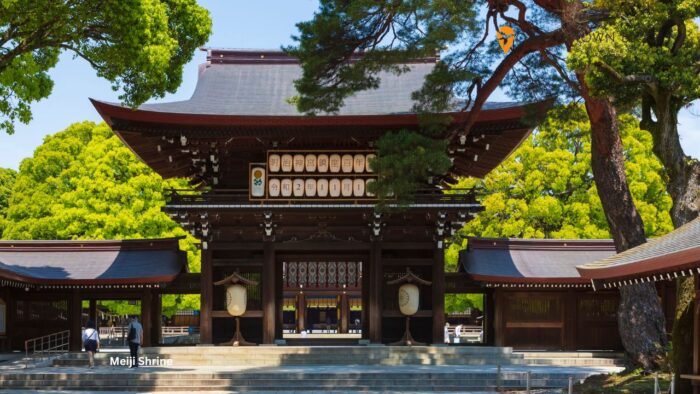
Meiji Jingu Shrine
The contrast is immediate. Outside the shrine grounds, Harajuku is known for fashion, shopping, cafés, youth culture, and crowded streets. Inside Meiji Shrine, a vast forest surrounds gravel pathways leading to traditional shrine buildings.
For travelers planning a Tokyo itinerary, Meiji Shrine pairs well with Harajuku, Takeshita Street, Omotesando, and Shibuya. It is also one of the best places in Tokyo to learn about Shinto customs, Japanese shrine etiquette, and Meiji-era history.
This Meiji Shrine Tokyo travel guide covers the shrine’s history, things to see and do, opening hours, entrance fees, transportation, photography tips, etiquette, and practical information for first-time visitors.
Meiji Shrine Practical Information
| Information | Details |
|---|---|
| Japanese Name | Meiji Jingu |
| Location | Yoyogi, Shibuya-ku, Tokyo, Japan |
| Dedicated To | Emperor Meiji and Empress Shoken |
| Established | November 1, 1920 |
| Religion | Shinto |
| Entrance Fee | Free for the main shrine grounds |
| Opening Hours | Changes according to sunrise and sunset |
| October Hours | Approximately 5:40 AM to 4:40 PM |
| November Hours | Approximately 6:10 AM to 4:10 PM |
| Recommended Visit | 1 to 2 hours |
| Nearest JR Station | Harajuku Station |
| Nearest Tokyo Metro Station | Meiji-jingumae <Harajuku> Station |
| Other Access Points | Yoyogi Station and Kita-sando Station |
| Main Attractions | Main Shrine, Meiji Shrine Forest, Ootorii, Sake Barrels, French Wine Barrels |
| Other Attractions | Inner Garden and Meiji Jingu Museum |
| Best Time to Visit | Early morning or weekdays |
| Photography | Allowed in most areas, with restrictions in designated areas |
| Recommended Attire | Comfortable and respectful clothing |
| Payment Tip | Bring some cash for shrine-related purchases and services |
| Estimated Walking | At least 10 minutes from the shrine entrance to the main shrine |
| Nearby Attractions | Harajuku, Takeshita Street, Omotesando, Shibuya |
| Suitable For | First-time visitors, families, photographers, culture lovers, and budget travelers |
Important: Meiji Shrine’s opening hours change throughout the year. Visitors should check the latest schedule before visiting, especially during winter or when planning a late-afternoon visit.
What Is Meiji Shrine in Tokyo?

Meiji Shrine is a Shinto shrine dedicated to the spirits of Emperor Meiji and Empress Shoken.
Emperor Meiji ruled Japan from 1867 until his death in 1912. Empress Shoken died in 1914. After their deaths, a movement emerged to build a shrine in their memory.
The shrine was established in 1920 in Tokyo’s Yoyogi area.
Its history is closely tied to the Meiji period, one of the most transformative eras in Japanese history. During Emperor Meiji’s reign, Japan experienced major political, economic, technological, and social changes.
Today, Meiji Shrine remains an active religious site. It is not simply a historical monument or tourist attraction.
Visitors may see people praying, purchasing protective amulets, writing wishes on wooden ema plaques, collecting goshuin, attending ceremonies, and participating in traditional Japanese wedding rituals.
This makes visiting Meiji Shrine different from visiting a museum. Travelers are entering a functioning place of worship.
Why Is Meiji Shrine Famous?
Meiji Shrine is famous for several reasons.
First, it honors Emperor Meiji and Empress Shoken, two key figures in modern Japanese history.
Second, an enormous man-made forest surrounds the shrine in central Tokyo. The forest creates a remarkably peaceful environment despite the shrine’s location near some of the city’s busiest neighborhoods.
Third, Meiji Shrine is one of the easiest major cultural attractions to include in a Tokyo itinerary. Harajuku Station is located close to one of its main entrances.
Finally, the shrine provides visitors with an opportunity to observe Shinto traditions and Japanese religious customs.
For travelers searching for things to do in Tokyo, Meiji Shrine is particularly appealing because it combines history, architecture, nature, photography, and culture in one destination.
The Meiji Shrine Forest
The forest is one of the main reasons Meiji Shrine stands out among Tokyo attractions.
It may look like an ancient natural forest, but people deliberately created it when the shrine was established.
People donated around 100,000 trees from different parts of Japan, and volunteers planted about 110,000 more.
The landscape was designed to develop naturally over generations.
Today, the forest covers about 70 hectares and contains hundreds of tree varieties.
The result is an impressive green space in the heart of Tokyo.
The walk through the forest is also an important part of the Meiji Shrine experience. Visitors follow broad gravel pathways beneath tall trees before reaching the main shrine.
This creates a gradual transition from Tokyo’s busy streets to the shrine’s quieter atmosphere.
Travelers should therefore avoid rushing through this section.
The forest is not simply a route to the shrine. It is one of the main attractions.
Things to See at Meiji Shrine
While the main attraction is the shrine itself, there are several things to see at Meiji Shrine.
The Giant Torii Gates
The large torii gates mark the entrances to the sacred grounds.
The most famous is the enormous Otorii at the southern entrance. It stands approximately 12 meters high and 17.1 meters wide.
The current torii was completed in 1975 after lightning destroyed the original gate in 1966.
The torii is one of the best spots for photography at Meiji Shrine.
Before passing through a torii, visitors may bow slightly as a gesture of respect.
When possible, visitors should avoid walking directly through the center of the shrine pathway. Traditionally, the center is associated with the kami’s path.
The Sake Barrels
One of the most recognizable sights along the approach to Meiji Shrine is the collection of sake barrels.
Japanese sake producers donate the barrels as offerings to the shrine.
They are arranged in colorful rows, making for interesting photography.
The display also provides insight into the continuing relationship between traditional industries and Japanese religious institutions.
The French Wine Barrels
Across from the sake barrels is another unusual display: French wine barrels.
The wine barrels were donated from Burgundy and reflect the cultural exchanges between Japan and France.
They also connect with the Meiji period, when Japan increasingly incorporated Western influences into its society.
The juxtaposition of Japanese sake and French wine barrels is one of the more interesting visual details inside Meiji Shrine.
The Main Shrine
The main shrine is the spiritual center of Meiji Jingu.
Traditional Japanese architectural details dominate the complex, including wooden structures, large courtyards, decorative elements, and distinctive roofs.
Visitors can observe people praying and making offerings here.
The area can get busy, especially on weekends and during major Japanese holidays.
Visitors should remember that this remains an active religious site and behave accordingly.
Things to Do at Meiji Shrine
Visiting the main shrine is only one part of the experience.
Pray at Meiji Shrine
Visitors do not need to be Shinto to enter Meiji Shrine.
Anyone can respectfully observe or participate in the traditional shrine experience.
The commonly practiced prayer sequence involves:
- Bow once before approaching the shrine.
- Place a coin into the offering box.
- Bow twice deeply.
- Clap twice.
- Make a prayer or expression of gratitude.
- Bow once more.
Visitors unfamiliar with the process can observe others and follow along.
There is no need to rush.
Purify Your Hands
Visitors can use the temizuya, or purification fountain, before approaching the shrine.
The traditional process involves rinsing the left hand, then the right hand. Then pour water into the left hand to rinse the mouth without touching the ladle directly to the lips.
Do not treat the water as drinking water.
This simple ritual helps visitors better understand traditional Japanese shrine customs.
Write an Ema
Writing an ema is another popular activity at Meiji Shrine.
An ema is a wooden plaque where visitors can write wishes, prayers, hopes, or messages of gratitude.
Visitors can write in their own language and place the plaque in the designated area.
For travelers, this offers a more meaningful cultural experience than simply taking photographs.
Get a Goshuin
Visitors interested in Japanese shrine culture can obtain a goshuin.
A goshuin is a traditional seal and handwritten inscription that records a visit to a shrine or temple.
Travelers who collect goshuin usually keep them in a special book called a goshuincho.
Treat goshuin respectfully because they have religious significance.
Look for Traditional Weddings
Meiji Shrine is a popular location for traditional Japanese weddings.
Visitors may occasionally see brides and grooms dressed in traditional Japanese wedding attire, accompanied by family members and shrine attendants.
This can be one of the most memorable sights during a visit.
Photography should remain respectful. Visitors should avoid blocking the procession or taking intrusive close-up photographs.
Meiji Jingu Inner Garden
The Meiji Jingu Inner Garden is another attraction within the shrine complex.
The garden has historical connections to Emperor Meiji and Empress Shoken and is particularly known for its iris garden.
It offers a more intimate experience than the main shrine grounds.
The garden requires additional time and has a separate admission fee.
Travelers who enjoy gardens, photography, and Japanese history may want to add it to their itinerary.
Meiji Jingu Museum
The Meiji Jingu Museum provides additional historical context about the shrine and the imperial couple to whom it is dedicated.
The museum opened in 2019 and was designed by renowned Japanese architect Kengo Kuma.
Its exhibitions include objects connected with Emperor Meiji and Empress Shoken.
The museum is separate from the free shrine grounds.
Admission is approximately YEN 1,000 for adults and YEN 900 for high school students and younger.
It generally operates from 10:00 AM to 4:30 PM, with last admission at 4:00 PM. The museum is generally closed on Thursdays unless Thursday falls on a public holiday.
Visitors should check the current schedule before planning their visit.
Meiji Shrine Opening Hours
One important thing travelers should know about Meiji Shrine is that its opening hours change throughout the year.
The shrine follows sunrise and sunset rather than a fixed schedule.
For October, the opening hours are approximately:
5:40 AM to 4:40 PM
For November, the hours are approximately:
6:10 AM to 4:10 PM
The schedule changes throughout the year.
This makes it important to check the current opening hours before planning an early-morning or late-afternoon visit.
Other facilities within the shrine complex have their own operating schedules.
Is Meiji Shrine Free?
Yes. Meiji Shrine is free to enter.
Visitors can walk through the forest, see the torii gates, visit the main shrine, observe religious ceremonies, and explore the main grounds without paying an entrance fee.
Some facilities have separate admission fees.
These include attractions such as the Meiji Jingu Museum and Inner Garden.
For budget-conscious travelers, the free admission makes Meiji Shrine one of the best cultural attractions to add to a Tokyo itinerary.
How to Get to Meiji Shrine
Meiji Shrine is conveniently located near several train stations.
From Harajuku Station
The easiest option for many tourists is Harajuku Station on the JR Yamanote Line.
The station is located close to the shrine’s southern entrance.
After leaving the station, visitors can walk toward the shrine entrance and follow the forested pathway toward the main shrine.
The entrance is close to the station, but the main shrine buildings are farther inside the grounds.
From Meiji-jingumae <Harajuku> Station
The Tokyo Metro Chiyoda Line and Fukutoshin Line stop at Meiji-jingumae <Harajuku> Station.
This station is particularly convenient for travelers arriving from other parts of Tokyo by subway.
From Yoyogi Station
Visitors can also reach Meiji Shrine from Yoyogi Station.
This provides access to the shrine’s northern side.
From Kita-sando Station
Kita-sando Station provides another northern access point.
The best station depends on the rest of the day’s itinerary.
Travelers visiting Harajuku and Takeshita Street will usually find Harajuku Station or Meiji-jingumae Station most convenient.
How Long Does It Take to Visit Meiji Shrine?
Most travelers should allow at least one hour for Meiji Shrine.
This includes walking through the forest, visiting the main shrine, taking photographs, and observing the surroundings.
Visitors who want to explore the Inner Garden and Meiji Jingu Museum should allow at least two hours.
Photography enthusiasts may want additional time.
The large forest and extensive grounds make the visit feel much less rushed when travelers allow enough time.
Best Time to Visit Meiji Shrine
The best time to visit Meiji Shrine depends on what travelers want from the experience.
Early Morning
Early morning is ideal for travelers who want fewer crowds and a quieter atmosphere.
It also provides softer light for photography.
Weekdays
Weekdays are generally preferable for visitors who want to avoid heavier tourist traffic.
However, Meiji Shrine remains popular year-round.
Autumn
Autumn offers cooler temperatures and changing foliage.
The forest becomes particularly attractive in autumn, making it a great time for photography and leisurely walks.
New Year
New Year’s is a completely different experience.
Meiji Shrine attracts huge crowds for hatsumode, the traditional first shrine visit of the year.
Visitors looking for peace and quiet should avoid the busiest New Year period.
Meiji Shrine Etiquette
Understanding Japanese shrine etiquette can make a visit more respectful and enjoyable.
Bow at the Torii
A slight bow before entering the shrine grounds is a common gesture of respect.
Stay to the Side
When possible, try not to walk directly through the center of the approach.
Keep Quiet
The shrine is an active religious site. Avoid shouting, playing loud music, or behaving disruptively.
Give Worshippers Space
Do not block people who are praying.
Avoid standing directly in front of the main shrine simply to take a photograph.
Follow Photography Rules
Photography is allowed in many parts of Meiji Shrine, but visitors should respect areas where photography is restricted.
Photography should also never interfere with worshippers or ceremonies.
Eat in Designated Areas
Consume food and drinks only in designated areas.
Keep the Shrine Clean
Do not leave rubbish behind.
The forest is carefully maintained and forms an important part of the shrine environment.
Can You Take Photos at Meiji Shrine?
Yes, you may photograph many parts of the shrine grounds.
Some of the best photography subjects include:
- The giant torii gates
- The forest pathways
- The sake barrels
- The French wine barrels
- The main shrine buildings
- Traditional wedding processions
- Seasonal scenery
However, visitors should follow photography restrictions around the main shrine and other designated areas.
Never interfere with people who are praying.
For the best photos, early morning is ideal because of the softer light and generally lighter crowds.
What to See Near Meiji Shrine
One of the biggest advantages of visiting Meiji Shrine is its location.
Travelers can easily combine it with several major Tokyo attractions.
Harajuku
Harajuku is one of Tokyo’s best-known neighborhoods for fashion, youth culture, cafés, shopping, and Japanese street culture.
It is directly beside Meiji Shrine.
Takeshita Street
Takeshita Street is famous for its colorful shops, fashion stores, cafés, dessert shops, and youth-oriented culture.
It contrasts sharply with the peaceful environment of Meiji Shrine.
Omotesando
Omotesando offers luxury shopping, contemporary architecture, cafés, restaurants, and international brands.
It is an excellent place to continue exploring after visiting the shrine.
Shibuya
Shibuya is only a short journey from Harajuku.
Travelers can continue to Shibuya Crossing, shopping centers, restaurants, cafés, and observation decks.
Suggested Meiji Shrine and Harajuku Itinerary
Travelers can easily build a half-day itinerary around Meiji Shrine.
8:00 AM: Arrive at Meiji Shrine and walk through the forest.
8:30 AM: Visit the main shrine and observe the traditional prayer rituals.
9:00 AM: Photograph the torii gates, sake barrels, and shrine grounds.
9:30 AM: Walk toward Harajuku.
10:00 AM: Explore Takeshita Street.
11:00 AM: Have lunch or coffee around Harajuku or Omotesando.
12:00 PM: Continue toward Omotesando.
Travelers with more time can add Shibuya in the afternoon.
Travel Tips for Visiting Meiji Shrine
Wear comfortable shoes. The shrine grounds are extensive and require plenty of walking.
Visit early. Morning visits are generally calmer and better for photography.
Check the seasonal opening hours. Meiji Shrine follows sunrise and sunset.
Bring some cash. Certain shrine services may require cash.
Avoid large luggage. Carrying a suitcase through the forested pathways can be inconvenient.
Respect worshippers. Remember that Meiji Shrine remains an active place of worship.
Do not rush through the forest. The walk is a highlight of the experience.
Combine Meiji Shrine with Harajuku. The two attractions are close enough to visit together.
Consider visiting the museum. Travelers interested in Japanese history can add the Meiji Jingu Museum.
Avoid New Year’s if you dislike crowds. Hatsumode attracts enormous numbers of visitors.
Is Meiji Shrine Worth Visiting?
Meiji Shrine is worth visiting for travelers who want to experience traditional Japanese culture while staying in central Tokyo.
Its biggest advantage is its accessibility and atmosphere.
A short train ride takes visitors to Harajuku, but within minutes of entering the shrine grounds, city noise gives way to trees, gravel paths, traditional architecture, and religious rituals.
The shrine also provides more than a single landmark.
Visitors can walk through the forest, see enormous torii gates, photograph sake and wine barrels, observe traditional weddings, pray, write an ema, collect a goshuin, explore the Inner Garden, or visit the Meiji Jingu Museum.
For first-time visitors, Meiji Shrine provides a useful introduction to Japanese culture. Repeat visitors can return for the changing seasons and ceremonies.
Its location also makes it easy to combine with Harajuku, Takeshita Street, Omotesando, and Shibuya.
For travelers planning a Tokyo itinerary, Meiji Shrine deserves a place on the list.
FAQ About Meiji Shrine
Is Meiji Shrine free to visit?
Yes, Meiji Shrine is free to enter. Visitors can walk through the forest, pass through the large torii gates, visit the main shrine, observe traditional Japanese religious practices, and explore the main grounds without paying an entrance fee. Some attractions within the larger Meiji Shrine complex, such as the Inner Garden and Meiji Jingu Museum, charge separate admission fees. This makes Meiji Shrine an excellent choice for travelers looking for free things to do in Tokyo.
What are the opening hours of Meiji Shrine?
Meiji Shrine is open every day, but its opening hours change throughout the year because they are based on sunrise and sunset. In October, the shrine opens around 5:40 AM and closes around 4:40 PM. In November, the hours change to approximately 6:10 AM to 4:10 PM. Travelers should check the latest schedule before visiting, particularly if they plan an early-morning or late-afternoon visit.
How long should you spend at Meiji Shrine?
Most visitors should allow at least one hour to experience Meiji Shrine. This gives you enough time to walk through the forest, visit the main shrine, take photos, and take in the surroundings. Travelers who want to visit the Inner Garden and Meiji Jingu Museum should allow at least two hours. Photography enthusiasts may also want extra time because the shrine grounds are extensive and offer numerous details worth photographing.
How do you get to Meiji Shrine?
The easiest way to reach Meiji Shrine is by train. Harajuku Station on the JR Yamanote Line is one of the most convenient options, with an entrance to the shrine located nearby. Meiji-jingumae <Harajuku> Station on the Tokyo Metro Chiyoda and Fukutoshin lines is another convenient choice. Visitors can also use Yoyogi Station or Kita-sando Station to enter the shrine from the north.
Can tourists visit Meiji Shrine if they are not Shinto?
Yes. Tourists and visitors of different religious backgrounds are welcome at Meiji Shrine. Visitors do not need to be Shinto to enter the grounds or observe the shrine’s traditions. The important thing is to behave respectfully because Meiji Shrine remains an active religious site. Travelers should follow basic shrine etiquette, avoid disturbing worshippers, respect photography restrictions, and remain quiet and respectful.
Can you take photos at Meiji Shrine?
Yes, you can photograph many areas of Meiji Shrine. Popular subjects include the giant torii gates, forest pathways, sake barrels, French wine barrels, traditional architecture, and seasonal scenery. However, visitors should follow posted restrictions and avoid photographing people praying in an intrusive way. Photography should also never interfere with religious ceremonies or wedding processions.
What is the best time to visit Meiji Shrine?
Early morning is one of the best times to visit Meiji Shrine because the grounds are generally quieter and the light can be excellent for photography. Weekdays are also a good option for travelers hoping to avoid some of the larger crowds. Autumn offers comfortable temperatures and attractive foliage. Travelers seeking a peaceful experience should avoid the New Year period, when Meiji Shrine becomes extremely crowded for hatsumode.
What should you wear to Meiji Shrine?
Meiji Shrine has no strict dress code for tourists, but visitors should dress respectfully because the shrine is an active religious site. Comfortable shoes are strongly recommended because the grounds are large, and visitors will walk along forest pathways and gravel surfaces. Clothing should also match the season. Summer in Tokyo can be hot and humid, while winter mornings can be cold.
What are the main things to do at Meiji Shrine?
At Meiji Shrine, you can walk through the forest, pass through the giant torii gates, visit the main shrine, observe traditional prayers, write an ema, get a goshuin, photograph the sake and French wine barrels, and look for traditional Japanese wedding ceremonies. Travelers who want to learn more about the shrine can also visit the Inner Garden and Meiji Jingu Museum.
Is Meiji Shrine worth visiting in Tokyo?
Yes. Meiji Shrine is one of Tokyo’s most accessible places to experience traditional Japanese culture. Its large forest creates a peaceful setting, while the shrine provides opportunities to observe Shinto customs, architecture, ceremonies, and Japanese religious traditions. Its location beside Harajuku also makes it easy to combine with Takeshita Street, Omotesando, and Shibuya, making Meiji Shrine a practical addition to almost any Tokyo itinerary.
Tokyo Travel Tour Packages You Should Try
Follow and subscribe to OutofTownBlog.com on Facebook , Twitter, Instagram, Pinterest, and YouTube for more Travel-related updates.
Read:
- 8 Best Anime Cafes, Stores, and Hidden Spots in Tokyo
- The Top 10 Best Boutique Hotels in Tokyo, Japan
- Top 11 Best Airbnbs in Tokyo, Japan
- Where to Stay in Tokyo: Shinjuku vs Shibuya vs Ginza vs Asakusa
- Top 15 Best Things to Do in Shibuya City, Tokyo
- Top 35 Best TOKYO TOURIST SPOTS + Things to Do & Places to Visit
- TOKYO TRAVEL GUIDE: Travel Tips + Itinerary
- 8 Best Hotels Near Tokyo Narita Airport
- Best Narita Airport Transfers
- Manila to Tokyo Flight Guide: Airlines, Prices and Booking Tips
- Tokyo Outlet Shopping Guide: Where to Find Designer Brands for Less