

 Melo Villareal
10 Common Traffic Violations That Can Trigger an NCAP Ticket in Metro Manila
The No Contact Apprehension Policy (NCAP) has changed how Metro Manila enforces traffic violations. Motorists can receive a traffic violation notice without a traffic enforcer stopping them.
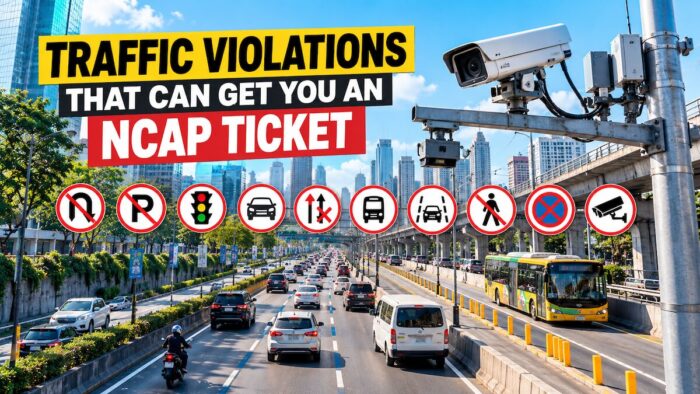
Traffic Violations That Can Get You an NCAP Ticket
The system uses CCTV cameras, digital cameras, and other technology to capture traffic violations. Officials review and validate the recorded footage before a violation becomes official.
The policy’s legal and regulatory framework has also changed. The Supreme Court lifted the temporary restraining order that had prevented the MMDA from implementing NCAP. The Court later dismissed consolidated challenges to the older NCAP ordinances after the Metro Manila Traffic Code of 2023 established a new framework for traffic enforcement and adjudication.
For motorists, the practical lesson is simple. If a traffic camera covers the road and your vehicle commits a detectable violation, you can receive an NCAP notice even when no enforcer pulls you over.
MMDA data also shows how common these violations remain. For 2025, illegal vehicle turning ranked first among recorded traffic violations, followed by unattended illegal parking, disregarding traffic signs, number coding violations and attended illegal parking.
Here are 10 traffic violations motorists should know.
1. Illegal Turning
Location: Major roads and intersections covered by traffic enforcement cameras.
Violation: Making a prohibited U-turn, left turn, or other unauthorized maneuver.
Illegal turning topped the MMDA’s list of the most common traffic violations recorded in Metro Manila in 2025.
This includes making prohibited U-turns, left turns, or other turns where road signs, lane markings, or traffic regulations prohibit the maneuver. A driver may be tempted to make a quick turn to save time, especially in heavy traffic, but a camera can capture the vehicle’s movement.
Motorists often commit illegal turns when they ignore directional signs or try to turn from the wrong lane.
The violation also highlights why motorists should pay attention to road markings. A legal turn in one intersection may be prohibited a few meters away.
Driving tip: Do not rely on what other vehicles are doing. Check the signs, lane markings and traffic signals before turning.
2. Unattended Illegal Parking
Leaving a vehicle parked where parking is prohibited can result in an NCAP-related violation, particularly on roads covered by camera enforcement.
Unattended illegal parking ranked second among the traffic violations the MMDA recorded in 2025. The offense can create serious traffic problems when a parked vehicle occupies a lane or blocks other vehicles.
Common problem areas include intersections, areas near driveways, fire hydrants, prohibited zones, and roads with no-parking signs.
The MMDA treats unattended illegal parking separately from attended illegal parking, and the applicable penalty can be higher.
Driving tip: If there is no legal parking space, do not leave your vehicle on the road simply because you expect to be away for only a few minutes.
3. Disregarding Traffic Signs
Ignoring traffic signs is a common violation detected through traffic enforcement.
This can involve failing to follow no-turn signs, stop signs, yield signs, lane restrictions, prescribed directions, and other traffic instructions.
The Metro Manila Traffic Code provides a framework for traffic signs and signals. A driver can therefore commit a violation even when no traffic enforcer is physically present at the intersection.
Cameras can capture vehicles making prohibited movements or entering areas subject to traffic restrictions.
This is particularly important on unfamiliar roads. A motorist who follows the vehicle ahead without checking the signs can easily make the same mistake.
Driving tip: Look beyond the vehicle in front of you. Check signs and lane markings before entering an intersection.
4. Number Coding Violation
The Unified Vehicle Volume Reduction Program, commonly called the number coding scheme, restricts certain vehicles from using covered roads during designated periods based on their license plate numbers.
The weekday schedule traditionally corresponds to plate endings 1 and 2 on Monday, 3 and 4 on Tuesday, 5 and 6 on Wednesday, 7 and 8 on Thursday, and 9 and 0 on Friday, subject to the applicable hours, roads and exemptions.
The MMDA lists number coding among the most common traffic violations in Metro Manila.
Drivers should also check whether their vehicle falls under an exemption before assuming the coding restriction doesn’t apply.
Driving tip: Check the current coding schedule and exemptions before driving into Metro Manila during coding hours.
5. Attended Illegal Parking
Attended illegal parking happens when a driver remains with the vehicle while it is stopped or parked in a prohibited location.
A common example is a driver waiting along a busy road while a passenger enters a building. Another is a delivery vehicle stopping in a restricted area to unload goods.
Being inside the vehicle does not automatically make the stop legal.
This type of violation is particularly common near restaurants, convenience stores, schools, offices, and commercial establishments where drivers want to make a quick stop.
The MMDA treats attended and unattended illegal parking as separate violations. Both appeared among the agency’s most common traffic violations in 2025.
Driving tip: A quick stop can still cause a violation. Use designated loading zones or legal parking areas instead.
6. Obstruction
Obstruction involves blocking or interfering with the normal movement of traffic.
A vehicle can obstruct traffic by stopping in a travel lane, blocking an intersection, double parking or occupying an area where vehicles need to pass.
The problem becomes particularly serious on narrow roads and major Metro Manila corridors. One improperly positioned vehicle can cause a queue that stretches far beyond the original obstruction.
The MMDA’s traffic violation schedule lists obstruction as a separate offense.
Cameras can provide evidence showing where the vehicle was positioned and how the obstruction affected traffic.
Driving tip: Before stopping, ask whether your vehicle is blocking a lane, driveway, intersection, pedestrian crossing, or other road user.
7. Prohibited Loading and Unloading
Stopping to pick up or drop off passengers may seem harmless, but doing so in a prohibited area can result in a traffic violation.
The MMDA identifies loading and unloading in prohibited zones as an offense. It is particularly relevant to taxis, public utility vehicles, transport network vehicles, delivery vehicles, and private motorists picking up passengers.
The problem becomes worse when drivers stop beside another vehicle or occupy an active traffic lane.
Motorists should look for designated loading areas and follow signs indicating where stopping is permitted.
This is also important near schools, shopping areas and transport hubs, where vehicles frequently stop even when no legal loading zone exists.
Driving tip: Do not assume that hazard lights make an illegal stop legal. Use a designated loading or unloading area.
8. Illegal Lane Changes or Swerving
Traffic cameras can detect sudden or improper lane changes, particularly on roads with clear lane markings and camera coverage.
The violation can include swerving across lanes, changing lanes where prohibited or making unsafe movements that disregard road markings.
This is especially relevant on EDSA and other major Metro Manila roads where lane discipline is essential for traffic flow.
Motorists should signal before changing lanes and ensure there is enough space to move safely.
Frequent lane changes can also increase collision risk, especially during heavy traffic when motorcycles, buses, and other vehicles are moving through adjacent lanes.
Driving tip: Signal early, check your mirrors and blind spots, then change lanes only where permitted.
9. Using Restricted Lanes or the EDSA Busway
Restricted lanes exist for specific types of vehicles or road users. Entering one without authorization can result in a traffic violation.
The EDSA Busway is a prominent example. The MMDA has used camera enforcement to detect vehicles illegally entering restricted lanes.
A motorist may be tempted to enter a restricted lane when regular lanes are congested. However, traffic congestion does not automatically permit motorists to use lanes reserved for buses, motorcycles, or other authorized users.
Camera enforcement makes these movements easier to document.
Driving tip: Treat lane restrictions as mandatory. Never enter a restricted lane simply to bypass traffic.
10. Beating the Red Light
Running a red light is one of the clearest violations camera systems can document.
NCAP uses traffic cameras and other technology to capture traffic violations, including vehicles proceeding through intersections against a red signal.
Some motorists attempt to accelerate through an intersection when a traffic signal is about to change. Others move forward after the signal has already turned red.
Both situations can create dangerous conflicts with pedestrians and vehicles that have the right of way.
A traffic camera can record the vehicle’s position, the traffic signal, and the movement through the intersection.
Driving tip: Slow down when approaching a signal that is about to change. Never accelerate simply to beat a red light.
Where Is NCAP Being Implemented?
NCAP enforcement is focused on roads under the MMDA’s jurisdiction and designated areas covered by the program.
When NCAP resumed in 2025, the MMDA identified major Metro Manila corridors including EDSA, Quezon Avenue, Commonwealth Avenue, Roxas Boulevard, Taft Avenue, Shaw Boulevard, Ortigas Avenue, Aurora Boulevard, Marcos Highway, MacArthur Highway, and other major roads.
Coverage and enforcement arrangements can change, so motorists should check current MMDA announcements rather than assuming every CCTV camera automatically issues an NCAP ticket.
How Does an NCAP Ticket Work?
NCAP does not require an enforcer to stop your vehicle at the moment of the violation.
The system captures images or video of the vehicle. The evidence is then reviewed and validated through the applicable enforcement process.
The MMDA’s current May Huli Ka system allows motorists to check violation records using their plate number and MV file number, or their plate number and ticket number. The portal also allows motorists to view violation information and pursue the contest process.
Motorists who disagree with a citation may contest it through the Traffic Adjudication Division within the prescribed period stated in the Notice of Violation.
How to Check If You Have an NCAP Violation
Motorists can check the MMDA’s official NCAP portal using their vehicle information.
The current process involves:
- Enter your plate number.
- Enter your MV file number.
- Review any registered violation.
- Check the available evidence and Notice of Violation.
- Pay through an authorized payment channel if the violation is valid.
- File a contest if you believe the citation is incorrect.
The MMDA also provides payment options through selected digital channels and physical payment locations.
Motorists should be cautious of unofficial messages claiming they have an NCAP violation. Check the record through the official MMDA system instead of clicking suspicious links sent through text messages or social media.
Can You Contest an NCAP Ticket?
Yes. Motorists who believe an NCAP citation is incorrect can contest the violation through the appropriate MMDA Traffic Adjudication Division process.
The current MMDA portal states that you may file a contest within 10 working days of receiving the Notice of Violation.
Keep relevant evidence that may support your case, such as photographs, dashcam footage, official documents, or other information that directly addresses the alleged violation.
A contest should focus on the facts of the specific citation rather than simply arguing that other motorists were committing the same violation.
Why Motorists Should Take NCAP Seriously
NCAP changes the way motorists think about traffic enforcement.
A driver can no longer assume a violation goes unnoticed simply because no traffic enforcer is standing beside the road. Cameras can record traffic movements, vehicle positions, and road behavior in designated areas.
The MMDA reported that traffic violations fell sharply on the first day of NCAP’s resumed implementation in May 2025, with 1,112 infractions recorded compared with 3,982 on the comparable day the previous week.
The system is designed as a traffic management and enforcement tool, but its effectiveness ultimately depends on motorists consistently following the rules.
Practical Ways to Avoid an NCAP Ticket
The easiest way to avoid an NCAP ticket is to drive defensively and follow road signs even when traffic is light.
Keep these habits:
- Check traffic signs before turning.
- Follow lane markings.
- Never make an illegal U-turn.
- Observe number coding restrictions.
- Use legal parking spaces.
- Do not stop in prohibited loading zones.
- Avoid blocking intersections.
- Stay out of restricted lanes.
- Follow traffic signals.
- Give motorcycles, buses, pedestrians, and emergency vehicles their designated space.
- Slow down instead of rushing through intersections.
- Check the current MMDA traffic rules before driving unfamiliar Metro Manila routes.
Frequently Asked Questions About NCAP Tickets
1. What is an NCAP ticket?
An NCAP ticket is a traffic violation notice generated through the No Contact Apprehension Policy. Instead of being stopped by a traffic enforcer, a vehicle can be recorded by CCTV cameras, digital cameras, or other approved technology. The MMDA reviews and validates the captured evidence before the violation becomes official. The MMDA’s current system allows motorists to check violation records and related evidence. NCAP currently operates under the newer Metro Manila traffic enforcement framework established after the adoption of the Metro Manila Traffic Code of 2023.
2. What are the most common NCAP violations?
The MMDA’s 2025 records showed illegal vehicle turning as the most common traffic violation, followed by unattended illegal parking, disregarding traffic signs, number coding violations, and attended illegal parking. Other violations associated with traffic camera enforcement include obstruction, prohibited loading and unloading, illegal lane changes, restricted-lane use and beating the red light. The exact violations captured depend on the camera system, road coverage and applicable traffic regulations.
3. Can I get an NCAP ticket without being stopped by an MMDA enforcer?
Yes. That is the basic purpose of the No Contact Apprehension Policy. Cameras and other technology can record a vehicle committing a traffic violation without requiring an enforcer to pull the driver over. The evidence is subsequently reviewed and validated through the applicable process. The MMDA’s current portal allows motorists to view violation records and evidence associated with their vehicle.
4. How do I check if my vehicle has an NCAP violation?
The MMDA’s current May Huli Ka portal allows motorists to search for violation records using their plate number and MV file number. The system also provides an alternative search using the plate number and ticket number. If a valid record exists, motorists can view violation information and proceed with payment or contest the citation. Always use the official MMDA system to check a suspected violation, and avoid relying solely on unofficial text messages or social media posts.
5. Can I contest an NCAP ticket?
Yes. If you believe the MMDA Traffic Adjudication Division issued an NCAP citation incorrectly, you can contest it through the MMDA Traffic Adjudication Division. The current MMDA portal states that motorists may file a contest within 10 working days from receipt of the Notice of Violation. Supporting evidence can help, especially when it directly addresses the alleged violation. Motorists should review the citation carefully and follow the official contest procedure instead of ignoring the notice.
6. Does NCAP apply to all roads in Metro Manila?
No. NCAP enforcement depends on the applicable jurisdiction, designated roads, and current implementation arrangements. When the MMDA resumed implementation in 2025, it identified several major Metro Manila roads and corridors for enforcement. The system should therefore not be interpreted as meaning that every CCTV camera on every street automatically issues NCAP citations. Motorists should check current MMDA announcements and road coverage before relying on older lists of NCAP locations.
7. How much is an NCAP fine?
The amount depends on the specific traffic violation and the applicable traffic code. For example, penalties for disregarding traffic signs, number coding, and illegal parking differ. Unattended illegal parking can carry a higher penalty and may involve impoundment. Penalties can vary by offense and circumstances, so motorists should check the specific Notice of Violation rather than relying on a general NCAP fine list.
8. Can an NCAP ticket affect my vehicle registration or license?
Traffic violations can have consequences beyond the initial payment, depending on the offense, applicable rules, and the status of the case. The current Metro Manila traffic framework includes procedures involving traffic adjudication, settlement of notices, and coordination with the Land Transportation Office. Motorists should therefore avoid ignoring an NCAP notice. If you believe a citation is incorrect, use the official contest procedure within the prescribed period rather than simply leaving the violation unresolved.
9. Will I receive a notification for an NCAP violation?
The MMDA has introduced systems for notifying motorists about NCAP violations. Its current portal also allows motorists to access violation records and evidence. However, motorists should not depend exclusively on an SMS or email notification. The safest approach is to verify any alleged violation directly through the official MMDA system. This also helps protect motorists from scams that imitate government traffic notices and direct recipients to unofficial payment pages.
10. What is the best way to avoid an NCAP ticket?
Follow the traffic rules even when you do not see an enforcer. Pay attention to road signs, traffic lights and lane markings. Avoid illegal turns, prohibited parking, restricted lanes and unauthorized use of busways. Follow the number coding rules when applicable and use designated loading and parking areas. Most importantly, do not assume that a violation is safe simply because the road looks empty. On covered roads, cameras can record the vehicle and provide evidence for an NCAP citation.
Follow #TeamOutofTown on Facebook, Twitter, Instagram, Bloglovin, and Pinterest for more travel ideas.
Also read:
- How to Apply for RFID Sticker for SLEX, NLEX, CAVITEX, Etc. (EasyTrip & Autosweep)
- How to Renew Your Motorcycle Registration in the Philippines
- Updated LTO Student Permit Requirements and Procedure 2023
- A Complete Guide to Driver’s License Renewal in the Philippines
- NCAP Cameras in Metro Manila Cities: What Motorists Need to Know
- 10 Things Metro Manila Drivers Should Know About NCAP
- How to Spot NCAP Scams and Fake Text Messages