

 Melo Villareal
15 Foods Named After Cities and Regions: Their Origins and History
Food names can reveal surprising connections between cuisine, geography, migration, and history. Some dishes carry the names of the cities where they developed. Others were named after places that inspired their creators, attracted international attention, or became associated with the food through trade and tourism.

Famous Foods Named After Places and the Stories Behind Them
Consider Wiener Schnitzel, the celebrated Austrian breaded cutlet, or Buffalo wings, the spicy chicken dish associated with Buffalo, New York. Peking duck carries the historical name of China’s capital, while Baked Alaska connects a frozen dessert to a distant territory. In each case, the place name tells part of the story, but it doesn’t always explain the dish’s full history.
Some origin stories are supported by historical records. Others remain disputed or have been embellished over time. Understanding the difference makes these dishes even more interesting.
Here are 15 famous foods named after places, including their origins, ingredients, cultural significance, and the stories behind their names.
1. Wiener Schnitzel: Austria’s Famous Breaded Cutlet

Associated place: Vienna, Austria
What it is: A thin, breaded, and fried veal cutlet traditionally served with lemon.
Wiener Schnitzel is one of Austria’s best-known dishes. Its name combines Wiener, meaning Viennese, with Schnitzel, referring to a cut or slice of meat. The name directly links the dish to Vienna, where it became a key part of the city’s culinary identity.
Traditionally, the dish uses a thin piece of veal coated in flour, beaten egg, and breadcrumbs, then fried until golden. The result should have a crisp exterior and tender meat. Restaurants commonly serve it with a lemon wedge, potato salad, parsley potatoes, or a simple green salad.
The dish’s history is more complicated than its name suggests. Breaded meat preparations existed in European cooking long before Wiener Schnitzel became established under its present name. The Austrian food tradition records an early mention of the name in an 1831 cookbook. A popular story credits Austrian Field Marshal Joseph Radetzky with bringing a similar Milanese cutlet preparation to Vienna in the 1850s, but historians have challenged this account. The story should therefore be treated as a legend rather than a proven explanation of the dish’s origin.
Wiener Schnitzel eventually became a defining example of Viennese cuisine. Its popularity spread through restaurants, cookbooks, and Austrian communities abroad.
Where to try it: Vienna is the natural place to taste the dish in its traditional culinary setting. Look for restaurants that specify veal for the traditional version. Breaded pork cutlets are common in many countries, but they aren’t the same as classic Wiener Schnitzel.
2. Peking Duck: A Beijing Specialty With a Longer History
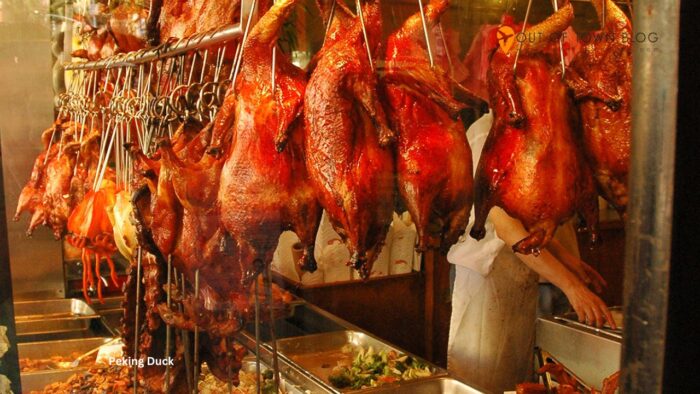
Associated place: Beijing, China
What it is: Roast duck with crisp skin, usually served with thin pancakes, scallions, cucumber, and sweet bean sauce.
Peking duck, also known as Beijing roast duck, is among China’s most recognizable regional specialties. Its English name uses Peking, the historical Western name for Beijing. The dish became closely associated with the imperial and restaurant traditions of China’s capital.
Preparing Peking duck involves more than roasting a bird. Cooks prepare the skin to be thin and crisp, often by separating it from the fat beneath. They dry, glaze, and roast the duck. At the table, diners usually wrap pieces of duck in thin pancakes with vegetables and sauce.
One interesting detail is that the dish’s history isn’t confined to Beijing. Accounts of its development point to earlier roast-duck traditions in Nanjing, a former Chinese capital. As political and culinary traditions moved north, roast duck became associated with Beijing and developed into a celebrated specialty there. The dish’s history shows how food traditions can travel between cities before becoming identified with a particular place.
The restaurant industry helped establish Peking duck as a symbol of Beijing dining. Specialist restaurants developed recognizable preparation and serving rituals, and the dish became a popular choice for banquets, family celebrations, and visitors seeking a classic Chinese meal.
Its international reputation grew as Chinese restaurants introduced the dish to diners overseas. Today, the name often evokes both the dish and Beijing’s culinary traditions.
Where to try it: Beijing is the best place to experience the dish in its most famous setting. Choose a restaurant specializing in roast duck and pay attention to the crispness of the skin, the balance of meat and fat, and the accompaniments.
3. Buffalo Wings: The American Snack Named After a City
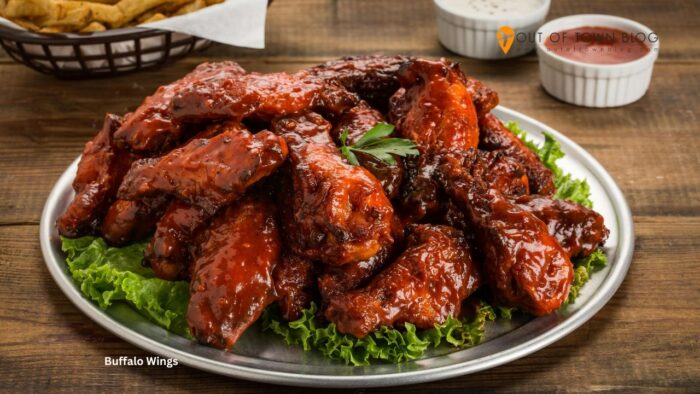
Associated place: Buffalo, New York, United States
What it is: Fried chicken wings coated in a spicy, buttery sauce.
Buffalo wings are a classic example of a dish named after a real place of origin rather than an animal or ingredient. The word Buffalo refers to the city in New York State, not the large mammal commonly called a buffalo.
The dish is widely associated with Anchor Bar in Buffalo, where Teressa Bellissimo is credited with serving chicken wings in a spicy sauce in 1964. According to the familiar story, she prepared them as a late-night snack for her son and his friends. Although the details of the invention have been debated, Buffalo’s connection to the dish is firmly established in American food culture.
Before Buffalo wings became popular, restaurants didn’t always treat chicken wings as a prized item. The preparation helped turn them into a sought-after snack. A typical version features fried wings tossed in a sauce made with hot pepper sauce and butter. Blue cheese dressing and celery sticks are common accompaniments, particularly in traditional American service.
The dish gained popularity in bars, restaurants, and sports venues. Its combination of heat, fat, crisp skin, and ease of sharing made it especially suited for watching games with friends. It eventually spread across the United States and became a familiar menu item internationally.
Today, Buffalo-style sauce is used on more than wings. Restaurants use it on sandwiches, chicken tenders, cauliflower, and other dishes, though the original name remains closely tied to the city.
Where to try it: Visit Buffalo to sample local interpretations and compare restaurants’ versions of the classic preparation. If you order Buffalo wings elsewhere, ask about the sauce’s heat level because restaurants vary considerably in how spicy they make it.
4. Neapolitan Pizza: A Culinary Tradition From Naples

Associated place: Naples, Italy
What it is: A round pizza with a soft, airy crust, tomato, mozzarella, and other simple toppings.
Neapolitan pizza takes its name from Napoli, the Italian name for Naples. The city played a major role in developing modern pizza, particularly the familiar combination of flatbread, tomato, cheese, and a hot oven.
Pizza-like flatbreads existed in different forms long before the modern Neapolitan style emerged. The defining tradition developed in Naples, where affordable flatbreads became a practical meal for working people. Tomatoes, introduced to Europe from the Americas, eventually became central to the style.
A classic Margherita pizza combines tomato, mozzarella, basil, and olive oil. Its red, white, and green colors often evoke the Italian flag. A popular legend says the pizza was created in 1889 for Queen Margherita of Savoy during a visit to Naples. The story has become part of pizza lore, though historians debate the details and the extent of the queen’s role. Tomato-and-cheese pizza existed before then, so the legend shouldn’t be treated as proof that the queen invented the modern dish.
What distinguishes Neapolitan pizza is its technique. The dough is typically fermented, hand-shaped, and baked quickly at very high temperatures. This produces a puffy edge, a tender center, and a lightly charred surface. Traditional toppings are usually restrained, letting the dough, tomato, and cheese stay prominent.
Immigration helped introduce pizza to new audiences. Italian communities brought their food traditions to North America and beyond, where local ingredients and tastes gave rise to many new styles.
Where to try it: Naples is the place to experience the traditional style. Look for a soft center, a raised crust, and a relatively short list of toppings. Remember that New York, Chicago, and other cities have developed their own celebrated pizza traditions, each with a different texture and preparation.
5. Baked Alaska: A Dessert Named for a Distant Territory

Associated place: Alaska, United States
What it is: Ice cream and cake covered with browned meringue.
Baked Alaska has one of the most intriguing place-name connections in dessert history. Despite its name, the dish is not generally considered an Alaskan invention. Its story links it to a New York City restaurant and a period when Alaska drew international attention.
The dessert combines contrasting temperatures and textures. A sponge cake base supports a mound of ice cream, topped with meringue. The outside is briefly browned in a hot oven or with a flame. If prepared properly, the meringue insulates the ice cream long enough for the exterior to brown without completely melting the frozen center.
A well-known account credits chef Charles Ranhofer at Delmonico’s restaurant in New York City with popularizing a dessert called Baked Alaska in 1867. The name is associated with the United States’ purchase of Alaska from Russia that year. The dish’s exact naming history is not entirely simple, and related hot-and-cold desserts existed in other forms, but the Alaska connection is widely repeated in culinary history.
Baked Alaska became a memorable example of restaurant showmanship. Its appeal comes from the apparent contradiction of serving ice cream beneath a browned, warm exterior. It also gave chefs a chance to show technical skill and create a dramatic presentation.
The name helped connect a fashionable dessert to a major political event. It shows how food can acquire a place name through public interest and clever naming rather than direct geographical origin.
Where to try it: Baked Alaska appears on some traditional restaurant menus and dessert lists, although it is less common than everyday cakes or ice cream. When ordering, ask whether it is made to order because the contrast between the warm meringue and cold center is central to the experience.
6. Chicken Kiev: A Dish Whose Name and Origin Do Not Fully Match

Associated place: Kyiv, Ukraine
What it is: A breaded chicken cutlet filled with seasoned butter.
Chicken Kyiv is a classic example of why a food’s name shouldn’t automatically prove its origin. The dish is named after Kyiv, Ukraine’s capital, but its culinary history is more complicated than a straightforward local invention.
The familiar version consists of chicken breast wrapped around chilled, seasoned butter, then coated in breadcrumbs and fried or baked. When cut open, the chicken releases melted butter. The filling may include parsley, garlic, lemon, and other seasonings.
The dish became especially popular in restaurants and home cooking across the Soviet Union before spreading to Western Europe and North America. Its name helped make it recognizable to international diners, particularly during the twentieth century, when restaurant menus increasingly introduced regional and national dishes to wider audiences.
However, accounts of its development point to Russian and French-influenced restaurant cooking as well as Ukrainian associations. Similar cutlets and filled meat preparations existed in European cuisine. The precise origin of the modern chicken version is disputed, so it is more accurate to describe Chicken Kyiv as a dish strongly associated with Kyiv than to claim that its entire form was conclusively invented there.
The food’s international popularity also illustrates how names can shape perceptions. For many diners, the word Kyiv became a shorthand for the dish even when they knew little about Ukrainian culinary history.
Where to try it: Kyiv is a meaningful destination for exploring the dish’s connection to Ukrainian food culture, although it is not the only place where it is served. When ordering, allow the cutlet to rest briefly before cutting into it, since the hot butter inside can spill out quickly.
7. Eggs Florentine: A Dish With a Connection to Florence

Associated place: Florence, Italy
What it is: A dish of eggs and spinach, often served on toast or an English muffin with a creamy sauce.
Eggs Florentine is a familiar brunch and breakfast dish whose name points toward Florence. On modern menus, Florentine generally signals spinach, particularly in dishes featuring eggs, fish, or poultry.
A typical serving combines cooked spinach with poached eggs and a sauce such as hollandaise or Mornay. Some versions place the ingredients on toasted bread or an English muffin. The result is rich and savory, balanced by the greens’ earthy flavor.
The naming tradition is often connected to Catherine de’ Medici, the Florentine noblewoman who became queen of France in the sixteenth century. Popular culinary accounts suggest that she and her Italian entourage influenced French cooking and helped introduce spinach dishes to the French court. The historical details behind many of these stories are uncertain, and the idea that Catherine personally introduced every food associated with the term Florentine is not well established.
What matters is that the word became a culinary label linking spinach-based preparations with Florence. Over time, restaurants adopted the term for a range of dishes rather than a single fixed recipe.
Eggs Florentine demonstrates how a place name can become shorthand for an ingredient or preparation style. The dish is now served in many countries, especially in hotels, cafés, and brunch restaurants, where its name evokes a European culinary tradition.
Where to try it: You can find Eggs Florentine on brunch menus in many cities, including Florence, but it is not necessarily a standard local dish in every Florentine restaurant. If you are visiting the city, explore Tuscan specialties as well rather than assuming every dish with a Florentine label is a local classic.
8. Dijon Mustard: A Famous Condiment Named After a French City
Associated place: Dijon, Burgundy, France
What it is: A sharp, aromatic mustard traditionally made from mustard seeds, liquid, and seasonings.
Dijon mustard is named after Dijon, a city in Burgundy, eastern France. Its reputation reflects the area’s long-standing connection to mustard production and the commercial success of mustard makers who helped establish the city as a recognized center of the condiment.
Mustard itself is much older than the modern Dijon style. People in different regions have crushed mustard seeds and mixed them with liquids for centuries. The Dijon tradition developed through local production and evolving recipes, creating a style valued for its sharpness and versatility.
Modern Dijon-style mustard commonly uses brown or black mustard seeds, which produce a stronger flavor than milder yellow mustard. Recipes may use vinegar, wine, water, salt, and other ingredients. The finished condiment can be smooth and creamy, making it useful in vinaigrettes, mayonnaise, marinades, sauces, and sandwiches.
Dijon mustard’s international popularity grew as French cooking gained influence in restaurant kitchens and home cookbooks. It became a standard ingredient in recipes that call for a more complex, pungent flavor than ordinary table mustard.
The geographical name matters, but it does not mean every product labeled Dijon mustard was made in Dijon. The relationship between a place and a food can involve history, style, and commercial identity rather than a simple guarantee of origin. Consumers should check the product label when geographical origin matters to them.
Where to try it: Dijon is a great place to explore local mustard shops and Burgundian cuisine. Try mustard alongside regional meats, sandwiches, or sauces. For a broader culinary experience, pair the visit with Burgundy’s other specialties, including regional cheeses and wines.
9. Gorgonzola: Italian Blue Cheese Named After a Town
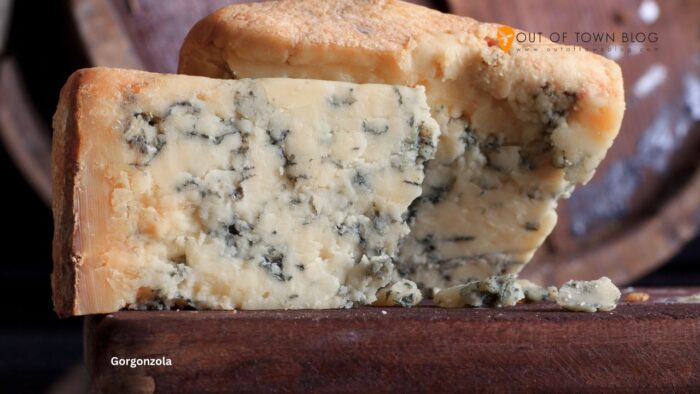
Associated place: Gorgonzola, Lombardy, Italy
What it is: A creamy blue cheese with characteristic blue-green mold veins.
Gorgonzola is one of Italy’s best-known blue cheeses. It gets its name from the town of Gorgonzola near Milan, though the cheese’s production history spans a wider area of northern Italy.
The cheese is made from cow’s milk and develops its distinctive blue-green veins as selected molds grow during production and aging. Depending on the variety and maturity, it can be soft and creamy or firmer and more crumbly. Its flavor ranges from relatively mild and buttery to sharp, salty, and assertive.
Stories about Gorgonzola’s early production often describe cheese makers developing blue veining through the storage and aging of curds. As with many traditional foods, precise details about the first batch are difficult to verify. What is clearer is that the cheese became associated with a specific northern Italian region and eventually developed a reputation beyond its original local market.
Gorgonzola is now used in pasta sauces, risotto, polenta, salads, and pizza. It can also be served as a table cheese with pears, walnuts, bread, or honey. Its rich flavor means that a small quantity can add considerable depth to a dish.
The name has become internationally recognized, but genuine Gorgonzola has a defined production identity. Not every blue cheese made outside Italy is Gorgonzola, even if it looks or tastes like the original.
Where to try it: Visit the Lombardy region and explore cheese shops, traditional restaurants, and markets. Ask whether the cheese is milder or more mature, since the difference can substantially change the tasting experience.
10. Melba Toast: A Crisp Food Named After an Australian Opera Singer’s Stage Name
Associated place: Melbourne, Australia
What it is: Very thin, crisp toast traditionally served with soup, cheese, pâté, or spreads.
Melba toast reminds us that foods named after places don’t always refer directly to a city or region. Its name comes from Nellie Melba, the stage name of Australian opera singer Helen Porter Mitchell, who was born in Melbourne.
Melba became an international star in the late nineteenth and early twentieth centuries. French chef Auguste Escoffier named several culinary creations after her, including Melba toast and Peach Melba. The toast is commonly described as having been created when the singer was ill and needed light food, although popular retellings vary in detail.
To make Melba toast, toast bread, slice it horizontally into very thin pieces, and toast again until crisp. The result is dry, light, and crunchy. People often serve it with soft cheese, pâté, soup, or savory spreads. Packaged versions became popular because they are easy to store and offer a convenient alternative to fresh bread.
The dish’s name reflects the way celebrity and restaurant culture influenced food naming. Rather than being a traditional Melbourne specialty, Melba toast honors a famous performer whose name itself referenced the Australian city.
The story also illustrates how a place can enter culinary language indirectly through a person. The connection is geographical, but the naming mechanism is different from a dish that originated in the city itself.
Where to try it: Melba toast is widely available in supermarkets and restaurants worldwide. Visitors to Melbourne can explore the city’s food culture and its connection to Nellie Melba, but they should view the toast as a tribute to the singer rather than a defining local dish.
11. Salisbury Steak: An American Comfort Food Named After a Physician
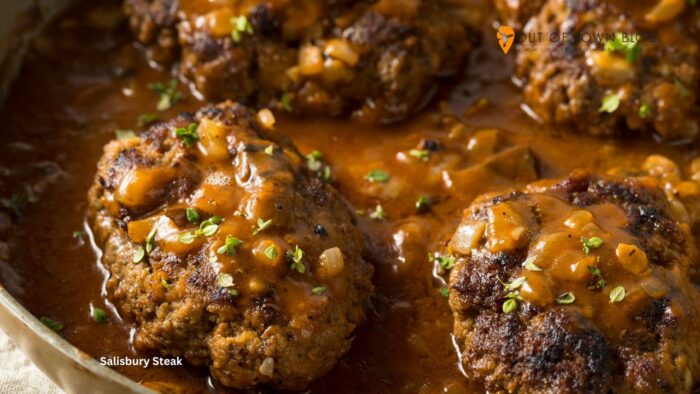
Associated place: Salisbury, England, through the name of Dr. James Salisbury
What it is: A seasoned ground-beef patty usually served with gravy, onions, or mushrooms.
Salisbury steak sounds like a dish from the English city of Salisbury, but it is named after Dr. James Henry Salisbury, an American physician and nineteenth-century dietary advocate. It is therefore an example of a food whose place connection operates through a person’s name rather than a direct link to the city.
Salisbury promoted a diet centered on lean beef and believed that limiting certain foods could improve health. During and after the American Civil War, he advocated preparing chopped or minced beef, which later became associated with his name. The dish eventually developed into the familiar ground-beef patty served with gravy.
Unlike a traditional steak cut from a whole piece of meat, Salisbury steak is made from ground beef, often mixed with seasonings and other ingredients. Modern versions may include breadcrumbs, egg, onion, and Worcestershire sauce. Mushroom or onion gravy is a common accompaniment.
The dish became particularly familiar in twentieth-century American home cooking. It appeared in diners, cafeterias, frozen dinners, and family meals. Its convenience and hearty presentation helped it remain popular even as restaurant trends changed.
The name can mislead diners into thinking Salisbury steak originated in Salisbury, England. The historical connection is instead to Dr. Salisbury, whose surname became attached to a food associated with his dietary ideas.
Where to try it: Salisbury steak is common in American diners, casual restaurants, and home-style menus. It is especially associated with traditional comfort food rather than fine dining. Look for a well-browned patty and savory gravy when trying a classic version.
12. London Broil: A Name That Does Not Guarantee a London Origin
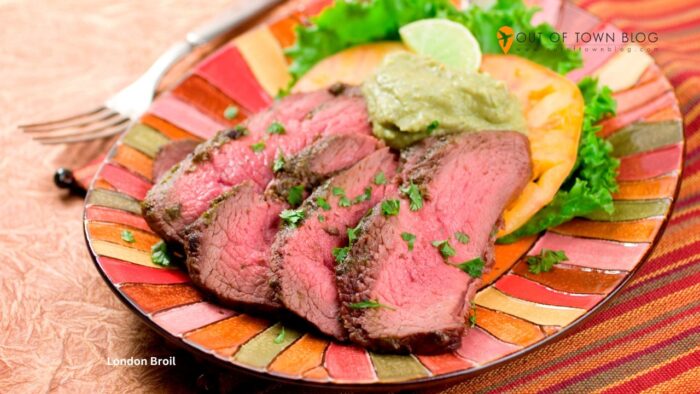
Associated place: London, England, by name; modern versions are strongly associated with North American cooking.
What it is: A beef preparation in which a lean cut is marinated, cooked, and sliced thinly across the grain.
London broil is one of the most misleading food names on this list. The term sounds like a traditional British dish, but many American diners associate the preparation with North American cooking.
In modern usage, London broil usually refers to a method rather than a specific cut of beef. A relatively lean cut, often flank steak or top round, is marinated, grilled or broiled, rested, and sliced thinly across the grain. The marinade may contain oil, vinegar, garlic, herbs, soy sauce, or other seasonings.
The name’s early history is not completely settled. The term appeared in North American culinary use, and clear evidence does not support a connection to London or that the modern preparation originated in the English capital. The word broil may also confuse readers, since British and American cooking terminology differs in how it describes certain cooking methods.
The dish became popular because it lets cooks prepare less expensive cuts of beef while making them flavorful and tender. Slicing the meat thinly across the grain is particularly important, since it shortens the muscle fibers and makes each bite easier to chew.
London broil shows how associations, marketing, or naming trends can shape food names. A familiar city name may make a dish sound established or international even when its actual history points elsewhere.
Where to try it: London broil is easiest to find in North American restaurants and home-style menus. If you encounter it in Britain, ask how the restaurant defines the term, since it may not be treated as a standard British specialty.
13. Nashville Hot Chicken: A Spicy Specialty From Tennessee
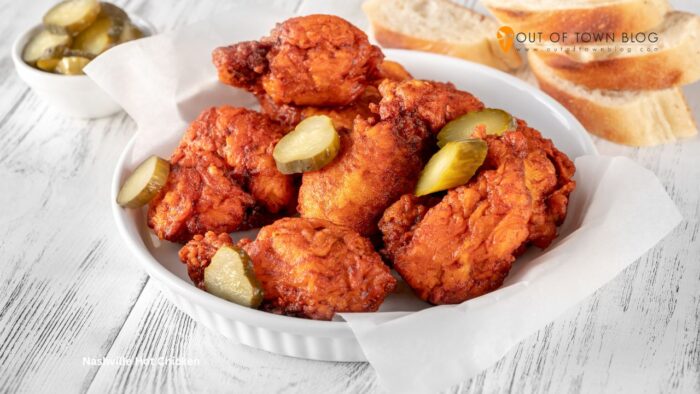
Associated place: Nashville, Tennessee, United States
What it is: Fried chicken coated with a spicy oil-based seasoning, often served with white bread and pickles.
Nashville hot chicken is one of the clearest examples of a modern regional food that became famous under its home city’s name. The dish is closely tied to Nashville’s African American culinary traditions and has become a key part of the city’s food identity.
The familiar preparation begins with chicken that is seasoned, coated, and fried until crisp. The cooked chicken is then covered with a spicy mixture commonly made from hot fat or oil, cayenne pepper, and other seasonings. It is often served on white bread with pickle slices, which help balance the heat.
A widely repeated origin story credits Thornton Prince and the Prince family with developing the dish in Nashville. According to the account, a particularly spicy chicken preparation was created in response to a personal dispute, but the details have been retold in different ways. It is safer to recognize the Prince family and Nashville’s Black food culture as central to the dish’s history than to treat every detail of the legend as established fact.
The dish grew from a local specialty into a national restaurant trend. Restaurants outside Tennessee began offering Nashville-style hot chicken, and diners came to recognize the name for fiery fried chicken.
Its popularity also demonstrates how a regional food can become part of a city’s tourism identity. Visitors now seek out hot chicken as an essential Nashville food experience, while restaurants compete through variations in heat, breading, and seasoning.
Where to try it: Nashville is the ideal place to sample the dish from established local specialists. Start with a milder heat level if you are unsure of your tolerance, because the spiciest versions can be intensely hot. Traditional accompaniments such as pickles and bread help balance the seasoning.
14. Parmesan Cheese: A Name Rooted in an Italian Region

Associated place: Parma, Emilia-Romagna, Italy
What it is: A hard, aged cheese with a savory, nutty flavor, commonly grated over pasta and risotto.
Parmesan is the English name commonly used for a hard Italian cheese associated with Parma. The protected Italian name Parmigiano Reggiano identifies a specific cheese made according to established rules in designated areas of northern Italy. The name links the product to Parma and Reggio Emilia, as well as nearby parts of Emilia-Romagna and Lombardy.
The cheese is made from cow’s milk and aged for months or longer. During aging, it develops a firm texture, granular structure, and complex flavor. Younger versions can taste milder and more milky, while longer-aged cheese often develops stronger savory notes and a crystalline texture.
Parmigiano Reggiano has a long history in the region’s agricultural and culinary traditions. Its production relies on milk from local dairies, controlled methods, and extended aging. These requirements help create a consistent product that reflects its geographical identity.
The cheese became internationally popular because it is versatile. You can grate it over pasta, shave it onto salads, serve it with fruit, or eat it in small pieces as part of an antipasto spread. Its concentrated flavor often contributes more to a dish than its quantity suggests.
The distinction between generic Parmesan and protected Parmigiano Reggiano matters. In many markets, Parmesan is used broadly for hard, grated cheese, while the protected Italian name is reserved for cheese produced within the defined region and according to the relevant standards.
Where to try it: Visit Parma or the wider Emilia-Romagna region to learn about traditional cheese production. A tasting can help you compare cheeses of different ages. Pair small pieces with bread, fruit, balsamic vinegar, or local specialties to appreciate its flavor without overwhelming it.
15. Neapolitan Ice Cream: A Three-Flavor Dessert With an Italian Name

Associated place: Naples, Italy (by name); the familiar three-flavor format developed through international culinary history.
What it is: Ice cream arranged in adjoining layers or sections, traditionally chocolate, vanilla, and strawberry.
Neapolitan ice cream takes its name from Naples, but its modern form reminds us that a food’s name may reflect migration and culinary association rather than a direct, documented origin in the named city.
The familiar version places chocolate, vanilla, and strawberry ice cream side by side in a single container. The colors and flavors make it easy to serve several choices without opening separate tubs. The dessert became particularly popular in North America, where marketers promoted it as a convenient mix of three classic flavors.
Historically, the name Neapolitan referred to people and products associated with Naples. In nineteenth-century Europe and North America, Neapolitan-style desserts were linked with Italian confectioners and their culinary traditions. Some early forms of Neapolitan ice cream used more varied flavors and arrangements than the standard chocolate-vanilla-strawberry combination familiar today.
As Italian immigrants established confectionery and ice-cream businesses abroad, they adapted recipes and serving styles to local preferences. The three-flavor combination became a practical and recognizable product for households and commercial manufacturers.
Neapolitan ice cream is therefore not necessarily a traditional dessert that visitors will find served in the same form throughout Naples. Its name preserves a historical link to Italian food culture, but international adaptation and mass production have shaped its current identity.
Where to try it: You can find Neapolitan ice cream in supermarkets and ice-cream shops worldwide. In Naples, also explore local gelato and traditional pastries. Compare the layered commercial version with freshly made gelato to understand how the products differ in texture, flavor, and serving style.
Why Are So Many Foods Named After Places?
Food names connect dishes to places for several reasons. Some names identify the location where a recipe developed or became famous. Others reflect a region’s ingredients, a traditional production method, or a local product that gained an international reputation.
A geographical name can also serve as marketing. A dish associated with a famous city may sound distinctive, prestigious, or authentic to diners. Baked Alaska illustrates how a place name can reference a political event, while Melba toast shows how a celebrity’s name can carry a city’s name into culinary history.
Migration also plays an important role. When people move, they bring recipes, ingredients, and culinary techniques with them. A food can become popular in another country while retaining a name connected to its earlier associations. Neapolitan ice cream and Chicken Kyiv show how a dish’s international identity may differ from how it is understood in the place named.
A protected geographical product also differs from a more loosely used name. Parmigiano Reggiano has defined production requirements, while the term Parmesan is used more broadly in some markets. Dijon mustard is associated with a particular culinary tradition, but not every product using the style name is necessarily produced in Dijon.
When researching food history, it is useful to ask three questions:
- Where was the food first documented? The earliest surviving written reference may not prove where a dish was originally invented, but it provides a useful historical marker.
- What does the name actually refer to? A place name may identify an origin, a style, a person, or a marketing association.
- How did the food become famous? Restaurants, migration, tourism, cookbooks, and commercial production can turn a local specialty into an international favorite.
These distinctions help separate reliable history from attractive but unverified legends.
Frequently Asked Questions About Foods Named After Places
1. Why are so many famous foods named after cities or regions?
Foods are often named after places because the location helped develop, popularize, or distinguish the dish. A city may become known for a cooking method, a region may produce a distinctive ingredient, or a local business may make a specialty famous. Place names can also help restaurants communicate a dish’s identity to unfamiliar customers. However, a name does not always prove that the food originated there. Some names developed through migration, marketing, or association with a historical figure, so consider the naming story separately from the dish’s actual culinary history.
2. Does a food’s name always tell you where it originated?
No. A food’s name can suggest a geographical connection without proving the dish originated there. Chicken Kyiv, for example, is named after Kyiv, but its development is associated with broader European and Russian-influenced culinary traditions, and its exact origin remains disputed. London broil is another example: despite its name, the familiar preparation is primarily associated with North American cooking. To understand a food accurately, distinguish its name, its earliest documented appearances, and the place where it became culturally important.
3. What is the difference between a food’s origin and its namesake?
A food’s origin is where it was developed or first documented, while its namesake is the person, place, or idea it is named after. They can be the same, but they don’t have to be. Buffalo wings are strongly associated with Buffalo, New York, while Melba toast was named for opera singer Nellie Melba, whose stage name referenced Melbourne, Australia. This distinction matters because a dish may honor a place or person without having been invented there. Understanding the difference makes culinary history more accurate and interesting.
4. Which foods on this list are most closely associated with their named places?
Wiener Schnitzel and Vienna, Neapolitan pizza and Naples, Buffalo wings and Buffalo, and Nashville hot chicken and Nashville have particularly strong connections in popular food culture. These foods are widely recognized as specialties associated with the places in their names. Even so, strong regional association does not mean that every element of a recipe originated there or that the dish has never changed. Culinary traditions develop over time, and restaurants often adapt recipes to local tastes. Travelers can learn more by tasting the food in its associated region and comparing it with versions served elsewhere.
5. Why do some foods have disputed origin stories?
Food history often relies on incomplete records. Recipes may have been passed down orally before anyone documented them, and early restaurant menus or cookbooks may not survive. Several cooks may also have developed similar preparations independently. Later, restaurants, families, and cities may promote a particular story because it adds character to a dish or attracts visitors. These circumstances can make it difficult to identify a single inventor. A careful account distinguishes documented evidence from later traditions and legends. Disputed stories are still worth discussing, provided they are presented as uncertain rather than proven facts.
6. Are place-named foods protected by law?
Some foods have legally protected geographical names, while others use place names informally. Parmigiano Reggiano, for example, is a protected Italian cheese with defined production requirements and an established geographical area. Other names, such as Buffalo wings or London broil, generally function as culinary descriptions or style names rather than strict geographical guarantees. The legal position varies by country and product. If the origin of a cheese, wine, meat, or other specialty matters to you, check its labeling and relevant geographical indication rather than assuming the place name alone guarantees where it was made.
7. How does migration influence foods named after places?
Migration carries recipes, cooking techniques, and food traditions across borders. When communities settle in new countries, they may adapt familiar dishes to available ingredients, local tastes, and commercial opportunities. Over time, the food can become popular far beyond its original community while keeping its historical name. Neapolitan ice cream is an example of a food whose international identity was shaped by Italian culinary associations and adaptation abroad. This process also explains why a dish may look or taste different in its namesake place than it does in restaurants overseas. Food names often preserve traces of these journeys.
8. Which foods are best to try in their associated destinations?
For a food-focused trip, consider Wiener Schnitzel in Vienna, Neapolitan pizza in Naples, Peking duck in Beijing, Buffalo wings in Buffalo, and Nashville hot chicken in Nashville. These destinations offer chances to experience the dishes within the food cultures that made them famous. However, travelers should not assume that every restaurant in a named city serves the same version or that the most famous venue is always the best. Look for places specializing in the dish, pay attention to local serving traditions, and try regional accompaniments. Exploring other local specialties alongside the famous dish gives you a fuller sense of the destination.
9. Are foods named after places always traditional local dishes?
No. Some are deeply established regional specialties, while others gained their names through restaurant marketing, historical events, or associations with famous people. Baked Alaska is commonly linked to a New York restaurant and the purchase of Alaska by the United States, rather than to traditional Alaskan cuisine. Melba toast honors an opera singer rather than representing a defining Melbourne dish. This is why a place name should be treated as a clue, not conclusive evidence. When planning a culinary trip, research whether a food is a local specialty or better understood as an internationally recognized dish with a geographical name.
10. How can travelers find authentic versions of place-named foods?
Start by identifying the dish’s traditional ingredients and preparation method, then look for restaurants that specialize in it or have a clear connection to local food culture. Ask local residents where they eat the dish, and compare several versions if time allows. Markets, neighborhood restaurants, traditional cafés, and family-run businesses can provide useful insights alongside famous tourist establishments. Keep in mind that authenticity does not always mean one unchanging recipe. Food traditions evolve, and local cooks may approach them differently. The goal is to understand how a dish fits into the destination’s culinary culture rather than to search for a single supposedly perfect version.
Conclusion
The stories behind place-named foods reveal more than where a dish might have begun. They show how cities build culinary reputations, how chefs honor people and events, and how migration and tourism spread regional specialties around the world.
Some names directly connect to their associated destinations. Others reflect a complicated history, a popular legend, or a commercial identity that developed far from the place itself. Wiener Schnitzel, Peking duck, Buffalo wings, Dijon mustard, and the other foods on this list demonstrate why the distinction matters.
For travelers, these names offer a useful starting point for exploring local food culture. When possible, try the specialty in its best-known setting, learn how it is traditionally prepared, and ask how it became associated with the place. The result is a richer food experience, one that connects every meal to the people, history, and geography behind it.
Follow the Out of Town Travel Blog on Facebook, Twitter, Instagram, and Pinterest for more travel- and food-related updates.
Read:
- 10 Best Beaches in Vietnam
- 12 Fun Things to Do in Samal Island, Davao del Norte
- Review: Pearl Farm Beach Resort in Samal Island
- 15 Must-Try Filipino Restaurants in Dubai
- Top 49 Best Things to Do in Phu Quoc Island + Tourist Spots
- Vietnam Food Guide: 25 Must-Try Dishes From Pho to Banh Mi