

 Team Out of Town
Meycauayan, Bulacan, is famed for its sparkling jewelry, but the city’s true heart is much more than gold and gems. The city is called the Jewelry Capital of the Philippines because it is home to about 2,000 jewelry manufacturers and is known for small enterprises that make gold and gems (Meycauayan Jewelries, n.d.). But during our visit, we discovered something familiar beyond its reputation. Not a peculiar place, but a common one.
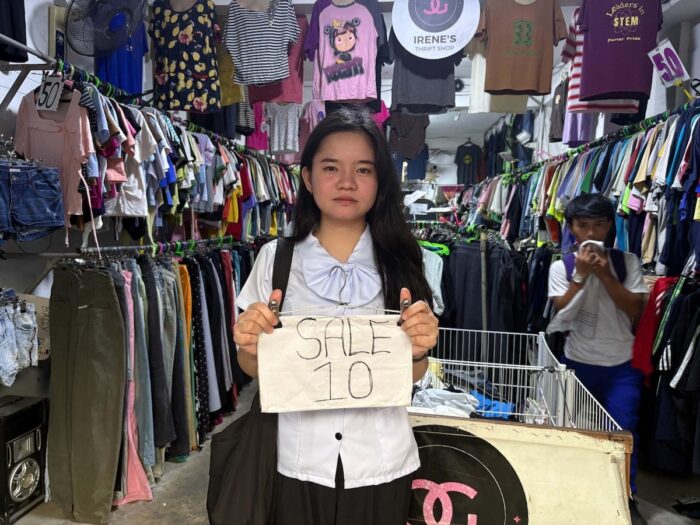
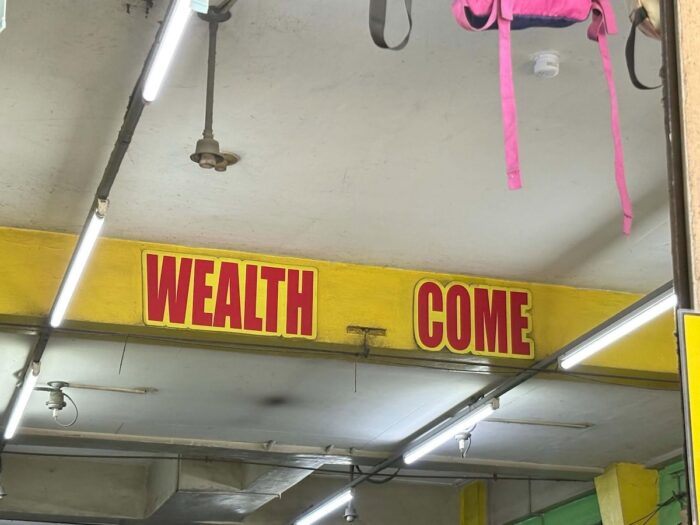
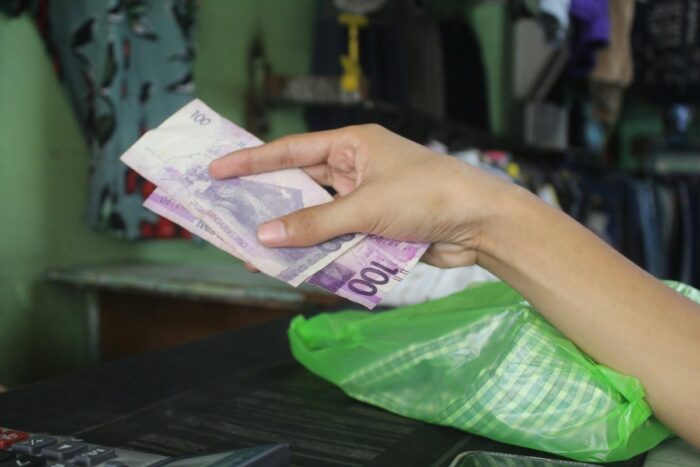
Inside a local second-hand clothing store, budget shoppers can find a variety of pre-loved apparel starting at 10 pesos.
A place we often pass by without much thought, yet many people keep returning. From our experiences and the insights shared by customers and shop owners, it is clear people are drawn there not only because it’s affordable, but also because they can find high-quality, one-of-a-kind pieces at a significantly lower cost. One of our interviewees, a middle-aged male owner from Meycauayan, Bulacan, remarked that “ang main reason bakit pumapasok sila rito is magtipid.”
In that moment, we paused and concluded that buying something is not just about being thrifty or resourceful, but about being wise and seeing things for what they are worth. As noted in a 2019 ethnographic study of Fleur de Lis, customers visit this kind of place because it’s often associated with affordability, where they can hunt for quality, stylish clothes even on a limited budget. But the lingering question is: is it really just about affordability, quality, and uniqueness?
As the saying goes, the most ordinary places often hold the deepest significance, depending on how you look at them. So, to unfold the answer beyond surface level, we decided to see it for ourselves by venturing towards the thrift shops commonly known as ukay-ukay situated along the Meycauayan town, where the overwhelming sorted pile of clothes, collection of bags draped around the shop’s walls, and the footwear selection placed among the shelves welcomed us. As we drew closer, the strong, classic smell of old fabric and dust rushed in, familiar to each customer rummaging through crowded racks they could barely sift through.
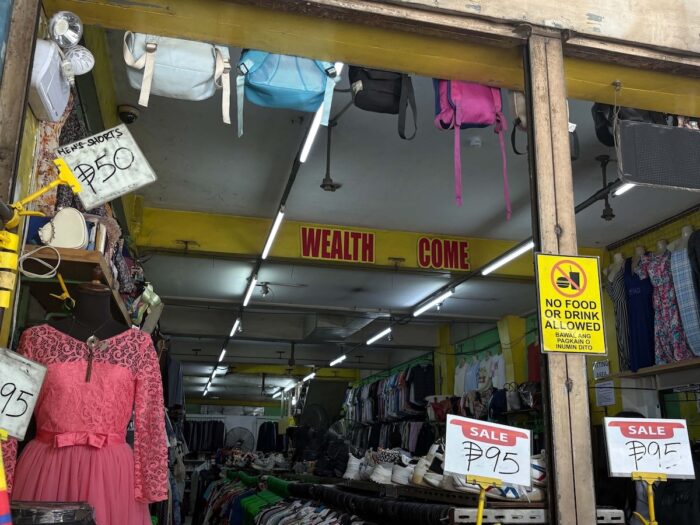
As we moved from shop to shop, we eventually tried on thrift clothes and blended in with the customers. Like any typical thrift patrons, we browsed for pieces where attention to detail was put to the ultimate test as we inspected the quality and condition of items while weighing the prices, even though they were cheaper than they were. We walked and walked until our legs felt heavy and strained, yet we had only uncovered a fraction of what lay ahead in the rest of Meycauayan’s prominent ukay-ukay community.
The more we explore them, the more we realise the microscopic details some tend to overlook. As mundane as they may seem, these thrift shops are more than just a hub for budget finds. Instead, they hold a substance where every piece, stain, faded fabric, loose thread, and even unblemished garment portrays a life, a story, and the imprinted memories of a stranger once part of someone’s favorite outfit.
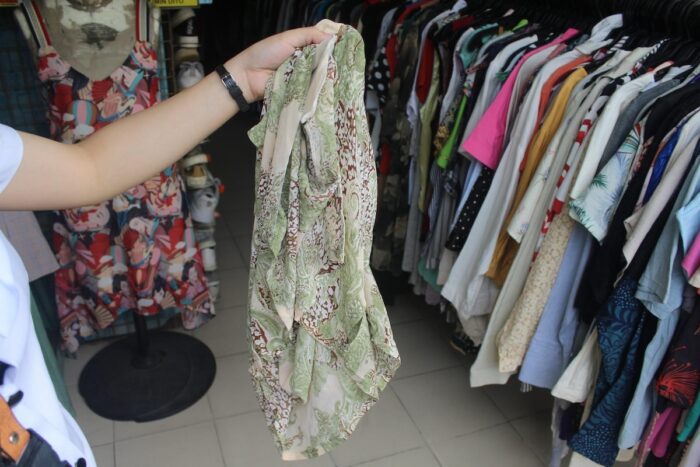
Because these garments carry such personal histories, a spooky, well-known superstition has emerged about the invisible connection between the clothes and their previous owners. In Filipino folklore, many believe that secondhand garments carry more than just history; they hold the lingering spirits and legacy of those who wore them before (Tapia-Raquel, 2012). In fact, we know someone who has never been able to step into a thrift shop in her entire life, firmly believing that wearing thrift-shop items is like wearing the clothes of the deceased owner.
While some initially hold onto this fear, a single firsthand experience often completely reshapes their perspective. This was precisely the case for a former skeptic we know. She had the same reason: “nakakatakot kasi baka sumama sakin ‘yung may-ari”. However, she eventually debunked the idea when she had the opportunity and strength to try it once, and she soon immersed herself in thrift shops. They often say that seeing is believing, but when it comes to the deep-seated fears surrounding the ukay-ukay, experiencing is believing.
On the other hand, some people simply don’t believe in these cultural taboos at all. As shared by one of the students who’s keen on buying thrift clothes herself, “parang wala pa naman akong na experience, siguro ‘pag may na-experience ako doon ako maniniwala” she said. In addition, the shop owner also shared the truth, saying they’ve been in the business for more than 20 years, so they should have encountered and experienced it already. He humorously added, “mas nauuna dapat namamatay ‘yung nagtitinda ng ukay kaysa sa bumibili” while emphasizing that they are the ones who are highly exposed to these thrift pieces, so among all people, it should be them to experience it firsthand.

Superstitions aside, exploring ukay-ukay is not just about confronting the ghosts of previous owners but also about mastering the hunt’s best tips. Turning a pre-owned garment into a personal piece and collection demands a practical strategy. It starts with patience; a jam-packed rack can be overwhelming, so be patient to ensure you leave with a truly rewarding piece worth every hour of effort. According to a storekeeper, some customers spend at least 2-3 hours hunting, so take all the time you need.
Second, keep a sharp eye on the quality and condition of the items because, even if they’re cheap, money is still money. Third, stay updated on sales and new arrivals so you can access thrifted items at lower prices and snag premium finds in newly opened bundles.
Fourth is to exercise negotiation skills to do “tawad,” which can turn a steep price into a victorious steal, and lastly, it would be to properly wash and sanitize the items prior to usage; this way, you effectively strip away both the physical grime of the thrift shop and the ghostly hints of the stranger who wore it before, transforming a piece of someone else’s history into a clean slate for your own wardrobe where you can start creating new and own memories.

CONCLUSION
As we walked away from the busy racks, ukay-ukay revealed itself to us from a whole new perspective. The seemingly chaotic rows of second-hand clothes felt like a living museum of continuous collections, where pieces are not displayed for preservation but transferred from one lucky owner to another. Unlike a regular museum, where artifacts are exhibited for people to merely gaze at, ukay-ukay lets its collection ‘live’ through a different set of owners every day, every week, every month, and every year.
Through interaction and selection, the shop’s collections get a new lease of life, becoming more than just a collection of old items. It becomes a place where the past and present continuously collide, intersect, and coexist through worn-out clothes and accessories.
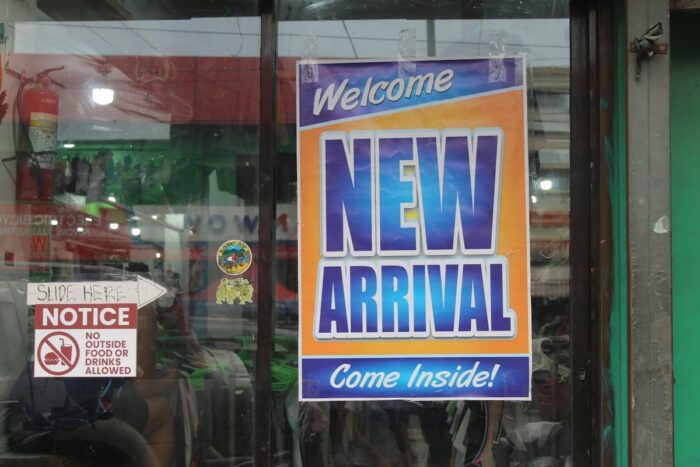
We also learned that meaningful places are not necessarily grandiose or extraordinary structures. They may exist amid chaos, in a seemingly unimportant corner of the world, among heaps and piles of old clothing buried under dust. In Meycauayan, we stumbled upon a place that captures the Philippine ethos of making the most of old, used things.
We discovered that even the simplest places can hold their own unique meaning and encapsulate the values, beliefs, discussions, and memories of the people who interact with them. As we walked away from the shop, the familiar rows of clothes and accessories no longer looked like the same boring, dusty collections on display. Instead, they felt like a page from a book, waiting for new hands to flip through its contents.
That is perhaps the closest essence of what a museum truly is—a place where stories are told, revisited, and rehashed as long as people who preserve and maintain its legacy in their own unique ways keep its collections in their hands. The life of the collection in ukay-ukay is never-ending, as new owners can always give old pieces a new lease on life.
About the Authors
The authors are Bachelor of Science in Tourism Management students from Bulacan State University – Main Campus. In their article, Thrift Garments of Meycauayan’s Yesterdays, they examine how ukay-ukay in Meycauayan City goes beyond budget shopping to reflect Filipino resourcefulness, memory, and community. Drawing from interviews and firsthand experiences with shoppers and storekeepers, the piece invites readers to see value in the ordinary and to recognize the cultural stories woven into everyday practice. Through this work, the authors hope to encourage greater appreciation for local heritage and to inspire the preservation of traditions that live not only in Meycauayan but in communities throughout the Philippines.
Authors:
Arellano, Mariel Denise T.
Figedero, Carmela S.
Villanueva, Keithlyn Rose T.
Viloria, Brian Clarence G.
Follow and subscribe to OutofTownBlog.com on Facebook, Twitter, Instagram, Pinterest, and YouTube for more Travel-related updates.
Read:
- Baguio Arboretum Is Now Open: What Visitors Need to Know
- A Place Called Hiraya Manawari
- 8 Reasons to Go to Bustos, Bulacan
- Whispers Beneath the Surface of Yesterday: Rediscovering Bustos