Team Out of Town
On Monday, an instructor asks you to draw your abdominal wall in and hold it there as you breathe. On Wednesday, another instructor asks you to let your belly fill and soften with every inhale.
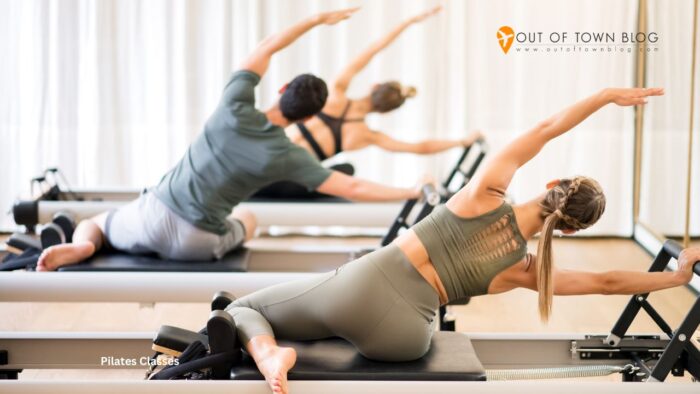
Pilates Classes
Neither is wrong, and neither has forgotten what the other said. The instructions differ because the two practices are asking the breath to do entirely different jobs.
Almost nobody explains this, which leaves students attending a Pilates class in Riyadh and a yoga class in the same week quietly wondering which teacher to believe.
What Pilates Is Asking For
Pilates uses lateral thoracic breathing, sometimes called intercostal or rib breathing.
Direct the inhale into the sides and back of the ribcage. Feel the ribs widen outward under your hands while the abdominal wall stays drawn in, and exhale through slightly pursed lips.
The reason is mechanical. An engaged abdominal wall maintains intra-abdominal pressure, which supports the lumbar spine while the arms and legs move.
Let the belly release on every inhale, and let the support go with it halfway through every repetition.
This is also why the exhale often lands on the hardest part of a movement. Exhaling as you lift, roll up, or press engages the core precisely when the load arrives.
What Yoga Is Asking For
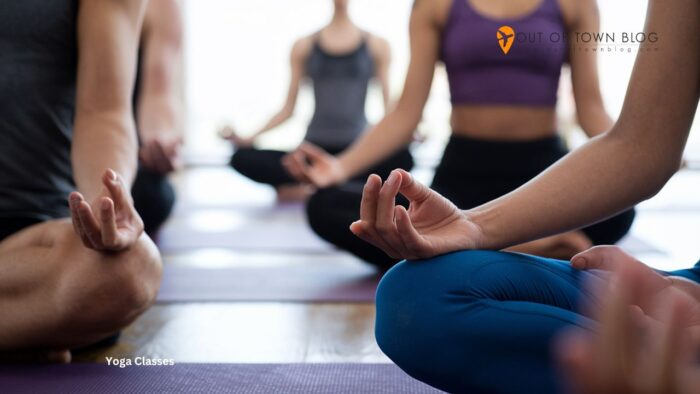
Diaphragmatic breathing works in the opposite direction and for a different purpose.
The inhale fills the belly first, then the torso, then the chest, and the exhale releases in reverse order. The abdominal wall expands as it goes.
The purpose is largely regulatory. Deep abdominal breathing engages the parasympathetic nervous system, which is the mechanism behind the settling effect people describe after a class.
Yoga also uses other patterns, including ujjayi, where a gentle constriction at the throat slows and controls the airflow. It produces the audible quality you hear in a studio and gives the practitioner something steady to work against through a long hold.
None of this is incompatible with strength. It simply doesn’t do the bracing job that Pilates breathing does.
Why the Contradiction Is Deliberate
Put the two side by side, and the logic becomes clear.
Pilates is a stability practice. The core holds while the limbs work, so the breath has to happen without the center letting go.
Yoga is more often a mobility practice. Shapes are held, the body is asked to open, and the breath is one of the tools that allows that opening to happen rather than being resisted.
So the cue you receive in a yoga class in Riyadh is not a softer version of the Pilates cue. It is a different instruction for a different outcome, and following the Pilates pattern through a yoga class would work against what the class is trying to achieve.
What This Means for Your Practice
The practical answer is to use the breathing the room is asking for.
That is easier said than done, because breathing patterns become habits quickly, and a student who has drilled lateral breathing for six months will often carry it into every other setting without noticing.
Two things help. Spend a few minutes at the start of a session establishing the pattern before movement begins, which most instructors will build in if asked. And be aware of which one you default to when you are tired, because that is usually the one you have practiced most.
There is also a case for diaphragmatic breathing outside the studio. Full abdominal breathing serves digestion, sleep and general nervous system regulation, and there is no reason to hold a bracing pattern through ordinary life.
Frequently Asked Questions
Is lateral breathing better than diaphragmatic breathing?
Neither is better. The useful question is which one the activity in front of you requires.
Should I use Pilates breathing in a yoga class?
No. The bracing pattern works against what the class is asking for, since yoga postures generally rely on the breath to allow opening rather than to hold the center firm.
Why does Pilates breathing feel difficult at first?
Because most people breathe abdominally by default, and directing air into the sides and back of the ribcage while holding the abdominal wall in is an unfamiliar coordination. It is a skill, and it becomes automatic with practice.
Does breathing pattern matter in every exercise?
Not in every one. Some movements have a specific breath cue attached, and in many others the instruction is simply to keep the pattern going rather than to hold the breath, which is the more common error.
Ask Which Job the Breath Is Doing
The confusion between these two patterns is entirely reasonable, and it usually persists because nobody has stated the reason for either.
Once the purpose is clear, the instructions stop competing. One breath holds a structure steady so the limbs can work against it. The other releases a structure so the body can move into a shape.
Ask an instructor which one a given exercise needs, and the answer will tell you what the exercise is actually for.
Follow and subscribe to OutofTownBlog.com on Facebook , Twitter, Instagram, Pinterest, and YouTube for more Travel-related updates.
Read:
- The Best Abu Dhabi Hotels For A Tight Budget
- How to Renew a Philippine Passport in the UAE: Comprehensive Guide
- ABU DHABI TRAVEL GUIDE: Top Attractions, Hotels, Food & Local Tips for First-Time Visitors
- The 6 Best Places to Celebrate Kids’ Birthdays in Abu Dhabi
- Mischief, Mayhem, and More: Meet the Iconic Villains of Warner Bros. World™ Yas Island, Abu Dhabi