

 Melo Villareal
The 10 of the World’s Most Dangerous Active Volcanoes
When determining how dangerous a volcano is, experts must consider several factors. Some of these include the population density close to the mountain, its recent geological activity, and the type of volcanic hazard it exhibits, such as pyroclastic flow, lava flow, lahar, debris avalanche, tephra fall, and release of deadly gas. And the degree of danger can increase based on the chemical composition and content of magma and lava. Countries with several dangerous and active volcanoes include Indonesia, Japan, the Philippines, and the United States.
Here are some of the world’s most dangerous active volcanoes:
Mount Pinatubo
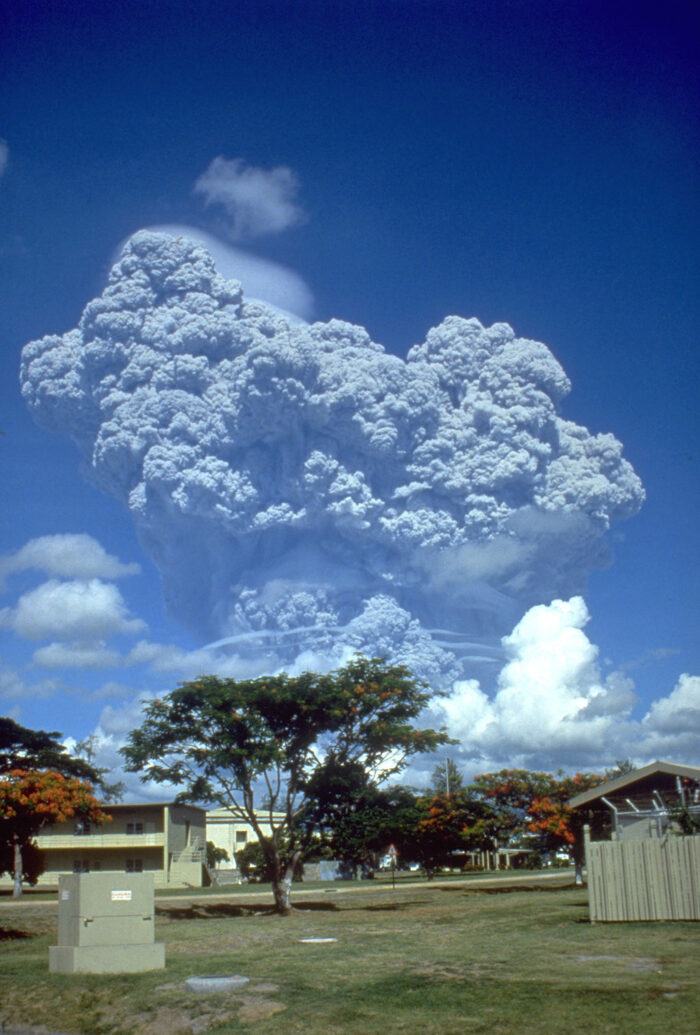
Location: Luzon Island, Philippines
Just three hours from Manila, at the intersection of Zambales, Tarlac, and Pampanga borders, is one of the Philippines’ most powerful volcanoes. Mount Pinatubo is well-known for its 1991 eruption, the second largest eruption in the 20th century following the 1912 eruption of Novarupta in Alaska. The volcano’s devastating effects were felt in the provinces closest to it and worldwide. Global temperatures lowered by one degree, and satellite imagery showed the volcanic ash clouds circle the planet. The 1991 eruption was followed by a 7.8 magnitude earthquake which brought a total death toll of 722 people and displaced more than 200,000 people.
Mount Fuji
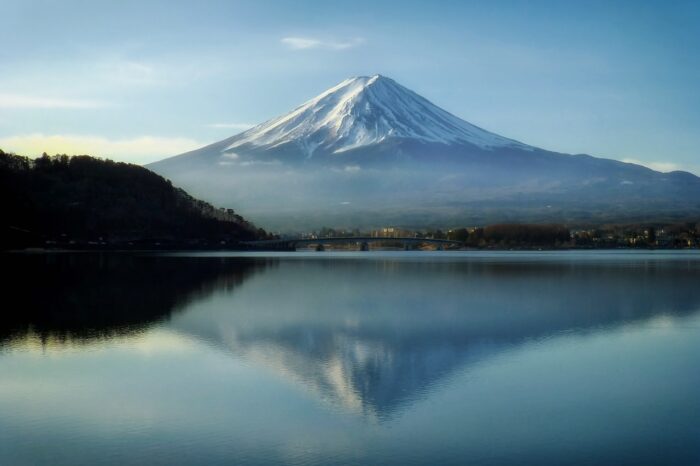
Location: Fuji-Hakone-Izu National Park, Japan
Mount Fuji, the highest mountain in Japan, is a sacred symbol of Japan, and temples and shrines can be found on and around the volcano. Hiking the volcano is considered a religious tradition. Mount Fuji has remained dormant since its last eruption in 1707, but geologists still classify it as active. The 1707 eruption, called the Hoei eruption, darkened present-day Tokyo’s sky with ash and buried several nearby temples. An 8.6-magnitude earthquake followed the eruption.
Mount Merapi
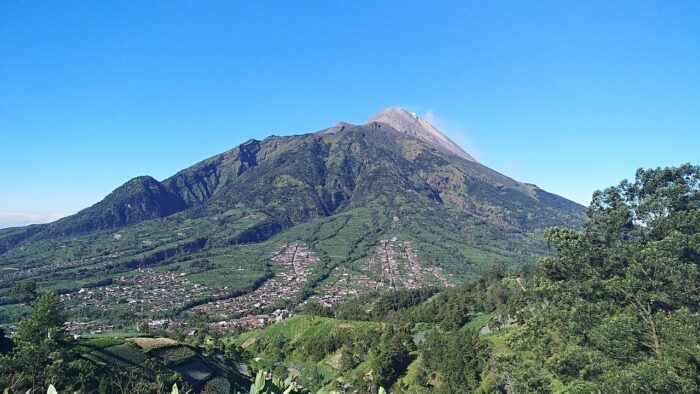
Location: Central Java, Indonesia
One of Indonesia’s most active volcanoes, Mount Merapi, is located in one of the country’s most populated islands, just 30 kilometers north of Yogyakarta. Mount Merapi’s most significant eruptions occurred in 1006, which spread ash across Java, and in 2010 which led to 354 deaths and left 350,000 people homeless. According to the Global Volcanism Program, its latest eruption was from December 16 to 22, 2022.
Shiveluch
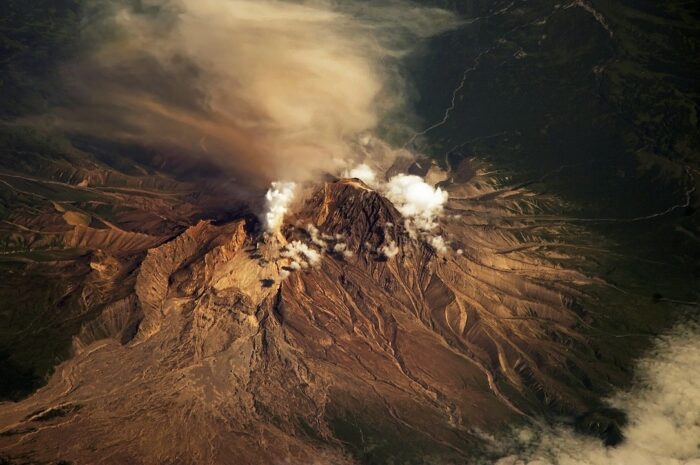
Location: Kamchatka Peninsula, Russia
The Kamchatka Peninsula is home to several active volcanoes surrounded by dense forests and a vast expanse of tundra. Shiveluch, one of the peninsula’s largest and most active volcanoes, was estimated to have had 60 eruptions in the past 10,000 years. Its most powerful eruption was in 2007 when a massive ash cloud shot 32,000 feet into the sky.
Mount Vesuvius

Location: Naples, Italy
Mount Vesuvius is regarded as one of the world’s most dangerous volcanoes because it is close to populated areas like Naples. The Global Volcanism Program has recorded eight major explosive eruptions for the past 17,000 years, followed by pyroclastic flows. The volcano’s largest and most famous eruption, the Pompeii eruption, happened in 79 A.D. after a century of dormancy. It killed more than 16,000 people in Pompeii, Herculaneum, and neighboring towns and villages.
Mount Nyiragongo
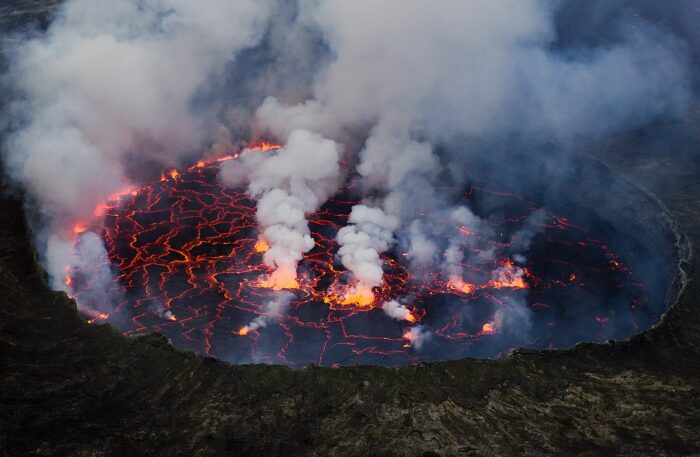
Location: Goma, Democratic Republic of Congo
Located next to the city of Goma within the Virunga National Park, Mount Nyiragongo is one of Africa’s most potent and most notable volcanoes. An estimated one million people live at the foot of the volcano. Mount Nyiragongo’s 2002 eruption claimed the lives of 245 people when lava from the volcano emitted gaseous fumes into the city of Goma. Almost a quarter of the city population dropped dead from the emitted deadly gas, and more than half a million were displaced. In May 2021, Mount Nyiragongo erupted again. Generated lava flowed toward the neighboring cities and villages, killing more than 30 people and leaving hundreds homeless.
Mount Kilauea
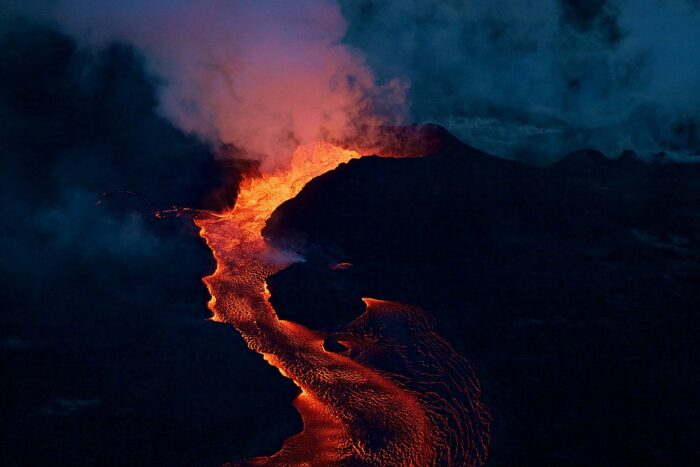
Location: Hawai’i
Mount Kilauea is one of the most active volcanoes on the Island of Hawai’i and one of the world’s most hazardous volcanoes, partly because of its frequent eruptions. It is also an effusive volcano, where instead of shooting into the sky, the lava erupts in fissures, opens cracks in the ground, and slowly overflows along the caldera. Eruptions are typically contained within its crater filled with active lava. Mount Kilauea’s most recent eruption in 2018 destroyed over 700 homes and displayed thousands of people. Its most recognized eruption happened in 1955, when lava overflowed for almost three months, destroyed 15 square kilometers of sugarcane fields and orchards, and was followed by a violent series of earthquakes.
Mount Rainier
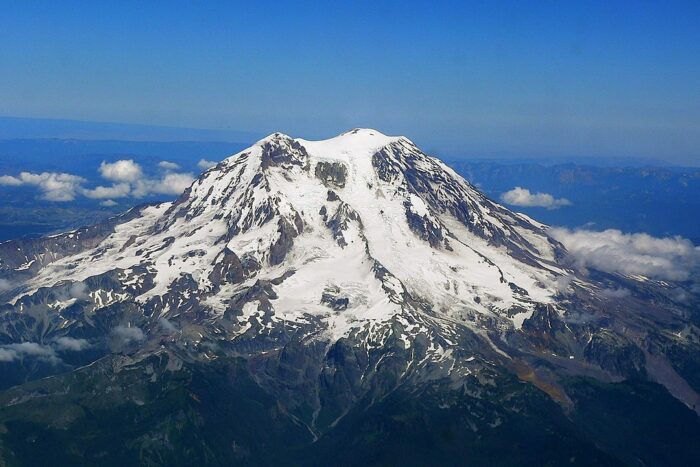
Location: Mount Rainier National Park, Washington State
Mount Rainier’s last major eruption occurred 1,000 years ago. Yet, it is considered by the International Association of Volcanology and Chemistry of the Earth’s Interior as one of the most dangerous volcanoes in the world. Mount Rainier presents a significant risk to Seattle and Tacoma suburbs because of the volcano’s towering height, at 14,410 feet above sea level, and its ability to build intense and deadly pyroclastic flows, lava flows, and volcanic ash. Its most devastative eruption generated a major lahar, named the Osceola Mudflow, more than 5,600 years ago, enough to cover the entire Manhattan under 130 feet.
Mount Saint Helens
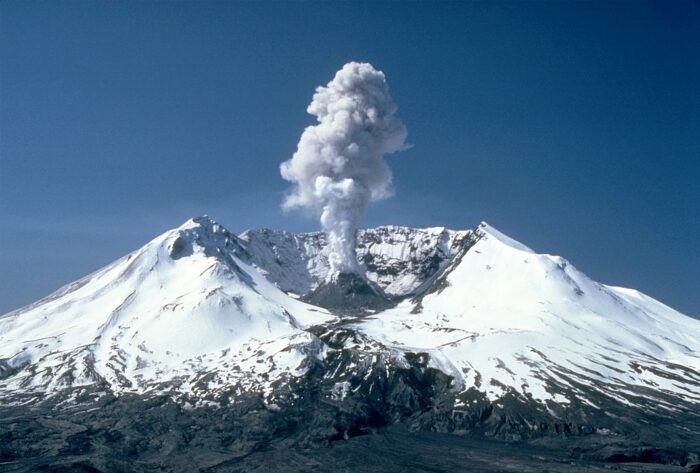
Location: Skamania County, Washington State
The 1980 eruption of Mount Saint Helens remains its deadliest and most economically destructive eruption in U.S. history, where 57 people and thousands of animals were killed, and about 518 square kilometers of the forest was destroyed. A devastating landslide and a series of earthquakes accompanied the eruption. Since the 1980 eruption, the elevation of Mount Saint Helens has decreased because of erosion and loss of rimrock by crater-wall collapses.
Popocatepetl
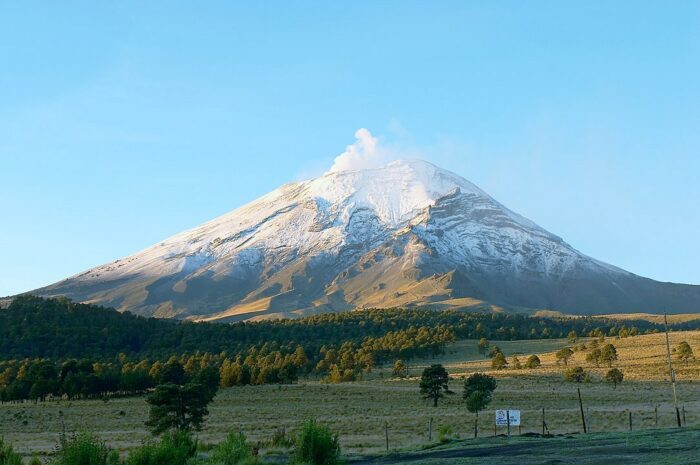
Location: Mexico-Puebla-Morelos, Mexico
Popocatépetl, or Volcán Popocatépetl, is North America’s second-highest volcano, located in Las Volcanes, a UNESCO Biosphere Reserve property. Popocatépetl is also Mexico’s most studied and deadliest volcano, as 30 million people live within a 70-kilometer radius of the volcano. Its largest eruption occurred in 2012 when the volcano generated an ash plume that rose 2 kilometers into the sky and caused ashfall to over 30 communities near the volcano.
Despite their dangerous reputation, several of the volcanoes mentioned above are safe to visit. Hiking trails and tours are usually open in the summer during the climbing season. The surrounding area of the volcanoes is a marvelous sight to behold, with either stunning views of the nearest city or picturesque sights of the forests and lakes.
Follow Out of Town Travel Blog on Facebook, Twitter, Instagram, and Pinterest if you want more travel and tech-related updates.
Read:
- Halsema Highway: The Philippines’ Most Dangerous Road
- 6 Volcanoes around the World That You Can Hike!