Melo Villareal
GYEONGBOKGUNG PALACE IN SEOUL, SOUTH KOREA
Gyeongbokgung Palace is to South Korea as Versailles is to France and Neuschwanstein Castle is to Germany. This iconic palace is the largest of the Five Grand Palaces constructed by the Joseon dynasty and served as its royal residence. Standing majestically today, many travelers are not aware that Gyeongbokgung Palace has raised one too many times from the ashes of obliteration.

Gyeongbokgung Palace in Seoul
The construction of Gyeongbokgung Palace was commissioned in 1394 by King Taejo and became a home for kings and their servants, as well as the capital of the dynasty, for over 200 years. It is believed that the palace once held up to 400 buildings within its rectangular perimeter, the majority of which were burned down during the alleged invasion of the Japanese.
I used the term “alleged” because another legend has it that the arsonists were actually a group of local slaves who were most often disdained and put through harsh living and working conditions.

Following the coronation of young King Gojong, the palace was rebuilt in 1863, but shortly thereafter, the Japanese launched another invasion. Under Japanese rule, Korea was forcibly opened to foreign trade.

It was on the Gyeongbokgung Palace grounds that Empress Myeongseong was assassinated in 1895; she was one of Gojong’s wives. The palace was constantly used by the Japanese as an interrogation and torture chamber, and to snidely destroy the pride of the Koreans, they also subjected the palace to numerous changes.

How to Get to Gyeongbokgung Palace
Gyeongbokgung Palace is located at 161 Sajik-ro in Jongno-gu, Seoul. It is easy to reach from nearby attractions by subway, bus, taxi, or on foot.
By Subway: The easiest option is Gyeongbokgung Station on Seoul Subway Line 3. Take Exit 5, which leads directly toward the palace grounds. From Myeongdong, take Line 4 to Chungmuro Station and transfer to Line 3. You can also transfer at Euljiro 3-ga Station, depending on your starting point.
By Bus: Several Seoul city buses stop near Gyeongbokgung Palace, particularly around Gyeongbokgung Station and Gwanghwamun. Bus routes can change, so check the latest route information before traveling.
By Taxi: Taxis can take you directly to the palace entrance. Tell the driver “Gyeongbokgung Palace”.
On Foot: Gyeongbokgung Palace is within walking distance of Gwanghwamun Square, Bukchon Hanok Village, Insadong, and the National Palace Museum of Korea. This makes it easy to combine several major Seoul attractions into a single sightseeing itinerary.
Things to Do Inside the Palace
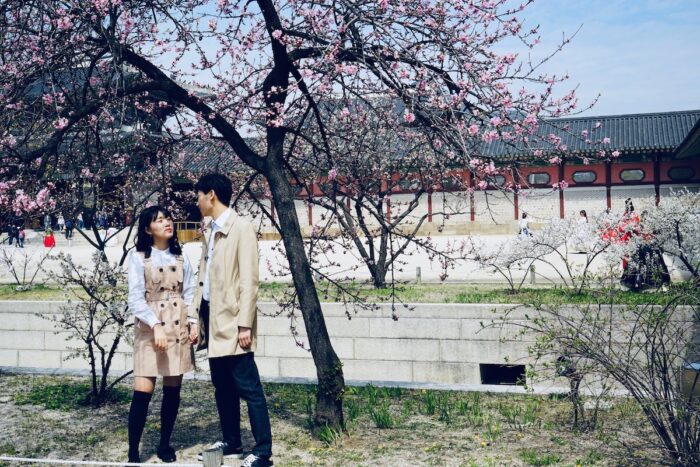
Touring the Gyeongbokgung Palace can take at least half a day. Ensure you arrive at the entrance before 10 AM and also grab yourself a map of the palace.
Watch the Gate Opening and Guard Changing Ceremonies

The Royal Guard change usually involves a reenactment of the military practices during the Joseon Dynasty. The procession takes place between the Heungnyemum Gate and the Gwanghwamun Gate, from 10 AM to 6 PM. The guards change shifts every 60 minutes, on the hour.
Take a guided tour of the Gyeongbokgung Palace

The free tour guides are offered in four different languages. The visitors on tour depart from the information desk close to the Heungnyemum Gate. The tours are offered up to 4 times a day, each lasting up to 90 minutes. The English tour starts at 11 AM, 1.30 PM, and 3.30 PM. Other languages are Japanese, Korean, and Chinese.
Admire the natural beauty of the palace

The Gyeongbokgung Palace gardens feature lush gardens, islands, lotus ponds, and statuary. A visit to these grounds is like a visit to another planet, in contrast to the surrounding bustling metropolis.
Gyeongbokgung Palace Entrance Fees
Gyeongbokgung Palace offers affordable admission, with separate rates for adults, children, and certain groups. The standard entrance fee is:
| Visitor | Entrance Fee |
|---|---|
| Adults aged 19 to 64 | KRW 3,000 |
| Children aged 7 to 18 | KRW 1,500 |
| Children aged 6 and below | Free |
| Visitors aged 65 and above | Free |
Admission is also free for everyone on certain special days, including the last Wednesday of each month, known as Culture Day.
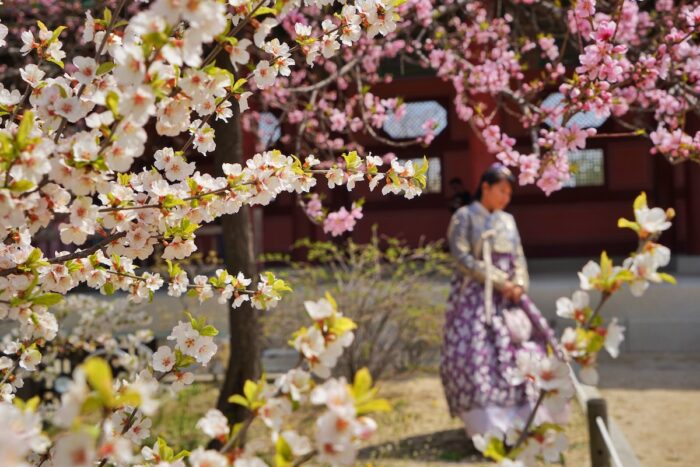
Visitors wearing a traditional Korean hanbok can also enter Gyeongbokgung Palace for free. This is a popular option for travelers who want to experience Seoul’s historic atmosphere while wearing traditional Korean clothing.
The entrance ticket generally covers the palace grounds. Additional attractions within the palace complex may have separate arrangements, so check the latest information before your visit.
Travel Tips
Tip 1: As one of Seoul’s top tourist attractions, Gyeongbokgung Palace always has large crowds. You can easily beat the crowds by showing up early (8.45 AM), before the palace gates open.
Tip 2: The tour buses drop off visitors on the east side of the grounds, where a ticket booth is located. This booth is always crowded because many tourists don’t know that there is actually a main ticket booth inside the Gwanghwamun Gate (the main gate).
Tip 3: The largest number of tourists visiting Gyeongbokgung Palace are Chinese, and they are usually in large groups. But you see, they normally stop for three snaps, then depart for their next destination. If you learn how to sidestep them and reach those attractions, you will be the only tourist not bothered by the crowd.
Seoul Travel and Tour Packages
Seoul Private 4 Hour Tour with A Korean Buddy

- Plan your own four-hour tour and have a Korean guide who speaks English, Chinese, or Japanese guide you!
- You and your friends will get to see places that best suit your interests.
- Find the most famous shopping items and the best restaurants with your Korean buddy.
- Meet your guide at the hotel or at the starting point of your tour, who will drop you off at your hotel safely.
- This is the ideal tour for groups who don’t have much free time in Seoul!

Check out our complete list of recommended Hotels in Seoul, South Korea via Agoda, or you may also see available Airbnb properties in the city.
Also see:
- 10 Must-See South Korean Travel Destinations Outside of Seoul
- Everland Theme Park in Yongin, South Korea
- Korean Folk Village in Yongin, South Korea
- Suwon Hwaseong Fortress in Gyeonggi-do, South Korea
- Galbi Dinner at Bonsuwon: Best Korean Beef BBQ in Suwon, South Korea
- Exploring Gwangmyeong Cave in Gyeonggi-do, South Korea
- Lunch at Seojichogaddeul Restaurant in Gangneung, South Korea
- Visiting Changdeokgung Palace in Seoul, South Korea
- How to Get a Korean Tourist Visa for Filipino Travelers
- Discovering Local Cuisine: Must-Eat Local Food in Seoul, South Korea