

 Team Out of Town
How to Apply for a PWD ID in the Philippines: Complete Step-by-Step Guide
A Persons with Disability Identification Card, commonly called a PWD ID, is an important government-issued identification card for Filipinos with disabilities. It serves as proof of disability and allows qualified cardholders to access discounts, benefits, and other privileges provided under Philippine law.
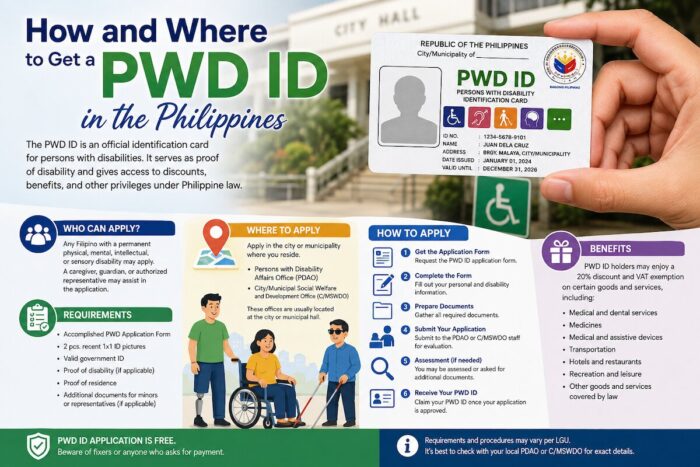
How and Where to Get a PWD ID in the Philippines
The issuance of PWD IDs is generally handled at the local government level, through the Persons with Disability Affairs Office (PDAO) or the City/Municipal Social Welfare and Development Office (C/MSWDO) in the area where the applicant resides.
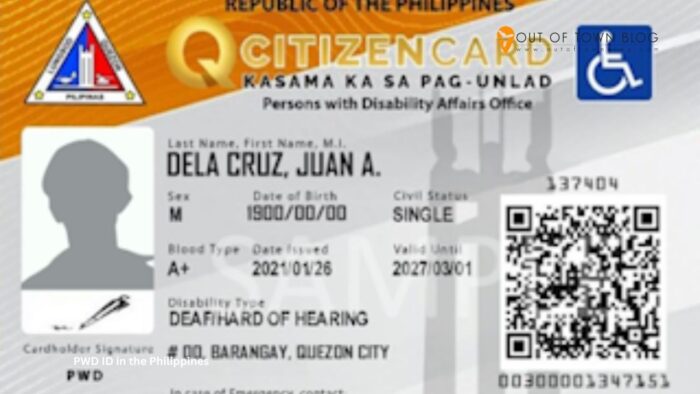
If you or a family member is applying for a PWD ID for the first time, here’s a practical guide to the requirements, application process, where to apply, and the benefits associated with the card.
What Is a PWD ID?
The PWD ID is an identification card issued to qualified persons with permanent disabilities. Covered disability categories include deaf or hard of hearing, intellectual, learning, mental, orthopedic, physical, psychosocial, speech and language impairment, and visual disabilities. The guidelines also cover persons with cancer and rare diseases.
The card serves as proof of disability when availing of benefits and privileges granted under laws such as Republic Act No. 9442 and Republic Act No. 10754.
Who Can Apply for a PWD ID?
A Filipino with a qualifying disability may apply for a PWD ID. The applicant may also be assisted by a caregiver, guardian, or authorized representative during the application process.
Applicants generally need to establish their identity, residence, and disability or medical condition when documentation is required.
For people with an apparent disability, such as total blindness, missing limbs, or an obvious mobility impairment, a medical certificate may not always be required. The issuing officer may assess the applicant and, when necessary, refer the case to the city or municipal health office for confirmation.
PWD ID Requirements in the Philippines
Requirements may vary slightly by local government unit, so it is advisable to check with your local PDAO or C/MSWDO before visiting.
1. Accomplished PWD Application Form
Applicants need to complete the prescribed PWD Identification Card Application Form.
The form may be obtained from the following offices:
- City or Municipal Social Welfare and Development Office
- Persons with Disability Affairs Office
- Department of Health
- National Council on Disability Affairs
2. Recent ID Pictures
Two recent 1×1 ID photographs are generally required. The applicant’s name and signature or thumbmark may need to be placed on the back of the photographs.
Some LGUs may have additional or different photo specifications, so applicants should confirm the requirements with their local issuing office.
3. Valid Government ID
Adults generally need to present a valid government-issued ID.
If an applicant does not have a valid ID, a Barangay Certificate may be accepted as an alternative. This may also help establish residence if the available identification document does not show the applicant’s current address.
4. Proof of Disability
Depending on the type of disability, applicants may need to submit a medical certificate, a certificate of disability, or another appropriate document confirming the condition.
For an apparent disability, the issuing authority may assess the applicant rather than require a physician’s certificate.
5. Proof of Residence
Applicants may be asked to provide proof of residence within the jurisdiction of the issuing LGU.
Possible documents include:
- Barangay Certificate
- Voter’s ID or another accepted proof of residency
- Utility bill showing the applicant’s name and address
The exact documents accepted can differ by LGU.
6. Additional Documents for Minors
For children, a school ID may be accepted. If the child does not have a school ID, a photocopy of the birth certificate may be required.
A parent, guardian, or authorized representative may assist the minor with the application.
7. Documents for a Guardian or Authorized Representative
If someone is applying on behalf of the PWD, additional documentation may be required.
A guardian may need to present proof of guardianship, while an authorized representative may need to provide a notarized authorization letter.
Where to Get a PWD ID
The most important thing to remember is that you normally apply for a PWD ID in the city or municipality where you reside.
Persons with Disability Affairs Office
The PDAO is one of the primary offices responsible for PWD registration and ID issuance at the local level.
Depending on the LGU, the PDAO may be located at or near the city or municipal hall or another government facility.
City or Municipal Social Welfare and Development Office
If your city or municipality does not have a dedicated PDAO office that handles applications, the C/MSWDO can assist with PWD registration and ID issuance.
These offices are commonly located at the city or municipal hall.
National Council on Disability Affairs
The National Council on Disability Affairs provides national guidelines and support concerning PWD registration. However, ordinary applicants generally obtain their PWD ID through their local government.
How to Apply for a PWD ID
The application process is generally straightforward.
Step 1: Get the Application Form
Visit your local PDAO or C/MSWDO and request the PWD ID application form.
Some LGUs may also provide the form through their local government website or online services.
Step 2: Complete the Form
Provide the requested personal information, address, disability information, and other details required by the registration form.
Make sure the information is accurate and consistent with your supporting documents.
Step 3: Prepare the Supporting Documents
Bring your photographs, valid ID, proof of residence, and medical or disability documentation if applicable.
If you are applying through a guardian or authorized representative, bring the required proof of guardianship or authorization.
Step 4: Submit Your Application
Submit the completed application and supporting documents to the designated PDAO, C/MSWDO, or other authorized local government office.
The assigned personnel will check the documents and assess the application.
Step 5: Undergo Assessment if Necessary
If the disability is not immediately apparent, the applicant may be required to provide appropriate medical documentation.
For apparent disabilities, the issuing officer may conduct an assessment and, when necessary, coordinate with the local health office.
Step 6: Receive Your PWD ID
Once the application has been approved and processed, the PWD ID is issued to the applicant.
The exact processing time and release procedure can vary among LGUs.
How Much Does a PWD ID Cost?
The PWD ID application is generally free of charge.
However, applicants should distinguish the issuance of the government ID itself from incidental expenses, such as obtaining photographs, medical certificates, photocopies, or notarized authorization documents, which may incur separate costs.
What Benefits Can You Get With a PWD ID?
One of the main reasons eligible Filipinos apply for a PWD ID is to establish proof of entitlement to benefits and privileges under Philippine law.
Depending on the applicable law and transaction, qualified PWDs may receive a 20% discount and VAT exemption on covered goods and services.
These benefits can include certain:
- Medical and dental services
- Medicines
- Medical and assistive devices
- Transportation services
- Hotels and similar establishments
- Restaurants and food establishments
- Recreation and leisure services
- Other goods and services covered by law
The specific rules and conditions for each benefit should be checked because not every purchase or transaction automatically qualifies.
Can a Caregiver or Family Member Apply for a PWD?
Yes. A PWD may receive assistance from a caregiver during the application process.
A guardian or authorized representative may also transact on behalf of the applicant when appropriate, provided the required supporting documents are submitted.
For representatives, it is best to contact the issuing office in advance to confirm exactly what authorization documents are required.
How to Renew a PWD ID
For renewal or revalidation, applicants generally need to complete the PWD application form and indicate that the transaction is for renewal.
Common documents for renewal may include:
- Accomplished PWD ID application form
- Expired PWD ID
- Affidavit of Loss if the previous PWD ID was lost
- Recent 1×1 photographs if the expired PWD ID is unavailable
Because local procedures may differ, applicants should verify renewal requirements with their PDAO or C/MSWDO.
What If You Lose Your PWD ID?
If your PWD ID is lost, you may be asked to submit an Affidavit of Loss when applying for a replacement or renewal.
Your local issuing office may also require additional documents, so it is best to ask about the replacement procedure before submitting your application.
Tips Before Applying for a PWD ID
To make the process easier, keep these tips in mind:
Check with your LGU first. Requirements and procedures can vary slightly between cities and municipalities.
Bring originals and photocopies. Even when copies are not explicitly listed, having photocopies of your documents can save time.
Prepare your medical documents. If your disability is not apparent, bring an appropriate medical certificate or supporting documentation.
Bring proof of residence. PWD registration is generally handled by the LGU where the applicant resides.
Keep your PWD ID secure. It is an important proof of entitlement when claiming applicable benefits.
Ask about online processing. Some LGUs have introduced online registration, appointment, or application systems, but availability differs from one locality to another.
Frequently Asked Questions About PWD ID
Is a medical certificate always required for a PWD ID?
No. People with apparent disabilities may not need to submit a medical certificate. The issuing officer may assess the applicant and, when necessary, refer the case to the local health office.
Where should I apply for a PWD ID?
Apply through the PDAO or City/Municipal Social Welfare and Development Office of the city or municipality where you reside.
Is the PWD ID free?
The PWD ID itself is generally issued without a government processing fee. However, applicants may have incidental expenses for photographs, medical certificates, photocopies, or notarized documents.
Can children get a PWD ID?
Yes. Children with qualifying disabilities may be registered. A school ID may be accepted; if the child does not have one, a birth certificate may be required.
Can someone else process my PWD ID application?
Yes. A caregiver can assist the PWD, while guardians and authorized representatives may transact on the applicant’s behalf when the required proof of guardianship or authorization is provided.
Can I use my PWD ID anywhere in the Philippines?
The PWD ID serves as proof of disability for applicable benefits and privileges. However, establishments may verify the ID and other requirements before granting a particular discount or exemption.
Final Thoughts
Obtaining a PWD ID in the Philippines is an important step for qualified persons with disabilities seeking to access the benefits and privileges provided by law. The process usually starts at the local PDAO or City/Municipal Social Welfare and Development Office, rather than at a national government office.
Before heading to the government office, prepare your application form, identification documents, photographs, proof of residence, and disability-related documents when applicable. Since individual LGUs may have their own procedures or additional requirements, contacting your local PDAO or C/MSWDO beforehand can help avoid unnecessary trips.
Most importantly, the PWD ID is more than just another government identification card—it serves as official proof that helps qualified Filipinos access discounts, exemptions, priority services, and other protections intended for persons with disabilities under Philippine law.
Follow and subscribe to OutofTownBlog.com on Facebook, Twitter, Instagram, Pinterest, and YouTube for more Travel-related updates.
Read:
- South Korea Visa Requirements Get a Makeover — What Filipino Travelers Need to Know
- Acquiring 19 Valid IDs in the Philippines: A Step-by-Step Guide
- DFA Courtesy Lane: Who are allowed to use the DFA passport express lane?
- Top 10 Digital Nomad Destinations Around the World
- Best PWD-Friendly Hotels and Resorts in the Philippines


