

 Melo Villareal
The Historic Casa de Comunidad de Tayabas Museum in Tayabas City
For 131 years, Tayabas served as the provincial capital of Tayabas Province (now Quezon). Located at the heart of the province, it rose to prominence as a center of education, trade, arts, and culture. In the 1878 book *De Manila a Tayabas*, the town was described as the wellspring of the purity of the Tagalog race and the center of the pristine, elegant native language.

Casa de Communidad de Tayabas
Casa de Comunidad de Tayabas
Aside from having the largest Catholic church and several Spanish stone bridges, Tayabas offers the best panoramic view of Mount Banahaw (also known as Vulcan de Agua), which is now regarded as the mystical mountain of the Philippines.
If you are visiting the City of Tayabas, you should see the Casa de Comunidad de Tayabas, a typical *bahay na bato* structure dating back to the Spanish era. When I was a kid, this building was abandoned entirely. Inside, it was filled with old wooden tables, chairs, and books, evidence that it had once been a school.
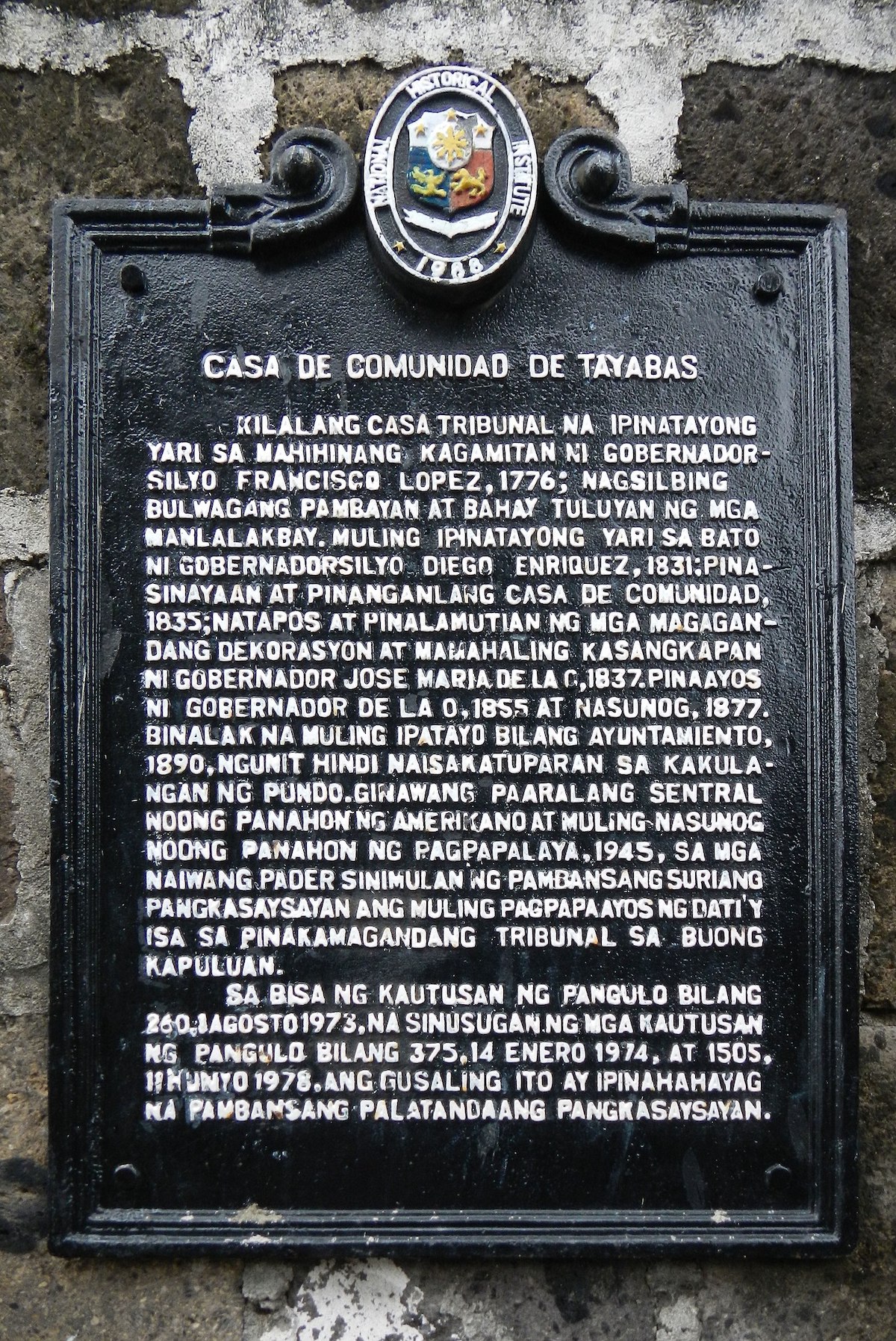
According to the National Historical Commission of the Philippines (formerly the National Historical Institute), the Casa de Comunidad de Tayabas was declared a historical attraction in June 1978.
During World War II, it served as barracks for the Japanese. The original tribunal was established by Gobernadorcillo Francisco Lopez in 1776 and was first constructed with lightweight materials. It was later renovated by Gobernadorcillo Don Diego Enriquez in 1831 and rebuilt entirely in stone.
Within these very walls, Hermano Pule was executed by firing squad after being sentenced to death for leading the first major mutiny in the country—an act apparently driven by his belief in religious freedom. He founded “The Brotherhood Cofradía de San José,” which barred Spaniards from membership, leading to his arrest and trial for heresy by Spanish religious authorities.
Today, the fully restored Casa de Comunidad de Tayabas houses a museum, an art gallery, and a municipal library within its historic walls. The museum showcases fascinating artifacts, including carved stone crosses and a stone press once used for specific tasks. Walking through this landmark structure feels like stepping into a time machine.

Here, you can see some of the oldest artifacts in Tayabas, along with a range of local products. One highlight is lambanog, a famous Filipino distilled alcoholic beverage. The building also features two chambers: one with a series of photos of Tayabas’s most notable sons, and another with a collection of traditional dresses (native ternos) preserved over the centuries. History enthusiasts will appreciate the many pieces on display, which seem to have stood still in time.
If you have enough time while visiting Tayabas City, be sure to include this stop in your itinerary. Ideal for the whole family, Casa de Comunidad de Tayabas offers an engaging, interactive glimpse into life in this historic city.
Follow #TeamOutofTown, on Facebook, Twitter, Instagram, Bloglovin, and Pinterest for more travel ideas.