

 Melo Villareal
Binondo Church: A Historical Landmark in Manila’s Chinatown
Binondo Church, also known as the Minor Basilica and National Shrine of San Lorenzo Ruiz, is a historic church located in the district of Binondo, Manila, Philippines. It was established by the Dominicans in 1596 and was initially dedicated to Saint Gabriel the Archangel before becoming Binondo’s patron until the mid-19th century. The church is now dedicated to Saint Lorenzo Ruiz, the first Filipino saint born and raised in Binondo.

Binondo Church is considered one of the oldest places of Christian worship in the Philippines. It has undergone several changes in administration, from Dominican priests in 1596 to secular priests in 1768, back to Dominican administration in 1822, and finally back to secular priests in 1898. Despite these changes, the church has remained an important landmark in the history of the Philippines, particularly in the development of Catholicism in the country.
Today, Binondo Church is a place of worship and a popular tourist spot in Manila. Its beautiful architecture, intricate designs, and rich history attract visitors from all over the world. The church’s status as a Minor Basilica and National Shrine also enhances its significance and attracts pilgrims seeking spiritual guidance and blessings.
Historical Overview
Binondo Church was founded by Dominican priests in 1596 to serve their Chinese converts to Christianity.
The original structure of the Binondo Church was constructed in 1596, but it underwent several renovations and reconstructions over the years. The current Baroque-style church building was completed in 1852. It was designed by two Spanish architects, Francisco Roxas and Felix Roxas, and features ornate details and intricate carvings.
Throughout its history, Binondo Church has witnessed several significant events. During the British invasion of Manila in 1762, the church was used as a hospital for wounded British soldiers. In 1863, an earthquake damaged the church, and it had to undergo extensive repairs.
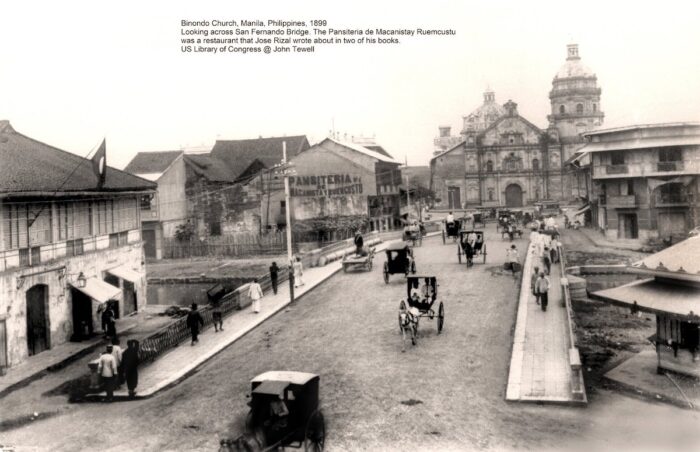
In 1898, the archives of the church were burned by the American bombing during the Spanish-American War. During the Second World War, the Japanese forces heavily damaged the church, which was restored after the war. In 1981, Pope John Paul II declared Binondo Church a Minor Basilica.

Binondo Church also played a significant role in the 1603 Chinese revolt, a rebellion by Manila’s Chinese community against Spanish colonization. The church served as a refuge for Chinese converts hunted down by the Spanish authorities.

Architectural Highlights
Binondo Church is a magnificent example of Baroque architecture in the Philippines. The church has undergone several renovations, but its original architecture and design have been preserved. The Western façade of the church is made of granite and features an octagonal belfry.
The bell tower of Binondo Church is one of its most striking features. The octagonal, pagoda-like bell tower is reminiscent of the parishioners’ Chinese cultural heritage. The bell tower is topped by a mirador that offers a stunning view of the surrounding area. The church’s dome is also notable, rising above the nave and transept to create a sense of grandeur and majesty.
The interior of Binondo Church is equally impressive, featuring colorful frescoes and a beautifully decorated altar. The church is designed in the form of a Latin cross, with a nave, transept, and sanctuary. The nave is flanked by side aisles and features a series of chapels dedicated to various saints.
The granite church was completed in 1852 and has since become a symbol of the Philippines’ rich history and culture. The church’s Italian High Renaissance architecture is a truly timeless masterpiece. The intricate carvings and details on the church’s façade are a testament to the skill and craftsmanship of the architects and builders who worked on it.
Religious Significance
Binondo Church is dedicated to Saint Lorenzo Ruiz, the first Filipino saint and martyr born of a Chinese father and a Filipino mother. He served as a sacristan in the church during his youth and later became an altar boy. He became a missionary in Japan, where he was executed for refusing to renounce his Christian faith. He was beatified by Pope John Paul II in 1981 and canonized in 1987.
The church was originally named Our Lady of the Most Holy Rosary Parish and was built in 1596 by Dominican priests. It was rebuilt in 1852 after it was destroyed by fire. The church has undergone numerous renovations and was declared a minor basilica in 1981 by Pope John Paul II. It was also designated as a national shrine in honor of Saint Lorenzo Ruiz.
Binondo Church is a Roman Catholic church under the jurisdiction of the Archdiocese of Manila. It is a popular pilgrimage site for Catholics and is visited by thousands of devotees yearly. The church is also a favorite wedding venue for couples who want to have a traditional Catholic wedding.
The church’s interior is adorned with beautiful stained glass windows, paintings, and statues of saints, including Saint Lorenzo Ruiz and Saint Gabriel the Archangel. The church also has a confession room where Catholics can confess their sins and seek forgiveness from God. The Blessed Virgin Mary is also venerated in the church, and her image is enshrined in the church’s altar.
Role of Dominicans
Dominican priests played a significant role in the establishment and administration of the Binondo Church. The church was founded by the Dominicans in 1596 and initially dedicated to Saint Gabriel the Archangel, who became Binondo’s patron until the mid-19th century. The Dominicans were known for their missionary work and played a crucial role in spreading Christianity in the Philippines.
The Dominicans were also responsible for constructing the church’s original structure, which was made of bamboo and nipa. The church underwent several renovations over the years, and the current structure was completed in 1852. The Dominicans were known for their architectural skills, and their influence is evident in the church’s Baroque-style facade.
In 1768, the church was administered by secular priests, but was returned to the Dominican administration in 1822. The Dominicans continued to administer the church until 1898, when it was again handed over to secular priests. Today, the Binondo Church is a Minor Basilica and National Shrine of San Lorenzo Ruiz, administered by the Archdiocese of Manila.
Domingo Cruz y Gonzales, a Dominican priest, played a significant role in the history of the Binondo Church. He was the first Filipino to be ordained as a Dominican priest and served as the church’s parish priest from 1863 to 1872. He was known for his efforts to improve the lives of the poor and marginalized, and his legacy continues to inspire the church’s social outreach programs to this day.
Binondo Church and Chinese Community
Binondo Church has played an essential role in the history of the Chinese community in the Philippines.
Binondo is the oldest Chinatown in the world, and the Chinese community has been an integral part of the Philippines for centuries. Chinese traders and merchants arrived in the Philippines as early as the 9th century, and the Chinese population has grown steadily over the years.
The Chinese community in Binondo is diverse, with different dialects spoken, including Mandarin and Hokkien. The church has been a center of religious and cultural life for the Chinese community, and Chinese converts have played an essential role in the church’s history.
The church has always had a Chinese priest who could communicate with most Chinese parishioners. The Dominican mission in Binondo ensured that the Chinese community was well represented in the church. Today, the church continues to serve the needs of the Chinese and wider Filipino communities.
Notable Events
Binondo Church has witnessed numerous notable events throughout its history. From natural disasters to canonization, this church has seen the highs and lows of the people who have called it their spiritual home.
One of the most significant events in the history of Binondo Church was the British bombardment of Manila in 1762. The church was used as a hospital during this time, and many people sought refuge within its walls. The church was damaged during the bombardment but was rebuilt in the following years.
Another significant event in the history of Binondo Church was the Japanese occupation of the Philippines during World War II. The district of Binondo was one of the areas where the Japanese had a strong presence, and the church was used as a place of worship for the Japanese soldiers. After the war, the church was restored and came to symbolize hope and resilience for the Filipino people.
Binondo Church has also been the site of many important religious events. In 1981, Pope John Paul II visited the church and beatified Lorenzo Ruiz, a Filipino martyr persecuted for his faith. In 1987, Lorenzo Ruiz was canonized, making him the first Filipino saint. The church has since become a popular destination for pilgrims and tourists alike.
Aside from religious events, Binondo Church has also hosted many weddings. Its beautiful architecture and rich history make it a popular choice for couples who want to tie the knot in a meaningful and picturesque place.
Famous Figures
Binondo Church has seen numerous famous figures throughout its history. One of the most notable is St. Lorenzo Ruiz, the first Filipino saint. He was a member of the church and worked as a sacristan. He later became a missionary and was martyred in Japan. His remains were brought back to the Philippines and interred in the church. Today, the church serves as a national shrine for St. Lorenzo Ruiz.
Another important figure associated with Binondo Church is Andrés Bonifacio, a Philippine revolutionary leader. He and his wife, Gregoria de Jesús, were married in the church in 1895. Bonifacio is known for founding the Katipunan, a revolutionary society that fought for Philippine independence from Spain.
Binondo Church is also admired for its grandeur and beauty, Baroque architecture, and intricate, awe-inspiring details.
Despite its beauty, Binondo Church has faced its fair share of challenges. In the early 1900s, the church was infested with termites, which caused significant damage to the structure. However, the church was restored and continues to stand as a testament to the resilience of the Filipino people.
Binondo Church Mass Schedule
| Day | Time |
|---|---|
| Sunday | 8:30 AM – 9:30 AM |
| Sunday | 10:00 AM – 11:00 AM |
| Sunday | 12:15 PM – 1:15 PM |
| Sunday | 5:00 PM – 6:00 PM |
| Monday | 7:00 AM – 8:00 AM |
| Monday | 12:15 PM – 1:15 PM |
| Monday | 5:00 PM – 6:00 PM |
| Tuesday | 7:00 AM – 8:00 AM |
| Tuesday | 12:15 PM – 1:15 PM |
| Tuesday | 5:00 PM – 6:00 PM |
| Wednesday | 7:00 AM – 8:00 AM |
| Wednesday | 12:15 PM – 1:15 PM |
| Wednesday | 5:00 PM – 6:00 PM |
| Thursday | 7:00 AM – 8:00 AM |
| Thursday | 12:15 PM – 1:15 PM |
| Thursday | 5:00 PM – 6:00 PM |
| Friday | 7:00 AM – 8:00 AM |
| Friday | 12:15 PM – 1:15 PM |
| Friday | 5:00 PM – 6:00 PM |
| Saturday | 7:00 AM – 8:00 AM |
| Saturday | 12:15 PM – 1:15 PM |
| Saturday | 5:00 PM – 6:00 PM |
Frequently Asked Questions
What is the history of Binondo Church?
The Minor Basilica of San Lorenzo Ruiz, commonly known as Binondo Church, was established in 1596 by Dominican friars to serve the Catholic Chinese community in Binondo, Manila—the world’s oldest Chinatown. Originally dedicated to Our Lady of the Most Holy Rosary and later to Saint Gabriel the Archangel, the church has endured multiple reconstructions following fires, earthquakes, and wartime damage throughout its over 400-year history. Administration of the church shifted several times between Dominican priests and secular clergy: secular priests took over in 1768, Dominicans returned in 1822, and secular clergy resumed control in 1898. The church holds special significance as the home parish of San Lorenzo Ruiz, a Binondo resident who became the first Filipino saint and martyr when he was canonized in 1987. In 1998, the church was renamed in his honor and elevated to a national shrine, symbolizing its importance to Filipino-Chinese Catholic heritage and Philippine Christianity.
When was Binondo Church built?
Binondo Church was initially built in 1596 by Dominican friars to serve the growing Catholic Chinese community in Binondo, Manila. The first church and convent were constructed with light materials. However, the current structure is not the original building; the church has been rebuilt and reconstructed multiple times throughout its history due to devastating fires, earthquakes, and wartime damage, including significant destruction from the 1863 earthquake and World War II. Despite these challenges, Binondo Church has stood for over 400 years. It remains one of the oldest places of Christian worship in the Philippines, continually serving its community since the late 16th century.
What is the significance of Binondo Church?
Binondo Church holds immense religious and cultural significance as one of the Philippines’ oldest churches and a symbol of the enduring Filipino-Chinese Catholic community. It serves as the spiritual center of the world’s oldest Chinatown, established in 1594, representing centuries of faith and cultural integration between Chinese immigrants and Filipino culture. The church’s most tremendous significance lies in being the home parish of San Lorenzo Ruiz, the first Filipino saint and martyr, who was born and baptized in Binondo before his martyrdom in Japan in 1637. Elevated to a minor basilica and later designated as a national shrine in 2024, Binondo Church stands as a testament to religious resilience, having survived numerous fires, earthquakes, and wars while continuing to serve its community for over 400 years. It embodies the rich heritage of Catholic evangelization among the Chinese community in the Philippines and remains a cherished landmark blending faith, history, and multicultural identity.
What is the name of the church in Binondo?
Binondo Church is also known as the Minor Basilica and National Shrine of Saint Lorenzo Ruiz. It was previously called Our Lady of the Most Holy Rosary Parish.
What is the Mass schedule for Sunday at Binondo Church?
The Mass schedule for Sunday at Binondo Church is posted above.
How can I contact Binondo Church?
To contact Binondo Church, call their parish office at +632 242 2426 or email binondochurch@gmail.com. You can also visit their website at www.binondochurch.org for more information.

Manila Travel Tour Packages You Should Try
Follow and subscribe to OutofTownBlog.com on Facebook , Twitter, Instagram, Pinterest, and YouTube for more Travel-related updates.
Read: