Richard Frisbie
A Taste of Spain: The Flavors of Extremadura
I was just traveling in the least-traveled region of Spain – Extremadura. Easily accessible from Madrid and Seville, this rugged, part mountainous, part farmland region lies along the border of Portugal. In fact, Lisbon is as close as the Spanish cities of Madrid and Seville. But no matter your route to get there, the fantastic-tasting food will let you know you’ve arrived!
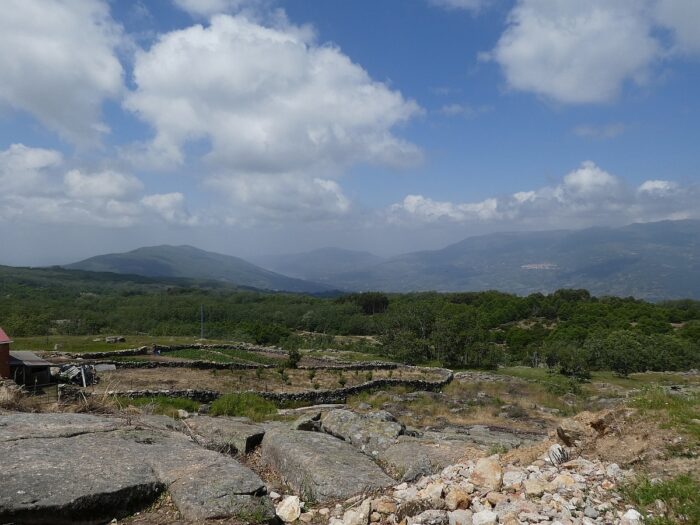
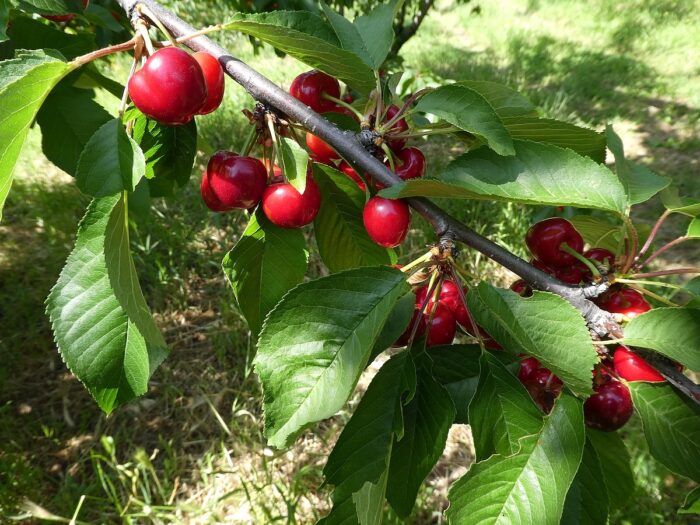
Extremadura has long been known as the pantry of Spain. From here comes the finest quality hams (Jamon Iberico Bellota), the creme de la creme of cheeses (Torta del Casar), the best cherries (in the Jerte Valley), and the finest pimenton (paprika). There is also a great selection of wines, cavas, and liquors to round out every dining experience. So, naturally, I went there to eat!
To fully experience a meal in Extremadura, one must get a feel for the terroir. That was the theme of my visit. So I began by cavorting with a sounder of swine (a herd of 300 free-range black hoofed pigs) in their natural setting, the dehesa. It is a mix of oak forests and meadows ubiquitous to the region that provides shade, grasses, and wildflowers for the pigs to eat, especially tons of acorns. I already talked about how the ham is cured here.
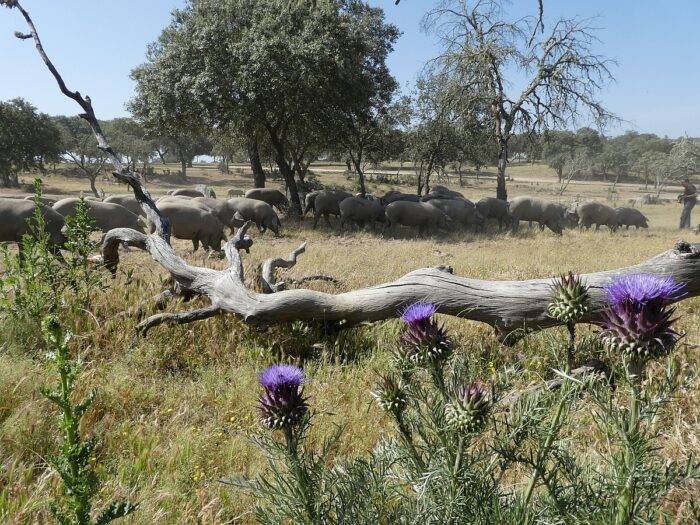
I’m told I was in no danger, these pigs were in the stage of their lives where they only eat acorns, so if I didn’t fall down, I was only liable to receive a few inquisitive nudgings and nibblings, an assurance that definitely kept me on my feet. But once the pigs found out, I didn’t have any acorns, they left me alone.
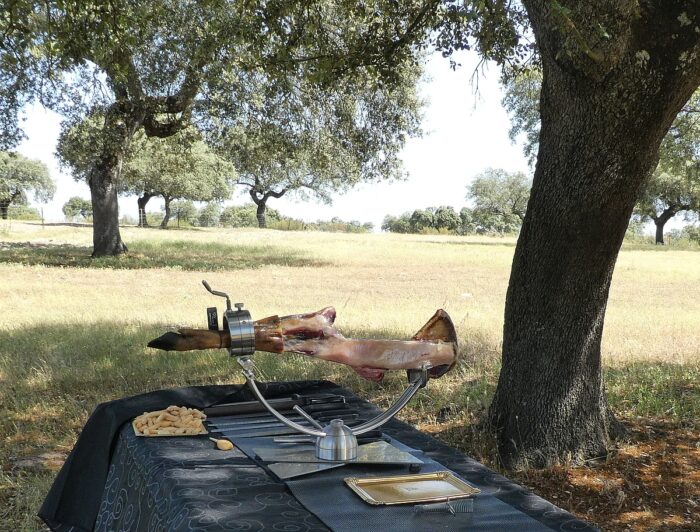
Then, almost within sight of them, an impromptu picnic was laid out beneath a spreading oak tree. A huge, aged, black-hoofed ham secured to an elaborate stand dominated the table, with a set of knives beside it. My task was to earn how to carve the ham into see-through-thin little pieces, which my host patiently instructed me in. His method was counter to the carving methods I usually use. Where I would cut thick slices down to the bone, he taught me to cut parallel to the bone in much thinner slices. Each piece was mouth-sized and meant to sit on your tongue until the fat began to melt before chewing it. Not only is the ham delicious, but the fat content is the same as olive oil and, therefore, good for you. (You can thank the acorns for that.)
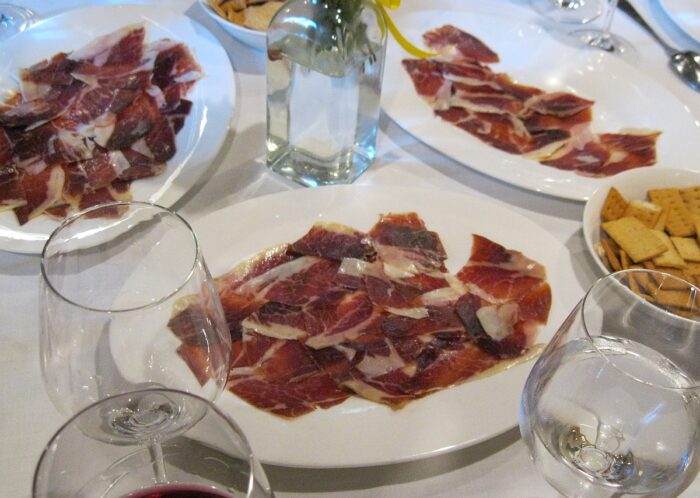
Everywhere I went, I was served a plate of this ham and other cured pork as an appetizer before meals. That is a Spanish tradition I could get used to. It takes up to five years to produce (from birth to table) and is the most expensive treat.
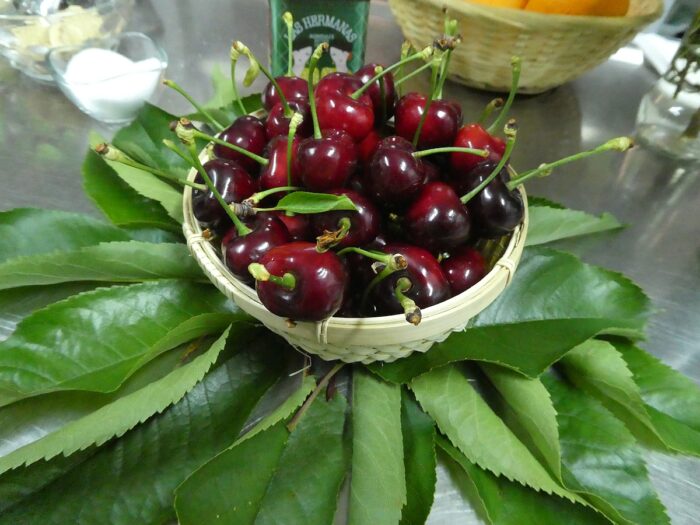
Similarly, before tasting cherry jam, cherry chutney, cherry gazpacho, and cherry pie, I enjoyed an afternoon on the terraced hillsides of the Jerte Valley, picking the fruit itself. The dwarf trees were heavy with lush ripe red fruit, unsprayed and entirely organic. Naturally, I ate as many as I picked. There is no greater taste sensation than biting into tree-ripened fruit still cool on one side and warmed by the sun on the other. It delivers the most dynamic fusion of flavors – totally cherry! After that, tasting the other incarnations of cherry (and there were many of them) always brought me back to that first taste of heaven.
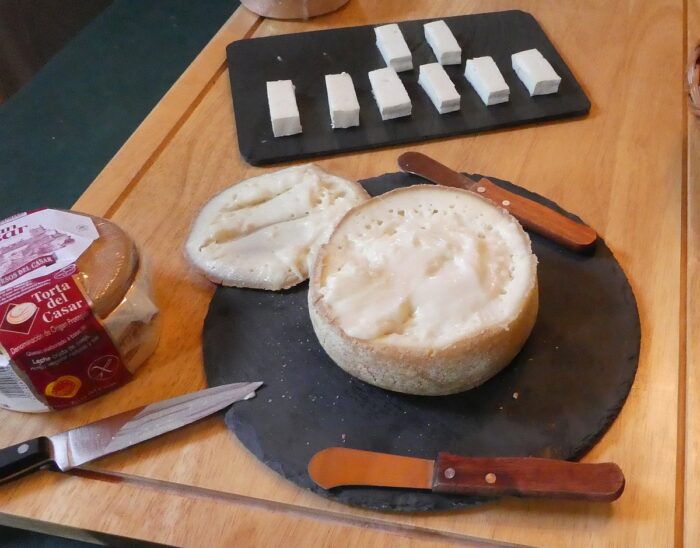
I’ve written about my favorite cheese Torte del Casar before, but there is always more to wax on about. I rarely get to have it, but I remembered the taste, although I had forgotten the smell. It is a crime that the best soft cheeses seem to have the most pungent aroma. Torta del Casar is no exception. You can smell it when it is double-sealed in the cheese case; forget about your refrigerator. But, if you can get past that (and I certainly can), the cheese is rich, creamy, spreadable, almost dippable. It is a rare cheese produced with a vegetable rennet made from thistles, giving it a slightly bitter taste. The closest cheese I can compare to is the French Epoisses, but it is much better in a velvety smooth, creamy way.
Here’s a unique cooking tip. You serve Torta del Casar by cutting off the top rind and letting people scoop or dip things into the runny interior. When the cheese is gone, the empty rind can be filled with any tasty combination of meat, fruit, or vegetables and baked. The resulting cheese pie is an excellent appetizer or side dish. (Mac & cheese cooked in a cheese rind, anyone?)
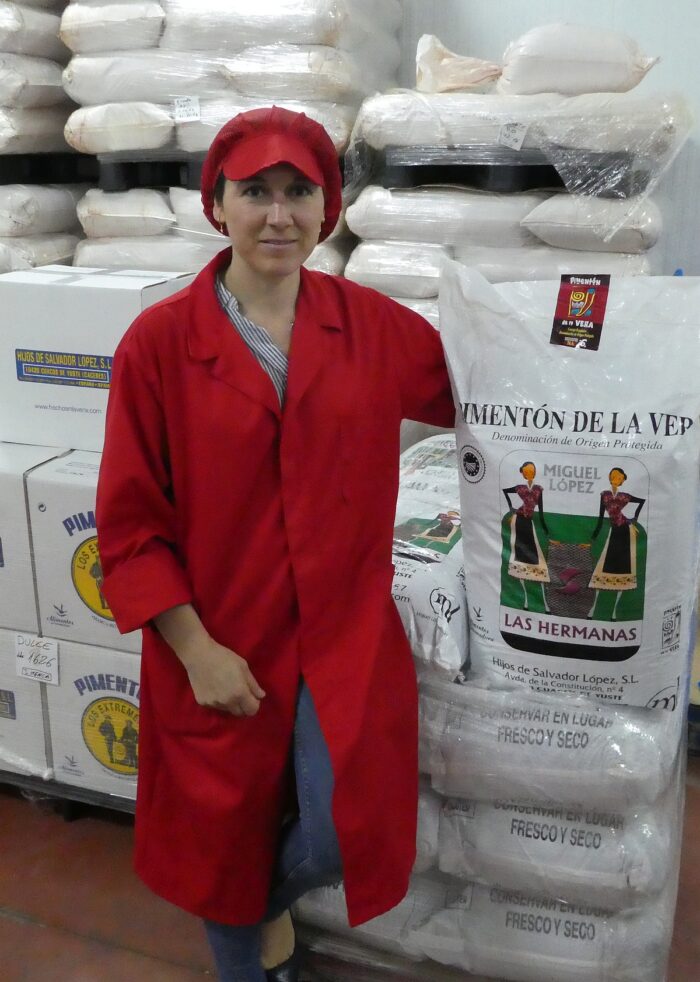
Pimenton, the ground red peppers we call paprika, is another unique product of Extremadura. It is an ingredient in all the region’s traditional dishes and is used to flavor olive oil. I visited Alica Lopez’s pimento factory, the only one owned by a woman, in Cuacos de Yuste, where centuries ago, the Holy Roman Emperor Charles V retired and died.
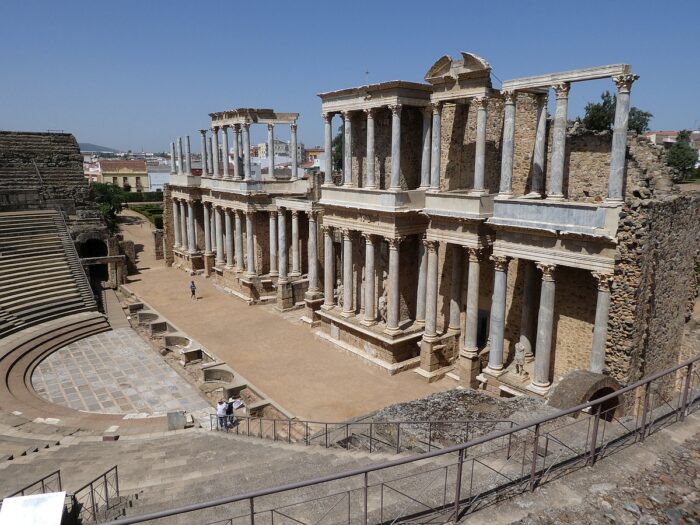
That’s the thing – with all this rich culinary history and tradition, it is easy to forget the centuries of Roman and pre-Roman history that forged this region. Extremadura has the longest surviving Roman bridge, the best preserved Roman amphitheater, extensive Roman roads and aqueducts, and many UNESCO World Heritage sites – even perfectly preserved walled villages with towers and castles!
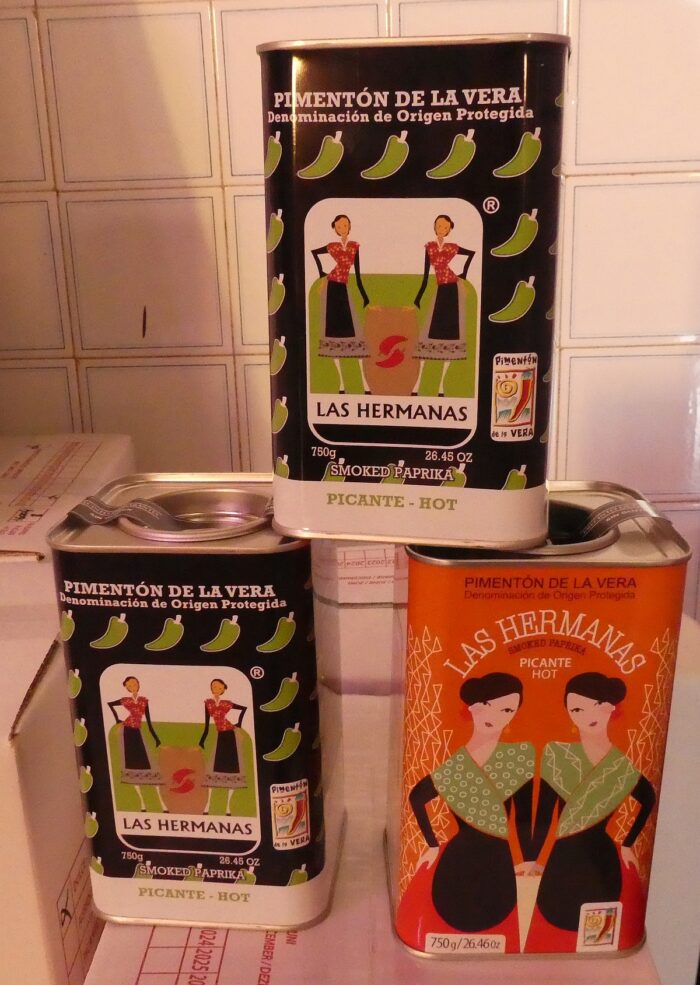
But that’s for history and archeology buffs. I’m talking about Extremadura’s food here, specifically pimento. There are two categories: pimentón de Murcia (unsmoked) and pimentón de la Vera (smoked). Both come as sweet, bittersweet, and spicy. At Ms. Lopez’s factory, they dry their red peppers with an oak fire to give them that distinct smoky flavor highly prized by culinary professionals. Her’s is a finely ground, pure organic product of spicy and non-spicy red peppers to create the finest paprika. I cook with it often.
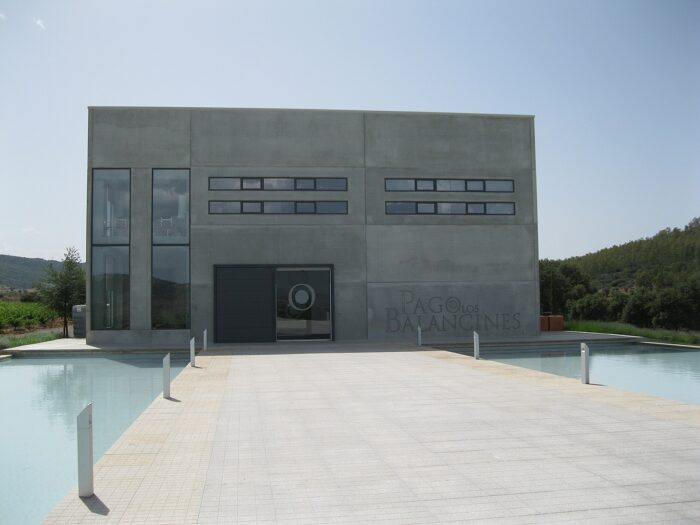
Finally, I visited a few remarkable wineries besides being served wines with every meal – even breakfast. To reach the most dramatic, I drove through olive groves and horse pastures to one of the newest wineries in the area. Located outside Merida, Pago los Balancines looks like the villain’s fortress in a James Bond movie. It is a dramatically stark concrete cube on a hilltop above acres of vines. I first noticed that the vines were not trellised, which is the tradition in a windy area. Then I got out of the car and felt the wind. No wonder the winery looked so solid. It had to be! Passing shallow pools of water on either side of the entrance, meant to moderate the temperatures in the cellar below, I stepped inside the cool interior and marveled at the design. It was constructed of all prefab concrete, every piece trucked in and erected in just three months.
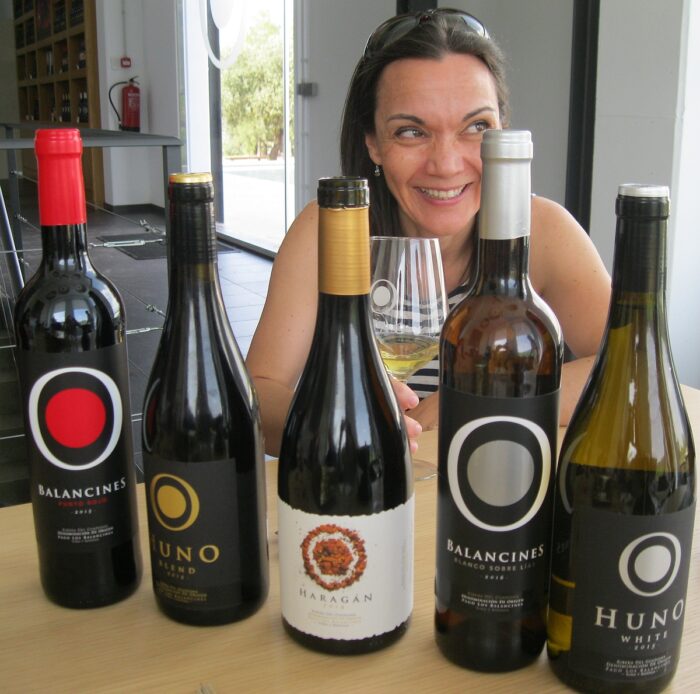
The wines showed the attention to detail the architect turned wine maker’s building revealed – they are complex yet approachable and straightforward. There is even an ice wine I didn’t get to taste, but the wines I did taste, guided by wine expert Catalina Bustillo, brought out the region’s terroir. The organic Pago de los Balancines wines aging in French oak barrels are an excellent addition to Extremadura DOC.
Follow the Out of Town Travel Blog on Facebook, Twitter, Instagram, and Pinterest if you want more travel and food-related updates.
Also Read:
- Wine Tasting Dinner at Parador de Plasencia in Extremadura, Spain
- 8 Best Airbnbs in Seville, Spain
- Seville Travel Guide: DIY Itinerary, Activities, Best Hotels and more