Team Out of Town
What are the Top Tourist Attractions in Avignon, France?
Located in the Southeastern part of France is the beautiful medieval city of Avignon. Strolling through this city, the capital of Vaucluse, will take you back to the allure of medieval architecture. Apart from the scenic landscape, Avignon is famous worldwide for its rich history and beautiful tourist-friendly scenery.
Things to do in Avignon, France
What to do in Avignon? To elevate your holiday experience, here’s a list of the activities uniquely available in this captivating French city:
Prance on a historic French bridge

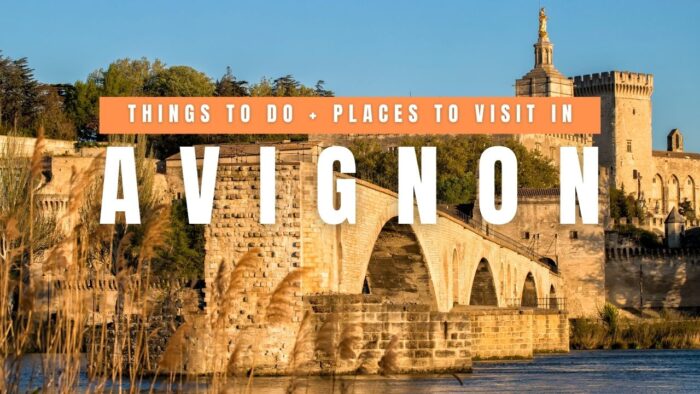
Pont Saint-Bénézet, often called the Bridge of Avignon, is a medieval limestone bridge spanning the Rhône River in Avignon, Provence, southern France. Built in the 12th century, it once had 22 arches, but today four remain, ending in mid-river. Atop one pier stands the small Chapel of Saint Nicholas, associated with the shepherd Bénézet, who, legend has it, inspired its construction.
The bridge sits beside Avignon’s fortified ramparts and the Palais des Papes, all within walking distance of the historic center. Visitors can stroll the deck, explore the chapel’s paintings, and enjoy panoramic river views. Nearby streets offer cafés, markets, and museums, while river cruises depart from the quays.
Reach Avignon by TGV from Paris or Marseille, then walk 15 minutes from Avignon Center station, or take local buses and taxis. Best visited at sunset when the stones glow golden over the water.
Ride a shuttle boat to Barthelasse Island

Barthelasse Island is a broad, green river island in the Rhône facing the medieval city of Avignon in southern France. Lying between the Petit Rhône and the main channel, it offers panoramic views of the Palais des Papes, Pont Saint-Bénézet, and ramparts.
The landscape is pastoral: orchards, farms, campsites, and shady lanes popular with cyclists and walkers. Visitors picnic on riverbanks, rent bikes, kayak around the island, or watch sunsets over the old town. In summer, river beaches and open-air events add a relaxed vibe, while spring brings blossoms and birdlife.
Access is easy: cross the Daladier Bridge on foot, by bike, or by car, or take the free seasonal river shuttle from the city center near the bridge. The flat terrain suits families, and cafés and guinguettes provide simple Provençal food. Parking areas are scattered along the banks and near campsites.
Say your prayers at the Avignon Cathedral.

Avignon Cathedral, officially Notre-Dame des Doms, crowns a rocky hill beside the Rhône in the historic center of Avignon, Provence, France, next to the Papal Palace. Its Romanesque façade and the gilded statue of the Virgin dominate the skyline.
Inside, visitors find a calm nave, medieval chapels, the marble tomb of Pope John XXII, fresco fragments, and views from the terrace over the river and Pont Saint-Bénézet. The surrounding gardens offer shade and photo spots, and combined tickets allow entry to the Palace of the Popes and the famous bridge.
To reach it, walk 10 minutes from Avignon Center train station through the old walls, or take local buses to “Palais des Papes.” From Avignon TGV station, take a shuttle or bus to the center, then continue uphill on foot. Evenings bring golden light and a quieter, reflective atmosphere here.
Tour at Le Rocher-des-Doms garden

Rocher des Doms is a landscaped hilltop garden overlooking the Rhône River in Avignon, southern France, beside the Palais des Papes. Perched on a limestone outcrop at the city’s northern edge, it offers sweeping views toward Villeneuve-lès-Avignon, the Pont Saint-Bénézet, and distant Alpilles.
Shaded paths, ponds, statues, and a children’s carousel make it relaxing after sightseeing. Visitors picnic on lawns, watch swans and ducks, photograph sunsets, and explore medieval ruins, including remnants of the former episcopal palace. A café terrace and viewpoints provide classic postcard panoramas of the ramparts.
Reach it by walking five minutes uphill from Place du Palais, entering through the gates near the cathedral. From Avignon Center station, it’s a 15-minute stroll through the historic streets; buses stop at Palais des Papes. The garden is free and open daily, with earlier closing during winter and spring festival events.
Visit the Calvet Museum

Located in the heart of Avignon, the Musée Calvet is one of Provence’s finest fine-arts museums. Housed in an elegant 18th-century mansion near Place de l’Horloge, it was founded in 1810 from the bequest of Esprit Calvet, a local physician and collector.
Inside, visitors can explore rich collections of European paintings, including works by Italian, French, and Flemish masters, as well as sculptures, decorative arts, and archaeological artifacts from Ancient Egypt, Greece, and Rome. Highlights include Roman statues, Renaissance canvases, and finely crafted objets d’art. The museum’s refined period rooms add to the experience, offering a glimpse into aristocratic life.
To get there, walk about 10 minutes from Avignon Center train station, or take a local bus serving the historic center. The museum is easily reached on foot from the Palais des Papes area.
Spend a day at a Charterhouse
The Charterhouse of Avignon, officially the Chartreuse du Val de Bénédiction, stands across the Rhône River from central Avignon in Villeneuve-lès-Avignon, southern France. Founded in 1356 by Pope Innocent VI, it was once one of Europe’s largest Carthusian monasteries, blending Gothic austerity with Renaissance elegance.
Visitors wander peaceful cloisters, monk cells with private gardens, frescoed chapels, and the vast Grand Cloister. The church houses painted decorations and sculpted tombs, while exhibitions interpret monastic life and medieval papal history. The terrace offers fine views toward the Papal Palace skyline.
To reach it, walk 20–25 minutes from Avignon’s historic center via the Pont Daladier bridge, cycle along the river path, or take a short bus ride to Villeneuve-lès-Avignon. Drivers can park nearby; trains arrive at Avignon Center station, then continue on foot, by taxi, or by bus.
Take photos at the Roman aqueducts

Near Avignon in Provence, the most impressive Roman aqueduct is the Pont du Gard, a three-tiered limestone bridge that once carried water from Uzès to Nîmes in the 1st century AD. It stands over the Gardon River about 25 km west of Avignon, within a protected cultural landscape.
Visitors can walk across the lower level, swim or picnic along the riverbanks, cycle on surrounding trails, and explore the onsite museum that explains Roman engineering, surveying, and daily life. Sunset viewpoints reveal warm golden stone and reflections in calm water.
From Avignon, reach it by rental car in about 30 minutes via D981, or by bus toward Remoulins, plus a short shuttle or taxi. Parking areas and pedestrian paths lead to the monument, and summer evenings often feature light shows and guided tours. Best visited in the spring or autumn for cooler weather and fewer crowds.
Make your prayers come true at the Church of St Pierre.

The Church of St Pierre (Église Saint-Pierre) stands in the heart of Avignon, just steps from the grand Palais des Papes on Place Saint-Pierre. Its ornate Baroque façade (17th century) is crowned with statues, while the massive carved walnut doors from 1551 are among the finest in Provence.
Inside, visitors admire gilded altars, delicate paintings, and a serene nave that contrasts with the lively square outside. Look for intricate woodwork and religious artworks reflecting Avignon’s rich papal history.
Things to do nearby include exploring the Palais des Papes, strolling the medieval streets, shopping in small boutiques, and relaxing at cafés around the square.
To get there, walk 5–10 minutes from Avignon Centre train station, or take local buses to the city center. The church is easily reached on foot within the historic walled city.
Visit the Palace of the Popes – the most iconic palace in Avignon.

The Palace of the Popes in Avignon is a vast medieval fortress-palace dominating Place du Palais in the historic center of Avignon, Provence, on the Rhône River. Built in the 14th century, when the papacy resided here, its honey-colored Gothic towers, battlements, and courtyards make it a UNESCO-listed landmark.
Inside, explore ceremonial halls, the papal apartments with surviving frescoes, chapels, kitchens, and ramparts with sweeping city views. Nearby are the famous bridge, lively squares, and the shaded Rocher des Doms gardens. Visit with an audio guide or timed exhibition, and consider the summer evening light show projected onto the façade.
To reach Avignon, take the high-speed train to Avignon TGV, then shuttle, tram, or taxi ten minutes into town; regional trains stop at Avignon Centre, a fifteen-minute walk. Drivers can use parking garages outside the walls. Book tickets early during festival season.
Eat Local French Food

Avignon is home to many restaurants serving national cuisine. If you want to dine like an authentic resident of France, you won’t run out of options. If you’re looking for the hottest options on most menus, the combination of stew and steak, served with fried potatoes, won’t disappoint.
A famous stew option in Avignon is called pot-au-feu. Although macarons are famous in France, they actually originated in Italy. If you want an authentic French dessert, quiche is a famous French tart.
You can also try it in cheesecake form, made with traditional recipes. If you love truffles, they are usually in season from November to March. Happy dining!
Avignon Travel and Tour Packages
Searching for the best Avignon hotels, resorts, and affordable flights in the nearby Cities? Check out our list of Avignon affordable hotels and resorts via Agoda, or you may also see available Airbnb properties in the city.
Want more updates about new tourist attractions in Avignon, France? Follow #TeamOutofTown on Facebook, Twitter, Instagram, and Pinterest for more travel ideas.
Also read:
- The 15 Best UNESCO World Heritage Sites In Spain
- The Most Beautiful Sceneries In Japan
- One Night In Paris
- The 7 Best Airbnbs In Bend, Oregon