

 Melo Villareal
Miagao Hablon: Iloilo’s weaving heritage
Iloilo, Philippines — With indigenous fabrics steadily gaining popularity in high fashion, our local weaving communities’ spotlight shines brighter than ever. In particular, Iloilo’s hablon weaving commerce is making a name for itself in the international design industry as demand for hand-woven textiles has increased impressively over the past few years.

Hablon Weaver at Salngan Livelihood Multi-Purpose Cooperative


Hablon, taken from the Hiligaynon word “Habol,” meaning “to weave,” refers to both the process of making the fabric and the end product. It is traditionally made of locally made fibers such as piña, abaca, and cotton. This hand-woven world-class textile is famous for its beautiful and artistic color combination, design, and high quality. Hablon weaving is a very intricate and traditional method of fabric production that can be traced back to Miagao since the late 18th century.
Due to sporadic price increases in raw materials, polyester and other fibers were added to strengthen the fabric and cut production costs.


In 1980, the industry suffered a significant decline as weavers turned to other livelihood sources because of the rising popularity of machine-woven textiles.
The availability of the loom parts has also posed another challenge to the communities: tight competition and difficulties in penetrating the mainstream textile market.
In the early 2000s, the government of Iloilo, together with the Department of Tourism, joined hands in hopes of reawakening the interest of many in this century-old local heritage.
The question now is, what part do we play in keeping this industry alive? For one thing, here is where you can visit the weaving houses in Iloilo for your next trip.

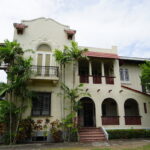
In the city, you can go to the Camiña Balay na Bato and Sinamay House, both located at Osmeña St. in Arevalo, to buy hablon products.
Not far from here is the Arevalo Handwoven Products at Brgy. Sta. Cruz, the official maker of the University of the Philippines’ official academic graduation garment, sablay. Running through the fabric are geometric patterns of indigenous Philippine tribes.
The municipalities of Miagao and Oton are still the top producers of the hablon weave in the province.
The largest weaving communities also manufacture and sell export-quality products such as traditional patadyong skirts, Barong Tagalog, saya, bandana, and household and novelty items like table runners, picture frames, slippers, seminar/corporate bags, etc.

At Indag-an Primary Multi-Purpose Cooperative, tourists can experience and see first-hand what it takes to produce hablon products.
Here, daughters of the hablon weavers are trained to learn the traditional art of hablon weaving to pass their knowledge and skills to another generation.
Process of Making Hablon
- Planning – Thread cones in selected colors will be arranged according to the desired pattern before warping.
- Warping (Sab-ong) – Threads will be set on a warping tool, then grouped and rolled along the bamboo pegs of the warping frame. Threads are counted by hand based on the desired length, width, and design.
- Beaming (Likis) – Threads from the warp will be rolled along the weaver’s beam, a bamboo cylinder at the upper back of the loom.
- Hedding (Sulod sa Binting)– Each thread of the warp passes through the openings of the heddle.
- Reeding (Sulod sa Salod) – After hedding, each thread will be inserted into each opening of the metal reed using a bamboo hook.
- Tie-in (Higot sa Baston) – The end of the threads will be tied into the cloth roll, a wooden cane at the base of the loom.
- Spooling (Pangalinyas) – The weft thread needed for the shuttle will be spooled using the traditional spooling wheel.
- Weaving (Habol) – The weaver steps on the bamboo pedal to raise or lower the heddle; then the weft will be propelled across the loom by a shuttle, and then the weft will be pushed against the fell of the cloth by the reed.
To honor the grandeur and fame of Hablon, the Municipality of Miagao celebrates the Annual Hablon Festival every first week of September. The weeklong celebration highlights the culture and heritage of the fabric through exhibits, fashion shows, beauty pageants, trade fairs, and parades.


Where to buy Hablon Textile in Iloilo
Camiña Balay Nga Bato
Address: Villa Arevalo District, Iloilo City
Hours: Open from Monday to Friday from 8am to 9pm
Phone: (033) 336 3858
Facebook page: https://www.facebook.com/BalayNgaBatoIloilo/?ref=br_rs
Sinamay House
Osmeña St, Villa Arevalo District, Iloilo City
Open from Monday to Saturday, from 8am to 5pm
Arevalo Handwoven Products
Sta. Cruz St., Villa Arevalo District, Iloilo City
Open from Monday to Saturday, from 8am to 5pm
Phone: (033) 337 4574
Facebook page: https://www.facebook.com/Arevalo-Handwoven-Products-Official-656201607846482/
Indag-an Primary Multi-Purpose Cooperative
Brgy. Indag-an, Miagao, Iloilo.
Phone: (033) 315 9722
Official website: www.miagaohablonipmpc.com
Connie’s Hablon
Indag-an Miagao Iloilo
(033) 513-7292 or
(+63) 9193937285
Imees Hablon
Indag-an Miagao, Iloilo
(033) 315-9537
Natinga’s Hablon
Bugtong Haulid, Miagao, Iloilo
(+63) 9302660129
Valencia Hablon Center
Valencia, Miagao, Iloilo
(033) 315-3005
FAQ About Hablon Weaving in Iloilo
What is Hablon weaving?
Hablon is a traditional handwoven textile from Iloilo in Western Visayas. The name comes from the Hiligaynon word habol, which means “to weave.” Hablon refers both to the weaving process and the finished fabric. It is known for its colorful patterns, durability, and versatility, making it one of Iloilo’s most treasured cultural crafts.
Where did Hablon weaving originate?
Hablon weaving originated in Iloilo Province, where it has been practiced for centuries. The municipalities of Miagao, Oton, Badiangan, Dueñas, Igbaras, and Calinog are among the communities recognized for preserving this traditional weaving heritage.
What materials are used in Hablon?
Traditional Hablon is woven from natural fibers such as cotton, piña (pineapple fiber), abaca, silk, and jusi. Today, some weavers also incorporate polyester or blended fibers to improve durability and make the fabric more affordable while maintaining its traditional appearance.
How is Hablon made?
Hablon is woven by hand using a traditional wooden loom, locally called a teral. The process involves preparing and dyeing the yarn, arranging the warp threads, threading the loom, and weaving each row by hand. Depending on the complexity of the design, producing a single piece can take several days.
What makes Hablon unique?
Hablon stands out for its vibrant colors, intricate stripes, plaid patterns, and exceptional craftsmanship. Every piece is handmade, making each textile unique. It also reflects generations of Ilonggo artistry and cultural heritage.
What products are made from Hablon?
Hablon is used to create a variety of products, including:
- Traditional patadyong wrap skirts
- Shawls and scarves
- Barong Tagalog and Filipiniana garments
- Dresses and jackets
- Bags and pouches
- Table runners and placemats
- Cushion covers
- Home décor and fashion accessories
Is Hablon still woven today?
Yes. While the industry declined with the rise of machine-made textiles, Hablon weaving has experienced a revival through the efforts of local government units, weaving cooperatives, the Department of Trade and Industry (DTI), educational institutions, and designers who continue to promote and innovate Hablon products.
Why is Hablon important to Iloilo?
Hablon is a symbol of Iloilo’s rich cultural heritage and craftsmanship. It provides livelihoods for local weaving communities, preserves traditional skills passed down through generations, and promotes sustainable, handmade textiles that showcase Filipino artistry.
Where can visitors see Hablon weaving demonstrations?
Visitors can watch live weaving demonstrations in several weaving communities in Miagao, Oton, and other municipalities in Iloilo. Demonstrations are also occasionally held at museums, cultural centers, and tourism events to introduce visitors to the traditional weaving process.
Can tourists buy authentic Hablon products?
Yes. Authentic Hablon products are available directly from weaving communities, local cooperatives, souvenir shops, artisan boutiques, and trade fairs throughout Iloilo. Purchasing directly from local weavers helps support their livelihood and preserve this centuries-old tradition.
What is the best souvenir made from Hablon?
Popular Hablon souvenirs include scarves, shawls, table runners, placemats, handbags, wallets, cushion covers, and the traditional patadyong. These handmade items combine Filipino craftsmanship with practical everyday use.
Why should travelers experience Hablon weaving?
Experiencing Hablon weaving offers a deeper appreciation of Iloilo’s cultural heritage. Watching skilled artisans work on traditional looms, learning about centuries-old weaving techniques, and bringing home an authentic Hablon product make for a meaningful cultural experience that supports local communities and helps preserve one of the Philippines’ finest textile traditions.
Our Top Hotel Picks for Iloilo
Check out our complete list of recommended Hotels and Resorts in Iloilo City, Philippines, via Agoda, or you may also see available Airbnb properties in the city.
Also see: