

 Melo Villareal
Corfu, Greece: The Ultimate Guide to Its Beaches, History and Culture
Corfu is one of those Greek islands where history, beaches, architecture, food, and countryside come together in one destination. In the Ionian Sea, the island blends lush green landscapes with turquoise waters, historic villages, dramatic coastlines, and an elegant Old Town shaped by centuries of European influence.
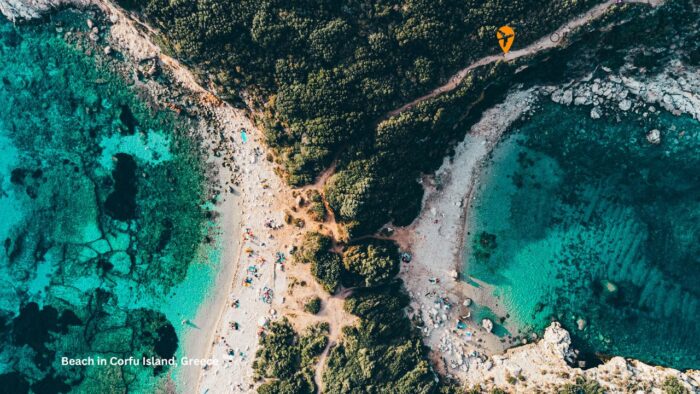
Beach in Corfu Island, Greece
For travelers who want more than a beach holiday, Corfu offers plenty to explore. Spend the morning walking through Venetian-influenced streets, the afternoon swimming in a secluded cove, and the evening enjoying traditional Corfiot dishes at a local taverna.
The island has a distinct character within Greece. Its history reflects Greek, Venetian, French, British, and other European influences, creating an architectural and cultural identity that feels different from many other Greek islands.
Why Visit Corfu?

Corfu appeals to different types of travelers because the island offers a broad mix of experiences.
Explore a UNESCO World Heritage-listed historic center, visit centuries-old fortifications, relax on sandy beaches, discover mountain villages, take boat trips, hike through olive groves, and sample local cuisine.
The island is also remarkably green. Olive groves, cypress trees, wooded hills, and gardens contrast sharply with the blue waters surrounding the coast.
Corfu works particularly well for travelers who want to combine sightseeing with relaxation. You can enjoy a cultural trip and a beach vacation in the same itinerary.
Explore Corfu Old Town

Corfu Old Town is the island’s cultural heart and one of its most important attractions.
UNESCO inscribed the historic center on the World Heritage List in 2007. Its urban landscape reflects centuries of Venetian influence, followed by French and British periods. The Old Town sits between the Old Fortress and New Fortress, creating one of Greece’s most distinctive historic cityscapes.
The best way to experience the area is on foot.
Walk through the narrow kantounia, explore the Campiello neighborhood, and spend time around Spianada, the large open square beside the Liston.
The Liston is one of Corfu Town’s most recognizable areas, lined with cafes and arcaded buildings. Its design reflects French influence and gives the city a distinctly European character.
The Old Town also has churches, museums, historic mansions, small shops, restaurants, and traditional cafes.
Visit the Old Fortress
The Old Fortress is one of Corfu’s most important historic landmarks.
Its strategic position overlooking the Ionian Sea explains why Corfu became such an important defensive location. Venetian engineers built the town’s fortifications during Venetian rule, while later modifications reflected British influence.
Walk around the fortress for views of Corfu Town, the sea, and the surrounding coastline.
The New Fortress is another important part of Corfu’s defensive heritage. Together, the two fortifications help explain the island’s strategic importance at the entrance to the Adriatic Sea.
Discover Paleokastritsa
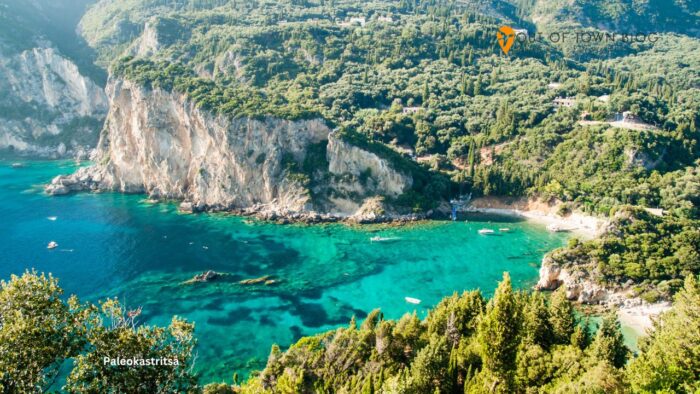
Paleokastritsa is one of Corfu’s most famous coastal destinations.
Located on the western side of the island, the area is known for rocky formations, sea caves, small coves, and deep turquoise water. Its coastline is particularly attractive for swimming, snorkeling, and boat trips.
Take a boat trip to explore the caves and smaller coves that are difficult to reach from land.
Paleokastritsa also offers elevated viewpoints where you can appreciate the relationship between the green hills and the Ionian Sea.
For photographers, this is one of the places where arriving early pays off. The cliffs, vegetation, boats, and clear water combine to create some of Corfu’s most recognizable coastal scenes.
Relax on Corfu’s Beaches
Corfu has a remarkably varied coastline.
You will find long sandy beaches, white-pebble coves, dramatic cliffs, shallow swimming areas, and secluded bays. The western coastline tends to have more exposed beaches and striking rock formations, while parts of the eastern coast offer calmer waters and sheltered coves.
Glyfada Beach
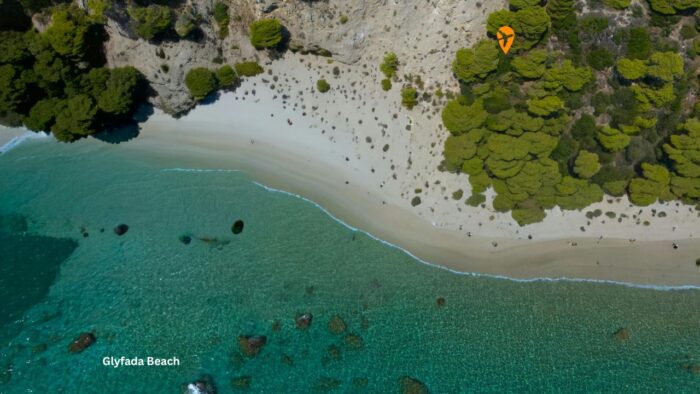
Glyfada is one of the island’s popular sandy beaches. It offers facilities and easy access, making it suitable for travelers who prefer an organized beach experience.
Agios Gordios
Agios Gordios combines a sandy beach with a dramatic mountain backdrop. It is a good choice if you want scenery without traveling too far from the main tourist areas.
Issos Beach
Issos is known for its broad sandy landscape and dunes. Its location near Lake Korission also creates an interesting natural environment.
Chalikounas Beach
Chalikounas sits beside Lake Korission and combines beach scenery with a wetland ecosystem. It is a good option for travelers who prefer a more open and natural setting.
Canal d’Amour
Near Sidari in northwestern Corfu, Canal d’Amour is known for its sandstone formations and narrow coastal channels.
The unusual rock formations make it one of the island’s most photographed coastal attractions.
Take a Boat Trip Around Corfu
One of the best ways to experience Corfu’s coastline is from the water.
Boat excursions can take you to small coves, sea caves, beaches, and coastal areas that are difficult to access by road.
Paleokastritsa is particularly popular for boat excursions because of its rocky coastline and caves.
You can also arrange private boat trips for greater flexibility in your itinerary.
For travelers who enjoy photography, a boat trip provides a different perspective of Corfu’s cliffs, beaches, villages, and turquoise water.
Visit Corfu’s Villages
Corfu has more than 200 mountain villages, each contributing to the island’s traditional character.
Leave the coast for a day and explore the countryside.
Traditional villages offer stone houses, small churches, village squares, olive groves, local tavernas, and everyday island life.
The interior is also a good place to experience Corfu’s agricultural landscape. Olive trees dominate many parts of the island, while cypress trees and wooded hills add to its green appearance.
Renting a car can make village-hopping easier because public transportation doesn’t reach every rural area as frequently.
See Achilleion Palace
Achilleion Palace is another well-known attraction near Corfu Town.
The palace was built for Empress Elisabeth of Austria, popularly known as Sisi, and later became associated with Kaiser Wilhelm II of Germany. Its history and architecture reflect Corfu’s connections with European royalty and aristocracy.
The palace grounds are particularly interesting for travelers who enjoy architecture, gardens, history, and photography.
Check the current opening arrangements before visiting because access to historic properties can change during restoration or maintenance.
Visit Pontikonisi and Vlacherna Monastery
Pontikonisi, or Mouse Island, is one of Corfu’s most recognizable small islands.
It sits near the coast and is closely associated with the Vlacherna Monastery, a small monastery connected to the mainland by a narrow causeway.
The white monastery, small island, surrounding water, and approaching aircraft make the area one of Corfu’s classic photo spots.
The Vlacherna Monastery dates to the 17th century and is dedicated to the Virgin Mary.
Experience Corfu’s Food
Corfiot cuisine reflects the island’s Mediterranean setting and its long history of foreign influence.
Local food has distinct Venetian characteristics alongside Greek culinary traditions.
Look for traditional dishes featuring meat, seafood, vegetables, pasta, olive oil, herbs, and local ingredients.
Look for dishes and products such as sofrito, a veal dish prepared with garlic, parsley, and vinegar, and pastitsada, a richly seasoned meat dish commonly served with pasta.
Corfu is also known for kumquat, a small citrus fruit closely associated with the island. You will find kumquat products including sweets, preserves, and liqueur.
For the most authentic experience, eat at local tavernas and try regional dishes rather than relying only on international menus.
Experience Corfu’s Easter Traditions
Easter is an important cultural event in Corfu.
The island is known for distinctive Easter customs, religious celebrations, and performances by its Philharmonic bands. These traditions help draw visitors to Corfu beyond the traditional summer beach season.
If you plan to visit during Easter, book accommodations and transportation early.
The experience also requires cultural sensitivity. Religious celebrations are important community events, so visitors should dress appropriately around churches and follow local customs.
Best Time to Visit Corfu
The main beach season runs from late spring through early autumn.
May and June are good choices for travelers who want pleasant weather, greener landscapes, and fewer crowds than the peak summer months.
July and August are the busiest months. Expect higher demand for hotels, beaches, restaurants, car rentals, and tours.
September and October can attract travelers who prefer a quieter atmosphere while still enjoying outdoor activities and relatively warm weather.
If swimming and beach activities are your priority, summer offers the most reliable conditions. If you prefer sightseeing, photography, hiking, and village exploration, the shoulder seasons can offer a more comfortable experience.
How to Get to Corfu
Corfu has an international airport, Ioannis Kapodistrias Airport, which makes the island accessible from Greece and many European destinations.
Domestic flights connect Corfu with Athens and Thessaloniki. The flight from Athens takes approximately 1 hour and 15 minutes, while the flight from Thessaloniki takes around 55 minutes.
You can also reach Corfu by ferry from mainland Greece and other Ionian destinations.
Your best option depends on your starting point and whether you plan to combine Corfu with another Greek island or mainland destination.
How to Get Around Corfu
A rental car is one of the most convenient options if you want to explore beyond Corfu Town.
It lets you visit beaches, mountain villages, viewpoints, archaeological sites, and rural areas at your own pace.
Buses are useful for selected routes, particularly around Corfu Town and major tourist destinations. Taxis and organized tours are also available.
If you’re on a beach-focused holiday based in one resort, you may not need a car every day. For a wider island itinerary, renting a car can save considerable travel time.
Where to Stay in Corfu
Corfu Town is ideal for travelers who prioritize history, restaurants, architecture, museums, nightlife, and easy access to the Old Town.
Paleokastritsa suits travelers who want dramatic coastal scenery, swimming, and boat excursions.
Glyfada is a good choice for a beach holiday with convenient access to a popular sandy beach.
Kassiopi offers a more relaxed northeastern coastal setting with beaches, restaurants, and a picturesque harbor.
Agios Gordios suits travelers looking for a mix of beach access, mountain scenery, restaurants, and a relaxed resort atmosphere.
Your base choice can significantly affect your experience, so consider your priorities before booking accommodation.
Corfu Travel Tips
Wear Comfortable Shoes
Corfu Old Town has narrow streets and uneven stone surfaces. Comfortable walking shoes will make exploring much easier.
Start Early
Popular beaches and major attractions can become busy during summer. Early mornings offer better photo opportunities and a quieter experience.
Rent a Car for Island Exploration
If you want to explore several beaches and villages, a rental car gives you more flexibility than relying entirely on public transportation.
Bring Sun Protection
Pack sunscreen, sunglasses, a hat, and a reusable water bottle, particularly during summer.
Allow Time for the Countryside
Do not spend your entire trip along the coast. Corfu’s interior offers olive groves, villages, hills, churches, and rural landscapes that reveal another side of the island.
Respect Local Traditions
Corfu has strong religious and cultural traditions. Dress appropriately when visiting churches and religious sites, and be respectful during ceremonies and festivals.
A Sample 4-Day Corfu Itinerary
Day 1: Corfu Town
Start your trip with Corfu Old Town.
Explore the kantounia, walk around Spianada, visit the Liston, and explore the Old Fortress.
Enjoy dinner in the historic center.
Day 2: Paleokastritsa and Western Corfu
Drive toward Paleokastritsa and spend the morning exploring its beaches and coastline.
Take a boat trip to visit sea caves and secluded coves.
Continue to a western beach such as Glyfada or Agios Gordios, then return to Corfu Town.
Day 3: Achilleion and Southern Corfu
Visit Achilleion Palace, then explore nearby coastal areas.
Continue to Lake Korission and Chalikounas for a more natural side of the island.
Return to your accommodation in the evening.
Day 4: Northern Corfu
Explore the island’s northern part.
Visit Sidari and the Canal d’Amour, then continue toward traditional villages or coastal towns such as Kassiopi.
Return to Corfu Town for your final evening.
Why Corfu Feels Different From Other Greek Islands
Corfu’s personality is shaped by its history.
Its architecture reflects Venetian, French, British, and Greek influences. Its coastline offers both sandy beaches and dramatic rock formations. Its interior remains remarkably green, with olive groves and mountain villages.
The result is a destination where a morning walk through a historic European-style city can easily lead to an afternoon at a Mediterranean beach.
That combination is what makes Corfu special.
It lets travelers experience Greece through architecture, history, food, nature, beaches, and local traditions in a single trip.
Frequently Asked Questions
Is Corfu worth visiting?
Yes, Corfu is worth visiting if you want a Greek island that combines beaches, history, architecture, food, nature, and cultural experiences. The UNESCO-listed Old Town provides a strong historical focus, while destinations such as Paleokastritsa, Glyfada, Canal d’Amour, and Chalikounas offer very different coastal landscapes. The island also has traditional villages and a lush interior filled with olive groves and wooded hills. This variety makes Corfu suitable for couples, families, photographers, beach lovers, and travelers who want more than a resort holiday.
What is Corfu best known for?
Corfu is best known for its UNESCO-listed Old Town, Venetian-influenced architecture, beautiful beaches, lush landscapes, historic fortresses, traditional villages, and distinctive cuisine. The island also has strong French and British historical influences, giving its architecture and urban landscape a character that differs from many other Greek islands. Popular attractions include Paleokastritsa, Canal d’Amour, Achilleion Palace, Pontikonisi, and Vlacherna Monastery. Corfu is also famous for its Easter traditions and Philharmonic bands.
How many days do you need in Corfu?
Four to five days is a good starting point for a first visit to Corfu. This gives you enough time to explore Corfu Old Town, visit at least one or two major beaches, spend time in Paleokastritsa, and explore another part of the island. A longer stay of seven days or more makes sense if you want a slower itinerary with several beach days, village visits, boat trips, hiking, and more time for local food. Corfu is large enough that rushing between attractions can reduce the enjoyment of the trip.
What are the best beaches in Corfu?
Corfu has beaches suited to different travel styles. Paleokastritsa is known for rocky formations, coves, caves, and deep turquoise water. Glyfada is a popular sandy beach with facilities. Agios Gordios combines a broad beach with dramatic scenery, while Issos and Chalikounas offer expansive sandy landscapes and shallow waters. Canal d’Amour near Sidari is famous for its unusual sandstone formations. The island’s coastline varies significantly between the east, west, north, and south, so it is worth visiting more than one beach during your trip.
Is Corfu expensive?
Corfu offers a wide range of travel options, from budget-friendly accommodations and local tavernas to luxury resorts and upscale restaurants. Your costs will depend heavily on the season, accommodation, transportation, tours, and dining choices. July and August generally bring higher demand, particularly in popular coastal areas. Travelers seeking better value can visit in May, June, September, or early October. Staying outside the most popular resort areas and eating at local restaurants can also help control daily expenses.
Is Corfu good for first-time visitors to Greece?
Corfu is an excellent option for first-time visitors who want to experience several sides of Greece in one destination. The island combines historic architecture, beaches, Greek food, traditional villages, outdoor activities, and cultural attractions. Corfu Town is especially useful for first-time visitors because many key sights are concentrated in a walkable historic center. Beyond the city, travelers can rent a car or join tours to explore beaches and villages. Its international airport also makes Corfu relatively convenient to reach from several European cities.
What is the best time to visit Corfu?
The best time depends on your travel priorities. May and June are ideal for travelers who want pleasant weather, green landscapes, and fewer crowds than in peak summer. July and August suit travelers who want a traditional summer beach holiday, though these months are also busier. September can provide a good balance of warm weather and fewer crowds. October is useful for sightseeing and countryside exploration, although beach conditions become less predictable as the season progresses.
Can you explore Corfu without renting a car?
Yes, but your options will be more limited. You can easily explore Corfu Town on foot, and buses connect the city with several major tourist destinations. Taxis and organized tours can also help you reach beaches and attractions. A rental car is more useful if you want to visit several beaches, rural villages, viewpoints, and attractions across the island. If you plan to stay mainly in Corfu Town or one coastal resort, you may not need a car for the entire trip.
What food should you try in Corfu?
Try traditional Corfiot dishes that reflect the island’s Greek and Venetian influences. Sofrito, a veal dish prepared with garlic, parsley, and vinegar, is one of the island’s signature foods. Pastitsada, usually served with pasta, is another dish worth ordering. Look for local products featuring olive oil, herbs, vegetables, seafood, and other Mediterranean ingredients. Corfu is also closely associated with kumquat, which appears in sweets, preserves, and liqueur. Eating at traditional tavernas is one of the best ways to experience the island’s regional cuisine.
Is Corfu good for a beach holiday?
Yes. Corfu has a diverse coastline with sandy beaches, white-pebble shores, sheltered coves, dramatic cliffs, shallow waters, and areas suited to water sports. This makes it easy to plan anything from a relaxed resort holiday to an active itinerary with snorkeling, diving, boating, and coastal exploration. Popular areas include Paleokastritsa, Glyfada, Agios Gordios, Issos, Chalikounas, and Sidari. The island’s beaches vary significantly by east, west, north, and south, so exploring different coastal areas can make your trip more interesting.
Corfu Travel Quick Guide
| Category | Information |
|---|---|
| Country | Greece |
| Region | Ionian Islands |
| Main city | Corfu Town |
| Main airport | Corfu International Airport |
| UNESCO site | Old Town of Corfu |
| Best known for | Beaches, Old Town, Venetian architecture, villages, cuisine |
| Popular beach area | Paleokastritsa |
| Famous natural landmark | Canal d’Amour |
| Historic attraction | Old Fortress |
| Cultural highlight | Corfu Easter celebrations |
| Best for | Beach holidays, culture, history, photography, food, road trips |
Corfu combines the elements that make a Greek island memorable with a history and architectural identity that set it apart. Its UNESCO-listed Old Town, Venetian heritage, green countryside, traditional villages, dramatic coastline, and clear Ionian waters give travelers plenty of reasons to explore beyond the beach.
Follow and subscribe to OutofTownBlog.com on Facebook, Twitter, Instagram, Pinterest, and YouTube for more Travel-related updates.
Other Stories:
- 12 Of The Best Places To Visit In Greece
- Top 10 Best Things To Do In DeLand, Florida
- Top 12 Best Things To Do In Naoussa, Greece
- 7 Best Airbnbs In Athens, Georgia
- Top 15 Best Things to Do in Athens, Greece
- Is the Athens Acropolis Really Worth the Price?
- 15 Best Hotels in Athens, Greece: Where to Stay for Luxury, Views and Location

