
 Melo Villareal
A Walking Tour of Madrid, Spain
Note: This itinerary may not be complete, but trust me!, It’s the easiest and probably the most interesting route if you plan to do a Walking Tour of Madrid. 🙂
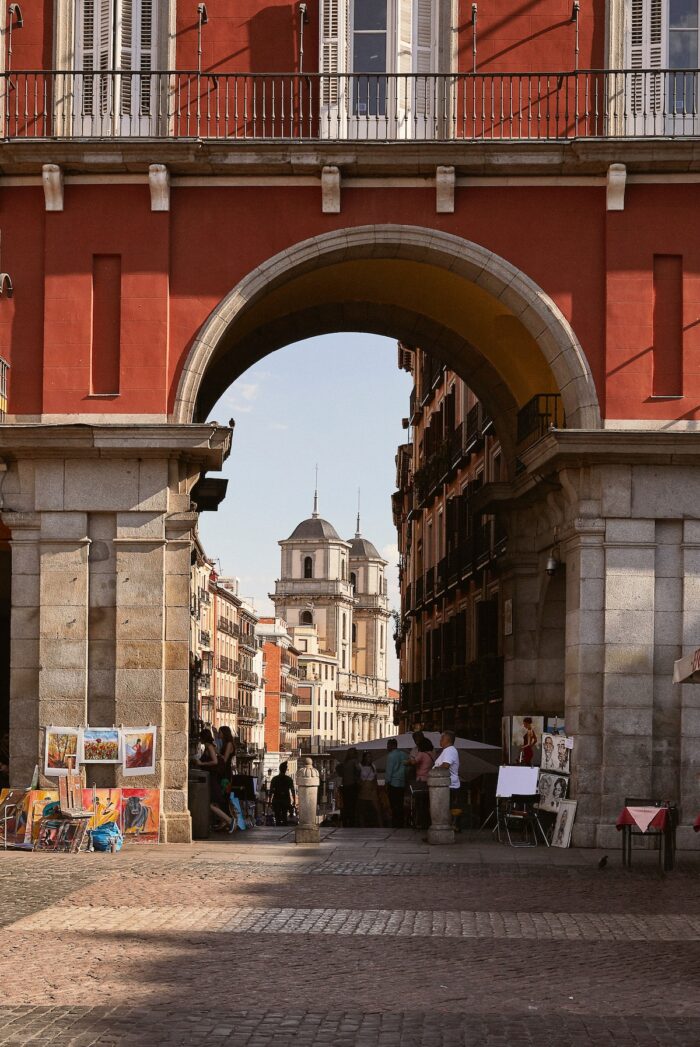
Walking Tour of Madrid photo by Lucas Ricci via Unsplash
As I watched the plot of the award-winning The Grand Budapest Hotel thicken, a certain question boggled my mind: did Gustave, one of the major characters, really kill his lover? It was an enigma I wanted solved, and I sunk deeper into my chair as I watched each scene gradually unfold—until the captain interrupted to announce that the plane was about to land at the Istanbul Ataturk Airport. I was a bit reluctant and disappointed because I really wanted to watch the rest of the movie, but on the other hand, I was happy that my 12-and-a-half-hour flight was finally over.
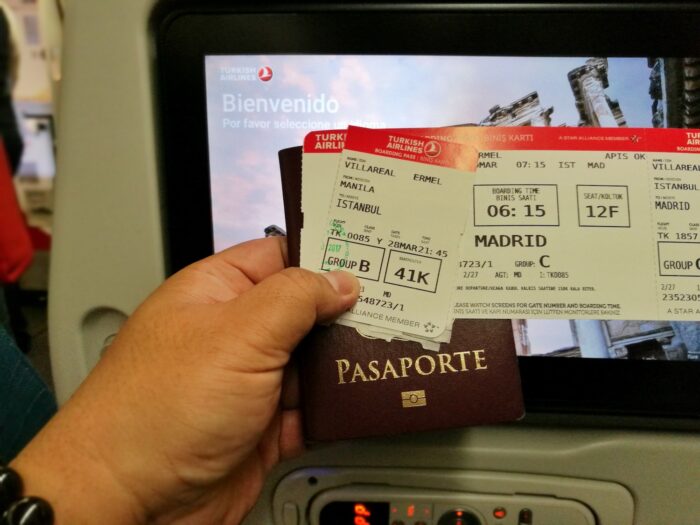
I spent the remaining four-and-a-half hour travel from Istanbul to Madrid agonizing over the unsolved mystery of The Grand Budapest Hotel.

I finally arrived in Madrid after a long journey. From the airport, we proceeded to Catalonia Gran Via Hotel (hotel info), our official home for two nights in the city. The hotel staff quickly assisted us to our rooms and gave us a welcome kit with maps and guides for touring in Madrid.

After finally settling in my room, I wandered for a while. It’s been more than two years since I last visited Madrid. A strange combination of wonder and nostalgia hit me. My previous experiences in Spain are like layers of sediment that make up a larger rock, and I was very glad that I was adding another layer to it.
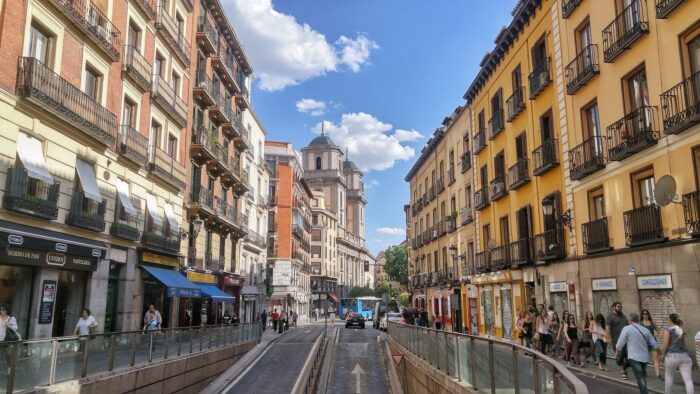
After our two-hour resting period, we met in the hotel lobby with Marta, our local English-speaking tour guide. We had a walking tour scheduled that day, so I geared up and prepared for another beautiful adventure in the Spanish capital.
Walking Tour of Madrid
We started our walking tour on the street of Gran Via, oftentimes called the “Spanish Broadway”. It’s just located near our hotel in central Madrid and is notable for its bustling nightlife, shops, and local life. If New York is the city that never sleeps, Gran Via is the street that never sleeps. The street’s name literally translates to “Great Way”, and is the center of urban Madrid life.

Along the street that never sleeps is the Grassy Building, known locally as the Edificio Grassy. The Edificio Grassy is made of two conjoined buildings built on a triangular piece of land and is actually made of beige concrete, not green or grassy materials.
Aside from housing a museum of ancient clocks and other rare European and British artifacts, the building itself serves as the beautiful, welcoming edifice of Gran Via, standing proudly on the corner of the street.
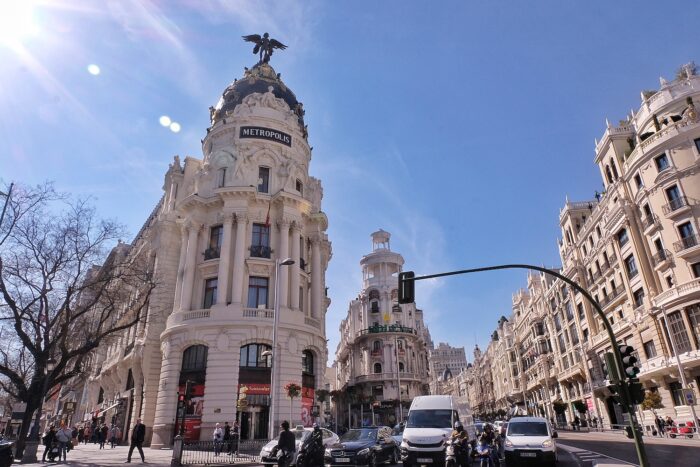
Our next destination was the Metropolis Building, an office building with a catchy Beaux-Arts architectural style. The building towers over the blue skies of Madrid, on the corner of Gran Via and Calle de Alcala.

Before leaving Gran Via to go to Calle de Alcala, our tour guide shared that the two tallest European buildings in the 1950s, the Madrid Tower and the Spain Building, were constructed in Gran Via. The street that never sleeps has been very busy indeed, even before.
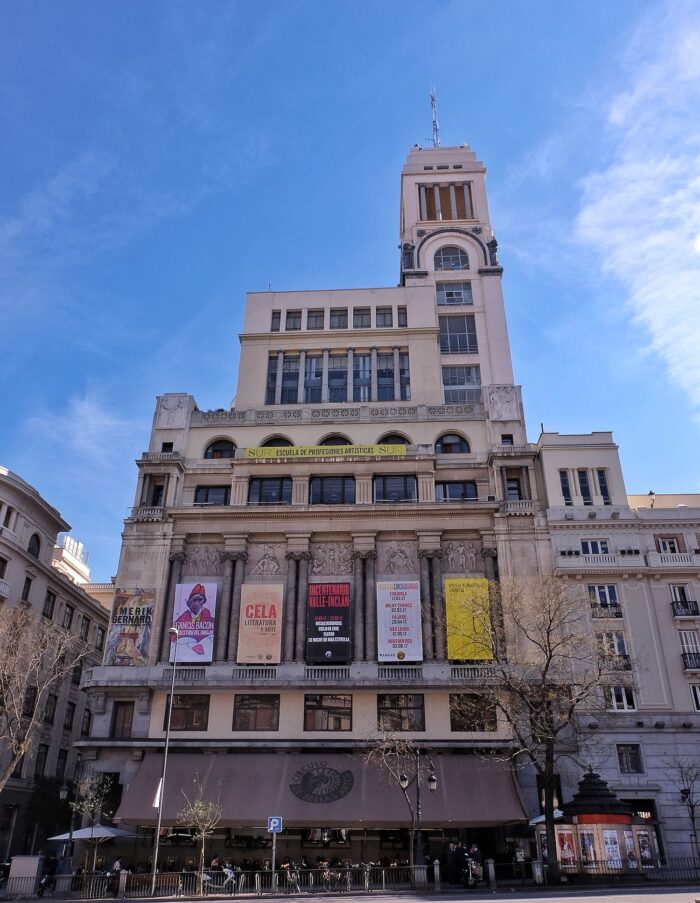
We went to Circulo de Bellas Artes, or CBA, near Calle de Alcala. CBA was founded in 1880. The building was constructed in 1926 and is run and owned by a private, non-profit organization of the same name.
Inside the building are exhibitions, concerts, lecture halls, workshops, a cinema, and a theatre that are dedicated to the humanities of Madrid. Its rooftop is known for offering a picturesque view of Madrid. It was declared a Spanish Property of Cultural Interest in 1981 due to its active role in the local culture.
After CBA, we went to Calle del Barquillo. “Barquillos” might sound familiar to some—and if you first thought of those crispy biscuit rolls, you are right. The ”barquillo” in the name of the street comes from the food we all know. The sweets are said to have been produced in the streets during fiestas and other celebrations.
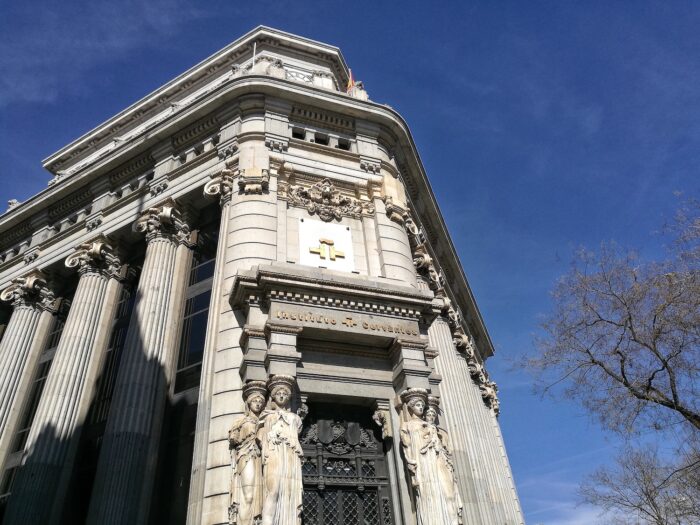
A landmark located along this street is the Instituto Cervantes hub, the headquarters of the largest international non-profit organization dedicated to studying and promoting the Spanish language and culture. The building and the organization were named after Miguel de Cervantes, a significant figure in Spanish literature.
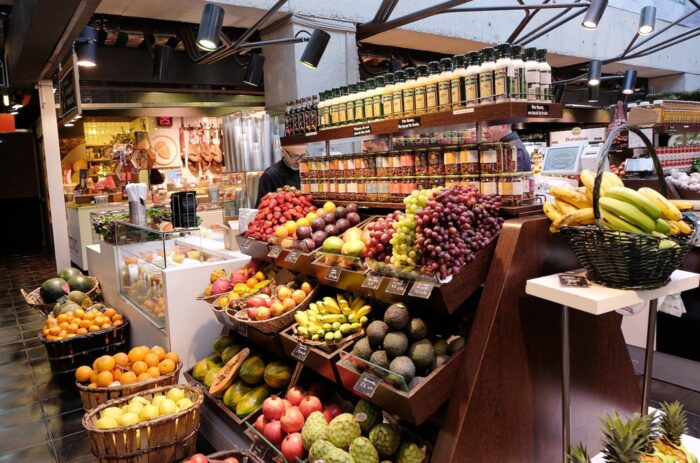
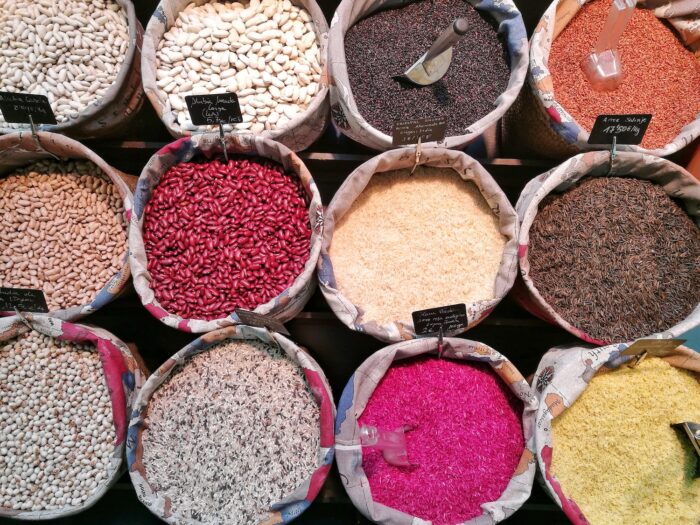
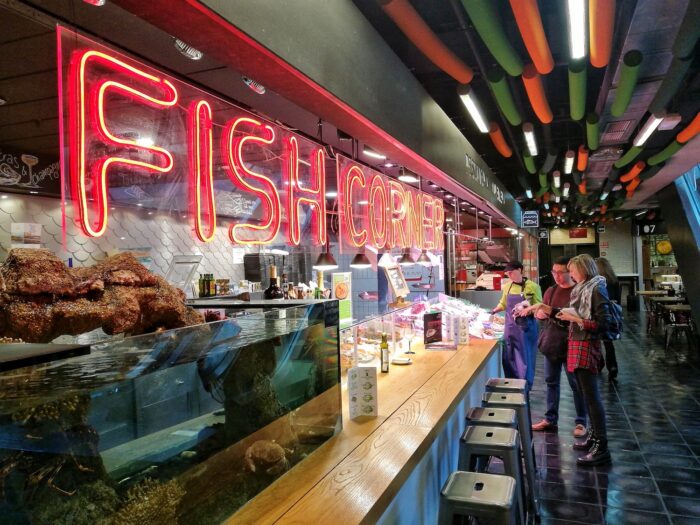
We moved on after gasping at the sceneries in the beautiful streets we were on. We headed to Mercado de San Anton in Calle Augusto Figueroa. It was my second time visiting this well-organized, roofed market.
It still charmed me the first time I saw neat displays, colorful fruits, vegetables, local produce, various food, and plenty of cafes with Instagrammable interiors. Iberico ham and cheese are just two Spanish specialties that can be bought fresh here.
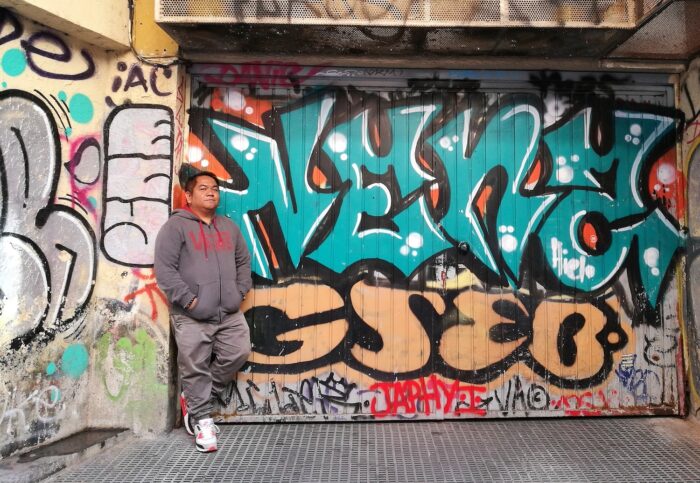
We visited another market afterwards, the Mercado de San Ildefonso in Calle Fuencarral. By then, we had already reached the neighboring district of Malasaña, often referred to as a neighborhood with hipster culture.

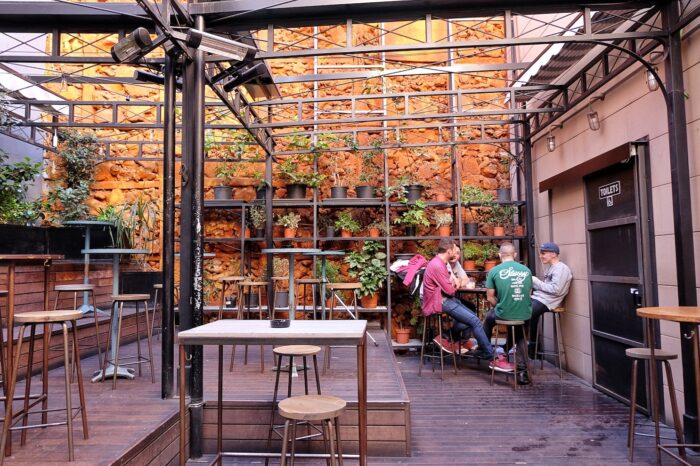
The Mercado de San Ildefonso is smaller than the Mercado de San Anton from the previous calle. This market had three storeys, and the first two floors were filled with shops that sell food like tapas, pizza, juices, and even sushi! It was a foodie paradise with a fancy atmosphere.
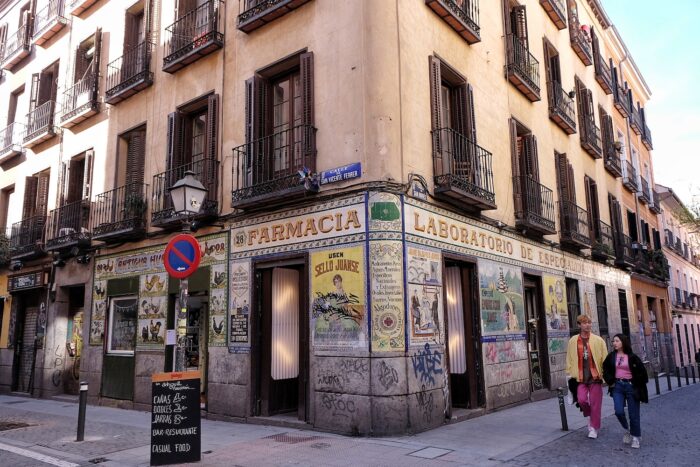
We continued with our walking tour and passed by Calle de San Andres. Our tour guide showed us a pharmacy built in the 1920s that recently closed down. It was closed down, but its colorful hand-painted tiles containing advertisements of perfume and medicine continue to fascinate everyone who sees it. Oh, we were definitely in Malasaña, all right. Everything was so fancy.
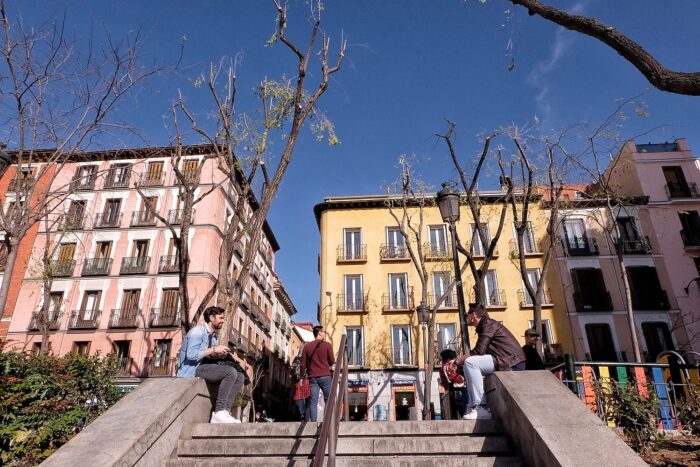
It didn’t take long before we reached Plaza del Dos de Mayo, the heart of the Malasaña district. The plaza’s name was taken from the historical event that occurred in the 1800s when the town locals rebelled against foreign invaders. Two statues that serve as a tribute to the heads of the movement are located in the plaza.
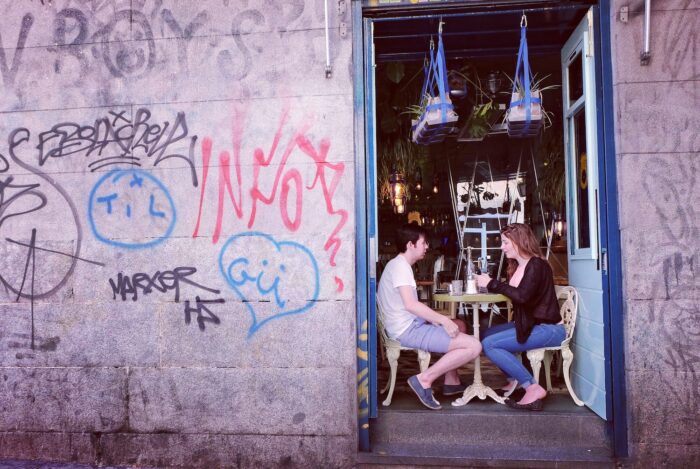
The Plaza del Dos de Mayo is a very, very fancy place and a complete picture of a happy neighborhood. It was surrounded by many attractive bars and cafes, which I noticed tended to have grandiose terraces. I could not help but wonder what it was like to have a cup of coffee while having that view. It would be excellent, I suppose.
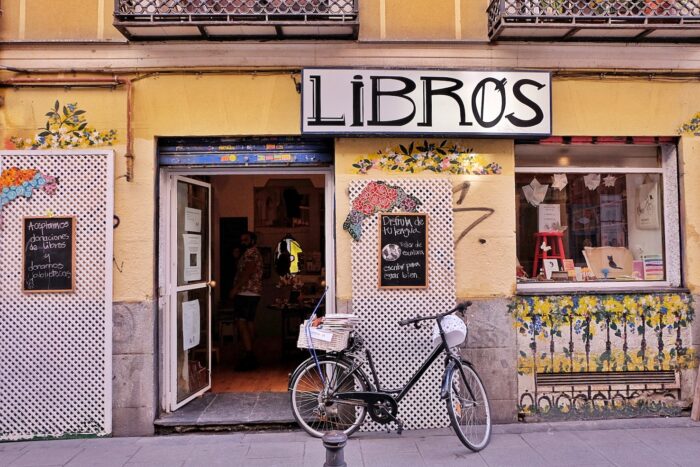
An exciting shop around the corner was a coffee shop called Libros. I’m not a huge fan of books, but seeing the shop’s colorful and old-fashioned façade already excited me. Bookworms would scream and cause a commotion if they were in my place.
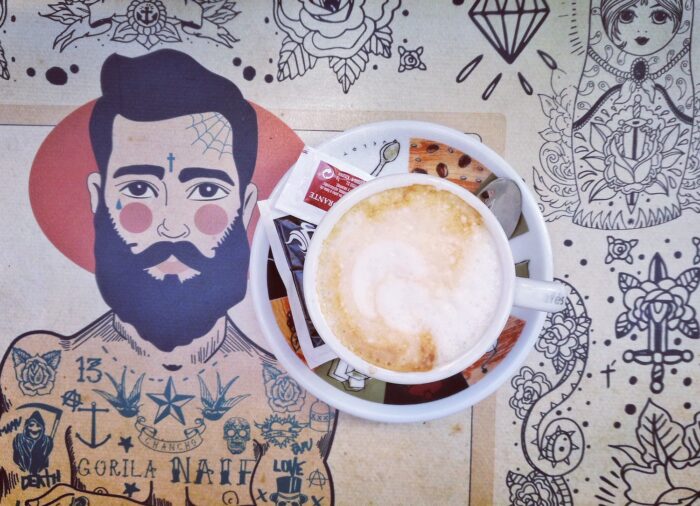
After walking further, we chanced upon another interesting shop and bar called Gorila Malasaña. It is a hipster bar with—you guessed it—a gorilla theme. If you’re not a gorilla fan, the bar’s quaint feel and the vintage interiors will surely make you a convert.
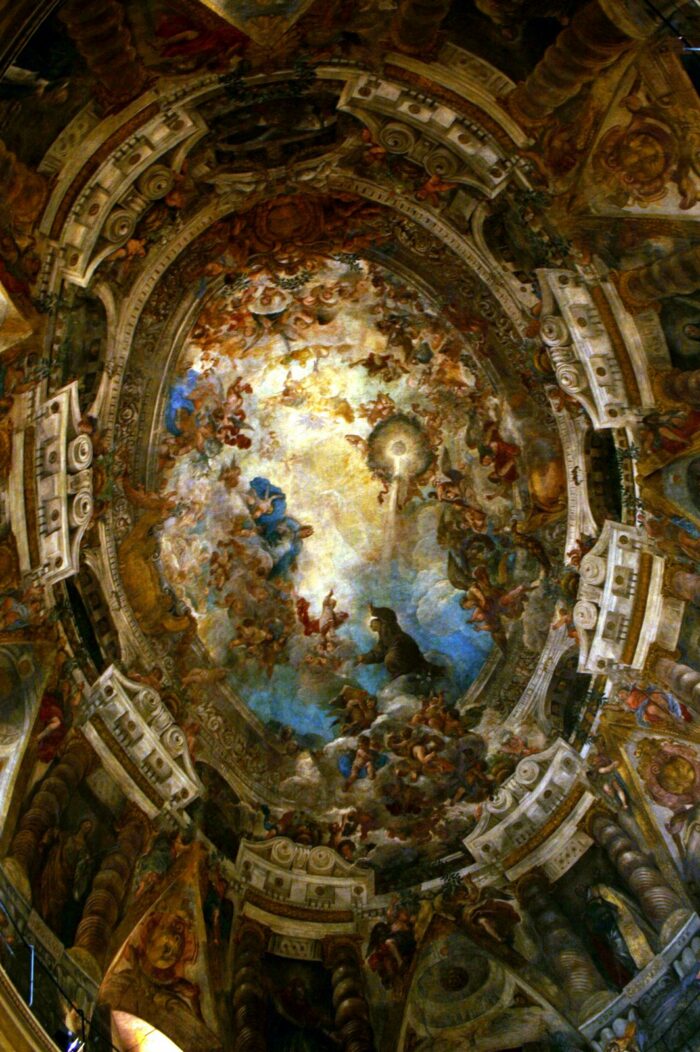
Our last stop for the day was at San Antonio de los Alemanes, a 17th-century Roman Catholic church with Baroque architecture. What was perhaps most notable about the church, aside from its exterior, was the painting on its high, domed ceiling. It was incredibly haunting.
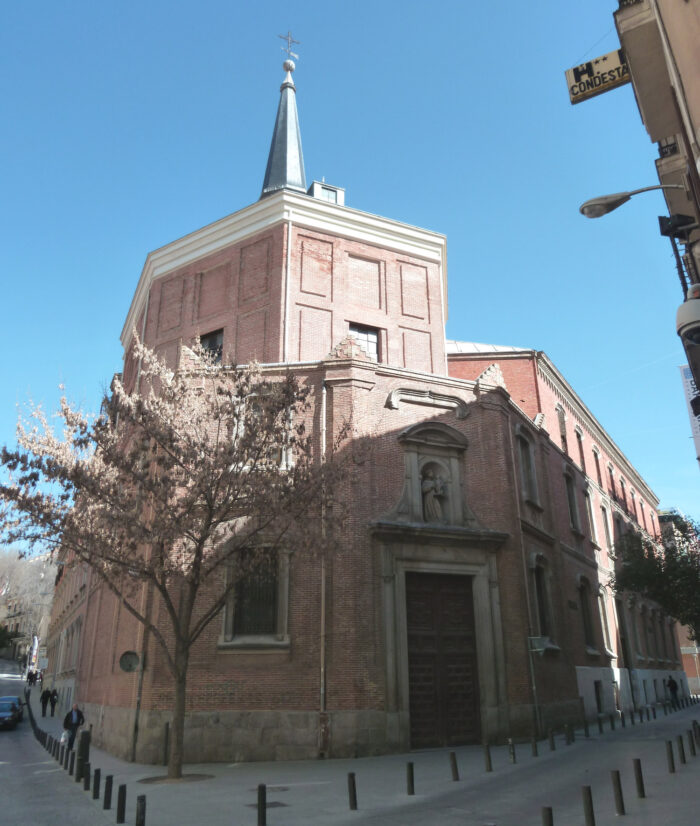
We officially ended our walking tour after whispering a prayer of thanks and of course, marveling at the design of the centuries-old church.

We headed back to our hotel shortly after that. While on the way back, I happily recounted how much dynamism was there in the Madrid streets we toured. There was a heavy influence on the culture of the old—the buildings that have stood there for centuries continue to look over the busyness of the street.
However, I still felt the power of the modern culture, with the hippie bars, picturesque coffee shop terraces, and specialty shops we passed on the way. There is a beautiful blend of the old and the new, and I can feel both from the landmarks we visited.

As a traveler, I would like to recommend and confirm, for the umpteenth time, that the only best way to explore Madrid, or any place, for that matter, is via a walking tour.
The Spanish capital is easy to explore on foot as most landmarks are located near central Madrid. As a foodie, I would also advise that each milestone be accompanied by a food trip. Cafes and bars abound in the Spanish capital, after all.
So forget the Madrid Bus Tour; the best way to explore Madrid is by foot and food. Free maps are available from the airport or at your hotel, and a full-blown walking tour can be accomplished within three to four hours. It can get exhausting, but the experience and the number of photos you can take are all worth it. And hey, like me, maybe you can watch the rest of the Grand Budapest Hotel before retiring for the day!
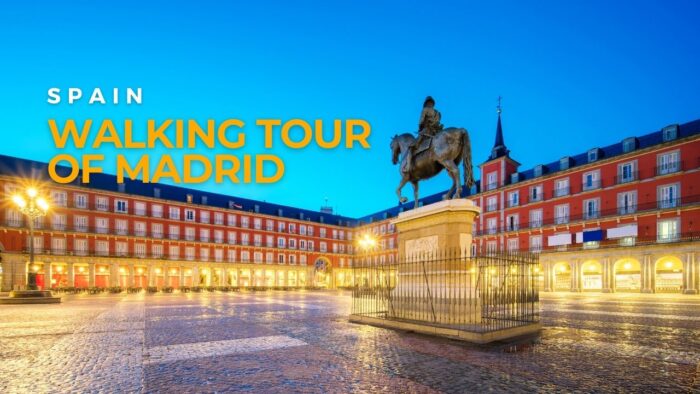
| Looking for Hotels in Madrid?
Book a hotel room in some of the best accommodation facilities in Madrid! Click here for discounted rates and room availability. Search for the best hotel deals in Madrid and save up to 40% on current room rates when you book via Agoda! |
Updating your social media accounts while Walking around Madrid has never been smarter with Smart Travel Wifi! Be a Smart Traveler! Get your own portable WiFi hotspot that lets you stay connected in over 100 countries for as low as P390 per day. Book Travel Wifi here!

Madrid Travel and Tour Packages
This Spain Street Photography and Food Tour was made possible by the Spain Tourism Board, Turkish Airlines, Madrid Destino, Visit Barcelona, La Rioja Tourism, Donostia San Sebastian Tourism, and Convention Bureau and Turismo Bilbao.
Also Read:
- Museo de San Isidro: The Origins of Madrid
- Hotel Review: Spending Two Nights at Hotel Hesperia Madrid
- Lunch at La Bola Taberna in Madrid
- How I Lost My Passport in Madrid
- Dinner at Restaurante Botin Madrid: The World’s Oldest Restaurant
- A Day in the Museo del Prado in Madrid, Spain