Team Out of Town
10 Common Scams and Practical Ways to Avoid Them
China offers travelers an impressive range of experiences, from walking along the Great Wall and exploring Beijing’s historic landmarks to discovering Shanghai’s modern skyline, visiting Xi’an’s Terracotta Army, and sampling regional Chinese cuisine. However, like other popular international destinations, China has tourist traps that can cost visitors money, disrupt their itineraries, or create uncomfortable situations.
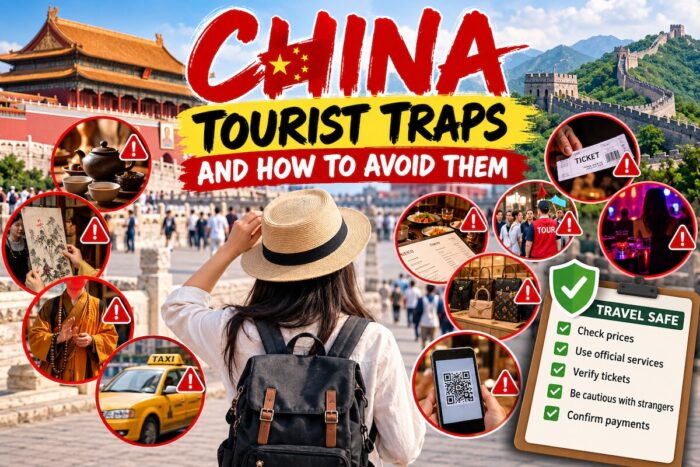
China Tourist Traps and How to Avoid Them
Some scams rely on friendly strangers who invite tourists to a supposedly authentic cultural experience. Others involve unofficial taxi services, misleading tour packages, inflated restaurant bills, fake tickets, and pressure to purchase expensive products. Digital payment systems and QR codes can also create opportunities for fraud when travelers do not verify what they are scanning or approving.
Not every unexpected offer is a scam, and you shouldn’t view most interactions with local residents and legitimate businesses with suspicion. The key is to recognize warning signs, understand how common tourist traps work, and avoid situations where another person controls the venue, price, or terms of a transaction.
This guide covers 10 tourist scams travelers may encounter in mainland China, explains how they operate in real-world examples, and offers practical ways to protect your money and personal information.
Quick Reference: 10 China Travel Scams
| Tourist scam | Warning sign | How to avoid it |
|---|---|---|
| Tea ceremony invitation | A stranger invites you to a specific tea house | Choose your own venue and check prices |
| Art student or gallery scam | Someone offers a private art exhibition | Avoid pressured purchases and unsolicited invitations |
| Fake monk or religious donation | A stranger demands payment for a blessing or charm | Decline unsolicited gifts and donations |
| Taxi overcharging | Driver refuses the meter or demands a large flat fare | Use official taxi ranks and agree on legitimate fare arrangements |
| Unofficial tours and shopping stops | An unusually cheap tour includes undisclosed shopping visits | Verify the operator, itinerary, and contract |
| Fake tickets and ticket touts | A stranger offers guaranteed entry or discounted tickets | Buy through authorized channels |
| Restaurant overcharging | Prices are missing, or the final bill differs from expectations | Check menu prices and confirm charges before ordering |
| Massage, bar, or nightlife scam | A stranger directs you to an unfamiliar venue | Choose established businesses independently |
| Shopping and counterfeit goods | Sellers use pressure tactics or make unverifiable claims | Compare prices and request receipts |
| QR-code and payment fraud | A QR code redirects you to an unfamiliar payment page | Verify the recipient and amount before confirming |
These scams aren’t equally common in every city, and some are longstanding tourist-trap patterns rather than incidents every visitor will encounter. Treat the table as a practical warning guide, not a ranking of crime rates.
1. The Tea Ceremony Scam
The tea ceremony scam is one of the best-known tourist traps associated with major Chinese tourist destinations. It often happens around busy sightseeing areas in Beijing and Shanghai, though similar approaches can occur elsewhere.
How the scam works
A friendly stranger approaches you near a famous landmark. They may introduce themselves as a university student, a local resident wanting to practise English, or another traveller interested in cultural exchange.
After a short conversation, they invite you to experience a traditional Chinese tea ceremony at a nearby establishment. The invitation may sound inexpensive, spontaneous, or even complimentary.
Once you arrive, staff serve several varieties of tea without clearly explaining the prices. At the end, you receive a bill that is far higher than expected. The person who invited you may appear surprised, leave, or encourage you to pay.
In some reported cases, staff pressure customers when they question the bill.
How to avoid it
- Politely decline unsolicited invitations to private tea houses.
- Choose a tea shop independently by checking its location, reviews, and published prices.
- Ask for a menu with prices before ordering anything.
- Confirm whether prices are charged per person, per pot, or per tasting session.
- Don’t assume a cultural experience is free just because the invitation sounds casual.
You can still enjoy Chinese tea culture. Book a tea-tasting experience through an established business, and confirm the total cost before you participate.
2. The Art Student and Gallery Scam
Another reported tourist trap involves strangers who claim to be art students, young artists, or cultural enthusiasts.
How the scam works
Someone approaches you near a popular attraction and starts a conversation. They may compliment your appearance, ask about your country, or explain that they are studying art.
They then invite you to a nearby exhibition, studio, or gallery where they supposedly display their work. They may present the invitation as a chance to support students or discover local talent.
Once inside, sellers show paintings, calligraphy, or other artwork and encourage you to buy something. Prices may be unusually high, and the seller may use emotional pressure to make you feel obligated to buy something.
Not every student exhibition is suspicious. The warning sign is an unsolicited invitation that quickly turns into a high-pressure sales pitch.
How to avoid it
- Be cautious when strangers insist that you visit a particular gallery.
- Ask for the gallery’s name, address, and prices before agreeing to go.
- Do not buy artwork because someone makes you feel guilty about refusing.
- Compare prices at established art shops if you genuinely want to purchase Chinese art.
- Walk away if the seller refuses to explain the price or pressures you to pay immediately.
A genuine interest in local art is a good reason to explore galleries. You don’t need to accept an unexpected invitation from someone you have just met.
3. Fake Monks and Religious Donation Scams
China has many Buddhist temples, historic religious sites, and places of spiritual significance. Some tourist traps exploit visitors’ respect for religion.
How the scam works
Someone in monk-like robes may approach you near a tourist attraction, temple entrance, or busy pedestrian area. They might offer a bracelet, charm, blessing, or small religious object.
After you accept the item, they may ask for a donation. The person might initially suggest a small contribution, then demand a much larger amount.
Other approaches involve donation lists, petitions, or requests for money presented as religious obligations. A donation request alone does not prove fraud, but unsolicited gifts followed by aggressive payment demands deserve caution.
How to avoid it
- Decline religious objects offered by strangers if you do not want to pay for them.
- Never assume an unsolicited blessing or charm is free.
- Make donations directly through clearly identified temple channels.
- Avoid giving money because someone claims you will have bad luck if you refuse.
- Follow posted donation procedures at legitimate religious sites.
If you wish to support a temple, use its official donation arrangements. You can appreciate China’s religious heritage without participating in an unfamiliar street solicitation.
4. Taxi Overcharging and Unlicensed Drivers
Transportation scams can occur around airports, railway stations, bus terminals, nightlife districts, and major tourist attractions.
How the scam works
An unofficial driver may approach arriving passengers and offer a convenient ride. The vehicle may look like an ordinary car, but the driver may demand an inflated fare once you reach your destination.
Another problem occurs when a driver refuses to use the meter and insists on a large fixed price. In other cases, a passenger may face unexplained charges or an unnecessarily long route.
Legitimate taxis and drivers can also encounter traffic, road closures, or navigation problems. Warning signs include refusing to explain the fare, pressuring you to accept an unverified price, and demanding additional payment that was never disclosed.
How to avoid it
- Use official taxi queues at airports and railway stations.
- Choose a licensed taxi or a reputable ride-hailing service.
- Confirm that the meter is running when required.
- If a fixed fare is legitimate, agree on the amount and any applicable tolls before departure.
- Check the vehicle details and destination in your booking confirmation.
- Keep your destination written in Chinese if you are concerned about language barriers.
Avoid following strangers who offer transportation inside terminals or near attraction entrances. A legitimate driver should not pressure you to leave the official pickup area.
5. Unofficial Tours and Compulsory Shopping Stops
A tour advertised at an unusually low price can become expensive once additional charges and shopping stops are introduced.
How the scam works
A seller offers a sightseeing package that appears much cheaper than comparable tours. The advertised price may exclude transportation, admission tickets, meals, or other essential services.
After payment, the itinerary may include visits to shops selling tea, silk, jewelry, health products, or souvenirs. Travelers may be pressured to purchase items, while promised attractions receive less time than expected.
China’s tourism authorities have also warned that unauthorized tour operators may use misleading promotions and unusually cheap packages to attract customers. These arrangements can involve unclear contracts, concealed fees, and forced or pressured shopping.
How to avoid it
- Verify the tour operator’s identity and relevant business credentials.
- Read the complete itinerary before paying.
- Ask whether shopping stops are included and whether purchases are optional.
- Confirm admission fees, meals, transportation, guide services, and cancellation conditions.
- Request written confirmation of the price and included services.
- Be cautious of tours advertised as free when the operator cannot explain how the trip is funded.
A low price isn’t automatically suspicious, but it should prompt you to examine the terms carefully. Choose an operator that provides clear information instead of relying on verbal promises.
6. Fake Attraction Tickets and Ticket Touts
Popular attractions may have limited entry slots, require advance booking, or have long queues. Scammers may exploit travelers who are worried about missing a visit.
How the scam works
Someone near an attraction offers discounted tickets or promises immediate entry. They may claim to have access to reserved tickets, special admission privileges, or a way to bypass official booking procedures.
The ticket may be invalid, duplicated, incorrectly dated, or unsuitable for your visitor category. In other cases, the seller may take payment and disappear.
A related problem involves unofficial booking services that charge excessive fees while pretending to be official ticket providers.
How to avoid it
- Check the attraction’s official booking process before your visit.
- Buy tickets through authorized channels or recognized travel platforms.
- Confirm the date, entry time, ticket category, and visitor details.
- Do not hand over your passport or personal information to an unverified ticket seller.
- Be suspicious of anyone who guarantees entry despite official channels showing no availability.
- Keep your booking confirmation until you have entered the attraction.
For major sites such as the Forbidden City and other popular landmarks, plan ahead rather than relying on someone selling tickets outside the entrance.
7. Restaurant Overcharging and Misleading Menus
China offers a wide variety of regional dishes, street food, and restaurant experiences. However, travelers should check prices carefully in unfamiliar establishments, especially near major tourist attractions.
How the scam works
A restaurant may display a menu without clear prices or present an expensive item as a standard dish. The final bill may include unexpected service charges, seafood priced by weight, or additional items the customer didn’t understand when ordering.
In a more aggressive version, staff may encourage customers to order premium dishes without explaining their costs.
Language barriers can make it difficult to distinguish a genuine misunderstanding from deliberate overcharging.
How to avoid it
- Check the price of each dish before ordering.
- Ask whether seafood is priced by weight and confirm the weight and unit price.
- Clarify whether a quoted price covers a portion, a person, or an entire table.
- Review the bill before paying.
- Keep a record of what you ordered if the bill appears inconsistent.
- Choose another restaurant if staff refuse to explain their prices.
A restaurant serving authentic regional food does not need to hide its prices. If you can’t confirm which dish the price is for, it’s safer to order somewhere else.
8. Massage, Bar, and Nightlife Scams
Some tourist traps target visitors looking for a relaxing massage, a drink, or an evening out.
How the scam works
A stranger recommends a nearby bar, karaoke venue, massage business, or spa. They may describe it as inexpensive, exclusive, or a local favorite.
Once inside, you may find prices are far higher than expected. The bill may include unexplained drinks, room charges, services you didn’t request, or other fees not disclosed beforehand.
Some reported tea-house scams use a similar pattern, steering visitors toward a particular venue before presenting an inflated bill. In more serious cases, customers have reported intimidation or threats when disputing charges.
How to avoid it
- Research bars, massage businesses, and spas independently.
- Check the service menu and full prices before agreeing to treatment.
- Confirm drink prices and any room or service charges before ordering.
- Do not accept invitations to unfamiliar venues from people who approach you on the street.
- Keep your phone, payment cards, and personal belongings under control.
- Leave if staff refuse to explain the charges or begin applying pressure.
If a venue becomes threatening, prioritize your personal safety. Do not escalate an argument over a disputed bill, and seek help from local authorities if you feel in danger.
9. Shopping Scams and Counterfeit Goods
China is known for its manufacturing industry, markets, shopping districts, and wide selection of products. Many legitimate businesses offer competitive prices, but travelers should still be cautious about sales claims and product authenticity.
How the scam works
A seller may claim that a product is genuine, imported, handmade, or available at an exclusive discount. The item might be counterfeit, lower quality than advertised, or different from the product demonstrated.
Other sellers use high-pressure tactics to persuade customers to buy expensive souvenirs, jewelry, tea, silk products, or electronics. A seller may also claim that an item is a limited-time bargain to discourage comparison shopping.
Not every inexpensive product is counterfeit, and not every market seller is dishonest. The problem arises when claims cannot be verified or the seller misrepresents what they’re selling.
How to avoid it
- Compare prices at several stores before buying expensive items.
- Ask for a detailed receipt.
- Check the product’s specifications, packaging, and warranty terms.
- Be cautious of authenticity claims you can’t verify.
- Avoid purchases you can’t properly inspect.
- Do not let a seller rush you into paying a deposit or making an immediate decision.
For expensive electronics, jewelry, branded goods, and other high-value purchases, established retailers generally offer more predictable after-sales support than anonymous street sellers.
10. QR-Code and Digital Payment Fraud
QR codes are widely used for payments and other digital transactions in China. They are convenient, but travelers should verify every payment request before approving it.
How the scam works
A fraudulent or altered QR code may redirect a user to a fake website, an impersonation page, or an unintended payment recipient. A scammer may also present a payment code that doesn’t belong to the business you think you are paying.
Other risks include fake payment confirmations and requests to scan a code to claim a discount, receive a refund, or access a special offer.
These situations are not unique to China, but the widespread use of QR-code transactions makes payment verification an important travel habit.
How to avoid it
- Check the recipient’s name and payment amount before confirming a transaction.
- Use the payment feature within your trusted payment application.
- Avoid scanning unfamiliar codes displayed on unofficial signs, stickers, or unsolicited messages.
- Do not share verification codes, passwords, or account credentials with strangers.
- Confirm the merchant received the payment before leaving.
- Be wary of anyone who asks you to approve a second payment to correct an unexplained error.
If a payment screen shows a recipient or amount you don’t recognize, cancel the transaction and ask the merchant to provide a verified payment method.
Common Warning Signs of Tourist Scams in China
Although the 10 scams differ, many use the same pressure tactics. Recognizing these patterns can help you make safer decisions in unfamiliar surroundings.
- Unsolicited invitations: Someone you have just met insists that you visit a specific tea house, gallery, bar, or shop.
- Unclear pricing: A seller refuses to provide a written price or explains the cost only after delivering a service.
- Unexpected urgency: You are told to pay immediately because an offer, ticket, or discount will disappear within minutes.
- Unusually cheap packages: A tour or service costs substantially less than comparable options, but the seller cannot explain what is included.
- Pressure to buy: A seller uses guilt, intimidation, or repeated persuasion to make you spend money.
- Unverified credentials: A person claims to represent a tour company, attraction, temple, or business but cannot provide verifiable information.
- Requests to leave official channels: Someone insists that you cancel an existing booking and pay through an unfamiliar account or private arrangement.
When one or more of these signs appear, pause before proceeding. You don’t need to prove someone is a scammer to decline an offer.
Pre-Trip Checklist: How to Avoid Scams in China
- Use this checklist before leaving for China and during your trip.
- Research major attractions and check their official ticketing requirements.
- Save your hotel address in Chinese to communicate more easily with drivers.
- Keep confirmation details for flights, hotels, tours, and tickets.
- Compare tour prices and verify what each package includes.
- Learn a simple phrase for declining unwanted offers, such as “No, thank you.”
- Check restaurant menus and service prices before ordering.
- Use licensed transportation and established businesses.
- Verify QR-code payment recipients and amounts before approving transactions.
- Keep your passport secure and avoid handing it to unverified sellers.
- Be cautious of strangers who invite you to a second location.
- Save local emergency information and your accommodation details.
- Keep your phone charged and retain access to your booking confirmations.
The goal is not to avoid interacting with local people. It is to make independent decisions about where you go, which services you use, and how you spend your money.
Frequently Asked Questions About China Travel Scams
Is China safe for tourists?
China is a major travel destination with extensive transport networks, popular attractions, and a wide range of accommodation options. Many visitors complete their trips without experiencing a scam. However, tourist traps and other safety risks can occur, particularly in busy sightseeing areas and around transport hubs. Travelers should remain aware of their surroundings, check prices before purchasing services, and use established businesses. Review current travel advisories before departure because safety conditions and entry requirements can change.
What is the tea ceremony scam in China?
The tea ceremony scam typically begins when a friendly stranger approaches a tourist and invites them to a nearby tea house. They may present the experience as a cultural exchange or an inexpensive introduction to Chinese tea. After the tea is served, the customer receives a bill that is much higher than expected. To avoid this trap, choose your own tea house, check the menu before ordering, and decline invitations from strangers who insist on taking you to a specific venue.
Are taxi scams common in China?
Taxi-related tourist traps can include unlicensed drivers, refusal to use the meter, unexplained extra charges, and inflated flat fares. These problems aren’t inevitable, and many drivers provide legitimate service. To reduce the risk, use official taxi ranks or a reputable ride-hailing service, confirm the destination before departure, and check the fare arrangements. Be especially cautious when arriving at airports and railway stations, where tired travelers may be more likely to accept an unsolicited offer.
How can I avoid fake tour guides in China?
Book tours through established operators and verify the company’s identity before paying. Request a written itinerary that lists transportation, attraction tickets, meals, shopping stops, and other included services. Be suspicious of people who approach you near a landmark and promise exclusive access or unusually cheap tours. If a guide cannot explain the price or insists you pay immediately, decline the offer. A legitimate tour provider should be able to give you clear information before you commit.
Should I accept invitations from strangers to visit a local shop or gallery?
You can speak with local residents if you wish, but be cautious when a stranger quickly directs the conversation toward a specific business. Some tourist traps use friendly conversation to lead visitors into overpriced tea houses, galleries, or shops. You don’t have to follow someone somewhere just to be polite. If you want to explore a gallery or local business, research it independently and check its prices. Genuine cultural experiences do not require you to accept unsolicited invitations.
How can I recognize a fake attraction ticket?
Be cautious when a stranger offers a discounted ticket, guaranteed entry, or a way to bypass official booking restrictions. Fake tickets may be invalid, duplicated, or issued for the wrong date or visitor category. Check the attraction’s official ticketing requirements and purchase through authorized channels. Read the booking details carefully and keep your confirmation until you enter. If official channels show tickets are unavailable, don’t assume an unknown street seller can legitimately guarantee admission.
Are restaurants in China safe for tourists?
Many restaurants welcome international visitors, but travelers should check prices and ordering arrangements before agreeing to a meal. Potential problems include unclear menu prices, unexpected charges, seafood sold by weight without clear explanations, and items added to the bill without the customer’s understanding. Ask for clarification before ordering and review the bill before paying. If staff refuse to explain the charges, consider choosing another restaurant. Checking prices is a sensible precaution, not a reason to avoid local food or unfamiliar dishes.
How can I avoid shopping scams in China?
Compare prices, inspect products carefully, and avoid purchases made under pressure. Be especially cautious when sellers claim trendy goods are genuine, jewelry is certified, or an item is a rare bargain without providing evidence. Request a receipt and check return or warranty terms before paying for expensive products. A low price does not automatically mean a product is counterfeit, but claims about authenticity should be verifiable. If a seller rushes you or refuses to explain the terms, walk away.
Is it safe to scan QR codes in China?
QR codes are common in everyday transactions in China, and many legitimate businesses use them. The risk comes from fraudulent codes, fake payment pages, or codes that direct money to the wrong recipient. Before approving a payment, verify the merchant name and the amount shown in your payment app. Avoid scanning codes from unfamiliar stickers, unsolicited messages, or unverified offers. Never share account passwords or verification codes with someone claiming to help resolve a payment problem.
What should I do if someone pressures me to pay an unexpected bill?
Stay calm and ask for an itemized bill that explains the charges. Compare it with the menu, booking confirmation, or price agreed before the service began. If the dispute continues, avoid escalating the confrontation, especially if the other party becomes threatening. Prioritize your personal safety and seek assistance from local authorities or appropriate consumer support channels when necessary. Keep relevant receipts, payment records, and booking details. Do not hand over your passport to settle a disputed bill.
Are religious donation requests in China always scams?
No. Legitimate religious institutions may accept voluntary donations through their established channels. Warning signs include strangers offering an unsolicited charm or blessing, then demanding payment, threatening bad luck, or refusing to accept a polite decline. If you want to support a temple, donate directly through its recognized arrangements. You should not feel obligated to pay for an object or service you did not request. Respectful curiosity about religious traditions is welcome, but participation should always be voluntary.
What is the most effective way to avoid tourist scams in China?
The most effective approach is to make independent decisions and verify prices before agreeing to services. Book accommodation, tours, transportation, and attraction tickets through established channels. Avoid following strangers to unfamiliar venues, and be cautious of offers that involve pressure, unclear costs, or promises that sound unusually good. Check payment details before confirming transactions and keep important travel records accessible. You do not need to distrust everyone you meet. Staying informed and taking time to verify an offer can prevent many common tourist traps.
Conclusion
China offers travelers a wide range of cultural, historical, culinary, and modern experiences. Knowing how tourist scams operate can help you enjoy those experiences with greater confidence.
The most useful precautions are straightforward: choose your own venues, verify prices before ordering, use legitimate transportation, book tours through established providers, and check payment details before confirming a transaction. Be cautious of unsolicited invitations and high-pressure sales tactics, particularly when someone wants to take you to a second location.
A scam warning shouldn’t keep you from enjoying local culture or interacting with residents. Instead, use it as a reminder to make informed choices. With preparation, clear boundaries, and a willingness to walk away from suspicious offers, you can reduce avoidable expenses and focus on discovering what makes China an exceptional travel destination.
Follow and subscribe to OutofTownBlog.com on Facebook , Twitter, Instagram, Pinterest, and YouTube for more Travel-related updates.
Read:
- The Jade Market in Hong Kong
- Travel Guide: Dragon Treasure Castle in Baguio City
- Top 15 Best Things to Do in Lijiang, China
- Top 12 Best Things to Do in Hangzhou, China
- 15 Best Things to Do in Suzhou, China
- 15 Best Things to Do in Nanjing, China: Top Attractions and Travel Tips