

 Melo Villareal
Must-Try Peranakan Dishes in Penang, Malaysia
As a traveler who is always on the go, I spend most of my trips walking around, admiring the local way of life, or visiting busy hotspots whenever my schedule allows. But beyond exploring on foot, I also enjoy exploring by food. I recently visited the Malaysian state of Penang, one of the world’s hubs for street food, coffee shops, and restaurants, where food and culture are literally on the same street.

Temple in Penang, Malaysia
Penang’s Peranakan dishes are renowned for their concoctions of Chinese, Thai, and Malay influences, and although there are endless numbers of these delightful, aromatic, spicy dishes to choose from, here are some of the top five must-try authentic Peranakan dishes in Penang:
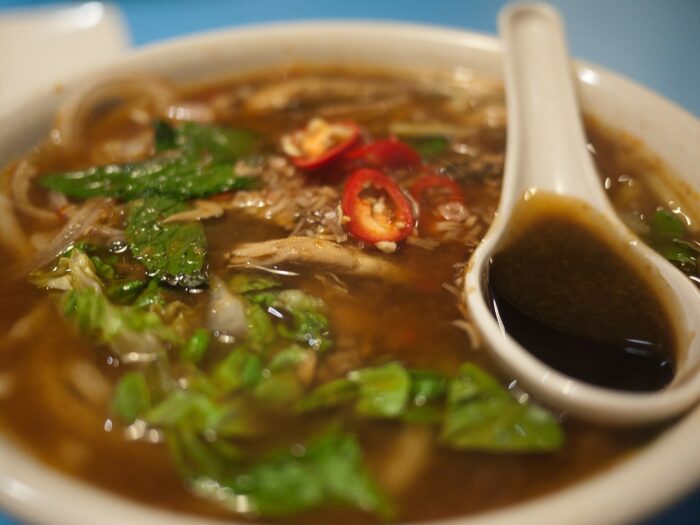
Penang Assam Laksa
Penang Assam Laksa in Penang is one of Malaysia’s most iconic Peranakan noodle soups, celebrated for its bold sweet-sour balance and deeply aromatic broth. The soup base is made by simmering mackerel or sardines with tamarind (assam), lemongrass, galangal, torch ginger flower, dried chilies, shrimp paste, and onions, then blended into a thick, slightly grainy gravy.
It is served over thick rice noodles and topped generously with shredded cucumber, pineapple slices, mint leaves, red chilies, onions, and a spoonful of pungent shrimp paste (hae ko).
The taste is intensely complex: tangy at first, then fishy richness, gentle sweetness, herbal freshness, and a lingering spicy warmth. Each bite shifts between refreshing and savory, never heavy despite the rich broth.
It is a must-try Peranakan dish because it perfectly reflects the cuisine’s philosophy—Chinese techniques fused with Malay spices—creating layers of flavor that cannot be replicated outside Penang’s street stalls.
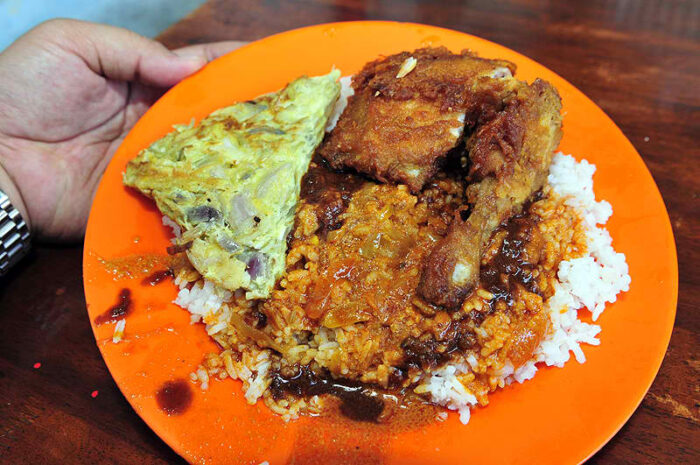
Nasi Kandar
Nasi Kandar in Penang is a legendary Malaysian rice dish rooted in Indian-Muslim cooking but embraced across Peranakan food culture for its bold, layered flavors.
A plate begins with steamed white rice, then servers ladle over a mix of curries — typically fish curry, chicken curry, dal, and spiced gravy known locally as “banjir” (flooded sauce). You choose toppings like fried chicken, beef rendang, squid, okra, cabbage, hard-boiled egg, and sometimes sambal prawns.
The taste is intense yet balanced: spicy, savory, slightly sweet, and deeply aromatic with cardamom, fennel, star anise, turmeric, and curry leaves. The mixed gravies create a complex umami richness rather than sharp heat alone.
It’s a must-try because it represents Penang’s multicultural identity in one plate — Indian spices, Malay techniques, and Peranakan love for layered sauces — eaten communally, quickly, and generously. Every stall tastes different, making each visit a new discovery.
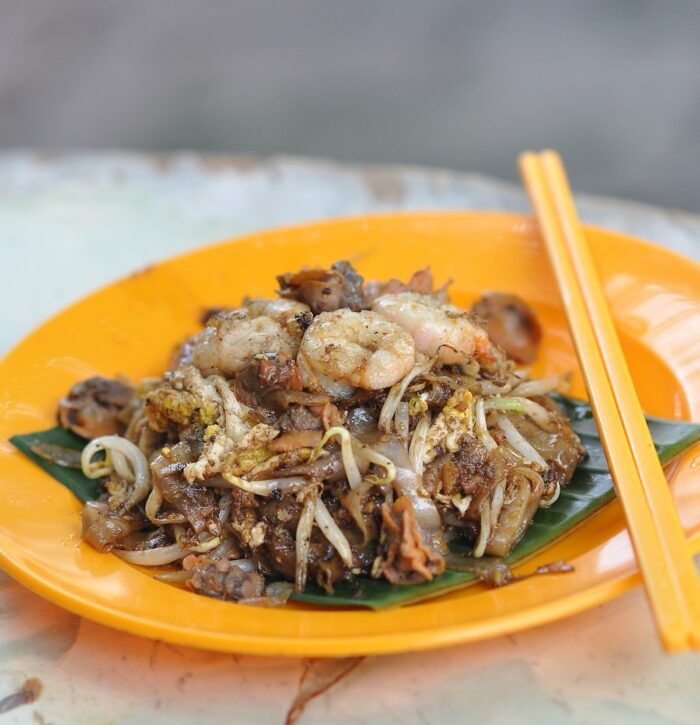
Char Kway Teow
Penang Char Kway Teow is a smoky stir-fried noodle dish cooked over intense charcoal heat in a well-seasoned wok. Flat rice noodles are tossed with prawns, Chinese lap cheong sausage, cockles, eggs, garlic, bean sprouts, and chives, then seasoned with soy sauce and chili paste. Pork lard or lard oil is often added, giving the noodles their signature glossy sheen and deep aroma.
The taste is rich, savory, slightly sweet, and faintly spicy, layered with a distinct “wok hei” — the prized breath-of-the-wok smokiness. Juicy seafood sweetness contrasts with crunchy bean sprouts and chewy noodles, while crispy bits of fried lard add bursts of indulgence.
It’s considered a must-try Peranakan dish because it reflects the fusion of Chinese cooking techniques with Malay flavors and local ingredients. Each hawker’s technique subtly changes the flavor, making it not just food but a cultural experience unique to Penang’s heritage street cuisine.

Oh Chien
Oh Chien in Penang is a beloved hawker classic that reflects the island’s rich Peranakan heritage. Also known as oyster omelette, it combines fresh, briny oysters with a batter made from eggs and tapioca starch.
The starch gives the dish its signature contrast: crispy and lightly charred on the outside, yet chewy and slightly gooey within. It’s typically fried with garlic, fish sauce, chili paste, and bean sprouts, then garnished with spring onions and served with a tangy chili dip.
Flavor-wise, Oh Chien is a bold balance of textures and tastes. The oysters bring bursts of ocean sweetness, while the egg adds richness. The caramelized edges provide smoky depth, and the chili sauce adds heat and acidity.
What makes it a must-try Peranakan dish is the harmony of Chinese cooking techniques and Malay flavors—simple ingredients transformed into a deeply satisfying, culturally layered street-food experience.

Cendol
Cendol in Penang is a beloved Peranakan dessert that perfectly captures the region’s tropical flavors and multicultural heritage. At its heart are soft, worm-shaped green jelly strands made from rice flour and pandan leaf extract, giving them a fragrant aroma and gentle herbal sweetness.
These are served over shaved ice and topped with rich coconut milk and thick gula Melaka (palm sugar syrup). Most bowls also include red beans, sometimes sweet corn, and occasionally glutinous rice for extra texture.
The taste is a balance of creamy, smoky, and refreshing. The coconut milk adds richness, while the caramel-like palm sugar provides deep sweetness with a hint of molasses. The icy texture cools you instantly in Penang’s humid heat.
It’s a must-try Peranakan dessert because it reflects the fusion of Malay ingredients and Chinese dessert traditions. More than a sweet treat, it represents Penang’s cultural identity in a single bowl.

Penang is an island state renowned for its vibrant and diverse culture, blending traditions from various ethnic groups, including Malays, Chinese, Indians, and others. To truly immerse oneself in the local customs and heritage, one can indulge in its rich culinary offerings.
The cuisine of Penang, though highly varied with flavorful dishes reflecting these different influences, is united by its deep-rooted history and shared cultural ties that have persisted over the centuries, creating a tapestry of tastes that tells the story of the island’s multicultural identity.
How about you? What are your favorite Peranakan Dishes in Penang?
Follow and subscribe to OutofTownBlog.com on Facebook , Twitter, Instagram, Pinterest, and YouTube for more Travel-related updates.
Also Read:
- Where to Stay in Penang: Sunway Hotel Georgetown
- Georgetown, Penang: Here Are The Must-Visit Landmarks In The Place
- Peranakan Dinner at Perut Rumah Nyonya Cuisine in Penang
- Adventures in Penang, Malaysia Day 1
- Visiting Penang? Don’t Miss These 7 Street Arts Of George Town.