

 Team Out of Town
Toledo Cathedral Spain: A Complete Guide to History, Design and Visiting
Standing at the heart of Toledo’s historic center, Toledo Cathedral is one of Spain’s most impressive Gothic monuments. Officially known as the Cathedral of Saint Mary of Toledo, or the Primate Cathedral of Spain, it has played an important religious, artistic, and cultural role for centuries.
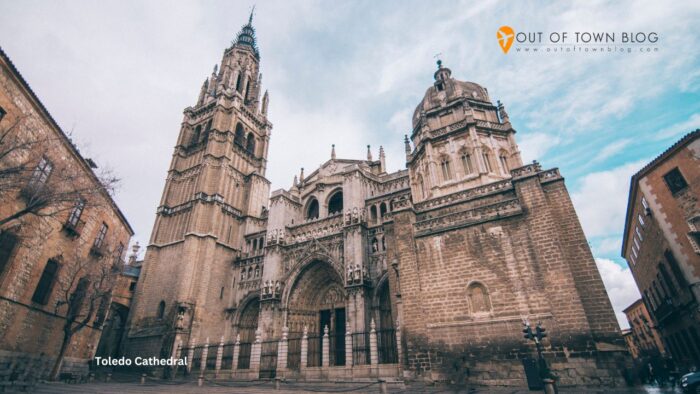
Toledo Cathedral
The cathedral combines monumental Gothic architecture with Renaissance, Baroque, and Neoclassical details added over generations. Inside, visitors encounter elaborate chapels, medieval stained-glass windows, royal tombs, paintings, sculptures, and religious treasures.
The building is also closely connected to Toledo’s layered history. The current cathedral stands on the site of earlier religious structures, including a Visigothic basilica and the city’s Great Mosque.
History of Toledo Cathedral

Construction of the present Toledo Cathedral began in 1226 during the reign of King Ferdinand III, under the direction of Archbishop Rodrigo Jiménez de Rada. The project took more than two centuries to complete.
The cathedral rose over the remains of an earlier Visigothic church and the Great Mosque of Toledo. This history reflects the different civilizations and religious traditions that shaped the city over many centuries.
Construction progressed through the 13th, 14th, and 15th centuries. The final Gothic vaults were completed in 1493, during the reign of the Catholic Monarchs. By then, the cathedral had become one of Spain’s most ambitious Gothic buildings.
The cathedral continued to evolve after its Gothic structure was completed. Renaissance, Baroque, and Neoclassical artists and architects contributed chapels, decorative elements, paintings, and other works.
2026 marks the 800th anniversary of the beginning of construction, making this an especially significant year to visit. Special exhibitions, cultural events, concerts, restoration projects, and religious activities are taking place throughout the year.
Design and Architecture of Toledo Cathedral

Toledo Cathedral is considered one of the finest examples of Spanish Gothic architecture. French Gothic traditions influenced its design, but it developed its own character within the Castilian architectural tradition.
The cathedral measures approximately 120 meters long and 59 to 60 meters wide. Its interior has five naves supported by 88 columns, creating an enormous and complex architectural space.
One of the most striking features is the ambulatory, which wraps around the Main Chapel and connects a series of chapels. The arrangement allows visitors to experience different architectural and artistic styles as they move through the cathedral.
The building is also known for its extensive collection of medieval stained-glass windows. Many date from the 14th, 15th, and 16th centuries, filling parts of the cathedral with colored light.

What to See Inside Toledo Cathedral
Approach a visit to Toledo Cathedral slowly. It has considerably more to see than its imposing exterior suggests.
Main Chapel
The Main Chapel is the cathedral’s artistic and liturgical center. Its monumental gilded and polychromed wooden altarpiece, created between 1498 and 1504, depicts scenes from the Bible.
The chapel also contains important royal burials and the Renaissance tomb of Cardinal Mendoza. A richly decorated grille surrounds the space.
The Choir
The choir is another major highlight. Its stalls combine remarkable Renaissance carving with detailed artistic work associated with masters including Alonso de Berruguete and Felipe Vigarny.
The choir is particularly interesting for travelers who enjoy sculpture and craftsmanship because many details are easy to miss if you simply walk through the cathedral.
The Sacristy
The Sacristy houses an impressive collection of paintings. Among its most famous works is El Greco’s The Disrobing of Christ, making it an essential stop for art lovers visiting Toledo Cathedral.
The Transparente
The Transparente is one of the cathedral’s most famous Baroque features. Created by Narciso Tomé, it uses sculpture, architecture, and light to create a dramatic visual effect.
It is a strong example of how Toledo Cathedral continued to change long after its original Gothic structure was completed.
Cathedral Treasury and Custodia
The cathedral also houses the celebrated Custodia of Enrique de Arfe, an elaborate masterpiece of Spanish goldsmithing. The work is particularly associated with Toledo’s Corpus Christi celebrations.
Interesting Facts About Toledo Cathedral
- Construction began in 1226, making the present building more than 800 years old.
- The cathedral was constructed over the remains of a Visigothic basilica and Toledo’s Great Mosque.
- It has five naves and 88 columns, giving the interior its enormous scale.
- Its stained-glass windows date mainly from the 14th, 15th, and 16th centuries.
- The cathedral contains important works by El Greco, one of Toledo’s most famous artists.
- The popular name Dives Toletana means roughly “the rich Toledan,” reflecting the cathedral’s artistic wealth.
- The building incorporates architectural influences from several centuries, including Gothic, Renaissance, Baroque, and Neoclassical styles.
- 2026 marks the 800th anniversary of construction’s start, with special cultural programming throughout the year.
How to Get to Toledo Cathedral
Toledo Cathedral is located at Calle Cardenal Cisneros, 1, in the heart of Toledo’s historic center.
From Madrid by Train
The easiest option for many travelers is the high-speed train from Madrid to Toledo. From Toledo railway station, you can take a taxi, local bus, or walk into the historic center.
The cathedral is within the pedestrianized historic core, so expect some walking once you enter the old city.
From Madrid by Bus
Buses also connect Madrid with Toledo. The journey takes longer than the high-speed train but can be a practical option for budget travelers.
From the Toledo bus station, you can walk uphill toward the historic center or take local transportation.
By Car
You can drive to Toledo, but reaching the cathedral by car can be difficult because of the narrow streets and pedestrian areas in the historic center. Parking outside the old town and walking in is usually more practical.
Toledo Cathedral Opening Hours
For cultural visits, Toledo Cathedral generally opens from 10:00 AM to 6:30 PM from Monday to Saturday and from 2:00 PM to 6:30 PM on Sundays.
Special schedules may apply during religious holidays and important celebrations. Check the latest schedule before visiting.
Tips for Visiting Toledo Cathedral
Give yourself at least one to two hours if you want to appreciate the major artistic highlights. Art enthusiasts may want longer.
Look beyond the main altar and take time to examine the chapels, stained glass, choir, paintings, and smaller architectural details. The cathedral rewards visitors who slow down.
If you are visiting Toledo as a day trip from Madrid, arrive early enough to explore the cathedral and the surrounding historic center without rushing.
The cathedral remains an active place of worship, so visitors should dress and behave respectfully, especially during religious services.
Frequently Asked Questions About Toledo Cathedral
What is Toledo Cathedral famous for?
Toledo Cathedral is famous for its Spanish Gothic architecture, enormous interior, medieval stained-glass windows, and exceptional collection of religious art. It also contains important works by El Greco, the elaborate Custodia of Enrique de Arfe, the Renaissance choir, and the dramatic Baroque Transparente. Its location on the site of earlier Visigothic and Muslim religious buildings also makes it an important symbol of Toledo’s layered history.
When was Toledo Cathedral built?
Construction of the present Toledo Cathedral began in 1226 under King Ferdinand III and Archbishop Rodrigo Jiménez de Rada. Work continued for more than two centuries, with the final Gothic vaults completed in 1493. The building continued to receive artistic and architectural additions in later periods, so the cathedral today reflects several centuries of Spanish artistic development.
Is Toledo Cathedral worth visiting?
Yes. Toledo Cathedral is one of Toledo’s essential attractions for travelers interested in architecture, history, and art. The Gothic building’s scale is impressive, but the interior is especially rewarding for its chapels, stained glass, paintings, choir, treasury, and religious treasures. It also provides an excellent introduction to Toledo’s complex history and its importance as a major religious and cultural center in Spain.
How long should you spend at Toledo Cathedral?
Plan for around one to two hours for a comfortable visit. This gives you enough time to see the major areas without rushing. If you enjoy art, architecture, or religious history, allow extra time; the cathedral has numerous chapels, paintings, sculptures, tombs, stained-glass windows, and decorative details. Travelers with a strong interest in Spanish art may want to spend even longer exploring the cathedral.
What are the opening hours of Toledo Cathedral?
The usual cultural visiting schedule is 10:00 AM to 6:30 PM Monday through Saturday and 2:00 PM to 6:30 PM on Sundays. The cathedral has special schedules on several religious holidays and may close or restrict access during major celebrations. Check the current schedule before your visit, particularly if you are traveling during Easter, Christmas, or Corpus Christi.
Where is Toledo Cathedral located?
Toledo Cathedral is located at Calle Cardenal Cisneros, 1, in Toledo’s historic center. Its central location makes it easy to combine with other attractions in the old city. Because much of the historic center consists of narrow streets and pedestrian areas, walking is one of the best ways to explore the area around the cathedral.
Can you visit Toledo Cathedral on a day trip from Madrid?
Yes. Toledo is one of the easiest historic cities to visit from Madrid for a day trip. High-speed trains connect Madrid and Toledo, and the cathedral sits in the historic center. A day trip gives you enough time to visit the cathedral and explore other major attractions, but staying overnight lets you experience Toledo after the daytime crowds leave.
Why is 2026 an important year for Toledo Cathedral?
2026 marks 800 years since construction of the present Toledo Cathedral began in 1226. The cathedral is celebrating its eighth centenary with a major cultural program that includes exhibitions, concerts, conferences, restoration projects, and religious celebrations. The anniversary makes 2026 an especially interesting year to visit this historic landmark.
For travelers exploring central Spain, Toledo Cathedral is a must-see, especially if you want to understand the city through its architecture, art, and religious history.
Toledo Spain Travel and Tour Packages
To help you plan your visit to Toledo, we listed places to visit and other unique activities in Toledo, Spain. We also listed some of the best travel deals and tour packages, along with excellent flight deals and accommodation options.
Klook.com
Searching for the best hotels, resorts, and affordable flights in the nearby Cities? Check out our list of cheap Toledo hotels and resorts on Agoda, or look for available Airbnb properties in the city.
Want more updates about new tourist attractions in Toledo, Spain? Follow #TeamOutofTown on Facebook, Twitter, Instagram, Bloglovin, and Pinterest for more travel ideas.
Also read:
- 12 Must-Visit Cities In Spain
- Best UNESCO World Heritage Sites In Spain
- Walking Tour Of Salamanca: Spain’s Golden City
- Best Things To Do In Avila, Spain
- Top 15 Best Things to Do in Toledo, Spain