

 Melo Villareal
Sta. Cruz Church Mass Schedule: A Guide to Visiting This Historic Manila Landmark
Located at Plaza Sta. Cruz in Santa Cruz, Manila, Sta. Cruz Church is one of the city’s most historic Catholic landmarks. Officially known as the Minor Basilica of Nuestra Señora del Pilar and Archdiocesan Shrine of the Blessed Sacrament, the church is a popular destination for worshippers and travelers exploring Manila’s heritage districts.
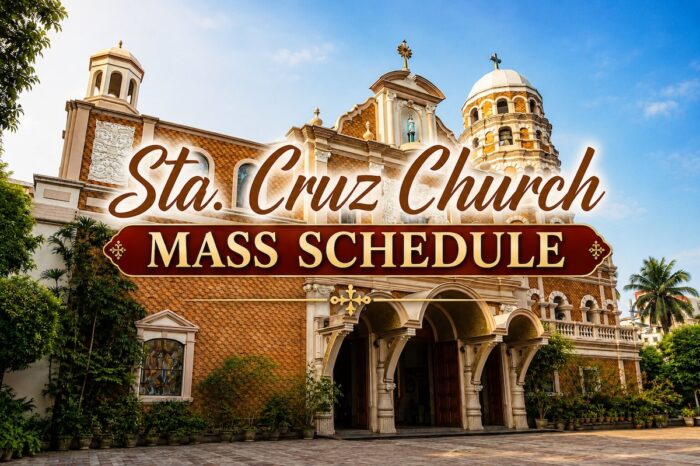
Sta. Cruz Church Mass Schedule
Its location also makes it an ideal starting point for a day of sightseeing, with Binondo, Chinatown, Escolta, Quiapo, and other historic attractions within easy reach.
A Brief History of Sta. Cruz Church
Sta. Cruz Church traces its history to June 20, 1619, when the Jesuits established the parish in the growing Santa Cruz district of Manila. The church also developed an important connection with the Chinese Catholic community in the area.
The church has a strong devotion to Nuestra Señora del Pilar (Our Lady of the Pillar). An image associated with the devotion was brought from Spain, and the Confraternity of Nuestra Señora del Pilar was canonically established at the church in the 18th century.
Over the centuries, the church suffered damage from earthquakes and other events. The original structure was eventually destroyed during the Battle of Manila in 1945.
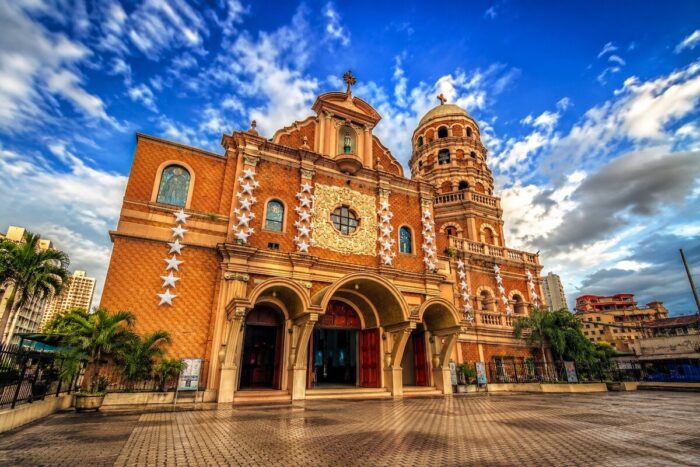
The present church was completed in 1957, incorporating Spanish Baroque and Mission Revival influences. That same year, the Congregation of the Blessed Sacrament began administering the parish, strengthening its role as a center of Eucharistic devotion.
In 2018, Sta. Cruz Church was formally declared the Archdiocesan Shrine of the Blessed Sacrament. In March 2025, the Vatican approved its elevation to a minor basilica, further recognizing its historical and religious significance.
Sta. Cruz Church Mass Schedule
The following is the regular Mass schedule. Visitors should still confirm the schedule before traveling because Mass times may change during feast days, Holy Week, Christmas, special celebrations, and other parish activities.
| Day | Time | Language |
|---|---|---|
| Monday | 6:30 AM | English |
| 8:00 AM | English | |
| 12:00 NN | Filipino | |
| 1:00 PM | English | |
| 5:00 PM | English | |
| 6:00 PM | Filipino | |
| Tuesday | 6:30 AM | English |
| 8:00 AM | English | |
| 12:00 NN | Filipino | |
| 1:00 PM | English | |
| 5:00 PM | English | |
| 6:00 PM | Filipino | |
| Wednesday | 6:30 AM | English |
| 8:00 AM | English | |
| 12:00 NN | Filipino | |
| 1:00 PM | English | |
| 5:00 PM | English | |
| 6:00 PM | Filipino | |
| Thursday | 6:30 AM | English |
| 8:00 AM | English | |
| 12:00 NN | Filipino | |
| 1:00 PM | English | |
| 5:00 PM | English | |
| 6:00 PM | Filipino | |
| Friday | 6:30 AM | English |
| 8:00 AM | English | |
| 12:00 NN | Filipino | |
| 1:00 PM | English | |
| 5:00 PM | English | |
| 6:00 PM | Filipino | |
| Saturday | 6:30 AM | English |
| 8:00 AM | English | |
| 12:00 NN | Filipino | |
| 1:00 PM | English | |
| 5:00 PM | English – anticipated Mass | |
| 6:00 PM | Filipino – anticipated Mass | |
| Sunday | 6:00 AM | Filipino |
| 7:00 AM | Filipino | |
| 8:15 AM | Filipino | |
| 9:30 AM | English | |
| 10:30 AM | Filipino | |
| 12:00 NN | English | |
| 1:00 PM | English | |
| 3:15 PM | Filipino | |
| 4:30 PM | Filipino | |
| 5:45 PM | Filipino |
A Holy Hour is also traditionally held in the evening, from 7:00 PM to 8:00 PM.
Nearby Attractions
One of the advantages of visiting Sta. Cruz Church is its proximity to several of Manila’s most interesting historical and cultural destinations.
Binondo and Chinatown
Just a short distance from Sta. Cruz is Binondo, widely recognized as Manila’s historic Chinatown. Visitors can explore traditional shops, restaurants, markets, old commercial buildings, and Filipino-Chinese heritage sites.
Food lovers can also turn the visit into a Chinatown food trip, sampling dumplings, noodles, hopia, tikoy, lumpia, and other Filipino-Chinese specialties.
Binondo Church
Also known as the Minor Basilica and National Shrine of San Lorenzo Ruiz, Binondo Church is another important religious landmark. It is located at Plaza Lorenzo Ruiz and is closely connected to the history of Manila’s Chinese-Filipino community.
Escolta
Once considered Manila’s premier commercial district, Escolta offers a fascinating glimpse into the city’s architectural and business history. Its historic buildings and streets are particularly interesting for photographers and travelers interested in old Manila.
Quiapo Church
The Minor Basilica of the Black Nazarene, commonly called Quiapo Church, is another major Catholic landmark. The surrounding Quiapo district is known for its religious traditions, markets, shops, street food, and busy urban atmosphere.
Intramuros
For a more extensive heritage experience, continue toward Intramuros, Manila’s historic walled city. Its Spanish-era churches, plazas, defensive walls, museums, and colonial architecture make it one of the city’s essential attractions.
How to Get to Sta. Cruz Church
By LRT-1
The Carriedo LRT-1 Station is one of the most convenient rail stations for reaching Sta. Cruz Church. From the station, visitors can walk toward Plaza Sta. Cruz.
By Jeepney
Jeepneys traveling toward Sta. Cruz, Carriedo, Divisoria, Quiapo, and nearby Manila districts can bring you close to the church. Ask the driver to let you off near Sta. Cruz or Plaza Sta. Cruz.
By Bus or Modern Jeepney
Several public transportation routes serve central Manila. Depending on where you are coming from, you may need to walk a few minutes after getting off.
By Taxi or Ride-Hailing Service
For the most convenient option, especially when traveling with children or older companions, use a taxi or ride-hailing service and set Sta. Cruz Church or Plaza Sta. Cruz as your destination.
Travel Tips for Visiting Sta. Cruz Church
- Check the Mass schedule before going. Special occasions may result in changes to regular Mass times.
- Arrive early on Sundays. Popular Masses can attract large crowds.
- Dress appropriately. Remember that the church is an active place of worship.
- Keep your belongings secure. The surrounding commercial areas can become crowded.
- Avoid blocking entrances and aisles. This is particularly important during Mass.
- Be respectful when taking photographs. Avoid using flash or photographing people during prayer without permission.
- Combine your church visit with nearby attractions. Binondo, Escolta, Quiapo, and other heritage areas can easily be incorporated into the same itinerary.
- Try visiting on a weekday if you prefer a quieter atmosphere for prayer and sightseeing.
- Allow extra travel time. Manila traffic can be unpredictable, particularly during peak hours and major religious events.
- Wear comfortable footwear. Exploring Sta. Cruz, Binondo, and nearby districts is best done partly on foot.
Frequently Asked Questions
Where is Sta. Cruz Church located?
Sta. Cruz Church is located at Plaza Sta. Cruz in Santa Cruz, Manila, Metro Manila.
What is the official name of Sta. Cruz Church?
The church is officially known as the Minor Basilica of Nuestra Señora del Pilar and Archdiocesan Shrine of the Blessed Sacrament – Sta. Cruz Parish. It is commonly called Sta. Cruz Church.
When was Sta. Cruz Church established?
The parish was established on June 20, 1619, making it one of Manila’s oldest Catholic parishes.
Is Sta. Cruz Church a minor basilica?
Yes. Sta. Cruz Church was elevated to the status of a minor basilica in 2025.
What time is Sunday Mass at Sta. Cruz Church?
Sunday Masses are scheduled at 6:00 AM, 7:00 AM, 8:15 AM, 9:30 AM, 10:30 AM, 12:00 NN, 1:00 PM, 3:15 PM, 4:30 PM, and 5:45 PM.
Does Sta. Cruz Church have weekday Masses?
Yes. There are multiple weekday Masses, beginning at 6:30 AM, with additional celebrations throughout the day.
Is there a Saturday anticipated Mass?
Yes. The regular Saturday schedule includes anticipated Masses at 5:00 PM in English and 6:00 PM in Filipino.
What attractions are near Sta. Cruz Church?
Visitors can easily explore Binondo Chinatown, Binondo Church, Escolta, Quiapo Church, and Intramuros as part of a Manila heritage and cultural itinerary.
Is Sta. Cruz Church worth visiting even if I am not attending Mass?
Yes. Beyond its religious significance, the church offers an opportunity to appreciate Manila’s long history and its connection to the city’s changing cultural and commercial landscape. Visitors should simply remember that it remains an active place of worship and behave respectfully.
Follow the Out of Town Travel Blog on Facebook, Twitter, Instagram, and Pinterest if you want more travel and food-related updates.
Read:
- Shopping in Quiapo, Manila
- Top 30 Best MANILA TOURIST SPOTS + Things to Do
- QUIAPO: Travel Guide + Things to do
- Quiapo Church Mass Schedule