

 Melo Villareal
When most travelers think of getting around Metro Manila, they picture jeepneys adorned with bright decals, crowded LRT trains, and wide avenues locked in traffic under the midday sun. Almost no one imagines crossing the city by water, watching the skyline and patchwork of riverbank communities slide by. Yet right through the capital’s core runs one of Manila’s most scenic—and unexpectedly practical—ways to move around: the Pasig River Ferry Service.

A newly blessed ferry boat (F-15) of the Pasig River Ferry network.
Part public utility and part cultural journey, the ferry gives travelers a fresh way to understand Metro Manila. Following the historic river that once served as the city’s main artery, it carries passengers past a living cross-section of the metropolis: timeworn warehouses, colonial-era bridges, modern office towers, and tightly packed barangays, all linked by the slow, unhurried flow of the Pasig.
A River With a Story
The Pasig River has played a significant role in shaping Manila’s history for centuries. It served as a crucial link between Laguna de Bay and Manila Bay, facilitating trade, travel, and daily activities long before the development of highways and rail lines. However, over the years, urbanization and pollution have contributed to the river’s neglect.
To address this issue, the Metropolitan Manila Development Authority (MMDA) operates the Pasig River Ferry Service as part of a broader initiative to revitalize the river. This service aims to enhance the river’s function as a transportation route while also symbolizing urban renewal. Traveling on the ferry offers passengers a unique opportunity to observe and engage with the evolving relationship between the city and its waterways.
Where the Ferry Goes

The ferry runs along the Pasig River, stopping at several key points that link major business districts, government centers, and residential areas. Common stations include:
- Plaza Mexico / Lawton area (near Intramuros and Manila City Hall)
- Escolta (Binondo side)
- Guadalupe (Makati–Mandaluyong area)
- Bambang / Sta. Ana
- Pinagbuhatan (Pasig City)
Stations are modest but functional, often located near bridges or riverside roads. For travelers, this means easy access to historically affluent neighborhoods such as Intramuros, bustling commercial districts in Makati, and local communities you might not encounter on a typical tourist route.
What the Ride Is Like
Ferry boats are enclosed, air-conditioned, and designed for short to medium commutes. Seating is simple but comfortable, and large windows allow unobstructed views of the riverbanks.
As you move along the Pasig, the city unfolds in layers:
- Old warehouses and heritage buildings
- Modern office towers rising behind informal riverside homes
- Temples, churches, bridges, and murals
- Daily life along the water—fishermen, children playing, laundry drying in the sun
For photographers and urban explorers, it’s one of the most revealing perspectives of Manila.
Fares and Practicalities
One of the ferry’s most significant advantages is that it is currently free.
A few practical tips:
- Operating hours are limited to daytime weekday hours.
- Service frequency can vary, so it’s best not to rely on the ferry for tight schedules.
- During heavy rain or extreme weather, operations may be suspended.
- Bring patience—this is not a high-speed express service, but a relaxed alternative.
Passenger Guidelines

The Pasig River Ferry Service has established guidelines to ensure passenger safety, comfort, and smooth operations:
Safety Requirements:
- Life jackets are provided and must be worn when required
- Follow crew instructions at all times
- No smoking or use of open flames onboard
- Passengers must remain seated during the journey
Boarding Procedures:
- Arrive at stations early to avoid missing departures
- Queue properly and wait for passengers to disembark first
- Have exact fare or payment ready
- Children must be accompanied by adults
Prohibited Items:
- Flammable or hazardous materials
- Large luggage that obstructs pathways
- Pets (except service animals)
- Alcoholic beverages
Passenger Conduct:
- Keep noise levels respectful
- No littering; dispose of trash properly
- Avoid overcrowding entry and exit points
- Respect fellow passengers and crew
Accessibility:
- Priority seating for seniors, pregnant women, PWDs, and children
- Discounted fares for qualified passengers with valid IDs
Schedule Compliance:
- Ferries operate on fixed schedules
- Service may be suspended during inclement weather
These guidelines help maintain an efficient, safe, and pleasant experience for all ferry service users.
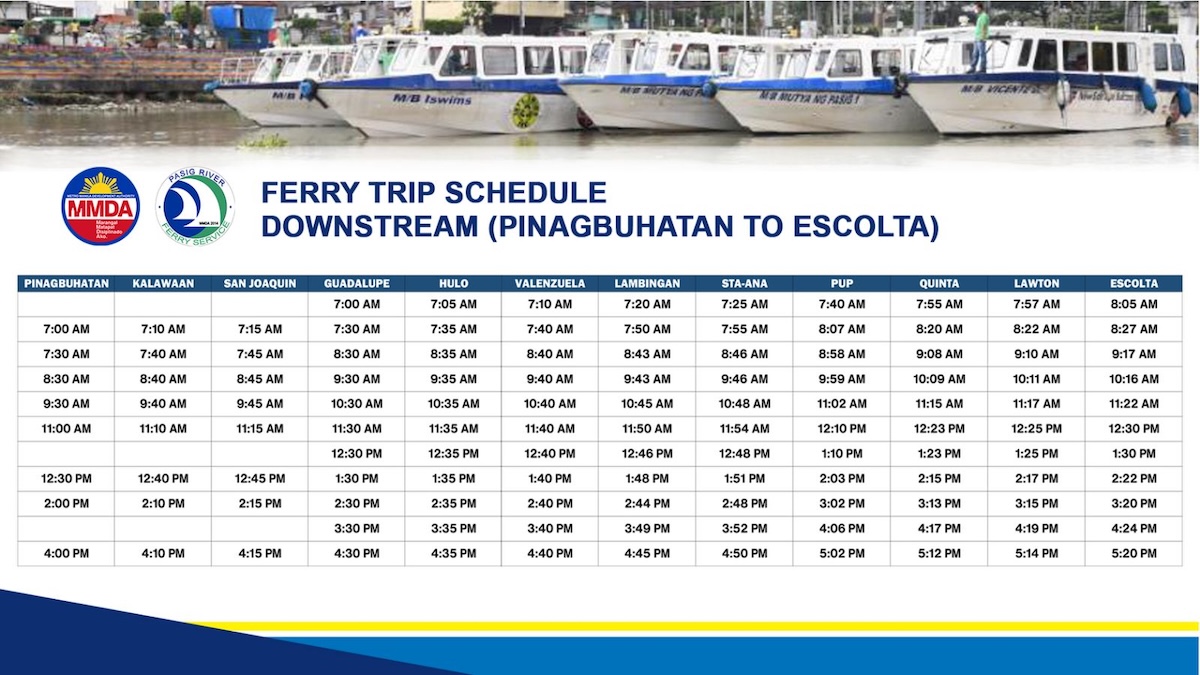
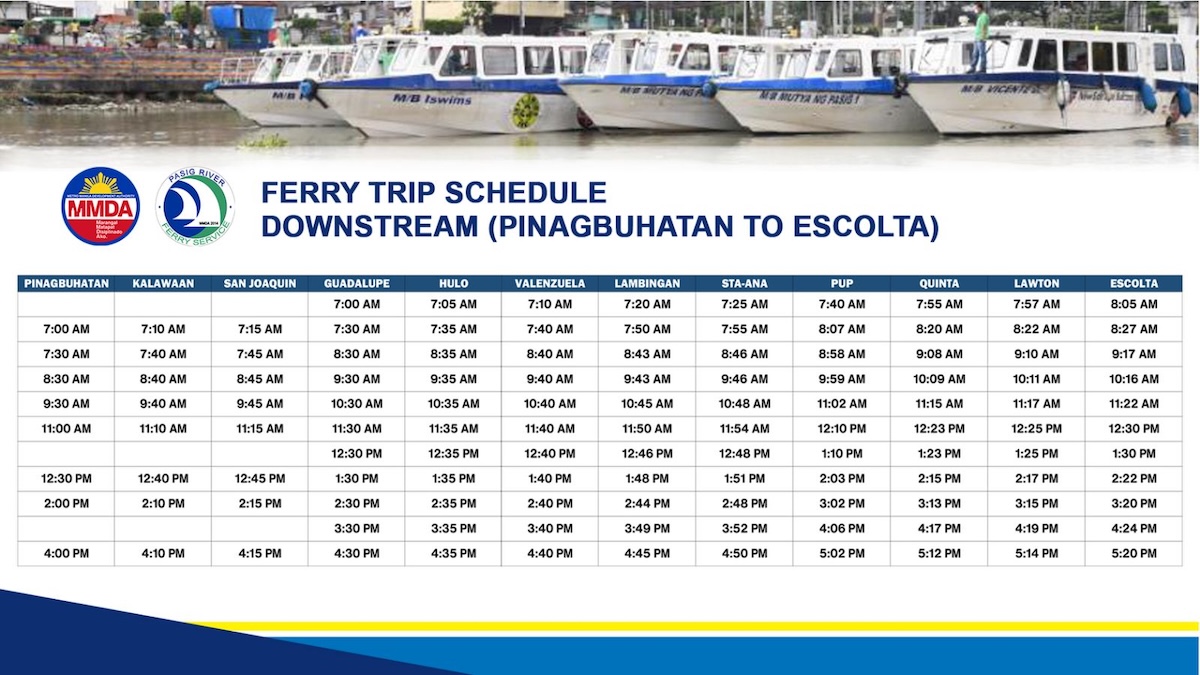
Pasig River Ferry Service Schedule

Why Travelers Should Try It
1. It Beats Traffic
Anyone who has spent time in Metro Manila knows traffic is part of the experience. The ferry bypasses congested roads entirely, offering a smoother and more predictable journey.
2. It’s Environmentally Conscious
Using the river helps reduce pressure on roads and contributes to a more sustainable transport mix—a vital consideration in a megacity.
3. It’s a Cultural Window
You see Manila not as a visitor sealed inside a taxi, but as a participant moving through its living spaces. The ferry reveals social contrasts and urban rhythms that guidebooks often miss.
4. It’s FREE
For travelers on a budget, consider this Free ferry service. The ferry offers excellent value—and an experience money can’t easily buy elsewhere.
Who Will Enjoy the Ferry Most?
- Slow travelers who enjoy observing city life
- Urban history enthusiasts interested in Manila’s past and present
- Commuter-curious travelers who want to experience how locals move
- Photographers and writers looking for fresh perspectives
If you’re expecting a luxury cruise, you’ll be disappointed. But if you’re open to a grounded, authentic, and surprisingly peaceful way to cross the city, the Pasig River Ferry delivers.
Final Thoughts
The Pasig River Ferry Service isn’t just a means of transportation—it’s a reminder that cities are shaped by their waterways, and that even in one of Asia’s most crowded capitals, there are moments of calm to be found.
For travelers willing to step off the usual routes, a ferry ride on the Pasig River offers something rare in Metro Manila: space to breathe, time to observe, and a deeper understanding of the city beneath the traffic.
Frequently Asked Questions:
What is the Pasig River Ferry Service?
The Pasig River Ferry Service is a water-based public transportation system operating along the Pasig River in Metro Manila, Philippines. It provides an alternative mode of transport to help alleviate the city’s notorious traffic congestion by utilizing the historic river that flows through the capital region.
The ferry service operates multiple stations along the river, connecting key areas from Marikina to Manila Bay. It offers commuters a faster, more scenic route than road travel, especially during peak hours. The system uses modern, air-conditioned ferry boats designed to accommodate passengers comfortably.
Initially launched in the early 2000s and relaunched with improvements in subsequent years, the service has become increasingly popular among commuters. It’s managed by various agencies and private operators under government oversight. The ferry system is part of a plan to revitalize the Pasig River, which has undergone extensive rehabilitation, while providing practical transportation for Manila’s dense urban population.
How much is the ferry service on the Pasig River?
The Pasig River Ferry Service has provided free rides since at least 2019, and the policy remains active in 2025. As a result, it has become a popular, free option for avoiding Metro Manila’s traffic, though riders should expect crowds and longer wait times.
Manila Travel Tour Packages You Should Try
Follow and subscribe to OutofTownBlog.com on Facebook , Twitter, Instagram, Pinterest, and YouTube for more Travel-related updates.
Read:
- Top 10 Best TOURIST SPOTS IN PASIG CITY + Things to Do
- EL NIDO TO CORON: What are the transportation options?
- Travel Guide: Hong Kong to Macau by Ferry or Bus via Sea Bridge
- Bohol Day Tour from Cebu: Itinerary + Affordable Tour Package
