

 Melo Villareal
Jesuit House Museum in Cebu City
(Cebu City, Philippines) – Aside from the famous Yap-Sandiego Ancestral house and Casa Gorordo, Cebu City has one other equally popular and prominent heritage house in Cebu, famous by the name Museo De Parian or Jesuit House of 1730.

Year 1730 Marker
The Museo De Parian is possibly one of the oldest houses in the country and was built centuries ago, supposedly during the same century when Yap-Sandiego was constructed.

Considering many artifacts in the Museo De Parian, it was assumed that the house was built in the 1730s. But recently, historians and architects have collected evidence supporting the claim that Museo De Parian was constructed well before the 1730s, although the exact year of its construction remains unclear.

About Museo De Parian
The Museo De Parian, as its name suggests, is located in the Parian district of Cebu City. The fact that the Jesuit house had been transformed several times over many centuries became evident after a coin was discovered buried in the house, supposedly from the Ming dynasty. Hence, it was also quite clear that a Chinese family owned the house at the time.

The roof of the house was built with tisa, or red clay, tiles, while the trusses featured numerous marvelous carvings, likely the handiwork of Chinese artisans. Visitors to the Museo De Parian are sometimes experts in the field, and most of them have noted significant Chinese influence in the house’s architecture.
Ceramics supposedly used during the Ming dynasty were also dug up from the premises of Museo De Parian, but most were broken, though still priceless. The Museo De Parian is similar to the Yap Sandiego ancestral house, as both houses’ first floors were built of coral stone. Nothing is known about the house’s original owners or the Spanish man who bought it a long time ago. The current owner, Jaime Sy, is, however, keen to find out.

Although the house is old, it doesn’t have the old glory, in my opinion, because it has undergone many changes, such as using putty made from newspapers to cover cracks in the walls and joints. The putty and the cracks are now hidden using mint green paint. The land where the house was built was once a pond, and the house has been sinking for a while. Maintenance work is underway to prevent it from sinking any further.
The house was even used by the United States Armed Forces during World War II, and it’s quite surprising that the house still remains intact even after bombings at that time.
The first floor of the house was previously used as a warehouse by the previous owners, and the present owner has expressed interest in converting it into a beautiful garden. However, the structure will remain unchanged.

The ground floor was now transformed into a mini Museum called Sugbo Gallery. The gallery showcases maps of old Cebu and photos of the city from the past. It’s interesting to see photos of Calle Colon and other photos of old churches in Southern Cebu. The gallery also has a mini-museum that showcases artifacts believed to have been brought by Chinese traders during the Ming Dynasty.
What do the Luneta Hotel and the Jesuit House of 1730 have in common? Both buildings were once nightclubs. Luneta Hotel was converted into a nightclub during the Japanese occupation (remember Marcova?), while the Jesuit House of 1730 was transformed into a nightclub in the 1950s.
The Museo de Parian, or the 1730 Jesuit House, may regain its former glory soon, and I highly recommend visiting this beautiful piece of history.
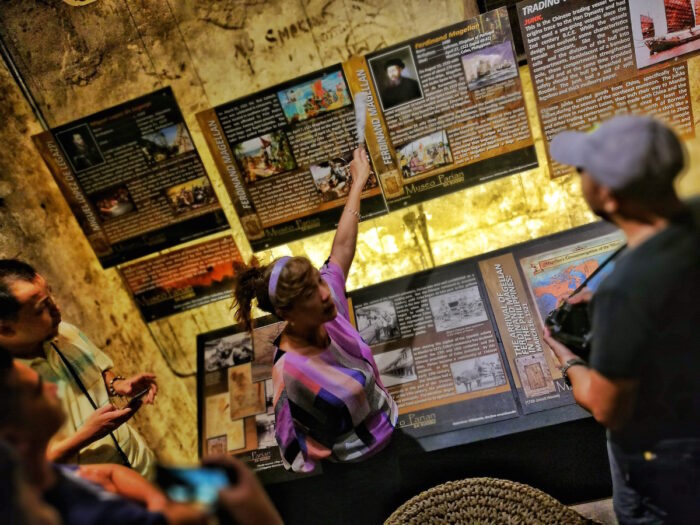
Visiting this old house has an entrance fee of P30 per person, payable at the Ho Tong Hardware cashier, which also serves as the Museum entrance.
Getting there is easy, just tell your tartanilla or your Cab driver to bring you to Parian. The Jesuit House is just a few walks away from the Cebu Heritage Monument and the Yap-San Diego Ancestral House.
Cebu Travel Tour Packages You Should Try
Follow and subscribe to OutofTownBlog.com on Facebook , Twitter, Instagram, Pinterest, and YouTube for more Travel-related updates.
Read:
- Travel Guide: Things to Do and See in Metro Cebu
- Ultimate List of the Best Cebu Luxury Hotels and Resorts
- Ghost Inside Museo Parian – 1730 Jesuit House in Cebu