

 Inka PIegsa-Quischotte
The Ultimate Travel Guide to Glasgow, Scotland
GLASGOW TRAVEL GUIDE — Although not the capital, Glasgow is Scotland’s largest city and most important seaport. Located on both banks of the River Clyde, the city is famous for its abundance of grand neoclassical architecture alongside cutting-edge modern structures such as the Clyde Arc, also known as the “Squinty Bridge”.

The Ultimate Glasgow Travel Guide Blog
Named European City of Culture in 1990, Glasgow has a thriving music, theatre and festival scene. The city is divided into several districts, each with its own character and ambiance. You can explore the City Center, the Merchant City, the affluent suburbs of the South Side, the bohemian West End, parks on the North Side, or venture into the still rather rough East End.

Chic shopping and a great variety of food, from fine dining to trying haggis in old-fashioned pubs, plenty of activities will keep you entertained when not strolling through the grid-patterned streets of the city center. Time permitting, plan excursions to Loch Ness and try to spot Nessie or follow the whisky trail.
In this Glasgow Travel Guide Blog, we listed some tips on how you can do your own DIY Day trip to Glasgow, Scotland. We also included a Glasgow Itinerary, Things to do and see, how to get there, and more.
Best Time to Visit Glasgow
The best time to visit Glasgow is from May to September, when the city generally has milder weather, longer daylight hours, and plenty of opportunities to enjoy its parks, museums, shopping areas, festivals, and nearby attractions. Summer is the busiest period, while late spring and early autumn offer a good balance between pleasant weather and fewer tourists.
May to June – Best Overall
Late spring is one of the best times to explore Glasgow. Temperatures are usually comfortable for sightseeing, and the days are considerably longer than in winter. Parks and gardens are also looking their best, making this a great time to walk around the city and explore attractions.
June offers especially long daylight hours, giving travelers more time to visit museums, historic buildings, shopping districts, and outdoor attractions.
Best for: Sightseeing, walking tours, parks, photography, and comfortable weather.
July to August – Best for Festivals and Events
Summer is Glasgow’s busiest travel season. July and August typically bring milder conditions and long daylight hours, while the city hosts numerous cultural events, concerts, festivals, and outdoor activities.
However, summer can also be wetter than visitors might expect, and popular hotels and attractions can be more expensive. Booking accommodation ahead of time is recommended.
Best for: Festivals, events, outdoor activities, families, and first-time visitors.
September – Best for Fewer Crowds
September is an excellent alternative to the peak summer months. The weather can still be relatively mild, but the busiest tourist period is beginning to wind down. It is a particularly good month for travelers who want to explore Glasgow’s attractions, shopping streets, restaurants, and neighborhoods at a more relaxed pace.
Best for: Couples, sightseeing, shopping, photography, and avoiding peak-season crowds.
October to November – Best for Autumn Atmosphere
Autumn brings cooler temperatures, shorter days, and more frequent rain, but Glasgow can be particularly atmospheric during this period. The city’s parks and surrounding countryside take on beautiful autumn colors.
This is also a good time to spend more time indoors exploring museums, galleries, cafés, restaurants, and shopping centres.
Best for: Museums, culture, shopping, food, and autumn scenery.
December to February – Best for Winter and Christmas
Winter is the coldest and darkest period in Glasgow, with shorter daylight hours and a higher chance of rain and wind. However, December can be appealing because of Christmas decorations, seasonal events, markets, and festive shopping.
January and February are generally quieter months, making them suitable for travelers who don’t mind cold and wet weather and want to explore the city without peak-season crowds.
Best for: Christmas atmosphere, shopping, museums, indoor attractions, and budget-conscious travelers.
March to April – Good for Spring Travel
Early spring can be unpredictable, with cool temperatures and occasional rain, but conditions gradually improve toward April. The longer daylight hours make March and April more pleasant for sightseeing than the winter months.
Best for: Budget travel, sightseeing, museums, and springtime city breaks.
Glasgow Weather by Season
| Season | Months | What to Expect | Best For |
|---|---|---|---|
| Spring | March-May | Cool to mild, changeable weather | Sightseeing, parks |
| Summer | June-August | Mild, long daylight hours | Festivals, outdoor activities |
| Autumn | September-November | Cooler, colorful, increasingly wet | Culture, photography |
| Winter | December-February | Cold, wet, short daylight | Christmas, museums, shopping |
When Should You Visit Glasgow?
May, June, and September are arguably the best months for a trip to Glasgow. May and June offer pleasant conditions and long days, while September provides a good combination of milder weather and fewer tourists.
If your main goal is to experience festivals and summer events, choose July or August. For Christmas shopping and a festive atmosphere, December is the obvious choice. If you’re looking for lower prices and fewer crowds, consider January, February, or November.
How to Get to Glasgow
Glasgow is one of Scotland’s easiest cities to reach, with international and domestic flights, trains from major UK cities, buses, and road connections. Most international visitors arrive by air, while travelers coming from London, Edinburgh, or other parts of the UK can conveniently travel by train.
By Air
The main airport serving the city is Glasgow Airport (GLA), located approximately 15 kilometers west of Glasgow city centre. It is Scotland’s principal international airport and serves numerous destinations across the UK, Europe, and other international markets.
From Glasgow Airport, travelers can reach the city centre by:
- Airport bus: Regular buses connect the airport with central Glasgow and are one of the easiest options.
- Taxi: Taxis are available directly outside the terminal and provide door-to-door transportation.
- Car rental: Several car rental companies operate at the airport, making it convenient for travelers planning to explore areas outside Glasgow.
For travelers from the Philippines, flying to Glasgow generally involves at least one connection, commonly through major international hubs in the Middle East, Europe, or Asia.
By Train
Traveling by train is one of the most convenient ways to reach Glasgow from other British cities. Glasgow has two major railway stations:
Glasgow Central Station is the city’s principal station and handles services from destinations including London, Manchester, Birmingham, Liverpool, and other parts of Scotland.
Glasgow Queen Street Station primarily serves routes to Edinburgh and destinations across central and northern Scotland.
From Edinburgh, trains to Glasgow are particularly convenient, with frequent services throughout the day. The journey usually takes around 50 minutes to just over an hour, depending on the service.
From London, direct trains can take roughly 4.5 to 5.5 hours.
By Bus
Long-distance buses and coaches are another affordable way to reach Glasgow. Buchanan Bus Station is Glasgow’s main coach terminal and is located close to the city centre.
Bus services connect Glasgow with Edinburgh, London, Manchester, Birmingham, and other cities throughout the UK.
Traveling by coach usually takes longer than taking the train but can be considerably cheaper, particularly when booked in advance.
By Car
Glasgow is well connected to the rest of Scotland and the UK by major roads. The M8 motorway connects Glasgow with Edinburgh and provides an important east-west route across central Scotland.
Driving can be useful if Glasgow is part of a larger Scotland road trip, especially if you plan to visit destinations such as Loch Lomond, the Highlands, or the Isle of Arran.
However, parking and traffic can be challenging in central Glasgow, so visitors staying in the city centre may find public transportation more convenient.
By Ferry
Glasgow itself is not a major passenger-ferry port, but ferries can be useful when traveling to destinations around Scotland’s west coast and islands.
If you’re combining Glasgow with a trip to places such as Arran, the Isle of Bute, or other Scottish islands, you can travel from Glasgow to the appropriate ferry terminal by train, bus, or car before continuing by ferry.
Getting to Glasgow from Edinburgh
If you’re already visiting Edinburgh, Glasgow makes an easy addition to a Scotland itinerary.
Train: Usually the fastest and most convenient option, with frequent departures from Edinburgh Waverley.
Bus: Usually cheaper, although travel time depends on traffic.
Car: The drive takes roughly 1 to 1.5 hours depending on traffic and route.
For most tourists, the train is the best option because Glasgow’s main railway stations are located right in the city centre.
Getting to Glasgow from London
Travelers from London can choose between:
Plane: The fastest option in terms of flight time, although airport transfers and security add to the overall journey.
Train: Direct services connect London Euston with Glasgow Central and offer a comfortable city-centre-to-city-centre journey.
Bus: The cheapest option in many cases, but the journey can take considerably longer.
Overnight train: The Caledonian Sleeper provides an alternative for travelers who want to travel overnight and arrive in Glasgow in the morning.
Best Way to Get to Glasgow
| Starting Point | Best Option | Approximate Travel Time |
|---|---|---|
| Edinburgh | Train | 50 min-1 hr 15 min |
| London | Train or plane | 4.5-5.5 hrs by train |
| Manchester | Train | Around 3-4 hrs |
| Birmingham | Train | Around 4-5 hrs |
| Glasgow Airport | Airport bus/taxi | Around 20-40 min |
| Scottish Highlands | Car or bus/train | Varies by destination |
Travel Tip
For international visitors, flying into Glasgow Airport is generally the simplest option. If you’re already touring the UK, however, taking the train to Glasgow Central or Glasgow Queen Street is often more convenient than flying, particularly from Edinburgh and other major British cities.
Getting Around Glasgow
Getting around Glasgow is relatively easy, especially in the city centre, where many attractions, shopping streets, restaurants, and historic landmarks are within walking distance. The city also has an extensive public transportation network of trains, buses, and the Glasgow Subway, making it convenient to explore neighborhoods farther from the centre.

Walking
Walking is one of the best ways to explore central Glasgow. Many popular attractions are close to one another, particularly around Buchanan Street, George Square, Merchant City, Argyle Street, and Glasgow Central Station.
Walking also allows you to discover independent shops, cafés, historic architecture, street art, and unexpected attractions along the way.
Best for: City-center sightseeing, shopping, photography, and exploring at your own pace.
Glasgow Subway
The Glasgow Subway is one of the quickest ways to travel around the city. It operates a circular route with stations serving areas such as the city center and the West End.
The Subway is particularly useful for reaching neighborhoods such as Hillhead, Kelvinbridge, and Partick. Hillhead is convenient for visiting the University of Glasgow, Kelvingrove Park, and the shops and restaurants around Byres Road.
Best for: Fast trips between the city center and West End.
Train
Glasgow has an extensive suburban rail network connecting the city centre with surrounding neighborhoods and towns.
The two principal city-center stations are Glasgow Central and Glasgow Queen Street. Trains can be useful for reaching attractions and destinations outside the immediate city centre.
Rail travel is particularly convenient if you plan to visit places around Greater Glasgow or take day trips to other parts of Scotland.
Best for: Longer journeys, suburbs, and day trips.
Bus
Buses cover areas that aren’t directly served by the Subway or railway network. They are useful for reaching attractions and neighborhoods throughout Glasgow.
Bus services can be particularly convenient when traveling between areas with no direct train or Subway connection. However, journey times can vary depending on traffic.
Best for: Local neighborhoods, attractions away from train stations, and flexible travel.
Taxi and Ride-Hailing Services
Taxis are widely available throughout Glasgow, particularly around major railway stations, shopping areas, hotels, and nightlife districts.
Ride-hailing services can also be convenient when traveling with luggage, as a group, or late at night when public transportation may be less convenient.
Best for: Door-to-door transportation, groups, luggage, and late-night travel.
Cycling
Glasgow has cycling routes and bike-sharing options that can be useful for visitors who want to explore the city independently. Cycling can be particularly enjoyable around parks and quieter areas.
However, visitors should take care when cycling on busy city streets, particularly during peak traffic periods.
Best for: Active travelers, parks, and exploring beyond the main tourist areas.
Hop-On Hop-Off Bus
Tourist sightseeing buses are another option for first-time visitors. These buses typically stop at major attractions, allowing passengers to get off and continue sightseeing before catching another bus.
This can be a convenient way to get an overview of Glasgow without having to plan individual public transportation routes.
Best for: First-time visitors, sightseeing, and families.
Getting Around Glasgow: Quick Guide
| Transportation | Best For | Convenience |
|---|---|---|
| Walking | City centre and shopping | Excellent |
| Subway | City centre and West End | Excellent |
| Train | Suburbs and day trips | Very good |
| Bus | Wider Glasgow | Very good |
| Taxi | Door-to-door travel | Excellent |
| Cycling | Active exploration | Good |
| Tourist Bus | Major attractions | Good |
Tips for Getting Around Glasgow
- Walk whenever possible in the city centre because many attractions are close together.
- Use the Subway for quick journeys between central Glasgow and the West End.
- Check train and bus routes before traveling, particularly on weekends and during major events.
- Keep some extra travel time during busy periods because road traffic can slow buses and taxis.
- If you’re planning day trips outside Glasgow, trains are often the most convenient option.
- Comfortable waterproof shoes and a light rain jacket are useful because Glasgow’s weather can change quickly.
- For longer sightseeing days, consider combining walking with public transportation rather than relying on taxis for every journey.
For most tourists, the easiest combination is walking + Subway + trains, with buses and taxis used when they offer a more convenient connection.
Places to stay
From budget to 5-star, Glasgow offers a great choice of accommodation for all budgets.
Alexander Thomson Hotel

[Check Rates and Availability]
My favorite is the Alexander Thomson Hotel at 320 Argyle Street.
This 3-star hotel is located in a Victorian building with all the charming details of the era, including high ceilings and bay windows. The rooms, however, are modern with private baths and more amenities than you might expect from a 3-star hotel. Situated close to a metro stop and in one of the main shopping streets of Glasgow, the hotel is an ideal starting point for sightseeing. Included in the price is an excellent and ample breakfast buffet.
Grand Central Hotel

[Check Rates and Availability]
For the higher budget, there is the 4-star Grand Central Hotel on Gordon Street. The luxury hotel is located in a lavish building dating from 1883 and has hosted guests such as Frank Sinatra and Charlie Chaplin. The rooms are elegant, and so is the famous restaurant Tempus. Ideally situated near the central train station, it’s great for exploring all the sights of Glasgow whilst sleeping in great style.
McLays Guesthouse

[Check Rates and Availability]
For those on a lower budget and who prefer more modern hotels, there is McLays Guesthouse at 260-276 Renfrew Street. Located a 20-minute walk from Queen Street station and close to museums and art galleries, this friendly guesthouse offers simple but very clean rooms with a private bath, tea- and coffee-making facilities, and a continental breakfast included in the price.
Best places to eat
When in Scotland, you certainly want to sample Scottish cuisine, and one of the best places in Glasgow to do so is the Ubiquitous Chip in 12 Ashton Lane. Distributed over several floors, the downstairs restaurant is decorated to resemble a rainforest.

Scottish dishes made with only Scottish ingredients are the specialty of this popular restaurant.
The location alone makes the Cottiers in Hyndland Street in Glasgow’s West End worth a visit. I mean, where else can you dine in a former church?

The menu is Scottish, with the occasional modern twist, but otherwise heavy on pork, bacon, blood pudding, and fish. Only local products are being used.
Lovers of the best and freshest fish and seafood should not miss a visit to Two Fat Ladies at the Buttery in 88 Dumbarton Road in Glasgow’s West End.

The menu changes daily to use the latest catches of fish, and the desserts are delicious too.
If you don’t want a sit-down meal or spend much money, the ever-popular fish and chips to be eaten out of a rolled-up newspaper and flavored with vinegar and salt is available from any corner ‘chippie’.
Glasgow Travel Guide: Things to do and see
Glasgow was founded in the 6th century by Saint Mungo, but little from that time or the Middle Ages remains. One such building, however, is Glasgow Cathedral, with a vast collection of stained-glass windows.
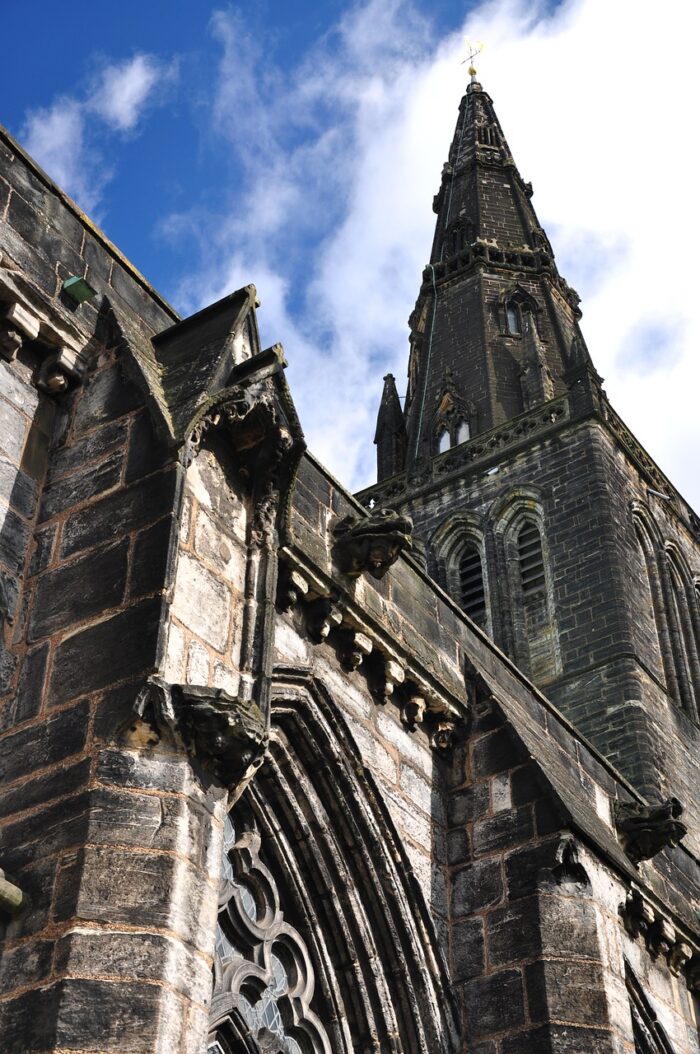
It may be best to explore Glasgow by district. Start with the bohemian West End, home to many boutiques, cafes, tea rooms, and restaurants. Visit the impressive Kelvingrove Art Gallery and Museum with 22 themed galleries and over 8000 exhibits. Enjoy some fresh air and green in the nearby Kelvingrove Park.

The city center is located on the north bank of the River Clyde. Its central square is George Square, and in this part of Glasgow, you find many statues and cultural buildings like the Lighthouse Museum of Architecture, the 18-screen Cineworld, or the King’s Theatre.

Proceed to the Merchant district (Merchant City), once the seat of the tobacco lords and their wealth. Streets still bear their names. Admire the prosperous past at the Tolbooth Steeple, Saltmarket or Tolgate. Today many of the old warehouses have been converted into expensive apartments and offices, which in turn brought an influx of elegant shops and restaurants.

Not to be missed is a visit to one of Glasgow’s landmarks: the Clyde Arc. It’s a round bridge spanning the River Clyde, connecting Finnieston with Pacific Quay and the Glasgow Center for Science. Illuminated at night, the bridge looks spectacular.
Another place to learn about the history of the city in the past two centuries is a visit to the People’s Palace and Winter Gardens, where you can have fun with the exhibits.
Talking about fun. If you enjoy a spot of gambling or just watching other people trying their hand, you can spend a night on the Grosvenor River Boat Casino, moored on the River Clyde. They have a great Louisiana-style restaurant as well as blackjack, roulette, etc. tables. And you can watch the sunset.

As we said at the beginning, Glasgow is also an ideal starting point for a small group trip to Loch Ness and other nearby sights, if you have enough time.
Best Places to Shop in Glasgow
Glasgow is one of Scotland’s best shopping destinations, with everything from major high-street brands and designer boutiques to vintage stores, Scottish souvenirs, and independent shops. Most of the main city-center shopping areas are within easy walking distance of one another.
1. Buchanan Street
Buchanan Street is Glasgow’s main shopping street and the best place to start your shopping trip. It forms the heart of the city’s famous Style Mile and is lined with major brands, department stores, fashion retailers, beauty shops, and cafés.
Best for: High-street fashion, beauty, electronics, department stores, and everyday shopping.
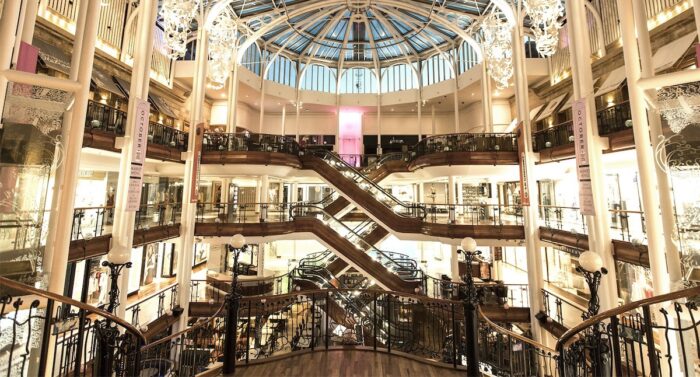
2. Princes Square
Princes Square is one of Glasgow’s most beautiful shopping destinations. Located directly on Buchanan Street, this elegant covered shopping centre combines designer labels, independent boutiques, restaurants, and cafés inside an ornate historic building.
Best for: Designer fashion, beauty products, premium brands, dining, and architecture.
3. Ingram Street
For a more upscale shopping experience, head to Ingram Street in Merchant City. The area is known for designer and luxury brands, stylish boutiques, and premium beauty stores.
Best for: Luxury fashion, designer goods, beauty, and premium shopping.
4. Argyll Arcade
Argyll Arcade is a historic covered shopping arcade connecting Buchanan Street and Argyle Street. It is particularly famous for its concentration of jewelry shops and is an excellent destination for shoppers looking for something special.
Best for: Jewelry, watches, engagement rings, and gifts.
5. Buchanan Galleries
Located at the northern end of Buchanan Street, Buchanan Galleries provides a convenient indoor shopping experience with a wide selection of stores. It is a practical stop if you want fashion, homeware, toys, beauty products, and gifts under one roof.
Best for: Families, fashion, homeware, toys, gifts, and rainy-day shopping.
6. St Enoch Center
At the southern end of the city-center shopping district, St Enoch Center offers a mix of high-street stores, restaurants, entertainment, and family attractions. It is convenient for shoppers who want to combine shopping with dining and entertainment.
Best for: Families, affordable fashion, children’s shopping, and entertainment.
7. Merchant City
Merchant City is a great choice if you prefer independent boutiques, creative shops, art, and lifestyle stores rather than big shopping malls. The historic neighborhood combines shopping with restaurants, bars, galleries, and attractive old buildings.
Best for: Independent stores, Scottish designers, gifts, art, and boutique shopping.
8. West End
Glasgow’s West End is particularly appealing for shoppers who enjoy vintage clothing, independent boutiques, books, gifts, and quirky finds. Areas around Great Western Road and Byres Road have a more relaxed, neighborhood-shopping atmosphere.
Best for: Vintage fashion, independent shops, cafés, and unique souvenirs.
9. Barras Market
For a completely different shopping experience, visit The Barras in the East End. This historic market is known for bargain hunting, second-hand goods, vintage items, collectibles, clothing, and unusual finds.
Best for: Bargains, antiques, second-hand goods, collectibles, and local atmosphere.
10. Glasgow Fort
Located outside the city center, Glasgow Fort is a large retail and leisure complex with a broad selection of stores, restaurants, and entertainment. It is a good option if you want a modern shopping-center experience with plenty of space.
Best for: Families, fashion chains, homeware, restaurants, and a full-day shopping trip.
11. Silverburn
Silverburn is another major shopping destination outside the city centre, offering a large selection of retailers, restaurants, and leisure facilities. It is particularly useful if you’re looking for a wide range of mainstream brands in one location.
Best for: High-street brands, family shopping, dining, and indoor shopping.
12. Scottish Souvenir Shopping
If you want to take something distinctly Scottish home, look for tartan, cashmere, tweed, wool products, whisky-related gifts, Scottish food products, and traditional souvenirs.
Glasgow’s city centre has numerous shops selling Scottish-themed gifts and locally inspired products, making it easy to find something memorable to bring home.
Best for: Tartan, Scottish gifts, clothing, souvenirs, and presents.
Best Glasgow Shopping Areas at a Glance
| Shopping Area | Best For |
|---|---|
| Buchanan Street | Overall shopping and major brands |
| Princes Square | Designer and premium shopping |
| Ingram Street | Luxury brands |
| Argyll Arcade | Jewelry and watches |
| Buchanan Galleries | Department stores and families |
| St Enoch Centre | High-street shopping |
| Merchant City | Independent boutiques |
| West End | Vintage and quirky shops |
| Barras Market | Bargains and second-hand goods |
| Glasgow Fort | Large retail complex |
| Silverburn | Mainstream brands and family shopping |
Best Shopping Route in Glasgow
For first-time visitors, a convenient shopping route is Buchanan Galleries -> Buchanan Street -> Princes Square -> Argyll Arcade -> Ingram Street -> Merchant City. This route combines high-street fashion, designer stores, jewelry shops, independent boutiques, cafés, and Scottish souvenirs, allowing you to experience much of Glasgow’s shopping scene on foot.
Currency, language, etc.
The currency is the pound sterling, but Scotland has different coins and banknotes than the rest of the UK. Get a bit of cash; otherwise, credit cards are accepted everywhere.
Luckily, the official language is English, but… the citizens of Glasgow are referred to as Glaswegians or Weegies, and their dialect is a variation of Scottish known as Glasgow patter. Don’t even try to understand it; stick to English and listen carefully because Glaswegians speak English with a very strong accent.
WiFi is excellent around the city.
If you are headed for Scotland for the first time, you can hardly find a better starting point than Glasgow and her hearty people.
Glasgow Travel and Tour Packages
Check out our complete list of recommended Hotels in Glasgow, Scotland via Agoda, or you may also see available Airbnb properties in the city.
Follow and subscribe to OutofTownBlog.com on Facebook, Twitter, Instagram, Pinterest, and YouTube for more Travel-related updates.
Read:

