

 Nizrhane Abdallah
Exploring the City of Münster
I am always thrilled at the idea that a fascinating city would be easy to reach. Luckily, Münster is very near Osnabrück. Hopping on a train to get there wouldn’t hurt. So I rode the train to Münster, and thirty minutes later, I arrived.
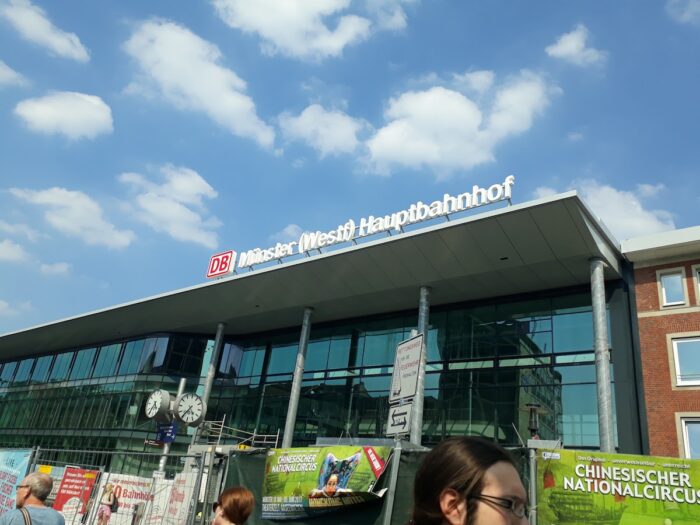
Münster Central Train Station
Tell Me About Münster
Münster is one of the major cities of the state of North Rhine-Westphalia. The city was founded in 793 AD, allegedly when Emperor Charlemagne sent his emissary, Liudger, to convert the Saxons to Christianity.
The name Münster comes from the Latin word “monasterium,” meaning “monastery,” because a monastery was built on the site where the modern city now stands. Today, the city of Münster is known as the “bicycle capital of Germany”.
Walking Around Münster
Personally, when exploring cities, I go to the so-called Altstadt and roam around it. From the central train station, you can reach the Altstadt on foot in 10 minutes.
The Altstadt is a charming spot, and the shops are very close together. First, you’ll be at Middelberg Bakery Cafe, and then next thing you know, you’ll find yourself shopping at Lush. I did find myself at Lush after a short visit to the city museum.

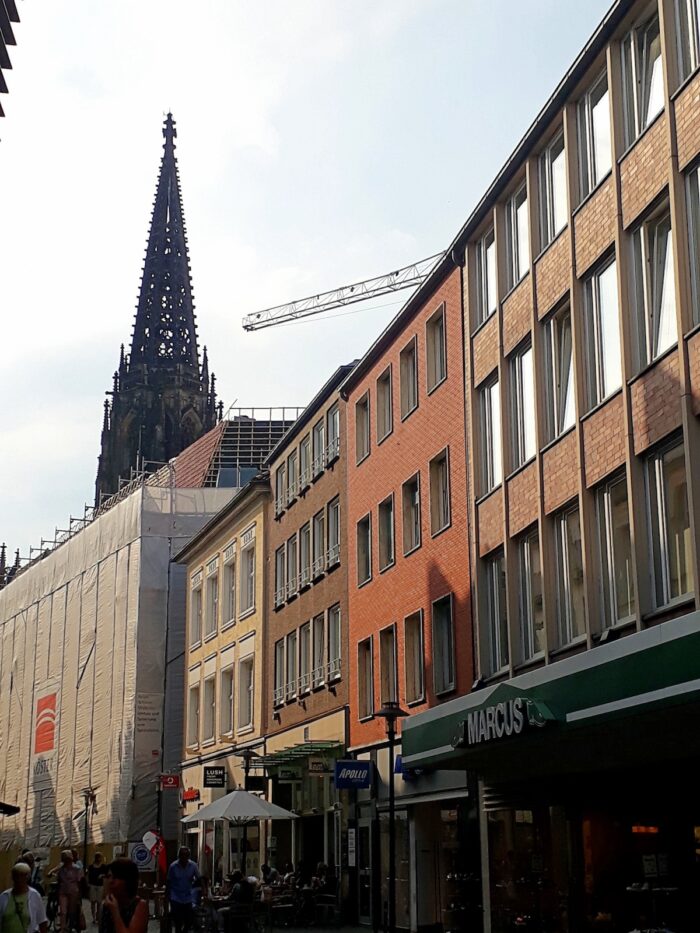
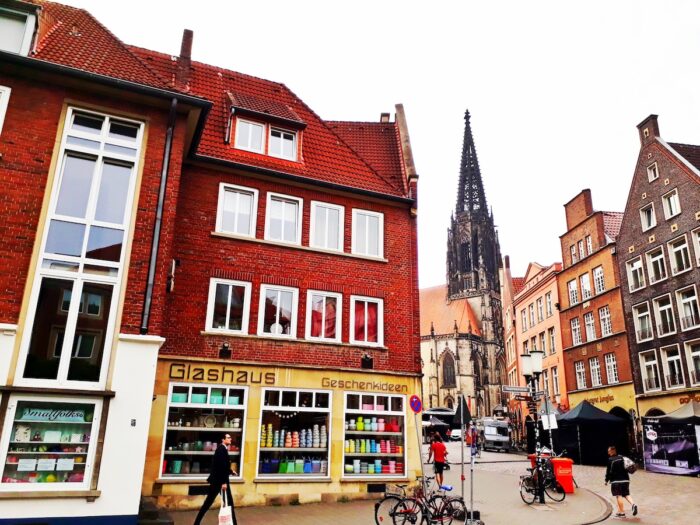
I kept walking until I came to this beautiful church with a black spire. Its name is St Lambert’s Church, and I was so glad to meet it.

The black color of its tower has got me looking at it a few times. I have a strong attachment to the color, and I can never agree more that it’s strikingly beautiful. I went to the corner of the church, only to find something more charming than the first few meters of the old town I’d walked.
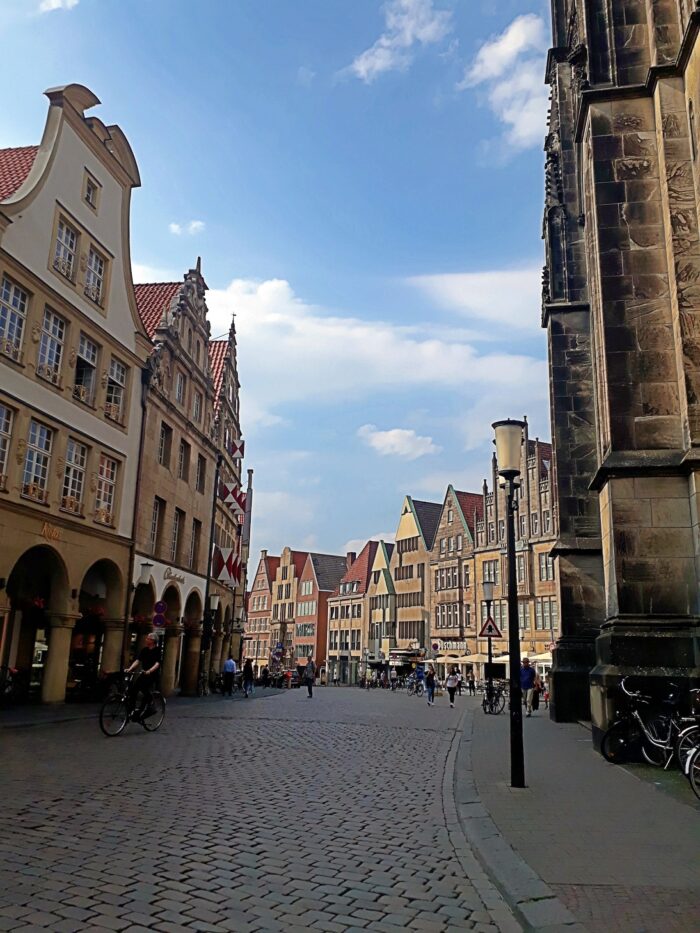
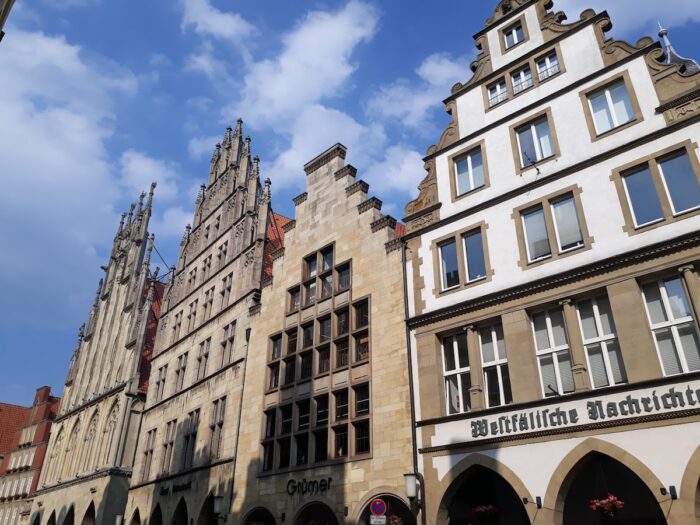
Lo and behold, there was the Prinzipalmarkt. This area is similar to the Marktplatz in Osnabrück, except that the buildings glimmered in the summer sun.
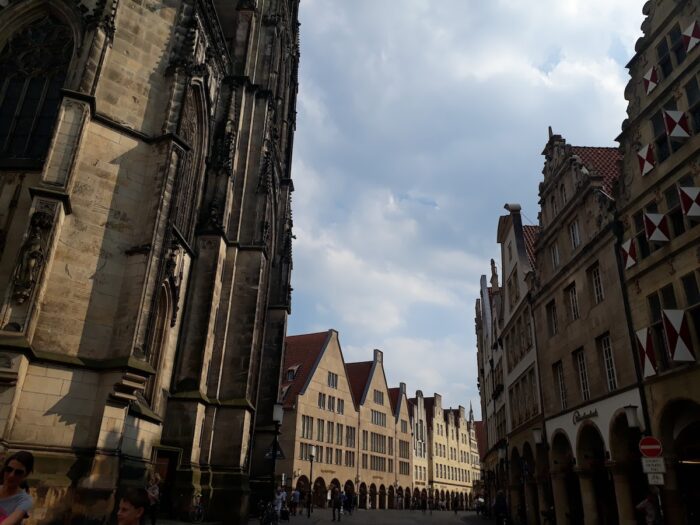
The Prinzipalmarkt really looked enchanting in the sun. I have seen a photo of the place at night, and it was stunning! I’m hoping I could witness Prinzipalmarkt in the evenings. The entire stretch of the Prinzipalmarkt is dotted with luxury-brand shops, bookshops, cafes, and specialty shops.
Walking along and marveling at the bourgeois buildings, I found myself completely in awe. Would you believe that this area was absolutely destroyed in World War II? In fact, it was, and renovation went under way for some eleven years, keeping the buildings close to the original. Thank goodness for conservation efforts.
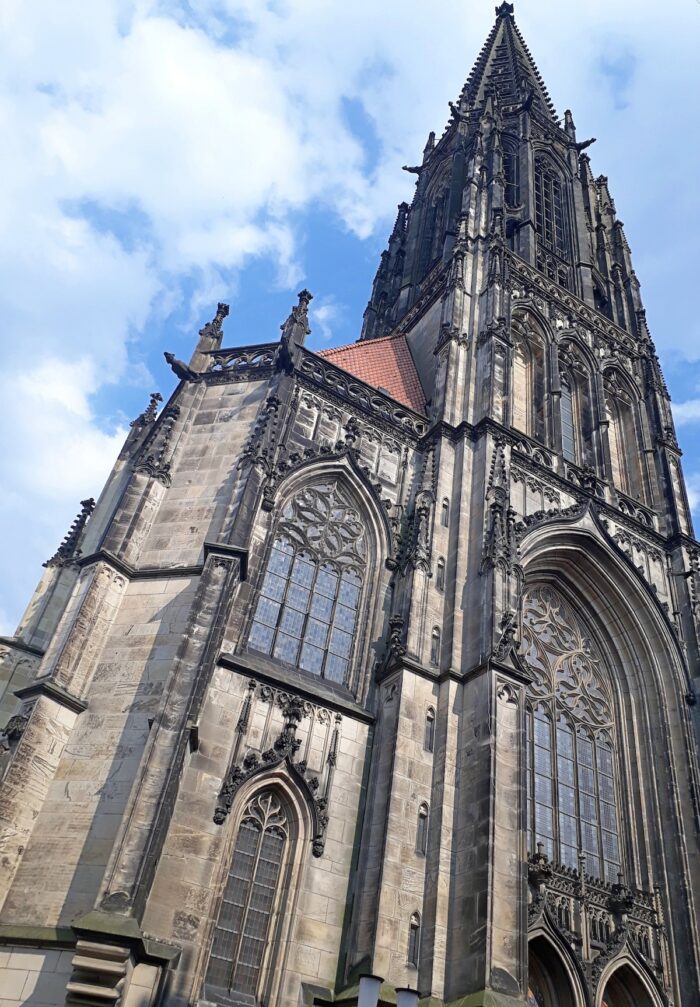
I trained my eyes back to the beauty that was St Lambert’s. Mind you, this church isn’t the city’s cathedral. I wasn’t able to visit St Paul’s Cathedral because I was completely mesmerized by the very core of the old town.
As I observed, this spot has buildings with varying architectural designs, which makes the Prinzipalmarkt quite interesting to look at.
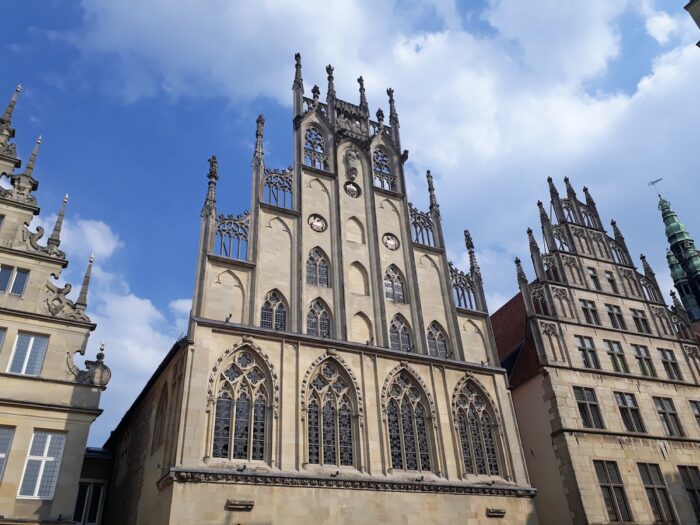
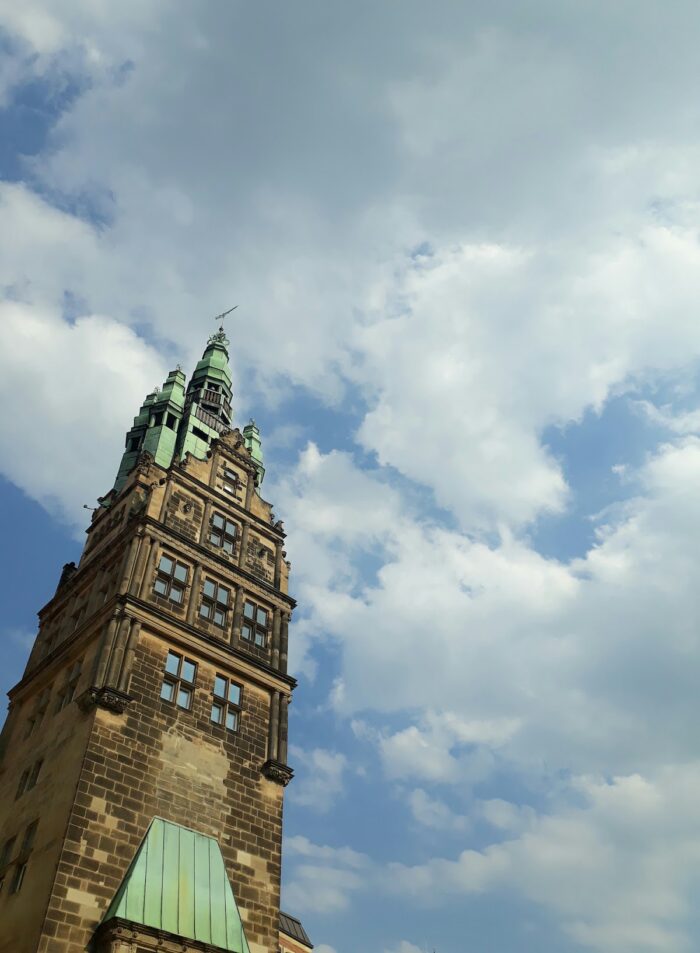
The photo above is the Stadthausturm Münster. This tower is the only surviving part of the former town hall. Miraculously, according to sources, Stadthausturm survived the war undamaged. Today, a daycare center is located within its premises.
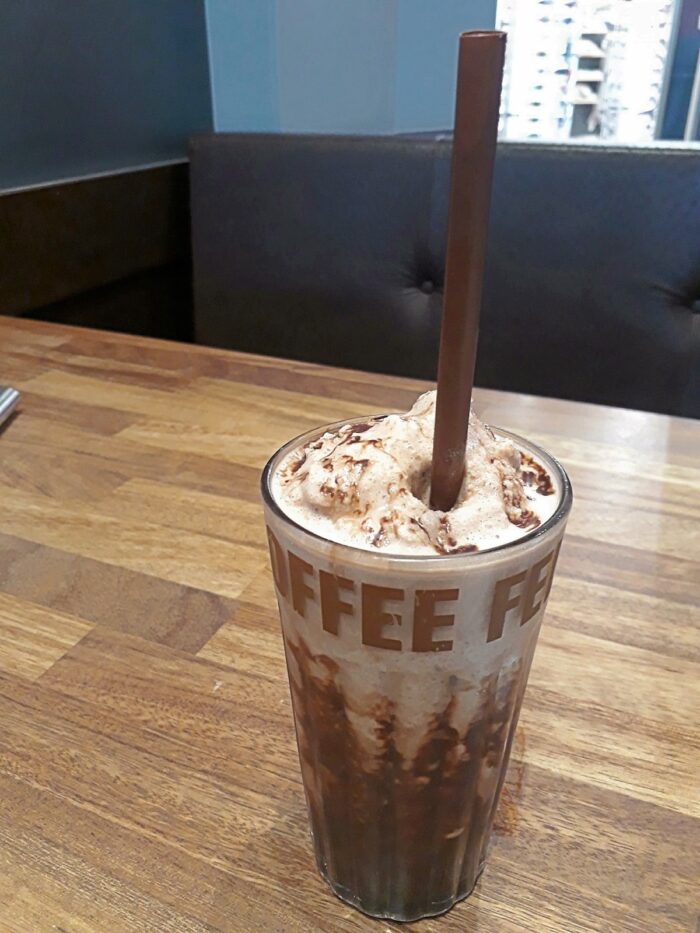
And it was time for a snack before going home. I went back to the middle of the old town and stopped by a cafe called Coffee Fellows. I ordered a glass of iced chocolate and a pesto chicken sandwich. Both yummy, especially the drink, which I really enjoyed.

While on the train home, I remembered seeing three rectangular objects hanging from the tower of St Lambert’s. As I read further, I found out that they were allegedly used as cages during the Middle Ages. According to some lore, three men were imprisoned in the cages after they were beaten to death. Their remains were left to rot in them for the public to see.
OK, enough with the details. That’s best left with history sleuths. Until next time, wherever my feet take me!
Search for Affordable Hotels in Münster, Germany via Agoda.
Also Read:
- Visiting Rotterdam
- Pointers for Getting A German Schengen Visa
- Things You Need to Do When You’re In a New City
- On the Bucket List: Cologne Cathedral, Germany
- A Tale of Really Going Up North: The Free Hanseatic City of Bremen


