

 Karlo Pacana
Bojo River Cruise in Aloguinsan, Cebu
Looking for a unique eco-cultural experience on a river cruise? Want to learn about mangroves and their role in the ecosystem? Want to support a community passionate about sustainable ecotourism? The King of Sinulog is off to experience the Bojo River Cruise in Aloguinsan. Read on as I share with you what I have learned on this one-of-a-kind nature trip.
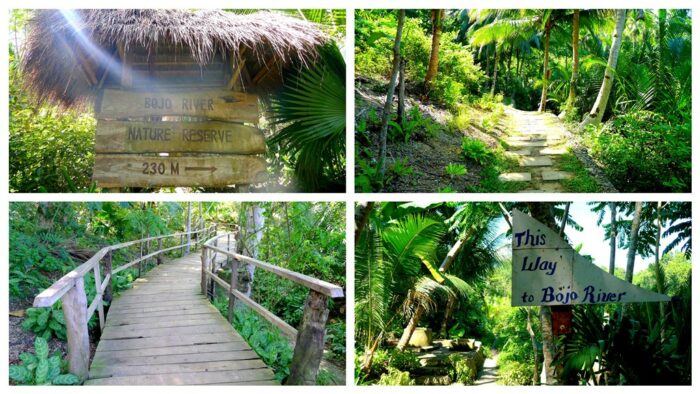
Arrival at the entrance / Bojo River Cruise
Bojo is one of the 15 Barangays in Aloguinsan, and since the river is located in the barangay, it was named as such. ‘Bojo’ is actually a Spanish word which means coastal sailing or trading, which would indeed make sense once you learn along the cruise that there was once an area near the river mouth where farmers and fishermen would trade their goods way back before currency was invented.
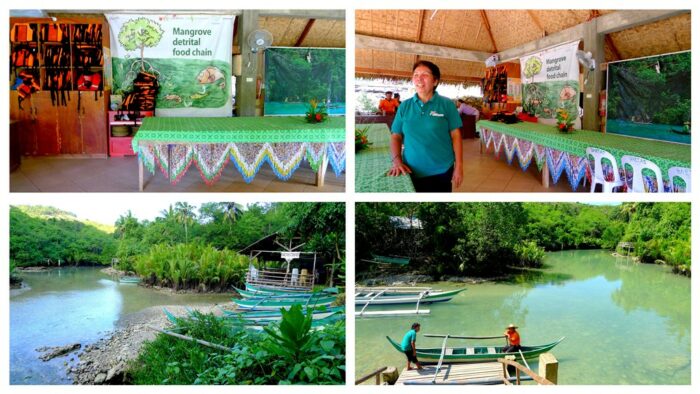
The project, run by the Bojo Aloguinsan Ecotourism Association, was funded by the local government unit, providing an alternative source of income for the community. The ecotourism movement started in 2009 and began training 400 participants for more than 4 months, and only 52 survived. Some of these members were unable to complete their education, but through their training, they are now empowered and fully capable of running the project. What’s more remarkable is that in 2015, they bested other countries in the Asia Pacific by winning the Best Community-Based Initiative Award for their efforts.
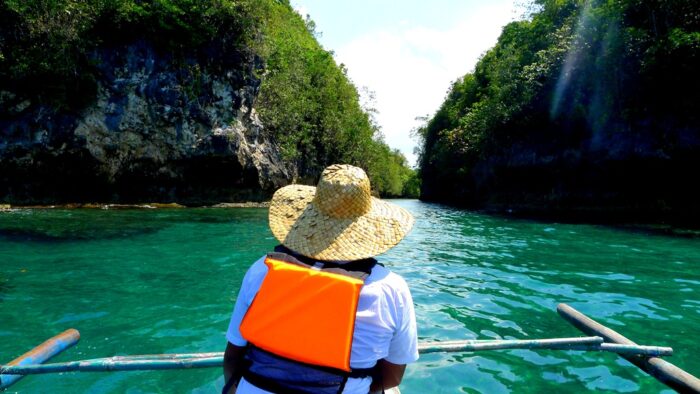
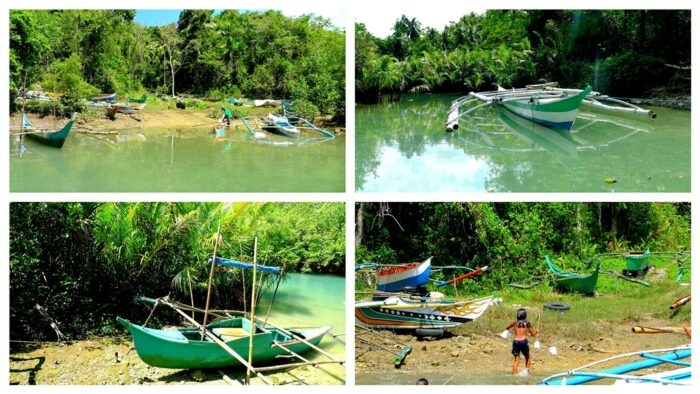
The Bojo River spans approximately 1.4 kilometers from the source to the mouth. The river cruise would take roughly an hour. Because the cruise depends on the tides, it’s best to check in advance before visiting the Bojo River. The river water is also brackish due to saltwater intrusion, a mixture of freshwater from natural springs and seawater. However, the river cruise is safe since the waters are very calm and there are no crocodiles in the area. The design of the banca or small boat is also stable because of its katig or support arches on both sides. Life vests must be worn at all times.
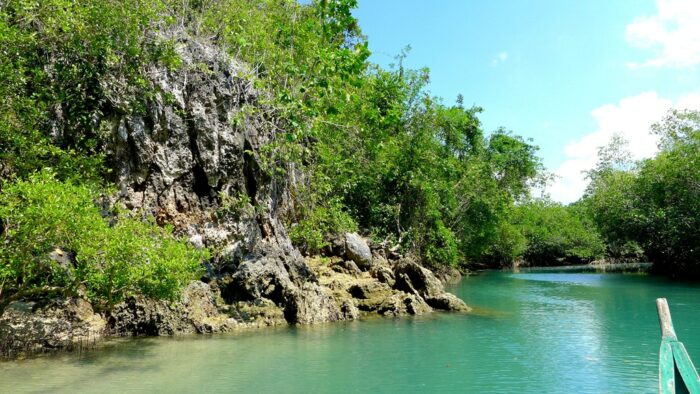
We were also reminded to lower our voices once the cruise started so we could listen to the guides and avoid disturbing the mythical beings said to coexist in the river, according to the local folklore of Maria Tang-an. This river fairy allows townsfolk to borrow items during fiestas and weddings. This and other stories made us more eager to start the cruise.
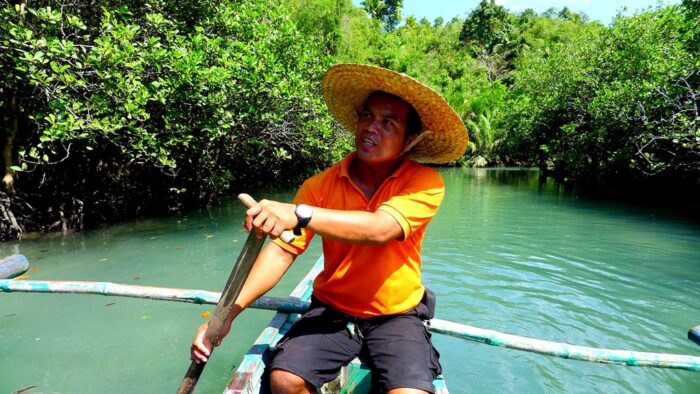
Our guide introduced himself and shared a little history of their association. Part of their training included learning about the Bojo River ecosystem and their role in protecting it. Currently, the river is home to 22 mangrove species, and we use local and scientific names through partnerships with university experts in the city.
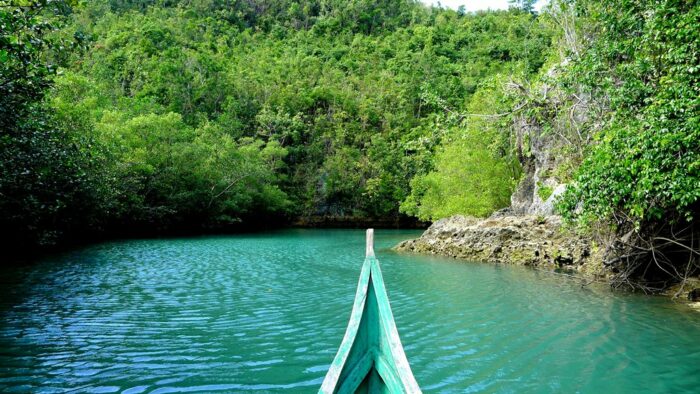
As keen listeners, we learned from our guide that mangroves have breathing organs called pneumatophores that shoot up from the ground like sticks, which is why bubbles form during high tide. Mangrove leaves also have holes, not because of insects but because of their salt glands. Once these leaves fall out, they become food for the crabs. Some decay releases nutrients to phytoplankton, which feed baby fish. Aside from being wave barriers, mangroves are also home to fish eggs that are nursed under their roots before heading out to sea upon reaching maturity.
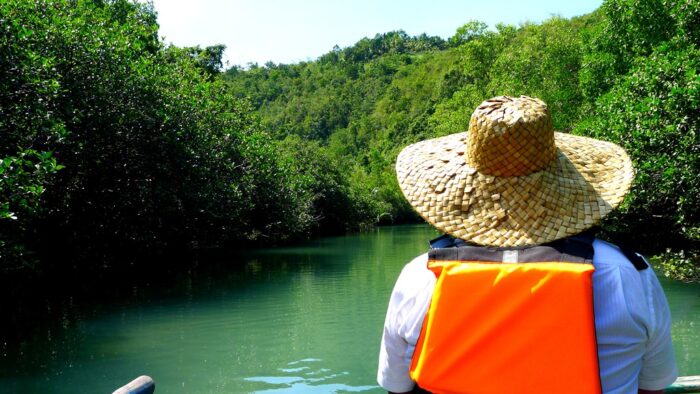
The Bojo River is also home to 71 bird species, 10 of which are migratory and appear at dusk and dawn. Bring binoculars with you along the renovated boardwalk for a better view.
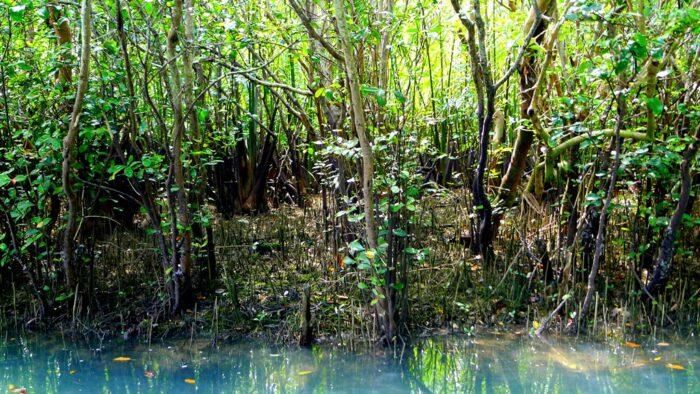
Halfway through the cruise, our guide told us that these thick mangrove forests were once hiding places of the locals during the Second World War. However, after the war, people began cutting mangroves for daily use. Only a portion remains, but they are slowly replanting and restoring it to its former glory with support from companies and non-profit organizations.
Further along the cruise, we come across the asinan, salt-making areas where locals boil saltwater for three days until it dries and becomes sea salt.
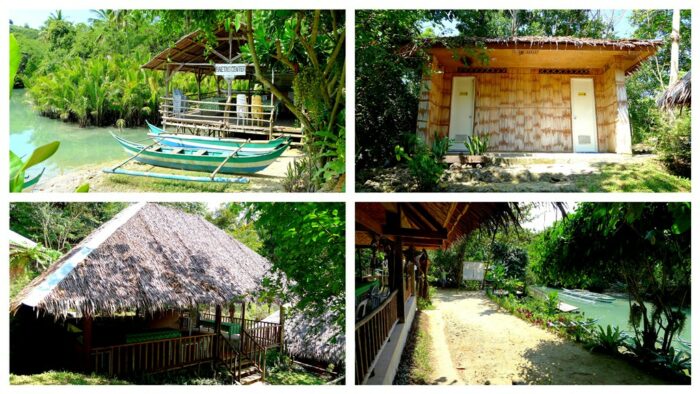
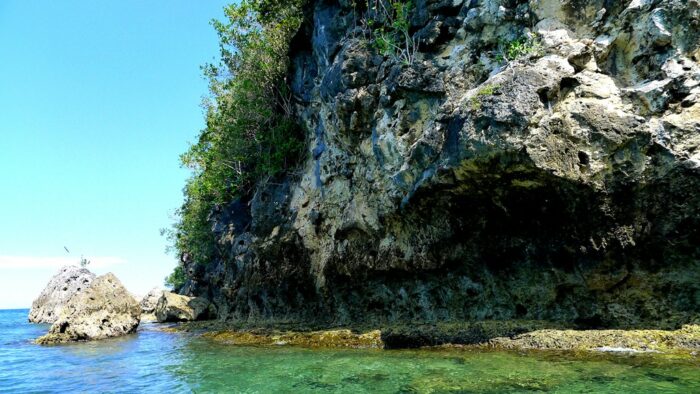
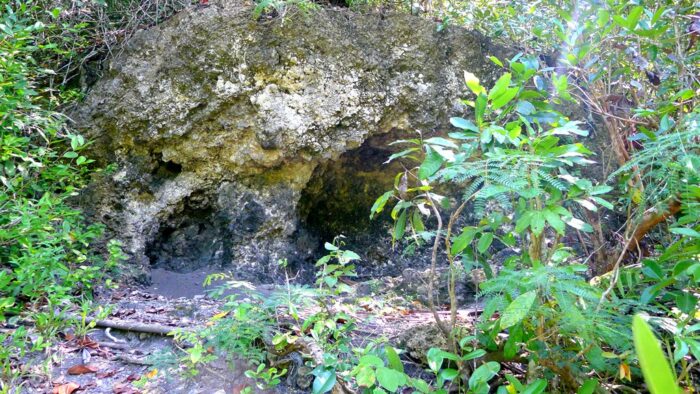
As we near the river mouth, we also see the Forest of the Lost Monkey, home to macaques that went into decline due to hunting in the ‘90s. Looking at the limestone cliffs, you’ll see holes that once served as their habitats. According to our guide, two relatives came here to hunt monkeys but ended up shooting each other after one mistook his relative for a monkey while retrieving a kill. People believed that the guy was somehow possessed by a spirit that protected the area. Another cause of the monkeys’ disappearance was the hunt for the Yamashita Treasure, believed to have been left by three Japanese warships that docked at the river mouth many years ago.
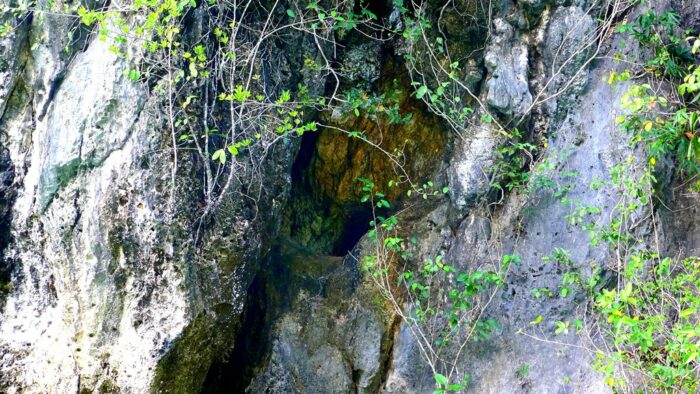
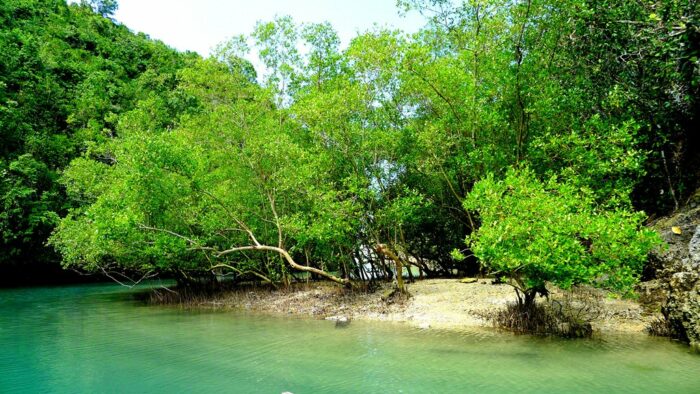
We saw a cathedral-like door on the left cliff and were told it was once the shrine of Maria Tang-an, the diwata mentioned earlier. Previously, people used banana leaves as paper and chicken feather tips as pens for their material requests, which were available in three days. Stories say that Maria Tang-an refused further requests because some borrowed things were either broken or never returned.
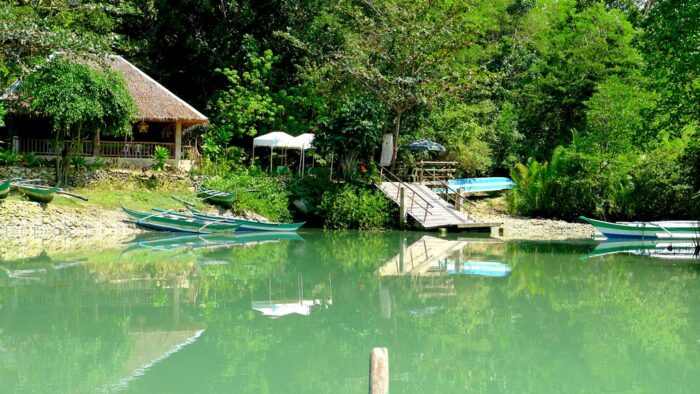
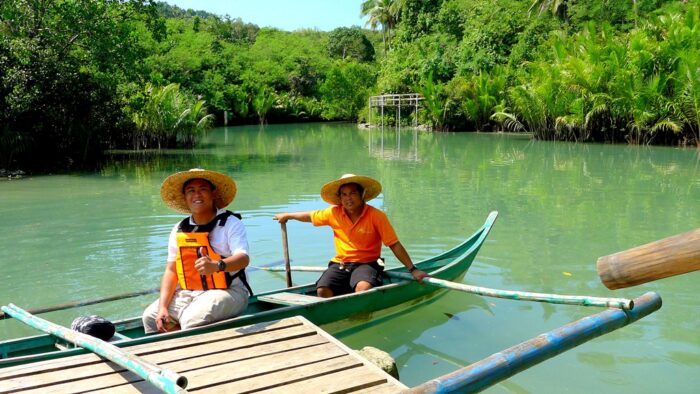
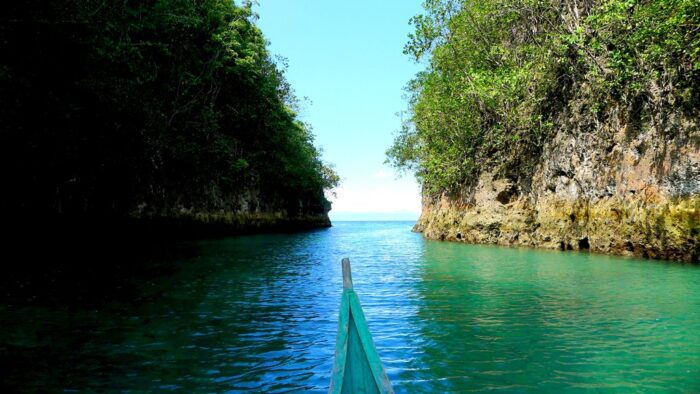
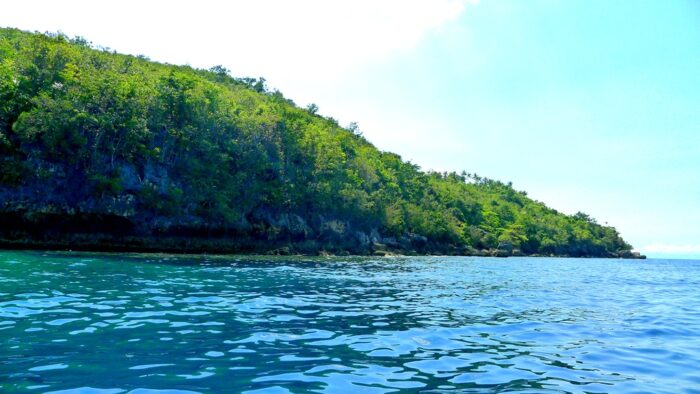
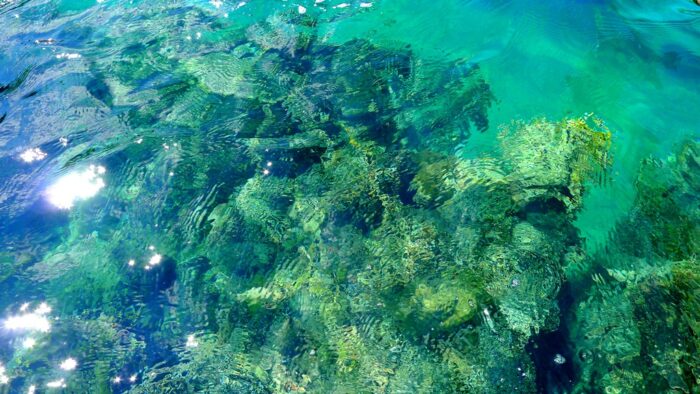
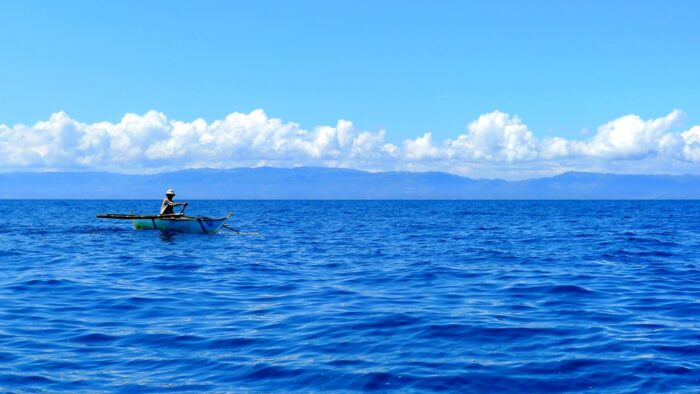
Going out of the river mouth, you’ll see Negros Island with Mt. Kanlaon as a background. You’ll see the transition of the water clarity from brackish to clear water to the deep blue waters of the Tañon Strait. You can choose to swim here to cool off from the heat as long as you’re not harming the corals. This is also the turning point of the cruise, and then we head back to finish the rest of the journey.
Rates and packages
We used the walk-in option and paid PHP 400 each. However, if you’re travelling with a group of more than 5 members, you can avail of the complete package at PHP650 each for a better experience, which includes lunch, organic snacks, a tour, and a handicraft demo at the Farmhouse.
Getting there
From Cebu South Bus Terminal, you can board a yellow Sepo bus to Aloguinsan, ask the bus driver to drop you off at Aloguinsan Public Market, and pay about PHP80 for a 2-hour land trip. From there, you can ride a motorcycle to the Bojo River and pay PHP20 per person for a 10-minute ride.
Contact information
You may call the Bojo Aloguinsan Ecotourism Association at 032 583-6797 or email them at baetas@aloguinsan.gov.ph. You may also check their website.
Cebu Travel Tour Packages You Should Try
Follow and subscribe to OutofTownBlog.com on Facebook , Twitter, Instagram, Pinterest, and YouTube for more Travel-related updates.
Read:
- Aloguinsan: 10 Reasons to Visit The Ecotourism Capital of Cebu
- Overnight Camping in Aloguinsan Cebu
- The Farmhouse in Aloguinsan Cebu: A Cebuano Countryside Experience
- Hidden Beach Resort in Aloguinsan: A Backpacker’s Paradise


