

 Kaye Chang
How To Avoid Getting Offloaded
(Manila, Philippines) – You might have experienced seeing travelers who are crying and begging in front of an immigration officer just to allow them to board their flights. You surely do not want to be in this horrific situation.
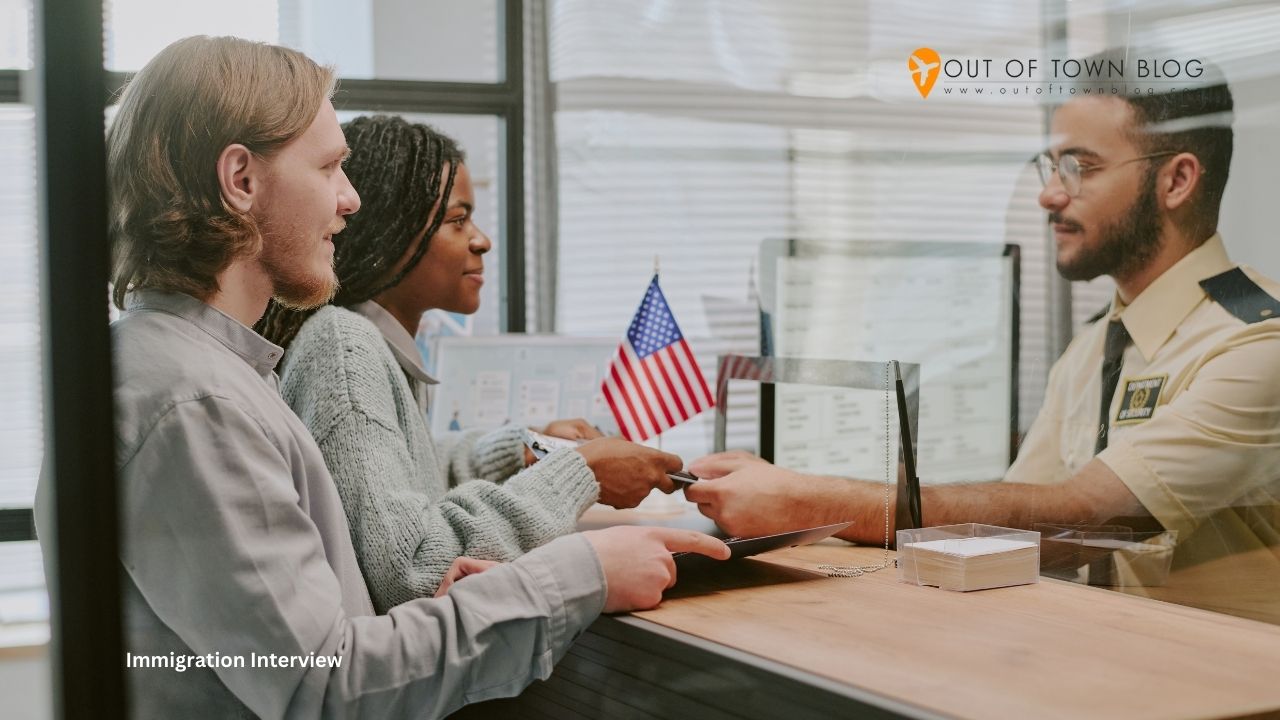
How To Ace Your Immigration Interview And Avoid Getting Offloaded
Being offloaded at any Philippine airport is a nightmare. You would not want to be embarrassed in front of many people. And worst, you would not want to throw away all the preparations you made for your trip.
What Is Offloading?
Offloading is the denial of a passenger’s entry into another country. It may happen if you give inconsistent responses to interview questions, lack sufficient documentation supporting your intended trip, or pose safety risks.
Offload is not a policy. However, it is a consequence of the implementation of the guidelines set by the countries and the Bureau of Immigration.
To avoid being denied entry to another country, you need to understand the people involved: you, as the traveler, and the Immigration Officer.

What Is An Immigration Officer?
One of the responsibilities of an Immigration Officer is to control the flow of people entering and exiting the country. This officer also provides advice to travelers on the guidelines for residence and travel in a particular country. Since they are responsible for protecting people from falling victim to illegal recruitment and human trafficking, an IO decides whether a traveler can exit or enter the country or not.
Some people are nervous to encounter an Immigration Officer. Some believe they will be intimidated by the questions they will ask. However, an IO would only ask travel-related questions: your travel itinerary, the number of days you plan to stay in the country, and where you will be staying.
When you are appearing in front of an Immigration Officer, you are already presenting yourself. Make sure to dress appropriately to give a good initial impression.
Only answer those that are being asked of you. Do not voluntarily give details that may result in further interrogation. When answering, stay calm, be consistent, and be convincing. The IO will know whether you are telling the truth or just making up stories.
The Immigration Officer will also verify that your documents are complete, that the fees have been paid, and that your purpose for travel is valid.

You As A Traveler
Travelers are categorized into three groups: tourists, overseas workers, and immigrants. The requirements that you need to settle and present to the Immigration Officer depend on your purpose of travel.
During the primary inspection by an Immigration Officer, you MUST present the following:
1. A Valid Passport
Your passport should still have a minimum of six (6) months’ validity from your departure date. To prove that you are a frequent flyer, you may also submit your old passport as a supporting document.
2. Round-Trip Plane Ticket
Your round-trip plane ticket should not exceed the number of days you are staying abroad. This is proof that you will be returning to the Philippines and you’re not going abroad to seek employment.
3. Visa (only if required)
Your visa should be valid and aligned with the purpose of your travel. A valid visa does not guarantee entry to your country of destination. However, it serves as proof that your trip is legal.
If the Immigration Officer thinks that you have a different reason other than what you initially declared, a secondary inspection may be conducted. Travelers who are traveling for the first time or those with no steady source of income are often asked to undergo a secondary inspection.
These people will be assessed based on the following:
1. Age
Keep a copy of your NSO-certified birth certificate or bring another Identification Card showing your date of birth.
2. Educational Attainment
You may present a copy of your Transcript of Records or your university alumni ID.
3. Financial Capability To Travel
You need to prove to the IO that you can support your trip financially. You may prove your financial capability to travel by showing any of these documents:
- Company ID
- Latest Income Tax Return
- Certificate of Employment
- Acceptance Letter for your Leave of Absence
- Bank Statement
- Bank Certificate
Who Often Undergoes a Secondary Inspection?
You will be automatically subjected to a secondary inspection if the IO categorizes you as any of the following:
- Traveler with no financial capacity to travel.
- Traveler who is escorted or accompanied by a foreigner who is not related to him or her.
- Minor traveling alone.
- Minor traveling with a guardian without the required travel clearance from the Department of Social Welfare and Development.
- Repatriated irregular workers without a clearance from the IACAT.
- Parents and spouses of foreign nationals who intend to meet or marry their fiancé without a CFO Guidance and Counselling Certificate.
- Passengers traveling to countries with deployment bans, alert levels, and travel advisories.
- Passengers tagged as tourists or temporary visitors who stayed abroad for more than a year during a previous departure from the country and intend to depart for the second time.
If the Immigration Officer is asking too many questions, don’t be irritated. They are just doing their job. They don’t want people to fall victim in another country, especially if you are traveling to Bangkok, Hong Kong, Singapore, and Malaysia, which are considered transit points for human trafficking incidents.

Before you travel, ensure you have all your travel documents with you. When speaking with an Immigration Officer, be calm, direct, and honest.
If you want to know more, you may see the full details via The Guidelines on Departure Formalities for International Bound Passengers. You may also contact the Bureau of Immigration via its website at http://www.immigration.gov.ph or by calling direct lines at 465-2400 loc 231-233, 527-3279, 527-3248, or 336-7751.
Manila Travel Tour Packages You Should Try
Follow and subscribe to OutofTownBlog.com on Facebook, Twitter, Instagram, Pinterest, and YouTube for more Travel-related updates.