
 Melo Villareal
Giant Rafflesia found in Full Bloom
Antique is famous for its quiet shores and majestic bodies of water, including the Batabat Coral Reef and Batbatan Island. Aside from wonderful tourist destinations, Antique is also home to the gigantic flower Rafflesia. Just recently, the endemic Rafflesia lobata in Igbaclag Cave, Brgy. Aningalan and Rafflesia speciosa in Mt. Igtulahong, Brgy. Tubudan was reported to be in full bloom. Both barangays are located in San Remegio, Antique.
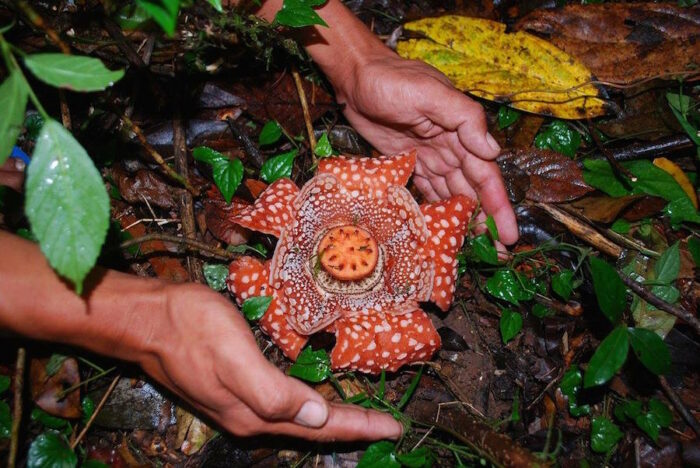
Rafflesia lobata found in San Remigio Antique
Netizen and Antique tourism mover Flord Nicson J. Calawag shared this information and photos on his Facebook account.
The full bloom of these critically endangered Rafflesia species lasts only 3-5 days.
The Rafflesia was discovered in 1818 by Stamford Raffles and Dr. James Arnold. The giant flower can reach a size of 106.7 centimeters (3 ft. 6 in) in diameter and weigh 11 kilograms (24 lb) when in bloom, with petal-like lobes an inch thick.
The Rafflesia is endemic to Southeast Asia, and the Philippines is one of the countries where the giant flower can be found. Out of the 38 species in the world, 10 can be found in the country. The Rafflesia grows in Quezon, Laguna, Antique, South Cotabato, Panay, Kalinga, Quirino, Compostela Valley, and the Bicol region.

Also called the “corpse flower,” the giant Rafflesia is a parasitic plant. When the flower blooms, it emits a foul odor that attracts flies and insects. The flies and insects will cause pollination from one flower to another. The plant, however, despite its remarkable ability to adapt and survive, is now listed as endangered.
There are only a few Rafflesia plants growing in the country; however, research about the plant has not been completed. The Rafflesia rarely blooms; sometimes it takes years before it does.
The Rafflesia speciosa was discovered in 2002 by Dr. Julie Barcelona and Dr. Edwino Fernando in the mountains of Antique Province. On the other hand, the first Rafflesia lobata was discovered by the locals during their study of the Philippine Spotted Deer (Cervus alfredi) under the direction of Rene Galang in Sebaste, Antique.
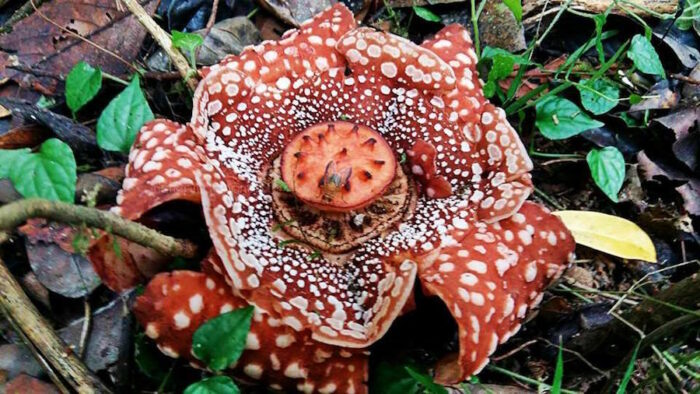
In other neighboring countries, the giant Rafflesia has been recognized as a national flower. In the Philippines, however, research and information dissemination are poor. Rafflesia thrives in dark and humid forests; therefore, access to these plants is difficult. Most of the Rafflesia species in the country were discovered accidentally. More studies are being conducted to learn more about the plant.
To see one of the biggest flowers in the world, you may contact San Remigio Tourism Office @ 0908-5663379, Tubudan Community-based Tourism Organization (CBTO) @ 0915-1810756, or Aningalan CBTO @ 0905-8231021.
Please follow #TeamOutofTown on Facebook, Twitter, Instagram, and Pinterest for more travel ideas.