

 Team Out of Town
The Ultimate Guide to Things to Do, Where to Stay, What to Eat, and How to Explore Iloilo
There are Philippine destinations that impress you immediately with dramatic beaches, towering mountains, or spectacular diving sites. Iloilo City is different. It reveals itself gradually, through beautiful old buildings, historic churches, riverside walks, lively markets, comforting bowls of batchoy, and conversations with friendly locals. It is a city where the past and present exist side by side, making every neighborhood feel like another chapter of a much bigger story.
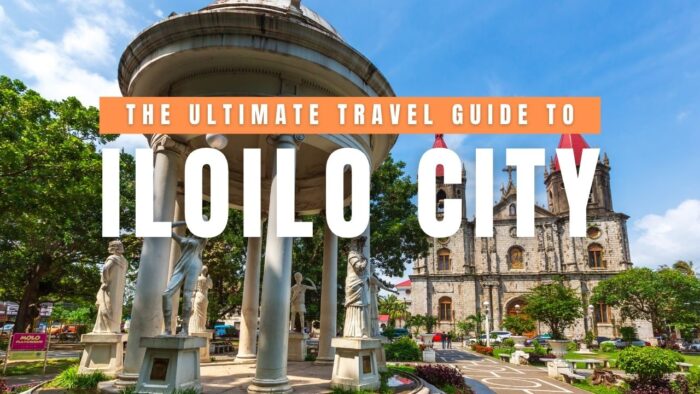
The Ultimate Travel Guide to Iloilo City
Iloilo is one of the Philippines’ most rewarding destinations for travelers interested in history, culture, architecture, and food. You can spend a morning admiring Spanish-era churches and ancestral houses, have lunch at a neighborhood eatery, explore a bustling public market in the afternoon, and finish the day walking along the Iloilo River as the sun sets.
The city is also an excellent base for exploring Western Visayas. Guimaras is close enough for an easy island escape, while northern Iloilo leads to the spectacular Gigantes Islands. Southern Iloilo offers additional heritage attractions, including the famous Miagao Church.

What makes Iloilo especially appealing is that it doesn’t require you to rush. Slow down, explore one neighborhood at a time, eat generously, and leave some room for unexpected discoveries.
1. Destination Overview
Why Visit Iloilo City?
Iloilo City combines:
- Spanish and American-era heritage
- Historic churches and ancestral houses
- A distinctive Ilonggo food culture
- The scenic Iloilo River Esplanade
- Traditional markets and bakeries
- Modern cafés and restaurants
- Shopping and entertainment districts
- Easy access to Guimaras
- Gateway access to Gigantes Islands
- A relatively relaxed atmosphere compared with Manila and Cebu
The city has become particularly attractive to travelers who want a Philippine destination that offers culture and urban experiences without the intensity of a major metropolis.
Best Time to Visit
The best overall period to visit Iloilo is November to May, when conditions are generally favorable for sightseeing and excursions.
December to February
These are among the most comfortable months for exploring the city. Temperatures are generally more manageable, making walking tours and outdoor sightseeing pleasant.
March to May
These are hotter months, but they are excellent for combining Iloilo with Guimaras, Gigantes Islands, and other outdoor destinations.
June to October
The southwest monsoon can bring more frequent rain and rougher seas. City attractions remain accessible, but island-hopping trips may be affected by weather.
January
January is particularly exciting because of Dinagyang, one of the Philippines’ most famous festivals. The city becomes extremely lively, with performances, street dancing, religious activities, food stalls, and large crowds.
Hotel rooms can sell out quickly during festival season, so advance reservations are strongly recommended.
Travel Difficulty
Easy to moderate.
Iloilo City is relatively straightforward for independent travelers. English is widely understood, transportation options are plentiful, and major attractions are accessible.
The biggest challenge comes when venturing farther from the city, particularly to destinations such as Gigantes Islands.
Recommended Duration
3 days: Ideal for a first visit focused on the city.
4–5 days: Better for combining city sightseeing with Guimaras.
5–7 days: Recommended if adding Gigantes Islands and southern Iloilo.
2. Essential Travel Information
Visa Requirements and Entry Procedures
For Foreign Travelers
Foreign visitors are subject to Philippine immigration requirements.
Many nationalities can enter the Philippines for tourism without a visa for an initial period, typically up to 30 days, provided they meet the applicable requirements. These can include a valid passport and an onward or return ticket.
Visitors from nationalities that are not eligible for visa-free entry generally need to obtain an appropriate Philippine visa before traveling.
Tourists who qualify may also be able to extend their stay through the Philippine Bureau of Immigration.
Because immigration rules can change, international travelers should verify the current requirements applicable to their nationality before departure.
Currency and Budget
Iloilo uses the Philippine peso (PHP).
For rough travel planning, you can use an approximate rate of US$1 = PHP55–60, though exchange rates fluctuate.
Typical Daily Budget
| Travel Style | Estimated Daily Cost |
|---|---|
| Budget | US$35–60 |
| Comfortable | US$70–130 |
| Upscale | US$150–300+ |
A simple local meal can cost around US$2–6, while meals at more upscale restaurants may cost US$7–15 or more.
Transportation is generally inexpensive, particularly if you use jeepneys for appropriate routes.
Language
Hiligaynon is the main local language, while Filipino and English are widely spoken and understood.
Useful phrases include:
- Salamat – Thank you
- Maayong aga – Good morning
- Maayong adlaw – Good day
- Tagpila? – How much?
- Diin ang…? – Where is…?
- Palihog – Please
- Indi – No or not
You can comfortably use English at hotels, restaurants, malls, tourist attractions, and transportation hubs.
Getting There
By Air
Iloilo International Airport is the city’s principal airport.
Domestic flights connect Iloilo with major Philippine cities, particularly Manila and Cebu. Depending on the season and airline schedule, international and regional connections may also be available.
The airport is outside the city center, so allow additional time for the transfer.
Estimated airport transfer: US$5–20 depending on transportation and destination.
By Sea
Ferries connect Iloilo with various destinations in the Philippines. Sea travel can be useful if you’re combining Iloilo with Bacolod, Cebu, Manila, or other destinations in Western Visayas.
Schedules can change, particularly because of weather, so check the latest departure information before traveling.
Getting Around
Taxi
Taxis are convenient for short trips and travelers carrying luggage.
Ride-Hailing Services
Ride-hailing apps can be particularly useful around the major commercial and business districts.
Jeepneys
Jeepneys are inexpensive and offer an authentic way to experience everyday life in Iloilo.
Routes can be confusing at first, so ask hotel staff or locals which jeepney to take.
Tricycles
Tricycles are more commonly used in residential and outlying areas.
Walking
Walking works particularly well around the heritage district, Calle Real, Molo, sections of Jaro, and the riverfront.
Pro Tip: Don’t spend your entire trip inside taxis. Walking between nearby attractions lets you discover old houses, small bakeries, local stores, and neighborhood eateries you might otherwise miss.
3. Top Attractions & Experiences
5 Must-See Landmarks and Cultural Sites
1. Molo Church
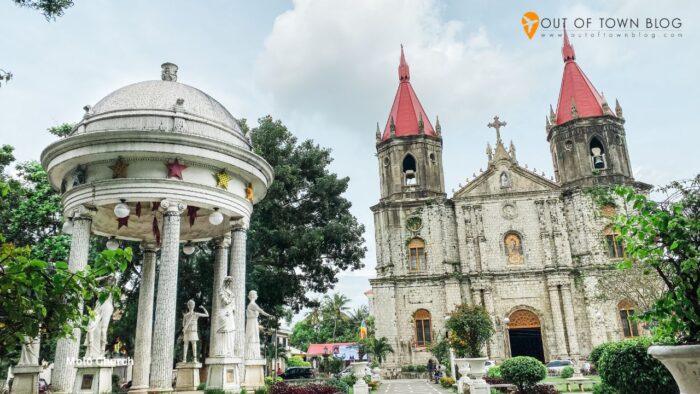
The historic Church of St. Anne, commonly known as Molo Church, is one of Iloilo’s most recognizable landmarks.
The church is celebrated for its Gothic-Renaissance Revival architecture and its collection of statues representing female saints.
Its location beside Molo Plaza also makes it easy to combine with other attractions.
Location: Molo District, Iloilo City
Entrance: Free, although donations are welcome.
Visit early in the day for better lighting and fewer visitors.
2. Molo Mansion

Located beside Molo Plaza, Molo Mansion is a restored heritage building that has become a venue for showcasing local products, crafts, food, and culture.
The mansion is especially convenient because you can combine architecture, shopping, photography, and food in one stop.
Location: Molo Plaza area
Entrance: Generally free.
3. Jaro Cathedral

Jaro Cathedral is one of Iloilo’s most important religious landmarks.
The surrounding Jaro district is also worth exploring, particularly for its historic streets, old houses, neighborhood businesses, and traditional atmosphere.
Location: Jaro District
Entrance: Free.
4. Calle Real

Calle Real is essential for anyone interested in Iloilo’s commercial and architectural history.
The historic street was once a major commercial center and still contains surviving heritage structures.
Spend time looking upward at building façades rather than simply walking from one destination to another.
Entrance: Free.
5. Iloilo River Esplanade
The Iloilo River Esplanade is one of the city’s most successful modern public spaces.
The interconnected riverfront areas provide places for walking, exercise, cycling, and relaxing.
Entrance: Free.
Best time to visit: Late afternoon and sunset.
5 Hidden Gems and Local Favorites
1. Casa Mariquit

Casa Mariquit is an important heritage house and a quieter alternative to Iloilo’s larger attractions.
The house offers visitors a glimpse into the lifestyle and history of one of Iloilo’s prominent families.
It is particularly rewarding for travelers interested in architecture and local history.
2. Camina Balay Nga Bato

This traditional house is an excellent choice for combining heritage with food.
Rather than simply looking at an old building, visitors can experience Ilonggo cuisine in a traditional setting.
It provides a more intimate cultural experience than a conventional restaurant.
3. La Paz Public Market
La Paz Public Market offers a look at everyday Iloilo life.
The market is particularly important for food travelers because the La Paz district is strongly associated with the city’s famous batchoy.
Visit in the morning when the market is most active.
4. Valeria Street
Valeria Street is worth exploring for casual restaurants, local food, bakeries, cafés, and neighborhood businesses.
It is a good alternative to spending all your meals in major shopping malls.
5. Iloilo Central Market
For travelers interested in local life, Iloilo Central Market is a fascinating stop.
Come early, observe respectfully, and sample local products where appropriate.
Local Secret: Some of Iloilo’s best food experiences are not found in polished restaurants. Look for busy neighborhood eateries filled with locals. A long line of regular customers is often a better recommendation than an elaborate dining room.
Day Trips and Further Explorations
1. Guimaras
Guimaras is the easiest major island escape from Iloilo.
The island is famous for its mangoes, beaches, countryside, and relaxed atmosphere.
Popular activities include:
- Visiting mango farms
- Exploring Guisi Lighthouse
- Beach visits
- Island-hopping
- Countryside tours
- Eating fresh seafood
- Buying mango products
Estimated day-trip budget: US$25–60 per person.
Start early and allow enough time for your return journey, as sea conditions and ferry schedules can change.
2. Gigantes Islands

Gigantes Islands are ideal for adventurous travelers.
The destination is known for limestone formations, turquoise water, sandbars, beaches, Tangke Lagoon, and Cabugao Gamay.
The journey is significantly longer than a trip to Guimaras. Travel from Iloilo City to Bancal Port can take approximately four to five hours by road before the boat journey.
Estimated budget: US$35–70+ per person depending on transportation, tour arrangements, and accommodation.
Local Secret: If your schedule permits, spend a night around Carles rather than attempting Gigantes as a rushed day trip from Iloilo City.
Unique Iloilo Experiences
Some experiences are particularly worth building your itinerary around:
- Eating La Paz Batchoy in La Paz
- Trying Pancit Molo in Molo
- Walking along the Iloilo River
- Exploring heritage houses
- Visiting traditional bakeries
- Eating authentic Ilonggo dishes
- Exploring public markets
- Joining Dinagyang celebrations
- Taking a Guimaras day trip
- Comparing traditional Iloilo with its modern business districts
Photography Tips
- Visit churches and heritage buildings early in the morning when the light is softer.
- The riverfront is best photographed during the golden hour.
- When photographing markets, always be considerate of vendors and shoppers. Ask permission before taking close-up portraits.
- Avoid entering private properties or photographing residents through windows and gates.
- For Molo Church, the surrounding plaza offers useful vantage points for capturing both the church and its urban surroundings.
Instagram-Worthy Locations
- Molo Church
- Molo Plaza
- Molo Mansion
- Iloilo River Esplanade
- Calle Real
- Jaro Cathedral
- Historic ancestral houses
- Iloilo Business Park
- Megaworld Boulevard
- Guimaras mango farms
- Cabugao Gamay
4. Accommodation Recommendations
Hotel rates fluctuate according to season, weekends, room type, and major events. The following are useful planning ranges, not guaranteed prices.
Budget-Friendly Hotels: US$50–100 per Night
Park Inn by Radisson Iloilo
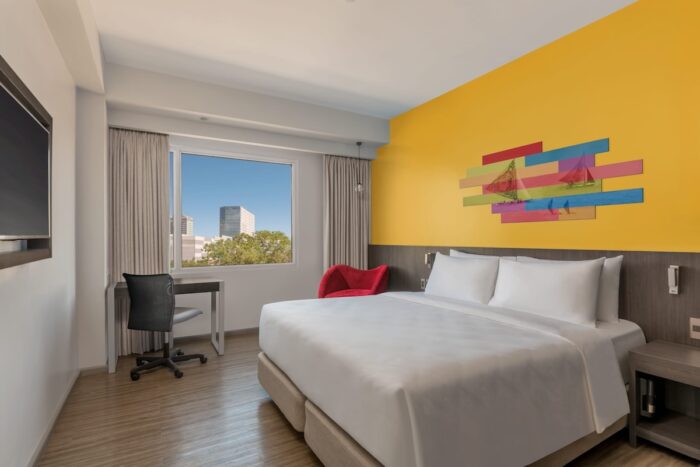
Location: SM City Iloilo area
Park Inn by Radisson Iloilo is a modern, practical hotel conveniently located near one of the city’s major shopping areas. Guests have easy access to restaurants, retail stores, entertainment, and transportation.
Rooms have a contemporary design, making the hotel a comfortable choice for travelers who prefer reliable international-standard facilities without paying luxury-hotel prices.
Typical price: US$60–100 per night.
Best for: Families, business travelers, and first-time visitors.
Figtree Hotel Iloilo
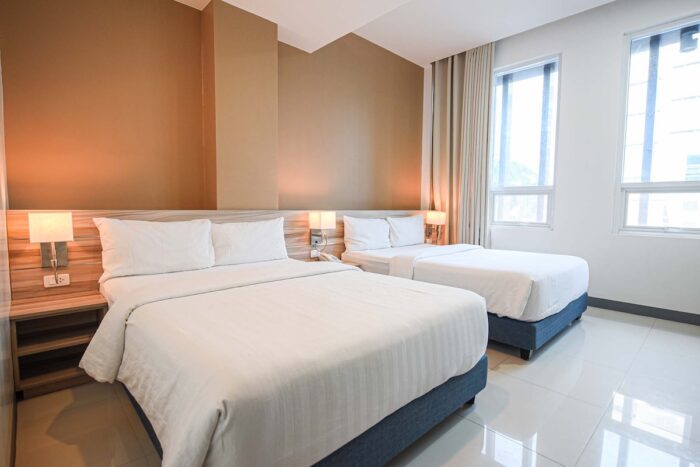
Figtree Hotel is a contemporary property offering modern rooms at a relatively accessible price.
Its location makes it ideal for travelers seeking convenient access to Iloilo’s commercial areas without spending heavily on accommodation.
Typical price: US$50–80 per night.
Best for: Couples, solo travelers, and short city breaks.
Mid-Range Hotels: US$100–250 per Night
Seda Atria

Address: Pison Avenue, Atria Park District, San Rafael, Mandurriao, Iloilo City
Seda Atria is one of the city’s popular upscale accommodations. Its location in the Atria Park District puts guests close to restaurants, cafés, shopping, and entertainment.
The hotel has contemporary rooms, dining facilities, meeting spaces, and the full-service amenities expected of an established upscale property.
Typical price: US$100–170 per night.
Best for: Couples, business travelers, families, and food-focused visitors.
Courtyard by Marriott Iloilo

Courtyard by Marriott is located in the Iloilo Business Park and offers a polished international business-hotel experience.
The property features modern rooms, dining facilities, fitness amenities, and convenient access to the business district and nearby entertainment areas.
Typical price: US$120–200 per night.
Best for: Business travelers, couples, and visitors who prioritize modern facilities.
Luxury Accommodation: US$250+ per Night
Richmonde Hotel Iloilo

Richmonde Hotel Iloilo is located in the modern Iloilo Business Park.
It offers comfortable upscale rooms, restaurants, leisure facilities, and convenient access to the city’s newer commercial district.
Although standard rooms can sometimes fall below the US$250 threshold, premium rooms and suites can reach or exceed this range depending on dates and demand.
Typical price: US$120–250+ per night.
Best for: Travelers seeking upscale comfort, business travelers, and special occasions.
Alternative Accommodations
Travelers who don’t need full-service hotels can find:
- Hostel dorm beds: US$10–25
- Private guesthouse rooms: US$25–60
- Vacation apartments: US$30–100+
- Homestays: US$20–60
Vacation rentals can be particularly useful for families or travelers staying for a week, as they often include kitchens, washing machines, and extra living space.
Pro Tip: During Dinagyang, prioritize location over getting the absolute cheapest room. Spending a little more to stay close to your planned activities can save substantial time and transportation costs.
5. Food & Dining Guide
Food is one of the strongest reasons to visit Iloilo.
Must-Try Local Dishes
La Paz Batchoy

La Paz Batchoy is Iloilo’s signature noodle soup.
It typically combines noodles with pork or beef, a rich broth, garlic, green onions, and crunchy toppings such as chicharon.
The broth is hearty and savory, making it particularly satisfying after a morning of sightseeing.
Typical price: US$2–5.
For the classic experience, eat batchoy in La Paz.
Pancit Molo

Pancit Molo is a soup-based dish featuring dumpling-like pieces filled with meat and served in a flavorful broth.
Despite its name, it is quite different from the dry noodle dishes commonly associated with Filipino pancit.
Typical price: US$2–5.
Chicken Inasal
Iloilo is an important part of the Philippine grilled-chicken tradition.
Chicken is marinated and grilled over charcoal, producing smoky, savory flavors and a distinctive aroma.
Typical price: US$3–8.
KBL
KBL stands for Kadyos, Baboy, and Langka.
This traditional Ilonggo dish combines pigeon peas, pork, and young jackfruit in a savory and slightly sour soup.
It is hearty and deeply associated with home-style Ilonggo cooking.
Typical price: US$3–7.
Laswa
Laswa is a vegetable-based Ilonggo dish and a good option when you want something lighter.
It commonly contains several vegetables cooked together in a simple broth.
Typical price: US$2–5.
Biscocho

Biscocho is crisp, toasted bread coated with butter or sugar.
It is one of Iloilo’s most recognizable food souvenirs and travels well in luggage.
Typical price: US$2–8 per package.
Butterscotch
Iloilo’s butterscotch is a sweet, buttery confection often purchased as pasalubong.
It is easy to pack and a popular gift.
Typical price: US$2–8 per package.
Restaurant Recommendations
Deco’s Original La Paz Batchoy
Located in the La Paz area, Deco’s is an established name in Iloilo’s batchoy tradition.
The restaurant is particularly well-suited for first-time visitors who want to experience the dish in its traditional home district.
Typical budget: US$2–6 per person.
Netong’s

Netong’s is another famous batchoy destination located around La Paz Public Market.
Its location makes it convenient to combine breakfast or lunch with a market visit.
Typical budget: US$2–6 per person.
Ted’s Oldtimer La Paz Batchoy
Ted’s is a long-established batchoy name and a useful stop for travelers looking to compare different versions of Iloilo’s famous noodle soup.
Typical budget: US$2–6 per person.
Breakthrough Restaurant
Located in the Villa Arevalo area, Breakthrough is particularly popular for seafood and Filipino dishes.
It is a good choice when traveling with a group because diners can order several dishes for sharing.
Typical budget: US$6–15 per person.
Roberto’s
Address: 61 JM Basa Street, Iloilo City Proper
Roberto’s is famous for its siopao and is a classic stop when exploring downtown Iloilo.
It is inexpensive and particularly useful for travelers wanting a quick snack between attractions.
Typical budget: US$1–5 per person.
Coning’s Talabahan
Located in Villa Arevalo, Coning’s Talabahan focuses on seafood and traditional Filipino flavors.
It offers a more casual dining experience and is well-suited to travelers who want to explore beyond the city’s upscale restaurant scene.
Typical budget: US$5–15 per person.
Street Food Safety
Iloilo’s food stalls and markets are generally rewarding, but travelers should follow basic precautions.
Choose stalls with high customer turnover and freshly prepared food.
Prefer food that is cooked thoroughly and served hot.
Be more cautious with raw seafood, unrefrigerated ingredients, and food that has been sitting uncovered.
Drink sealed bottled water if you are uncertain about the local water supply.
Carry hand sanitizer, particularly when visiting markets.
Dietary Restrictions
Traditional Ilonggo cooking frequently uses pork, seafood, meat, and meat-based broths.
Vegetarians can find vegetable dishes, cafés, international restaurants, and customized meals, but should clearly communicate dietary restrictions.
Travelers with serious food allergies should ask specifically about sauces, stocks, seasonings, and shared cooking equipment.
6. Local Culture & Etiquette
Ilonggos are widely known for their courteous and gentle communication style.
Visitors should respond with the same level of respect.
Dos
- Greet people politely.
- Say thank you when receiving assistance.
- Ask permission before photographing people.
- Dress appropriately inside churches.
- Support local businesses.
- Buy directly from local artisans when possible.
- Keep heritage areas clean.
- Respect residential neighborhoods.
Don’ts
- Enter churches wearing beachwear.
- Touch historic structures without permission.
- Climb on heritage buildings.
- Treat local communities as tourist attractions.
- Litter.
- Haggle aggressively over small amounts.
- Assume photography is permitted everywhere.
Tipping
Tipping is appreciated but generally not compulsory.
Restaurants may already include a service charge, so check your bill before leaving an additional tip.
For guides and drivers, approximately US$2–10, depending on the quality and duration of service, is a reasonable gesture.
Festivals
Dinagyang

Dinagyang is Iloilo’s biggest and most famous festival.
The celebration usually takes place in January and combines religious devotion, cultural performances, street dancing, music, elaborate costumes, food, and enormous crowds.
Expect road closures and heavy pedestrian traffic.
Hotels can become expensive and difficult to book.
Local Secret: If you want to experience Dinagyang without being overwhelmed by the biggest crowds, attend selected events earlier in the day and explore neighborhoods away from the most congested areas.
7. Practical Tips & Safety
Health and Safety
Iloilo is generally manageable for independent travelers.
Still, use normal precautions:
- Keep valuables secure.
- Be cautious in crowded markets.
- Use reputable transportation.
- Stay hydrated.
- Wear sunscreen.
- Use mosquito repellent.
- Watch for traffic when crossing roads.
- Check weather forecasts before island trips.
- Keep digital copies of important documents.
For remote island excursions, carry basic medication, drinking water, and enough cash.
What to Pack
Bring:
- Lightweight clothing
- Comfortable walking shoes
- Sandals
- Sunscreen
- Hat
- Umbrella
- Light rain jacket
- Reusable water bottle
- Power bank
- Small daypack
- Insect repellent
- Dry bag
- Swimwear
- Small cash denominations
What to Wear
Lightweight clothing is ideal for Iloilo’s warm climate.
Wear comfortable shoes because many of the city’s attractions are best explored on foot.
When visiting churches, wear clothing that covers your shoulders and knees or carry a light cover-up.
For island trips, bring swimwear and an extra dry outfit.
Money-Saving Tips
- Eat at local markets.
- Try neighborhood restaurants.
- Use jeepneys where practical.
- Walk between nearby attractions.
- Stay slightly outside the most expensive hotel districts.
- Travel outside major festivals.
- Buy snacks from local bakeries.
- Compare island-tour inclusions before booking.
- Travel with companions when private transportation costs can be shared.
Pro Tip: Plan your sightseeing by district. Exploring Molo attractions together, for example, is much more efficient than repeatedly crossing the city.
Mobile Data
Visitors can purchase Philippine SIM cards from major telecommunications providers or use an eSIM if their phone supports it.
The main networks include Globe and Smart.
International travelers should have their passports available because Philippine SIM cards require registration.
If you are staying only a few days, an eSIM can be particularly convenient because you can arrange mobile connectivity before arrival.
Emergency Contacts
National Emergency Hotline: 911
For medical emergencies, ask hotel staff or local authorities to direct you to the nearest appropriate hospital or medical facility.
Useful Local Phrases
Salamat – Thank you
Palihog – Please
Tagpila ini? – How much is this?
Diin ang CR? – Where is the restroom?
Buligi ako – Please help me
Maayong aga – Good morning
Maayong gab-i – Good evening
8. Souvenir Shopping
Popular Iloilo Souvenirs
Biscocho
Crispy and buttery, biscocho is one of the easiest and most popular Iloilo food souvenirs.
Barquillos
These thin rolled wafers are another classic regional treat.
Pack them carefully because they can break easily.
Butterscotch
Sweet, buttery, and easy to transport, Iloilo butterscotch makes a convenient gift.
Local Coffee
Look for Philippine-grown coffee and products from Western Visayas and nearby regions.
Woven Products
Locally made textiles, baskets, bags, and other handicrafts can make more meaningful souvenirs than mass-produced tourist merchandise.
Best Places to Shop
Original Biscocho Haus
A classic place to purchase biscocho, barquillos, butterscotch, and other Ilonggo food products.
Molo Mansion
A convenient stop for locally made products and crafts while exploring the Molo district.
Local Markets
Iloilo Central Market and neighborhood markets provide a more authentic shopping experience.
Night Markets and Flea Markets
Iloilo’s evening market scene can vary according to festivals, events, and seasonal activities.
Valeria Street and busy commercial districts are useful areas for evening food exploration, while temporary stalls often appear during major celebrations.
Check local schedules, as informal markets may not operate every night.
9. Suggested Itineraries
3-Day Express Iloilo Itinerary
Day 1: Heritage Iloilo
Morning
- Jaro Cathedral
- Jaro neighborhood
- Local breakfast
Late Morning
- Calle Real
- Historic commercial buildings
- Iloilo City Proper
Lunch
La Paz Batchoy
Afternoon
- Molo Church
- Molo Plaza
- Molo Mansion
Sunset
Iloilo River Esplanade
Dinner
Traditional Ilonggo food or seafood.
Estimated food and sightseeing budget: US$20–50 excluding accommodation.
Day 2: Food and Culture
Morning
- La Paz Public Market
- Batchoy breakfast
- Traditional bakery
Late Morning
- Iloilo Central Market
- Heritage streets
Lunch
Pancit Molo and other Ilonggo dishes.
Afternoon
- Casa Mariquit
- Local cafés
- Iloilo Business Park
Evening
Explore Mandurriao’s restaurant and café scene.
Day 3: Choose Your Adventure
Option A: Guimaras
Leave early for the port.
Spend the day exploring:
- Mango farms
- Guisi Lighthouse
- Beaches
- Island-hopping destinations
- Local restaurants
Return to Iloilo in the evening.
Option B: Southern Iloilo
Travel south and explore:
- Miagao Church
- Miagao town
- Guimbal
- Tigbauan
- Other southern Iloilo heritage attractions
This route is better for travelers who prefer history and architecture over island activities.
Off-the-Beaten-Path Alternative Route
If you’ve already experienced the major tourist attractions, spend your next visit exploring Iloilo at a slower pace.
Morning
Start with breakfast at a neighborhood eatery instead of a hotel buffet.
Visit a local market and observe everyday life.
Late Morning
Take a slow heritage walk through streets away from the major tourist stops.
Look for old houses, bakeries, neighborhood stores, and traditional businesses.
Lunch
Choose a family-run restaurant serving KBL, laswa, chicken inasal, or another local specialty.
Afternoon
Visit a traditional heritage house or cultural attraction.
Stop at a bakery for biscocho or butterscotch.
Sunset
Walk along a quieter section of the Iloilo River Esplanade.
Evening
Explore Valeria Street or another neighborhood food district.
Finish the evening at a local café.
Local Secret: The best way to understand Iloilo is not to race through a checklist of attractions. Spend half a day in Molo, another in La Paz, and another exploring Jaro and the city center. Each district has its own character, food, architecture, and stories.
Sustainable and Responsible Travel in Iloilo
Responsible tourism matters, particularly in Iloilo’s heritage communities and island destinations.
Choose locally owned hotels, restaurants, guides, and shops whenever possible. This helps tourism income remain within the community.
When visiting historic buildings, avoid touching fragile surfaces, climbing on walls, or entering restricted areas.
Do not photograph people in vulnerable situations without permission.
For Guimaras and Gigantes Islands, minimize single-use plastic, bring a reusable water bottle, and take all waste back with you when appropriate.
Never collect coral, shells, marine animals, or other natural materials.
Use reef-safe practices when swimming and snorkeling, and follow local rules designed to protect marine ecosystems.
Most importantly, remember that Iloilo’s heritage districts are living communities. People work, worship, study, and raise families in these neighborhoods. Travelers should behave as respectful guests rather than treating them as open-air museums.
Final Thoughts: Why Iloilo Should Be Your Next Philippine Adventure
Iloilo City isn’t a destination you visit for just one spectacular attraction. Its appeal comes from how everything fits together: the churches, ancestral houses, markets, riverfront, cafés, restaurants, bakeries, festivals, and the unmistakably warm character of Ilonggo culture.
Come for the La Paz Batchoy, but stay for the heritage streets. Visit Molo Church and then linger around the plaza. Walk along the river at sunset. Browse a local market. Try a dish you’ve never tasted. Buy biscocho for the trip home. Take the ferry to Guimaras or make the longer journey to Gigantes.
Give yourself permission to slow down.
Iloilo rewards travelers who are curious rather than hurried. Its greatest experiences often happen between the attractions: a conversation with a vendor, a hidden bakery, an old house spotted during a walk, or an unexpectedly memorable bowl of soup.
For travelers looking to discover a different side of the Philippines, Iloilo offers an appealing combination of history, food, culture, modern city life, and easy access to Western Visayas adventures.
Arrive hungry, wear comfortable shoes, explore beyond the obvious, and give Iloilo at least three days. The city just might leave you planning your return before you’ve even left.
Have you been to Iloilo City? Help us improve this Travel Guide to Iloilo City Blog by sharing your personal Iloilo City travel tips and recommendations.
Check out our complete list of recommended Hotels and Resorts in Iloilo City, Philippines, via Agoda, or you may also see available Airbnb properties in the city.
Also see:
- Iloilo’s cultural and art scene thriving in ILOMOCA
- Lunch at Damires Hills Tierra Verde Leisure Farm Resort in Iloilo
- 6 Reasons Why You Should Visit Iloilo
- DIY Trips: A guide to building your ultimate holiday


