
 Melo Villareal
Best Tourist Spots in Fukuoka, Japan
Fukuoka is the largest city on Kyushu’s island and the fifth-largest city in Japan. Plenty of things to do in Fukuoka will make you want to return to this beautiful city. You will have many places to see, from modern amenities to the historical side in the form of temples.

Best Time to Visit Fukuoka
Fukuoka, located in southern Japan, has a temperate climate with four distinct seasons. The best time to visit Fukuoka is spring (March to May) and autumn (September to November), when the weather is mild and pleasant.
Spring (March to May): This season is characterized by cherry blossoms, usually in Fukuoka in late March to early April. The city becomes adorned with beautiful pink flowers, and it’s a great time to enjoy hanami (flower viewing) in parks like Maizuru Park or Nishi Park.
Autumn (September to November): Autumn in Fukuoka brings cooler temperatures and colorful foliage. The city’s parks and gardens, such as Ohori Park and Uminonakamichi Seaside Park, offer picturesque views of vibrant autumn leaves.
Both seasons offer comfortable temperatures for exploring the city’s attractions, trying local cuisine, and participating in festivals. However, it’s worth noting that these seasons can be popular with tourists, so booking accommodation in advance is recommended.
How to get to Fukuoka

If you fly from Manila, Cebu Pacific offers daily flights between Manila and Fukuoka, Japan, with affordable fares as low as P3,288 per sector. Book Here: http://bit.ly/CEBxteamoutoftown

What to see in Fukuoka?
Explore Uminonakamichi Seaside Park

This is a large sandbar in Fukuoka, which makes up the border of Hakata Bay. The highlight of this tour is that you can visit the seaside park, a riot of color, and you will love seeing the pretty flower gardens. You can also go swimming at one of the biggest swimming pools west of Japan, also in the Sunshine pool park. The pool is only open during the summer, but you can visit other spots like the marine world, where you will see up to 450 marine life.
How to get there:
By Train: Adjacent from Uminonakamichi station of JR Kashii line.
By Ferry: Take the municipal ferry from Bayside Place to Saitozaki Tosenjo (ferry terminal) and an 8-minute walk to the park. Or, take the Uminaka line (jet ferry liner) from Momochi (Marizon) to Uminonakamichi Tosenjo (ferry terminal)and a 5-minute walk to the park.
By Bus: Get off at the Marine World stop of the Nishitetsu bus and walk for 3 minutes.
Have fun at Momochi Beach
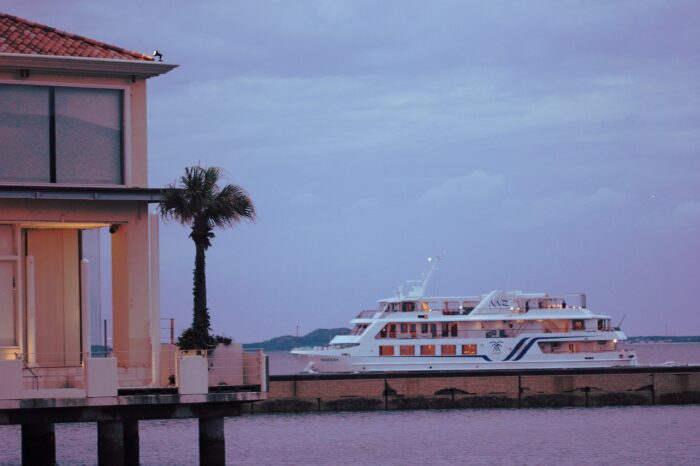
This is an artificial beach that stretches for a kilometer, and you will get to see the beauty of Fukuoka from here. The beach was constructed on reclaimed land, and attached to the beach is an artificial island where you will find numerous shops.
You can come to this island when you have your fill of the sun to eat as there are many restaurants here too, or you can even go to the ferry port.
Go sightseeing at Yusentei Park

This park was home to the 6th lord of Fukuoka, which was built in the 18th century. You will see a stunning garden built in the traditional style and an ornate pond at this park.
This is a great place to visit if you want to escape the city. You will also learn more about Fukuoka’s history from this tourist attraction.
Relax at Ohori Park
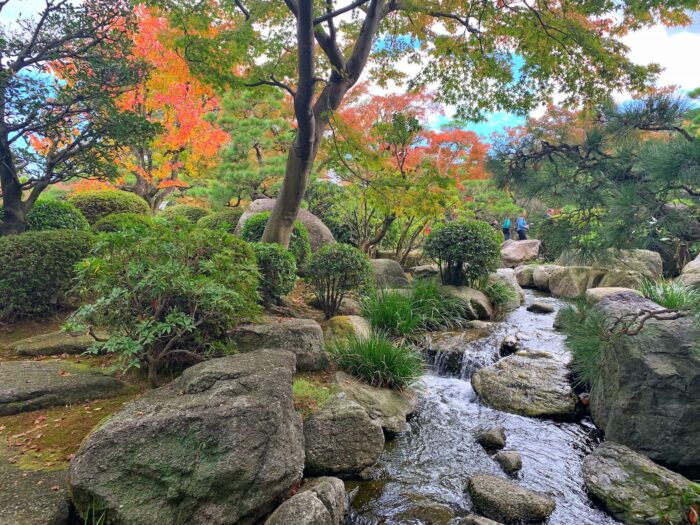
Although the Fukuoka Castle was torn down during the Meiji restoration, you will still see it at the beautiful Ohori Park. The park is situated in the middle of Fukuoka, and you will love this tourist attraction’s peace and scenic view.
The old castle moat was converted into a magnificent park where you can relax, and the moat was refashioned to look like China’s west lake, with three islands dotted around the water.
Visit the Hakozaki Shrine

This is one of the most important shrines in this region of Japan. It was originally destroyed as it was set on fire during the Mongolian invasion of Fukuoka in 1274 before rebuilding.
Some of the highlights of this temple are a stone anchor that would have been used by Mongolian ships and the statue of Nichiren, a well-known Buddhist scholar in Fukuoka that predicted the Mongolian invasion.
Visit the Kushida Shrine
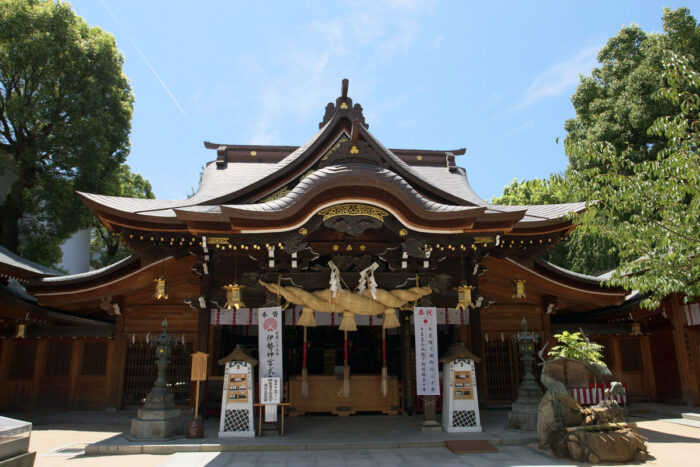
Kushida-jinja is a Shinto shrine located in Hakata-Ku. The shrine is dedicated to Amaterasu and Susanoo, and the entire complex is said to have been founded in 757.
The Hakata Gion Yamakasa festival is centered on the shrine. A great symbolic gingko tree grows in the shrine yard with two monumental tablets of the Mongolian invasion on its foot.
View the city from Fukuoka Tower.
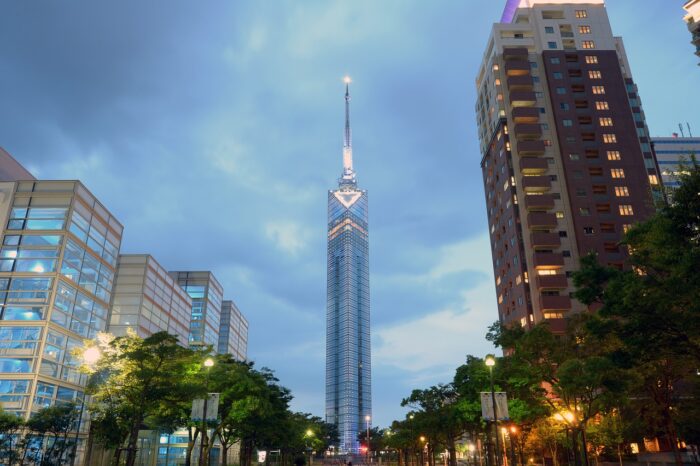
This is one thing to do in Fukuoka, as you will get a magnificent view of the city from this tower. Momochi artificial beach is also just close to this tower, and from the top of the tower, you will be able to see the Genkai Nada sea, or you can look inland to Momochi Park and other parts of the city.
This is among the tallest towers in Japan, and it stands at 234m high. You will also love the view of the night lights from this tower, and you can take an Instagram-worthy picture from here.
Check out the unique roof garden at ACROS Building.

This is in Tenjin Chuo Park, and you will see a fantastic roof garden. You can also get a stunning view of the rest of the city, set on a terrace.
The garden homes up to 35,000 different plants, and they comprise 76 other species. You can come here in the morning to catch the sunrise, but the park closes at 4 pm daily.
Go sightseeing at Sasaguri.

You can escape the city and get spiritual at Nanzoin Temple, just a twenty-minute train ride from Fukuoka City. You will find stunning scenery in this small town, Sasaguri, and you can even go hiking, as many hiking trails are to conquer.
You will see hundreds of Buddha statues in different poses, which look different from those we know. The tour’s highlight is that you will see a 41-m-long lounging Buddha statue, which is a sight to behold.
Go surfing

If you are adventurous, this is one of the best things to do in Fukuoka, as there are many beaches around the city where you can go surfing in the summer months.
During the summer, the waves are not that big, and this is a perfect place for beginners and intermediate surfers to enjoy the water and the sea views.
Go on a boat ride in Yanagawa.

Yanagawa is one of the places you must visit in Fukuoka, and you will see why it is nicknamed the Venice of Japan.
The highlight of this town is that you can go on a romantic gondolier ride through the waterways. You can also try out some eel, the local delicacy in this region.
Watch a Sumo Match
One of Japan’s cultural highlights is the exciting Sumo wrestling match, a must-see in Fukuoka. If you are here in November, you will see much of this match, as this is the prime sumo season.
You will also get to see famous sumo wrestlers as they walk around Fukuoka’s streets to promote this fantastic sport.
Go sightseeing at Kaho Gekijo Kabuki Theater.

If you want to learn about authentic Japanese culture, visiting this theater will give you more than you imagine.
You will get to go on special tours where you will see the behind the scene sections of the theatre, and you can even get to play with props and act out your own scene on the stage. You will get a memorable experience from this tour.
Try out Tonkotsu ramen

The locals call Fukuoka the birthplace of tonkotsu ramen, also called Hakata Ramen. Tonkotsu means pork bones in Japanese, and it makes up the soup base for this ramen dish.
This dish’s other characteristics are the firm noodles and the pork belly served as a topping. Some of the famous Japanese ramen chains originate from Fukuoka.
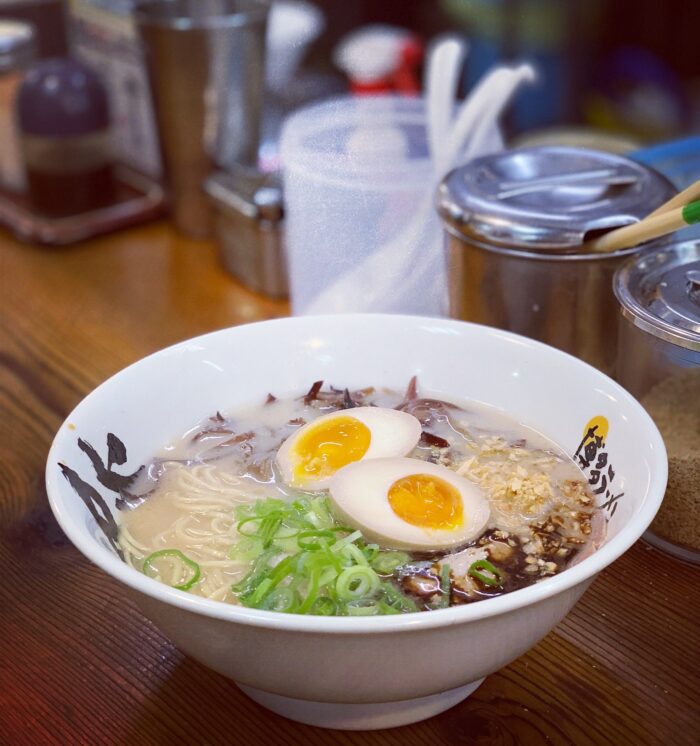
I highly recommend that you visit Hakata Ramen Zen Senshuji. This hole-in-the-wall ramen shop is actually my favorite. In fact, I always make sure to visit this ramen shop each time I get a chance to visit Fukuoka.
Hakata is a busy area in Fukuoka famous for its Hakata-style pork ramen. Hakata ramen originates from the Hakata district of Fukuoka city. Hakata-style pork ramen has a rich, milky, pork-bone Tonkotsu broth and relatively thin, non-curly, resilient noodles.
Go shopping at Yanagibashi Rengo Market

The market is also known as Hakata’s Kitchen, an early market in Fukuoka that sells fresh seafood and produce. This is a hotspot for the locals and tourists; you will get quality products from this market.
This is a great place to eat breakfast in Fukuoka as there are plenty of local snacks you can try out, and it is the perfect place to pick up a metaiko, a specialty in Fukuoka.
Go shopping at Canal City.

This is the biggest shopping center in the prefecture, and this is a must-see if you love Asian architecture. The mall homes a 13-screen cinema, more than 250 shops, and a wide range of restaurants, and it has an artificial canal that runs in the middle of it. You will love your time here as it looked like you jumped out of a science fiction anime.

The Fukuoka area is a little friendlier and more casual than Tokyo, and it attracts many tourists due to the many attractions you can visit. You will indeed have more on your hands in this city.

Foodie Tip: If you are looking for a perfect place to sample Ramen’s various types, visit Ramen Stadium. There are 8 ramen restaurants, and the food selections are reasonably priced. Most of them serve the authentic Tonkotsu Ramen, which originated in Fukuoka.
Migita Fruit Farm

Open from September to early December, this family-operated fruit farm has been offering this unique fruit-picking activity for almost 50 years now. Migita Orchard is one of the first in Japan to provide persimmon fruit picking for tourists.
Upon arriving, guests are given baskets and scissors and escorted to the nearest persimmon farm. Don’t worry; they will guide you on picking the best fruit in case you want to bring it home.
- Open: Late September to early December
- Hours: 9:00~17:00
- Entry: Free
- Reservations: Required for group only (phone or website)
- Parking: 20 spaces (free parking)
- Address: 3024 Tanushimaru-machi Chitoku, Kurume City, Fukuoka
- Tel.: 0943-72-2729
- http://migitaorchard.com/news/478/
Dazaifu Tenmangu Shrine
Apart from Kyoto’s Kitano Tenmangu, Fukuoka’s Dazaifu Tenmangu Shrine is considered one of Japan’s most important Tenmangu Shrine. These Shrines are dedicated to the spirit of Sugawara Michizane, a scholar and politician of the Heian Period.
Sugawara Michizane has been associated with Tenjin, a Shinto deity of education, and is popular among students. This shrine is always included in student excursions itinerary, and most pray for success in exams and academic achievement.

The road to the temple is dotted with many stalls selling popular local specialties such as Umegae-mochi (sweet rice cake with bean jam), Gokaku Chikuwa (fish sausage) with kanji characters meaning success burnt on the surface, Usonomochi (sweet rice cake packed with a small bird of lucky charm) and Onigawara Monaka (sweet bean jam sandwiched in mochi wafers) and other local delicacies. Several souvenir shops sell Fukuoka souvenir items.
How to get there: Dazaifu Tenmangu Shrine is five minutes east of Dazaifu Station. Alternatively, the shrine can be reached in a one-minute bus ride (100 yen, three buses per hour). Get off at the Miya-mae bus stop.
Entrance Fee: FREE
Fukuoka Castle Ruins


Located inside Maizuru Park, just 5 minute walk from Ohori Koen station, you will find the ruins of Fukuoka Castle – one of the must-visit historic structures in Fukuoka.
Fukuoka Castle was built by Kuroda Nagamasa, appointed lord of the Chikuzen feudal domain (a part of Fukuoka Prefecture), to support Tokugawa Ieyasu during the battle of Sekigahara.
Fukuoka Castle used to be the best castle. Nowadays, only ruined walls and a few turrets remain.
Nokonoshima Island Park
Located in Hakata Bay, Nokonoshima Island Park is located on an isolated island. It is a popular tourist attraction for people who want to see flowers bloom.
The all-season flower garden is also a popular spot for those wanting a beautiful pre-nuptial photo.

How to get there:
It is a top-rated tourist attraction, and you can get there in 10 minutes by ferry from Meinohama Ferry Terminal.
Access:
By bus
- Nishitetsu Bus “Hakata-Ekimae A” or “Tenjin K?soku Bus Terminal Mae” to “Meinohama-Tosenj?”. The most popular buses were 301 and 302, which seemed to run to Hakata and Tenjin. Always check Google Maps for the bus schedule.
By train
- Get off at Fukuoka City Subway “Meinohama” station, Nishitetsu Bus “Meinohama Eki Kitaguchi” to “Meinohama Tosenj?”
- From Meinohama Tosenj? to Nokonoshima Tosenj? by ferry (10 minutes)
- Upon arrival, Nishitetsu Bus for “Island Park” (13 minutes)
Nearest Station: Nishitetsu Bus “Noko-Tosenj?” station, Fukuoka City Subway Meinohama Station
Nokonoshima Island Park
Address: Fukuoka, Fukuoka city, Nishi, Noko 1624
Hours: Monday-Saturday 9:00-17:30, Sundays and Holidays 9:00-18:00 (Weekday hours during winter)
Entrance fee: adult 1000 yen, children (elementary/middle school) 500 yen, younger children (over 3) 300 yen
Phone number: +81-92?881?4494
Official website: Nokonoshima Island Park
Our Top Hotel Picks for Fukuoka, Japan
Fukuoka Travel and Tour Packages

Disclosure: This was an updated version of our recommended Things to Do Fukuoka Blog post. We added new attractions and activities from our recent trip, which Cebu Pacific and Strategic Works, Inc made possible.
Find the Best Hotels in Fukuoka according to your budget. Book now via Agoda.
Want more updates about new package tours and tourist spots in Fukuoka, Japan? Follow #TeamOutofTown, on Facebook, Twitter, Instagram, Bloglovin, and Pinterest for more travel ideas.
Also read:
- Fukuoka Travel Guide
- Ultimate List Of The Best Hotels In Fukuoka, Japan
- Costa Victoria North Asia Cruise: Arrival In Fukuoka, Japan
- Top 12 Best Places To Visit In Japan