

 Melo Villareal
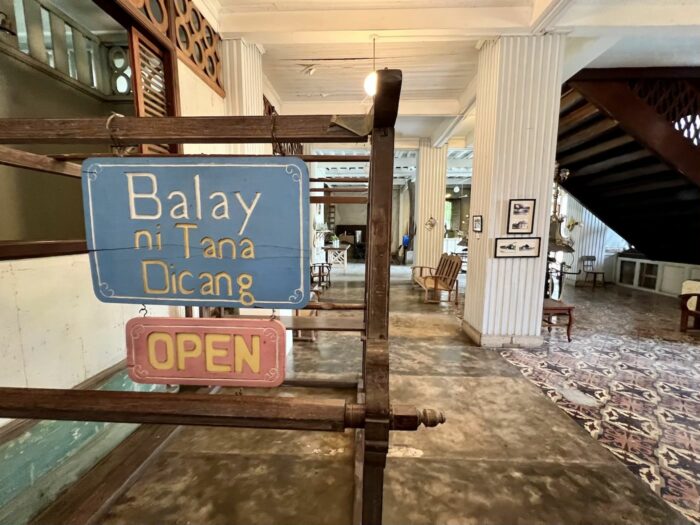
Balay ni Tana Dicang
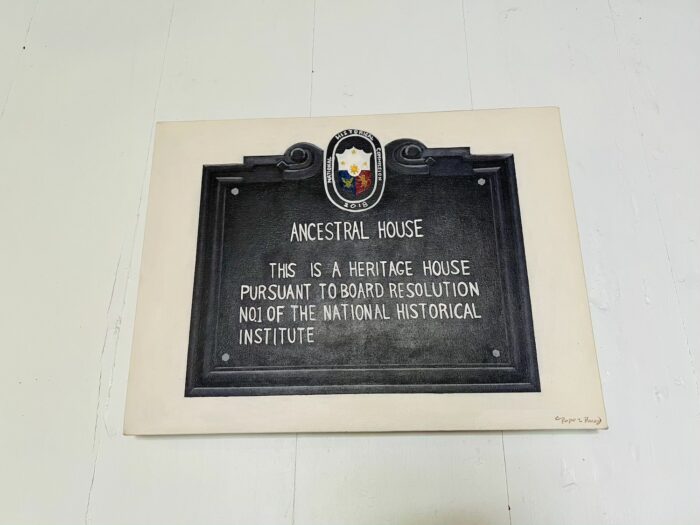
The long and arduous process of preserving and restoring ancestral houses around the country has a significant cultural and historical impact on modern-day Filipinos. Ancestral houses, among other historic cultural buildings, give a glimpse into the life of Filipinos then, adding life to the lessons of history and perpetuating the legacy of the past.
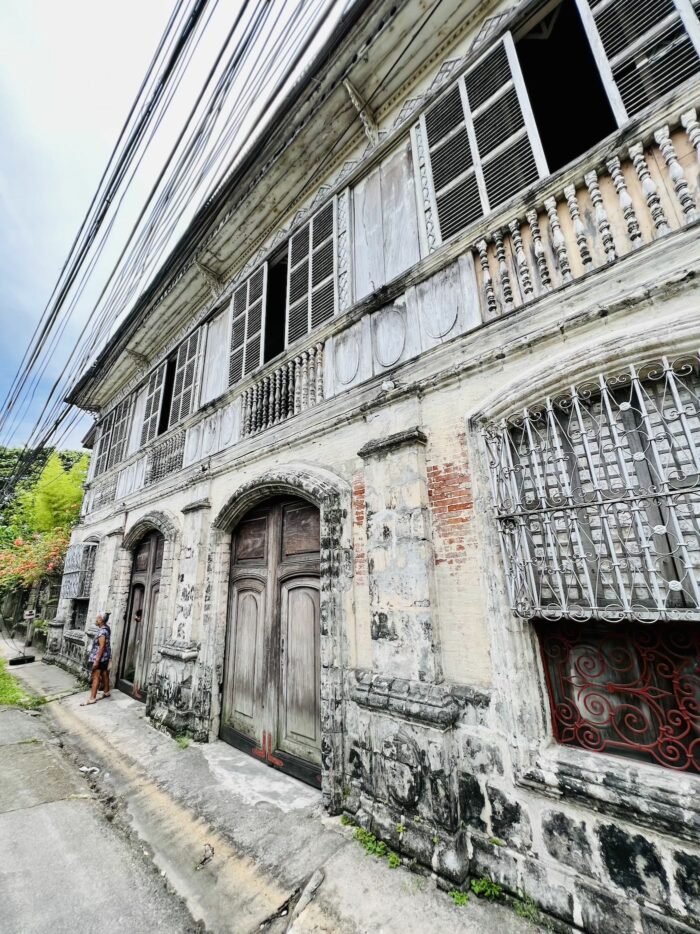
Some of these preserved ancestral houses include the Carlos P. Garcia Heritage House, formerly occupied by the eighth president of the Philippines, and the Henson-Hizon Heritage House, the former home of the hailed Kapampangan heroine Nicolasa Dayrit Panlilio. Another ancestral house renowned for its unchanged appearance since 1883 and serving as the former residence of one of the most powerful sugar baronesses in Negros Occidental is the Balay ni Tana Dicang.
History
Balay ni Tana Dicang, which means “House of Tana Dicang,” was the residence of former Mayor Efigenio Treyes Lizares and the sugar baroness Enrica Alunan Lizares. The ancestral house was ultimately named after Enrica, otherwise known as Tana Dicang, as there is little information about her husband aside from his death after Tana Dicang gave birth to their youngest child.
The Balay’s use of Philippine hardwoods, like narra, balayong, and molave, size and opulence attest to the Lizares’ distinguished status within Negros Occidental’s sugar industry by the time it was built.
Upon her death, Enrica Alunan Lizares bequeathed the house to six daughters and gave them strict instructions in her final will to use 10 percent of income from two of her haciendas to take care of the house. Balay ni Tana Dicang was formally established as a museum 125 years after its construction, giving the public access to the historic legacy of Tana Dicang.
Who is Tana Dicang?
Tana Dicang, sometimes referred to as Kapitanaor Tana Dicang, was the matriarch of the Lizares household and a sugar baroness on the flourishing sugar industry of the island of Negros. The matriarch managed three profitable sugar centrals and held a reputation of diligence and disapproval towards laziness.
Her industrious attitude pushed her to manage six haciendas and a specialty food store and establish a couture atelier. Tana Dicang’s reputation, however, is most prominent in her fascinating photo with President Manuel Quezon and Vice President Sergio Osmeña.
About the Ancestral House (Features)
Balay ni Tana Dicang is one of the most beautifully preserved ancestral houses in the Philippines and a testament to the established family that lived there. One of the Balay’s most notable features is the art gallery, formerly the bedroom of the sons of Tana Dicang on the ground floor, that lets the public see the legacy of the unyielding matriarch.
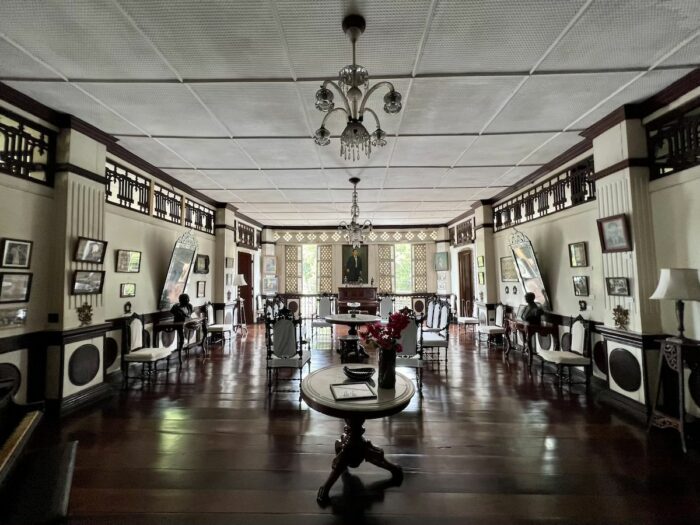
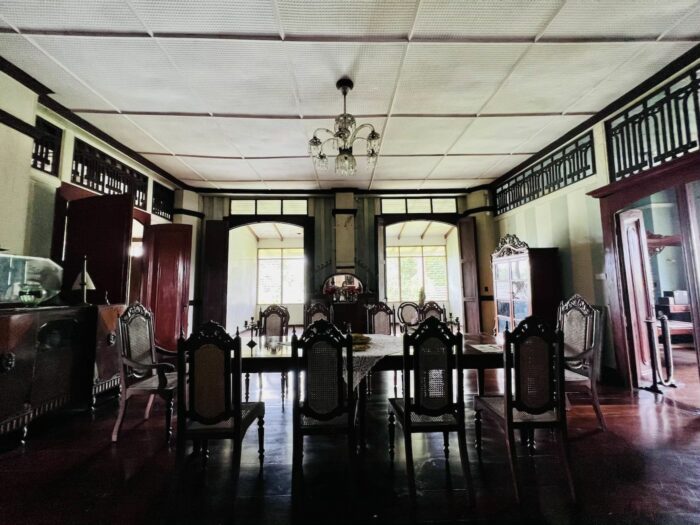
Like several other ancestral houses made of stone, the Balay has two sets of large double doors that served as entrances and parking to family carriages and, later on, family automobiles. A sedan chair on display greets visitors and is proof of the matriarch’s common trips before automobiles existed.
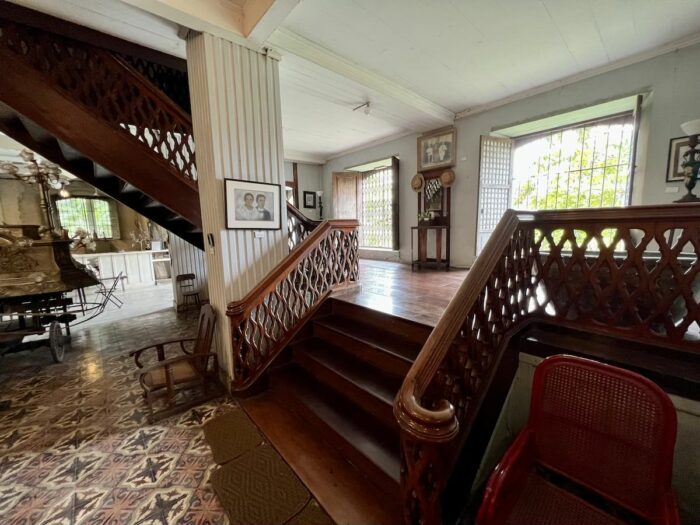
A stairway to the upper level leads visitors to the formal receiving room flanked by the sala or living room and the doors to adjacent rooms and bedrooms. Above the doors are traceried pierced wood panels, which allow the room to have an airy atmosphere.
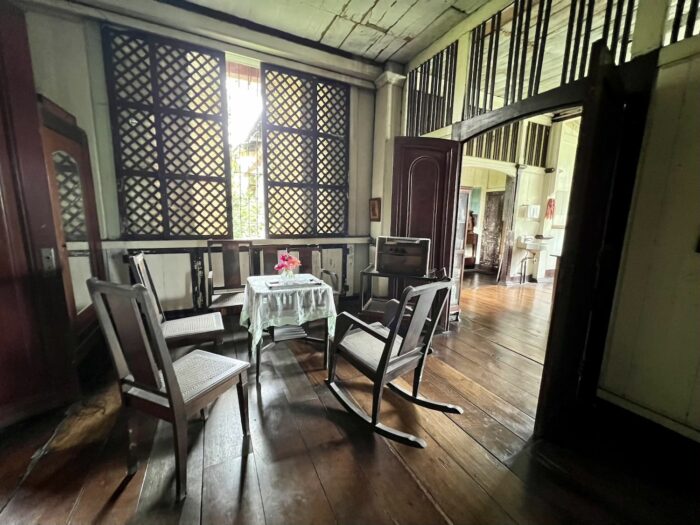
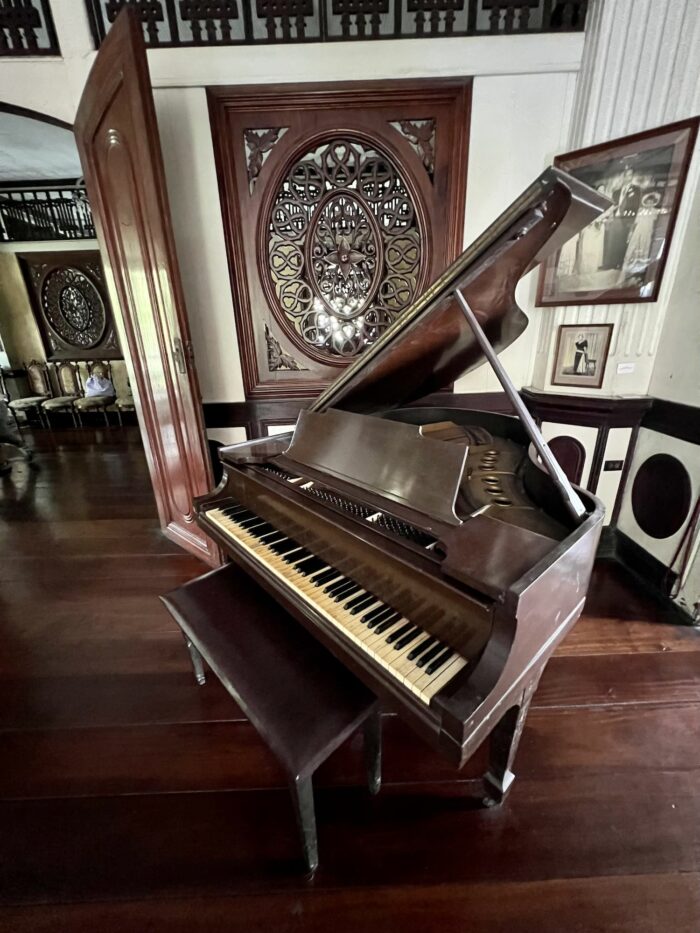
Sliding window shutters and overhanging roofs provide light while protecting the rooms from the sun. The exterior and interior are embellished with motifs, moldings, cornices, medallions, and pilasters. The original furnishings were right where they were when the matriarch was still alive.
No major renovations were done on the house except when the balcony was removed and replaced with a larger room with modern glass jalousies windows.
How to Get There
The Balay ni Tana Dicang is located at Enrique Lizares Street, Talisay City. Visitors can reach the ancestral house from Bacolod City by car or by taking a jeep to Mandalagan or Bata. From there, take another jeepney headed to Silay or Talisay, and take a tricycle from the Talisay Public Market to Balay ni Tana Dicang. The tricycle will stop at the intersection of Enrique Lizares Street.
Contact Information
- Opening Hours: 10AM to 5PM, Daily
- Email: balaynitanadicang@yahoo.com
- Telephone: 6334 4952104, 6334 7126800
Follow Out of Town Travel Blog on Facebook, Twitter, Instagram, and Pinterest if you want more travel and tech-related updates.
Read:
- Travel Guide: The Ruins In Talisay City
- Ultimate List Of The Best Hotels In Legazpi City
- Balay Negrense Museum In Silay City