

 Melo Villareal
Manaslu Circuit Trek Difficulty: Fitness, Altitude, Larkya La Pass and More
The Manaslu Circuit Trek difficulty comes from a combination of long trekking days, steep ascents and descents, high altitude, rugged terrain, and the challenge of crossing Larkya La Pass.
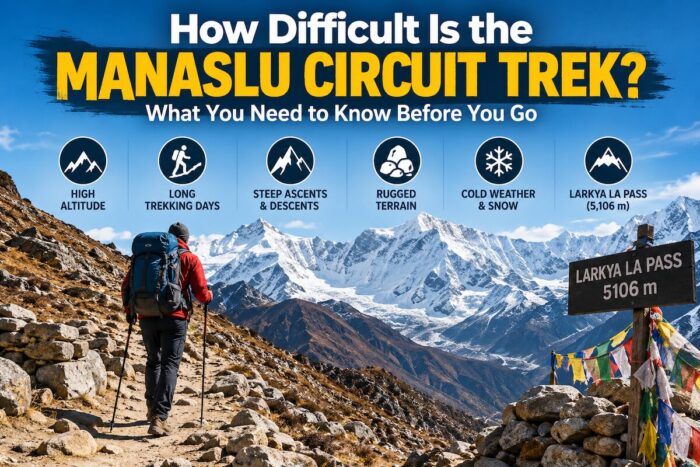
How Difficult Is the Manaslu Circuit Trek?
The trek takes you through the Manaslu region of Nepal, where trails climb from lower valleys into high Himalayan terrain. The route passes through remote communities, forests, river valleys, and high mountain landscapes.
For experienced hikers, the Manaslu Circuit can be a demanding but manageable trek with proper preparation. For beginners, the challenge is greater. The biggest concern is usually not technical climbing. It is about maintaining your energy over many consecutive trekking days while safely adapting to increasing altitude.
Manaslu Circuit Trek Difficulty Level
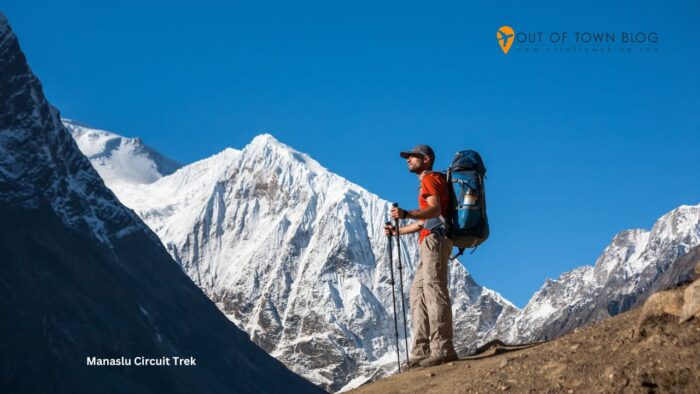
The Manaslu Circuit Trek difficulty level is generally considered moderate to strenuous.
You do not need technical mountaineering skills for the standard circuit. However, you need good physical endurance, the ability to walk for several hours on consecutive days, and enough preparation for high-altitude trekking.
Several factors determine how difficult the trek feels:
- Daily trekking distance
- Number of consecutive trekking days
- Elevation gain
- High-altitude conditions
- Steep ascents and descents
- Rocky and uneven trails
- Weather
- Cold temperatures
- Altitude acclimatization
- Your previous trekking experience
The trek becomes significantly more demanding as you approach Larkya La Pass, the highest point of the classic Manaslu Circuit.
What Makes the Manaslu Circuit Trek Difficult?
1. High Altitude
Altitude is one of the biggest challenges on the Manaslu Circuit.
The route gradually climbs from lower elevations toward the high Himalayas before reaching Larkya La Pass at approximately 5,100 meters above sea level.
At these elevations, the air contains considerably less oxygen than at sea level. Even fit hikers can experience fatigue, headaches, reduced appetite, shortness of breath, or other symptoms of altitude sickness.
The solution is not simply to walk faster or push harder. Proper acclimatization and gradual ascent matter.
2. Larkya La Pass
The Larkya La Pass difficulty is one of the biggest challenges of the entire trek.
At roughly 5,100 meters, the pass requires a long day of high-altitude hiking. The climb can involve snow, ice, loose rocks, steep sections, and cold or windy conditions depending on the season.
The challenge comes from the combination of altitude and distance. Your body has already spent several days trekking before you reach the pass.
A typical pass-crossing day starts early. This allows trekkers to make progress before weather conditions potentially deteriorate later in the day.
You should expect this to be one of the hardest days of your trek.
Is the Manaslu Circuit Trek Technically Difficult?
The standard Manaslu Circuit is a trekking route rather than a technical climbing expedition.
You generally do not need ropes, crampons, or advanced mountaineering skills for normal trail conditions. However, conditions can change with weather and season.
You should be comfortable with:
- Long uphill climbs
- Long downhill sections
- Rocky trails
- Uneven steps
- Narrow paths
- River crossings
- Walking on snow when conditions require it
- Carrying or managing a trekking backpack
- Hiking for several hours at a time
Your trekking agency or guide should assess trail conditions before difficult sections, particularly around Larkya La.
How Many Hours Do You Walk Each Day?
Daily walking times vary depending on the itinerary, altitude, terrain, weather, acclimatization schedule, and your pace.
Many trekking days involve several hours of walking. Some days can feel relatively manageable, while others become considerably harder due to elevation gain or route length.
Do not judge the trek solely by kilometers.
Walking 10 kilometers on a relatively flat trail is very different from walking the same distance while gaining significant elevation at high altitude.
The better preparation strategy is to train your body for long days on your feet, including uphill and downhill walking.
Can a Beginner Do the Manaslu Circuit Trek?
Yes, a beginner can potentially complete the Manaslu Circuit Trek, but it is not the easiest Himalayan trek for someone with no previous trekking experience.
The important distinction is between being a beginner at trekking and being unprepared.
Someone who has never completed a Himalayan trek but regularly hikes, exercises, and trains for long-distance walking may be better prepared than an experienced traveler who rarely exercises.
If you are considering the Manaslu trek as a beginner, build your fitness gradually before your trip.
You should ideally be able to:
- Walk for several hours without significant difficulty
- Handle consecutive days of physical activity
- Walk uphill for extended periods
- Descend steep terrain comfortably
- Carry a daypack
- Train consistently for several weeks or months
- Follow a gradual acclimatization itinerary
- Recognize symptoms of altitude sickness
For a first Himalayan trek, working with a reputable trekking agency and experienced guide is particularly important.
Manaslu is also a restricted trekking area, so trekkers need to arrange the required permits and logistics through an authorized trekking agency.
How Fit Do You Need to Be for Manaslu?
You do not need to be an elite athlete.
You do need good cardiovascular endurance and leg strength.
A useful training program should combine:
Walking and Hiking
Start with regular walks and gradually increase your distance and elevation gain.
Weekend hikes can help your body adjust to spending several hours on your feet.
Stair Training
Stairs are particularly useful because the Manaslu Circuit involves repeated climbing and descending.
Use stairs, a stair machine, or uphill treadmill sessions as part of your preparation.
Strength Training
Focus on the muscles you will use throughout the trek:
- Quadriceps
- Hamstrings
- Glutes
- Calves
- Core
You do not need an extreme bodybuilding program. Consistent functional strength training is more useful.
Cardiovascular Training
Running, cycling, swimming, brisk walking, and incline treadmill workouts can improve cardiovascular endurance.
If running is not part of your normal routine, you do not need to start running simply because you are preparing for Manaslu. Hiking and incline walking can provide useful trekking-specific conditioning.
How Hard Is the Larkya La Pass?
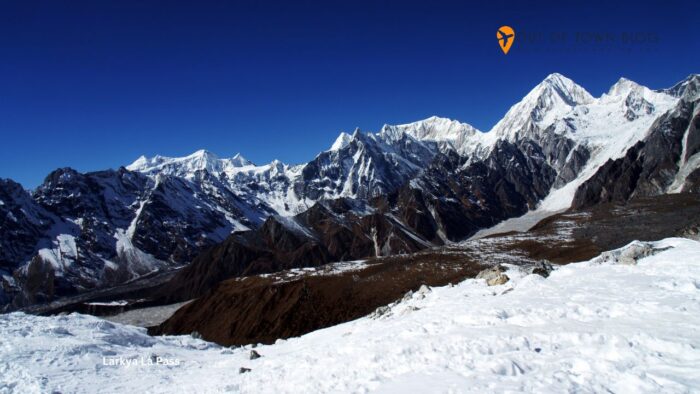
The Larkya La Pass difficulty comes primarily from altitude, terrain, weather, and the length of the crossing day.
The pass reaches roughly 5,100 meters. At that elevation, even simple physical activities can feel much harder than they would at lower elevations.
You may experience:
- Slower walking pace
- Shortness of breath
- Increased fatigue
- Headaches
- Cold temperatures
- Snow or icy sections
- Strong winds
- Reduced appetite
The descent after crossing the pass can also be demanding. Many trekkers focus heavily on reaching the summit and underestimate how much energy they still need for the descent.
Altitude Sickness on the Manaslu Circuit
Altitude sickness deserves serious attention.
Symptoms can include headache, nausea, fatigue, dizziness, and loss of appetite. More serious symptoms can include difficulty walking, confusion, severe fatigue, or shortness of breath at rest.
Do not treat altitude sickness as something you simply need to push through.
Your guide should know the appropriate response to altitude-related symptoms, and your itinerary should include enough acclimatization time.
If you have medical conditions or take prescription medication, speak with a qualified medical professional before planning a high-altitude trek.
What Is the Hardest Part of the Manaslu Circuit Trek?
For many trekkers, the most difficult section is the approach to and crossing of Larkya La Pass.
However, difficulty is subjective.
Some hikers may find the steep ascents harder. Others may struggle with the long downhill sections. Some may find the altitude more difficult than the terrain.
The accumulated fatigue also matters.
By the time you reach the pass, you have already spent days hiking through mountainous terrain. Your legs may be tired even if you have trained properly.
That is why pacing matters throughout the entire trek.
What Makes Manaslu Different From Easier Treks?
The Manaslu Circuit combines several challenges in one journey.
The route begins at relatively low elevation and progressively moves into much higher terrain. The landscape changes dramatically, and the trail passes through remote villages, forests, river valleys, and high mountain terrain.
The main trekking seasons are generally spring and autumn, when conditions are more favorable for high-altitude trekking.
The trek also takes place in a restricted region, which means travelers need to arrange the appropriate permits and trekking requirements before departure.
Best Time to Trek Manaslu
The traditional trekking seasons are spring and autumn.
March to May
Spring generally provides favorable trekking conditions, with increasingly warmer temperatures at lower elevations and mountain views along the route.
September to November
Autumn is another popular trekking period. Conditions are generally favorable for trekking, although temperatures become colder as winter approaches.
Winter
Winter can bring significantly colder temperatures and more challenging conditions at higher elevations. Snow can affect high passes and trail conditions.
Monsoon
Rain can make lower sections of the trail wetter and more challenging. Cloud cover can also affect mountain views.
Check current trail conditions before departure because weather, landslides, road conditions, and trail accessibility can change.
Manaslu Circuit Trek Preparation Checklist
Before starting the trek, make sure you prepare for both the physical and logistical demands.
Physical preparation
- Start training well before your departure.
- Include uphill and downhill walking.
- Practice hiking with a backpack.
- Build endurance gradually.
- Include strength training.
- Take recovery days.
Altitude preparation
- Follow a gradual itinerary.
- Do not rush the ascent.
- Stay hydrated.
- Pay attention to symptoms.
- Tell your guide if you feel unwell.
- Descend if serious altitude symptoms develop.
Gear preparation
Pack appropriate clothing and equipment for changing temperatures.
Essential items generally include:
- Proper hiking boots
- Warm layers
- Waterproof jacket
- Trekking pants
- Gloves
- Hat
- Sunglasses
- Sunscreen
- Headlamp
- Water bottles
- Trekking poles
- Sleeping bag suitable for the season
- Personal medication
- Basic first-aid supplies
- Power bank
- Backpack or duffel appropriate for your trekking arrangement
Is Manaslu Harder Than Annapurna Circuit?
The answer depends on your itinerary and experience.
Both are demanding Himalayan treks, but the experience can differ significantly.
Manaslu involves remote sections, high-altitude trekking, and the Larkya La Pass. Annapurna Circuit itineraries can also reach high elevations and include demanding mountain passes.
Instead of focusing only on which trek sounds harder, compare the route length, maximum elevation, acclimatization schedule, daily walking hours, accommodation, transportation, and current trail conditions.
Your previous trekking experience should also influence your choice.
Is Manaslu Suitable for First-Time Himalayan Trekkers?
It can be, provided you approach it seriously.
A first-time Himalayan trekker should not assume that general fitness automatically equals high-altitude trekking fitness.
You need to understand how altitude affects your body and prepare for consecutive days of walking.
The biggest mistake would be treating Manaslu as an ordinary multi-day hiking trip.
It is a remote, high-altitude trek with a major mountain pass. Proper preparation, a sensible itinerary, and experienced local support can significantly improve your experience.
How to Make the Manaslu Circuit Trek Easier
You cannot eliminate the physical challenge, but you can make the trek more manageable.
Choose a sensible itinerary
Avoid unnecessarily aggressive itineraries. More acclimatization time can help you adjust to increasing elevation.
Train before you arrive
Do not wait until you are in Nepal to start preparing your legs and lungs.
Pack strategically
A heavy backpack makes every uphill section harder. Carry what you actually need and use porter support if appropriate for your trip.
Walk slowly
A steady pace is more useful than trying to maintain the speed you use at lower elevations.
Stay hydrated
Drink regularly throughout the day, particularly as you climb higher.
Listen to your body
Fatigue is normal. Serious altitude symptoms are different. Tell your guide immediately if you develop concerning symptoms.
Manaslu Circuit Trek Difficulty: Is It Worth the Challenge?
The Manaslu Circuit Trek difficulty is significant, but the route offers a combination of Himalayan scenery, mountain villages, cultural experiences, and remote landscapes.
The trek requires preparation. You need to be comfortable with long walking days, steep terrain, high altitude, and unpredictable mountain conditions.
The most important preparation is not simply getting stronger. It is learning how to pace yourself, acclimatize properly, recognize altitude-related symptoms, and respect the conditions on the trail.
For beginners, Manaslu can be an ambitious first Himalayan trek. With structured training, adequate acclimatization, proper equipment, and qualified local support, it can be approached responsibly.
Frequently Asked Questions About Manaslu Circuit Trek Difficulty
1. How difficult is the Manaslu Circuit Trek?
The Manaslu Circuit Trek is generally considered a moderate-to-strenuous high-altitude trek. The route combines long walking days, steep climbs, rocky terrain, significant elevation gain, and the crossing of Larkya La Pass at roughly 5,100 meters. You do not normally need technical climbing skills for the standard route, but you need good endurance and preparation. Altitude is one of the biggest challenges, and the trek becomes considerably harder as you approach the high sections of the circuit.
2. Is the Manaslu Circuit Trek suitable for beginners?
The Manaslu Circuit can be completed by some beginners, but it requires serious preparation. Someone without previous Himalayan trekking experience should build strong cardiovascular endurance, leg strength, and hiking stamina before the trip. You also need to understand altitude acclimatization and be prepared for several consecutive days of walking. Because Manaslu is a restricted trekking area, trekkers need to arrange the required permit and trekking logistics through an authorized trekking agency.
3. How difficult is Larkya La Pass?
Larkya La Pass is generally one of the most challenging sections of the Manaslu Circuit. The difficulty comes from its elevation of approximately 5,100 meters, combined with a long trekking day, steep sections, cold conditions, and potentially snow-covered or icy terrain. The altitude can make ordinary walking feel considerably harder. Your preparation, acclimatization, weather conditions, and individual response to altitude will all affect how difficult the crossing feels.
4. How fit do I need to be for the Manaslu Circuit Trek?
You should have good cardiovascular endurance and strong legs before starting the trek. You should be comfortable walking for several hours and handling consecutive days of physical activity. Training should include long hikes, uphill and downhill walking, stair workouts, and functional strength exercises. Practicing with a backpack is also useful. You do not need to be a professional athlete, but you should arrive with enough fitness to manage long days without exhausting yourself early in the trek.
5. Is altitude sickness a concern on the Manaslu Circuit Trek?
Yes. Altitude sickness is an important consideration because the route reaches elevations above 5,000 meters. Symptoms can include headache, nausea, dizziness, fatigue, and loss of appetite. More serious symptoms require immediate descent. A gradual itinerary, proper acclimatization, hydration, and communication with your guide are important parts of altitude safety.
6. Do I need previous trekking experience for Manaslu?
Previous trekking experience is helpful but does not automatically determine whether you can complete the Manaslu Circuit. A physically prepared first-time Himalayan trekker may manage the route with appropriate support and acclimatization. However, previous experience helps you understand pacing, mountain weather, equipment, fatigue, and trail conditions. If Manaslu will be your first major trek, invest more time in physical preparation and work with an experienced guide and authorized trekking agency.
7. What is the hardest part of the Manaslu Circuit Trek?
For many trekkers, the Larkya La Pass crossing represents the biggest physical challenge. The combination of high altitude, cold weather, steep terrain, and a long trekking day makes this section demanding. However, difficulty varies between individuals. Some trekkers may struggle more with the repeated ascents and descents earlier in the route, while others may find the accumulated fatigue from several days of trekking more challenging than the pass itself.
8. What is the best season for the Manaslu Circuit Trek?
The traditional trekking seasons are spring and autumn. March to May generally offers favorable conditions, while September to November is another popular period for trekking in the region. Winter brings colder temperatures and potentially more challenging conditions at higher elevations. The monsoon season can bring rain, cloud cover, and wetter trails. Always check the current weather and trail conditions before departure, as mountain conditions can change quickly.
9. Can I do the Manaslu Circuit Trek without a guide?
Foreign trekkers should not plan the Manaslu Circuit as a completely independent trek. The Manaslu region is classified as a restricted area, and the required trekking permits must be arranged through an authorized trekking agency. Working with an experienced guide can also help with navigation, accommodation, changing trail conditions, altitude concerns, and emergency situations. Check the current permit and guide requirements before your trip because regulations can change.
10. How should I train for the Manaslu Circuit Trek?
Start training several weeks or months before your departure, depending on your current fitness level. Combine long walks or hikes with uphill and downhill training, stair workouts, cardiovascular exercise, and strength training for your legs and core. Gradually increase the duration of your hikes rather than suddenly taking very long walks. Practice carrying a backpack and include recovery days. Your goal should be to build sustainable endurance so you can walk for several hours on consecutive days without excessive fatigue.
Want more updates about new package tours and tourist spots in Palawan? Follow #TeamOutofTown on Facebook, Twitter, Instagram, and Pinterest for more travel ideas.
Read:
- Your Whirlwind Travel Tale of 10 Days in Nepal should be like this!
- How Much Does Trekking in Nepal Cost? A Simple Guide