

 Team Out of Town
How to Apply for a PWD ID in the Philippines: Complete Step-by-Step Guide
A PWD ID is an official identification card for persons with disabilities in the Philippines, issued under Republic Act No. 7277 and its amendments. It enables individuals with permanent disabilities to access discounts, benefits, and services nationwide.
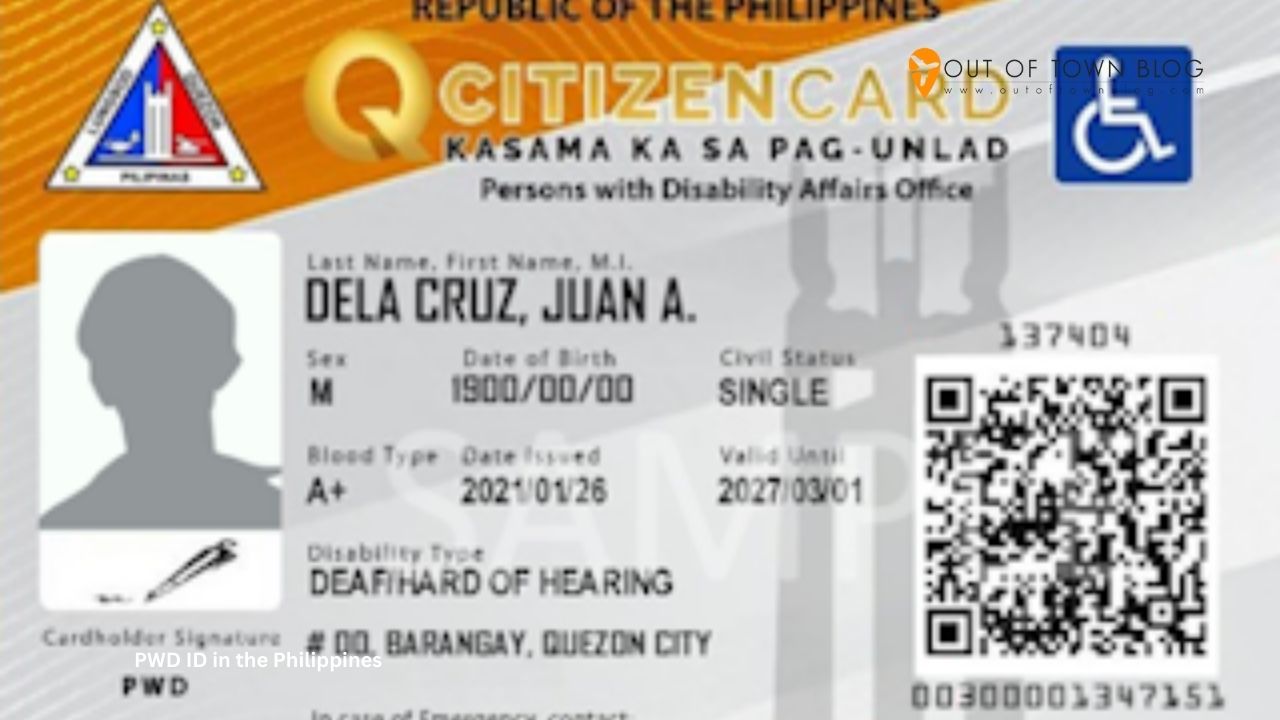
Example of an LGU-issued PWD ID in the Philippines
To apply for a PWD ID, submit medical documents and application forms to your local Persons with Disability Affairs Office or Social Welfare and Development Office. Eligibility depends on the type of disability, including physical, mental, or other health conditions.
Knowing the application steps and requirements simplifies the process. This guide explains eligibility, required documents, application locations, and available benefits for cardholders.
Eligibility Criteria for PWD ID in the Philippines
The Philippine government issues PWD identification to individuals with disabilities as defined under Republic Act No. 7277, the Magna Carta for Disabled Persons. Qualification requires certification from a medical specialist.
Who Qualifies as a Person with Disability
A person qualifies for a PWD ID if they have a physical, mental, psychosocial, or sensory impairment that limits daily activities. A licensed medical specialist must assess and certify the condition.
The law does not require disabilities to be visible or permanent. Temporary disabilities that significantly affect daily functioning may also qualify. Filipino citizens and foreign residents in the Philippines may apply through their local city or municipality.
Types of Disabilities Recognized
The government recognizes several categories of disabilities under Republic Act No. 7277 and its amendments. Physical impairment includes orthopedic disabilities affecting mobility. Sensory impairment encompasses visual and hearing disabilities that affect sight or hearing.
Mental disability includes intellectual and psychosocial disabilities affecting cognitive function and mental health. Learning disabilities affect information processing, while language impairments affect speech and communication.
Republic Act No. 10754, the National Integrated Cancer Control Act, expanded coverage to include cancer patients and survivors. They may obtain PWD IDs to access benefits during and after treatment.
Conditions Covered by Law
Medical specialists must provide a clinical abstract or medical certificate describing the condition and its impact on daily life. Documentation should clearly state the diagnosis and explain how the disability limits activities.
Chronic illnesses, developmental disorders, congenital conditions, and acquired disabilities qualify under the law. Mental health conditions such as depression, anxiety, and bipolar disorder are considered psychosocial disabilities. Autism spectrum disorder and attention deficit hyperactivity disorder are recognized as developmental disabilities.
The disability does not need to be severe or complete to qualify. Partial loss of function or ability meets the criteria if properly documented by a medical professional.
Requirements for PWD ID Application
Applicants must prepare specific documents, obtain medical certification, and meet photo identification standards. The application process is free and requires minimal paperwork.
Required Documents
Applicants must present one valid government-issued ID to complete their PWD registration form. Acceptable identification includes driver’s licenses, passports, postal IDs, or any government-issued document with a photo and signature.
Those applicants without a valid government-issued ID may submit a barangay clearance or certification as an alternative. This ensures all persons with disabilities can access the PWD ID card regardless of their existing identification documents.
Applicants must also bring the completed PWD registration form, available at the Persons with Disability Affairs Office (PDAO) or the municipal Social Welfare and Development Office in their area.
Medical Certification Guidelines
A medical certificate from a licensed physician is required to verify the applicant’s disability. The certificate must clearly state the type and nature of the disability, whether physical, visual, hearing, intellectual, or psychosocial.
The medical assessment should be recent and include the physician’s license number, signature, and clinic stamp. Some local government units may provide templates or specific forms for the certificate.
Applicants with permanent disabilities submit medical documentation only once during the initial application. Those with temporary conditions may need updated medical certificates for PWD card renewals.
Photograph and Identification Standards
Applicants must provide recent passport-sized photos, typically two copies with a white background. The photos should clearly show the applicant’s face without accessories that obscure facial features.
The PWD ID card includes the holder’s photo, name, disability type, and a unique identification number. It serves as proof of disability status and as a valid government ID recognized nationwide.
Where and How to Apply for a PWD ID
Applicants can obtain their PWD ID by visiting designated local government offices in person. Some areas now offer online registration through official portals managed by the Department of Social Welfare and Development and local government offices.
Application Through Local Government Units
Persons with disabilities should visit their local City or Municipal Social Welfare and Development Office to start the PWD ID application process. These offices distribute application forms and process submitted documents.
The Persons with Disabilities Affairs Office accepts applications in many localities. Applicants should inquire if this office operates separately from the social welfare office in their area.
Applicants may also visit the Office of the Mayor or the Office of the Barangay Chairperson to inquire about the PWD ID application. These offices can direct applicants to the correct department.
Steps for Submission and Processing
Applicants must complete the PWD ID application form provided by their local government unit and submit it, along with all required documents, to the processing office.
A licensed physician or local health officer must examine the applicant and sign the medical certificate that confirms the disability. The Department of Health and the National Council on Disability Affairs provide guidelines to these medical professionals for proper assessment and documentation.
The processing office reviews all submitted documents for completeness and accuracy. Staff checks that the medical certification meets NCDA standards and that all other requirements are in order.
After approval, the office issues the PWD identification card. Processing times vary by location, but most LGUs complete the process within a few weeks.
Application via Online Platforms
Some local government units offer online registration for PWD ID applications through their official websites. Applicants can download forms and submit initial requirements digitally where available.
The Philippine Registry for Persons with Disabilities maintains records of all registered PWDs nationwide. This database helps coordinate between the Department of Social Welfare and Development, the National Council on Disability Affairs, and local government offices.
Applicants should check with their municipal social welfare office or PDAO to confirm if the online application is available. In-person application remains the standard method in most areas.
PWD ID Issuance, Validity, and Renewal
After approval, applicants should know when and how to claim their card, its validity period, and procedures for expiration or damage.
Claiming Your PWD ID Card
The PDAO or municipal Social Welfare and Development Office notifies applicants when their PWD ID card is ready for pickup. Processing time varies by location, typically taking a few days to several weeks.
Applicants must claim their card in person at the office where they applied. Bring a valid ID and, if provided, the application receipt. If unable to claim personally, a family member may pick it up with proper authorization and identification.
The PWD ID card is a valid government identification, according to the National Council on Disability Affairs. It grants access to benefits and discounts under Republic Act No. 9442, RA 10754, RA 11215, and RA 10747.
Validity and Expiry Policies
The PWD ID card displays an expiration date. Validity depends on the type of disability and local government policies.
Most PWD ID cards are valid for several years before renewal. Permanent disabilities may receive longer validity periods, while temporary disabilities may have shorter terms.
Cardholders should check their expiration date regularly. Using an expired PWD ID card to claim benefits and discounts is not permitted.
Renewing or Replacing a Lost or Damaged Card
PWD ID renewal follows the same process as the initial application. Applicants must visit their local PDAO or Social Welfare and Development Office.
Required documents for renewal:
- Original and photocopy of expired PWD ID
- Updated medical certificate or assessment (if required)
- Accomplished application form
- Valid government-issued ID
The initial PWD ID is free of charge. Renewal due to expiration, damage, or loss incurs a minimal fee that varies by city or municipality.
For lost or damaged cards, applicants must file an affidavit of loss or present the card for repair. Complete a new application form and provide updated documents. Processing time for replacement cards is similar to initial applications.
Benefits and Privileges of PWD ID Holders
PWD ID holders in the Philippines receive mandatory discounts on essential goods and services, priority access in establishments, and additional support through government programs. These benefits are protected by law under Republic Act No. 7277 and its amendments, including RA 10754.
Mandatory Discounts and VAT Exemption
PWD ID holders receive a 20% discount on specific goods and services, including medical and dental services, diagnostic and laboratory fees, professional fees of health workers, and medicines from drugstores, whether branded or generic.
Transportation services offer a 20% discount on domestic air and sea travel in economy class, public land transportation, hotels, restaurants, and recreation centers.
VAT exemption applies to purchases made by PWDs. When the 20% discount is applied, establishments deduct the amount from gross sales before adding VAT. PWDs do not pay the 12% value-added tax on discounted items. Basic necessities and prime commodities such as rice, bread, cooking oil, and vegetables qualify for both the discount and VAT exemption.
PWDs must present their valid ID card to claim benefits. The discount applies only to personal use and consumption, not for resale or business purposes.
Access to Express Lanes and Priority Services
PWDs have the right to use express lanes at government offices, banks, commercial establishments, and public transportation terminals. RA 10754, “An Act Expanding the Benefits and Privileges of Persons with Disability,” strengthened this requirement.
Restaurants, airports, seaports, and shopping centers must provide priority lanes for PWDs. The same applies to hospitals and clinics where PWDs receive priority scheduling for appointments and consultations.
Public utility vehicles reserve priority seating for PWDs, ensuring safe and comfortable travel for individuals with mobility challenges or other disabilities.
Other Government and Local Incentives
The government provides educational assistance to qualified PWDs through scholarships and financial aid. Students with disabilities can access free tuition and other school fees at state universities and colleges.
Local government units offer additional benefits based on their ordinances. Some provide free or discounted access to recreational facilities, sports programs, and cultural events. Others offer monthly allowances or cash assistance to PWDs.
PWDs receive job placement assistance and skills training programs. The Department of Labor and Employment reserves 1% of government positions for qualified individuals with disabilities.
Relevant Government Agencies and Laws
The PWD ID issuance process involves coordination between national agencies and local government units, guided by Republic Act No. 7277 (Magna Carta for Disabled Persons) and its amendments under Republic Act No. 9442 and Republic Act No. 10754.
Role of the National Council on Disability Affairs
The National Council on Disability Affairs (NCDA) is the primary agency responsible for establishing guidelines and policies for PWD ID issuance. NCDA develops the framework and standardized procedures that local government units follow to ensure consistency nationwide.
The council protects the rights of persons with disabilities and ensures they receive appropriate benefits. It monitors the implementation of disability-related laws nationwide and provides educational materials and guidance for applicants.
The Department of Health (DOH) oversees the medical assessment component of PWD ID applications. Licensed physicians and local health officers conduct medical evaluations under DOH guidelines and certify the nature and extent of an applicant’s disability.
DOH establishes medical criteria for PWD eligibility and ensures only qualified healthcare providers issue medical certificates. This verification process maintains the integrity of the PWD identification system.l and Municipal Offices
Local government unitLocal government units (LGUs) process and issue PWD IDs in their jurisdictions. Applicants must submit documents to the Municipal or City Social Welfare and Development Office. These offices review applications, verify documents, and approve or deny requests.
The Department of Social Welfare and Development (DSWD) oversees local social welfare offices. LGUs maintain databases of registered PWD ID holders, distribute physical ID cards, and ensure beneficiaries access their privileges and discounts.
Applying for a PWD ID requires specific documentation, knowledge of where to obtain forms, and awareness of processing times and costs. Applicants often have questions about medical certificates, renewal procedures, and replacement options.
What documents are required when submitting an application for a Person With Disability (PWD) ID in the Philippines?
Applicants need to prepare several documents for their PWD ID application. The basic requirApplicants must prepare several documents for their PWD ID application. Basic requirements include a valid government-issued ID, birth certificate, recent passport-sized photo, and a medical certificate or assessment from a licensed physician.
Additional documents may include a barangay certificate or certificate of residency. Some local government units may require additional documents under their policies. Applicants should check with their local PWD Affairs Office for the complete list.
The application form is available at the local government unit’s PWD Affairs. The official PWD ID application form is available at the local government unit’s PWD Affairs Office or Social Welfare and Development Office.
Most city or municipal halls have a dedicated office for PWD services and forms. Applicants can also visit their local Department of Social Welfare and Development office to request the form. The form is provided free of charge to all applicants.
What is the process for securing a medical certificate for the PWD ID application?
Applicants must visit a licensed physician to obtain a medical certificate that documents their disability. The doctor will conduct an examination and assess. Applicants must visit a licensed physician to obtain a medical certificate documenting their disability. The doctor will examine and assess the type and extent of the disability, clearly stating if the condition is permanent or long-term.
The medical certificate should include details about the disability and its impact on daily functioning. Government hospitals and health centers often provide this service at reduced cost or free. Private physicians may also issue the certificate if licensed in the Philippines.Affairs.
The Philippine government does not require any payment for the processing or issuance of the identification card. This policy ensures that all persons with disabilities can access their benefits regardless of financial status.
The only potential costs are for securing supporting documents, such as medical certificates or photocopies. Medical certificates from government hospitals are typically free or cost minimal fees.
Private medical facilities may charge their standard consultation and certification fees.
However, subsequent renewals will require a minimal fee in cases of:
- Expiration (PWD IDs are valid for 3 years)
- Damage to the card
- Loss of the card
While your initial PWD ID application is free, you should expect to pay a small fee to renew or replace your card later.
How long does it typically take to receive a PWD ID after submitting the application?
Processing time for a PWD ID varies by local government unit handling the application. Most cities and municipalities process applications within 1 to 2 weeks of receiving complete requirements. Some areas with efficient systems can release the ID within a few days.
Applicants may experience longer wait times during peak periods or in areas with limited staff. The PWD Affairs Office usually provides an estimated release date upon application submission. Applicants can check the status of their applications at the office where they applied.
Can a PWD ID be renewed or replaced if it is lost, and what is the procedure for doing so?
PWD IDs can be renewed and replaced when necessary. For lost or damaged cards, applicants must report to their local PWD Affairs Office and file a replacement request. They need to bring valid identification and, if the card was lost, possibly an affidavit of loss.
The replacement process follows similar steps to the initial application but may require fewer documents. Some local government units charge a minimal fee for replacement cards to cover printing costs. Regular renewal of PWD IDs depends on regional policies, though the cards typically remain valid as long as the disability status has not changed.
Follow and subscribe to OutofTownBlog.com on Facebook , Twitter, Instagram, Pinterest, and YouTube for more Travel-related updates.
Read:
- South Korea Visa Requirements Get a Makeover — What Filipino Travelers Need to Know
- Acquiring 19 Valid IDs in the Philippines: A Step-by-Step Guide
- DFA Courtesy Lane: Who are allowed to use the DFA passport express lane?
- Top 10 Digital Nomad Destinations Around the World
- Best PWD-Friendly Hotels and Resorts in the Philippines


