
 Melo Villareal
List of Famous Painters in the Philippines and Their Popular Art Works
The Philippines has produced some of the most celebrated artists in Southeast Asia—painters whose works reflect the nation’s history, identity, struggles, and vibrant culture. From classical realism to modern abstraction, these masters shaped Philippine art and inspired generations of artists. Below are five famous Filipino painters, their fascinating stories, and some of their most iconic works.
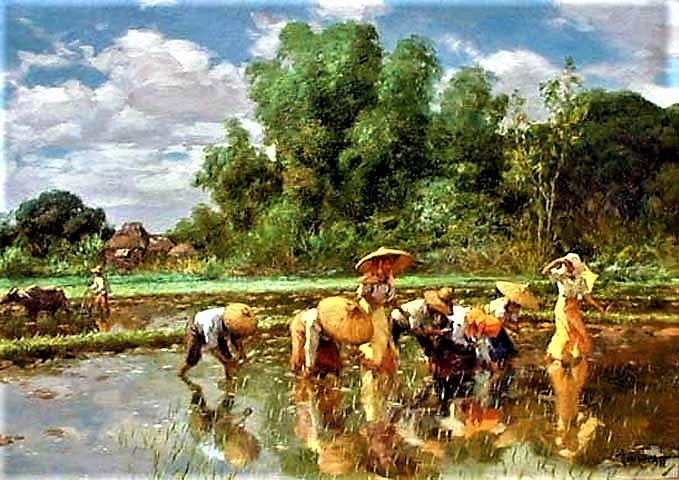
Planting Rice by Fernando Amorsolo
Fernando Amorsolo
Fernando Amorsolo was one of the most celebrated Filipino painters, widely known as the “Grand Old Man of Philippine Art.” He became famous for his radiant depictions of rural life, capturing sunlit rice fields, traditional festivals, and graceful Filipina figures. His mastery of light—especially his signature backlighting technique—gave his paintings a warm, glowing quality that made them instantly recognizable.
Amorsolo’s works presented an idealized vision of the countryside, promoting national pride and cultural identity during periods of colonial transition and modernization. He was the first Filipino to be named National Artist for Painting in 1972. His ability to combine technical excellence with deeply Filipino themes made him one of the most popular and influential artists in Philippine history.
Popular Artworks:
- Planting Rice
- The Making of the Philippine Flag
- Dalagang Bukid
Interesting Facts:
- He became the first National Artist of the Philippines in 1972.
- His paintings often portrayed an idealized countryside during a time of rapid change.
- He created more than 10,000 artworks throughout his career.

Juan Luna
Juan Luna was one of the most celebrated Filipino painters of the 19th century, known for his dramatic realism and powerful historical themes. Born in 1857, he gained international recognition when his masterpiece Spoliarium won a gold medal at the 1884 Exposición Nacional de Bellas Artes in Madrid. The massive painting, depicting fallen gladiators, symbolized the suffering of Filipinos under Spanish rule and became a source of national pride.
Luna’s success abroad proved that Filipinos could excel on the world stage. Beyond art, he supported the Propaganda Movement, advocating reforms for the Philippines. His technical mastery, emotional intensity, and patriotic symbolism made him one of the most influential and popular figures in Philippine art history.
Popular Artworks:
- Spoliarium
- The Parisian Life
- Blood Compact
Interesting Facts:
- Spoliarium won a gold medal at the 1884 Madrid Exposition of Fine Arts.
- His success became a symbol of Filipino pride during Spanish rule.
- He was part of the Propaganda Movement alongside Filipino reformists.
Vicente Manansala
Vicente Manansala was a pioneering modernist artist best known for developing the style known as “transparent cubism” in Philippine art. He blended the geometric structure of Cubism with soft, layered tones that allowed figures and background to merge harmoniously. Unlike purely abstract painters, Manansala grounded his work in everyday Filipino life—depicting jeepneys, market vendors, barong-clad musicians, and urban families. His painting, Madonna of the Slums, exemplifies his ability to portray poverty with dignity and compassion.
Manansala became one of the most popular Filipino painters by combining Western modernist techniques with local themes, making his art both innovative and relatable. His distinctive style, cultural relevance, and emotional depth earned him recognition as a National Artist and secured his lasting influence on Philippine visual arts.
Popular Artworks:
- Madonna of the Slums
- Jeepneys
- Market Scene
Interesting Facts:
- He was declared National Artist for Visual Arts in 1981.
- His style blended Western modernism with Filipino themes.
- His paintings often depicted both poverty and dignity in city life.
Carlos Botong Francisco
Carlos “Botong” Francisco was one of the most influential Filipino painters and a master muralist known for bringing Philippine history and culture vividly to life. Born in Angono, Rizal, he became renowned for his large-scale murals depicting significant historical events, legends, and everyday Filipino traditions. His distinctive style featured bold lines, rhythmic composition, and rich earth tones that created movement and drama.
Francisco helped revive mural painting in the Philippines at a time when it was declining, earning him national recognition. His works, such as First Mass at Limasawa and Filipino Struggles Through History, fostered pride in Filipino identity. Named National Artist in 1973, Botong remains celebrated for transforming history into powerful visual storytelling.
Popular Artworks:
- First Mass at Limasawa
- The Progress of Medicine in the Philippines
- Filipino Struggles Through History
Interesting Facts:
- He revitalized the art of mural painting in the Philippines.
- He was named National Artist in 1973.
- Many of his murals remain on view in public institutions.
Benedicto Cabrera (BenCab)
Benedicto Cabrera, widely known as BenCab, is one of the most influential contemporary artists in the Philippines. Born in 1942, he rose to prominence in the 1960s for his expressive and innovative style that blends realism with modern abstraction. He became especially famous for his Sabel series, inspired by a homeless woman he once encountered; through this figure, he explored themes of freedom, identity, and human vulnerability.

BenCab’s works often reflect Filipino heritage, indigenous culture, and social issues, particularly those connected to the Cordillera region. His ability to combine emotional depth with strong visual storytelling made him widely admired. In 2006, he was declared a National Artist for Visual Arts, solidifying his legacy in Philippine art history.
Popular Artworks:
- Sabel series
- Cordillera Dancers
Interesting Facts:
- He founded the BenCab Museum in Baguio City.
- He was declared National Artist for Visual Arts in 2006.
- His muse, “Sabel,” was inspired by a homeless woman he once saw, symbolizing freedom and creativity.
These five painters—Amorsolo, Luna, Manansala, Francisco, and BenCab—each represent a unique chapter in Philippine art history. Their masterpieces showcase exceptional talent while reflecting the Filipino spirit, resilience, and cultural pride.
Through radiant rural scenes, dramatic historical epics, modern urban imagery, and expressive contemporary works, they continue to shape the identity of Philippine visual arts and inspire future generations.
Follow the Out of Town Travel Blog on Facebook, Twitter, Instagram, and Pinterest if you want more travel and food-related updates.
Read:
- BenCab Museum: A Sneak Peek at BenCab Museum’s Erotica Gallery
- Top Museums and Art Galleries in Baguio City