

 Melo Villareal
How to Use the Bangkok BTS Skytrain: A First-Time Traveler’s Guide
Bangkok’s BTS Skytrain is one of the easiest ways to explore Thailand’s capital. The elevated rail network connects major shopping malls, business districts, tourist attractions, hotels, restaurants, and transportation hubs.
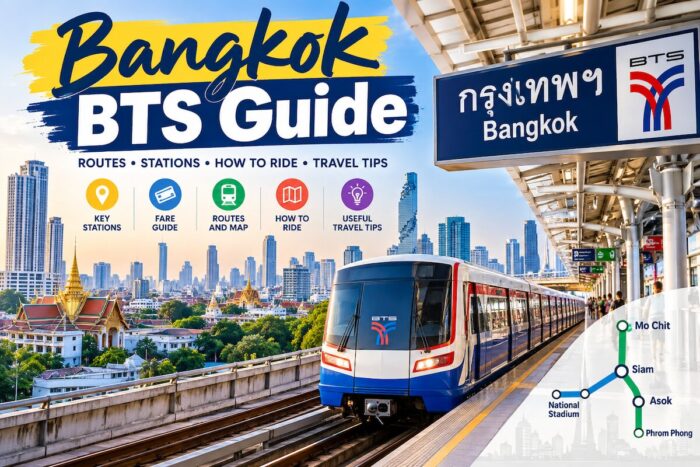
Bangkok BTS Guide
For first-time visitors, understanding the Bangkok BTS guide can make getting around the city faster and easier. The BTS avoids much of Bangkok’s notorious road traffic and connects to other public transportation systems.
Bangkok BTS Guide: What Is the BTS Skytrain?
The Bangkok Mass Transit System, commonly called the BTS Skytrain, is an elevated rapid transit system serving Bangkok and nearby areas.
The network consists of two main lines:
- Sukhumvit Line – Runs broadly from the northern part of Bangkok through central areas toward the southeast.
- Silom Line – Connects western Bangkok with the central business and shopping districts.
The two lines connect at Siam Station, one of the most important BTS stations for travelers.
The BTS is particularly useful for visitors staying in central Bangkok because many popular attractions and shopping areas sit close to BTS stations.
Bangkok BTS Guide: BTS Operating Hours
The BTS generally operates from early morning until around midnight, although the exact first and last train times vary by station, direction, and day.
If you plan to travel late at night, check the latest train information before starting your journey. After BTS services end, other transportation options, including taxis and ride-hailing services, can be useful.
For airport transfers, remember that the BTS is different from the Airport Rail Link. The Airport Rail Link connects Suvarnabhumi Airport with central Bangkok, while the BTS serves the city’s urban rail network.
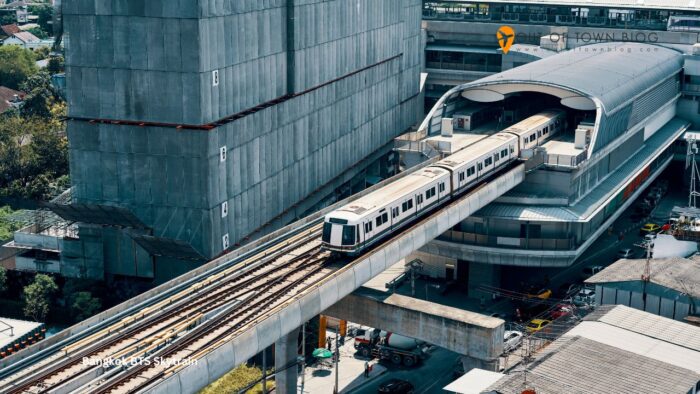
Bangkok BTS Lines and Important Stations
Knowing a few major stations makes navigating Bangkok much easier.
Siam Station
Siam is the main interchange between the Sukhumvit and Silom lines. It is also one of Bangkok’s biggest shopping areas.
From Siam, you can easily reach major malls and shopping destinations, including Siam Paragon, Siam Center, Siam Discovery, and nearby shopping districts.
Asok Station
Asok is one of the most useful stations for tourists. It connects with MRT Sukhumvit Station, allowing passengers to transfer between the BTS and MRT systems.
Terminal 21 connects directly to Asok Station, making it a convenient stop for shopping, dining, and accommodation.
Phrom Phong Station
Phrom Phong is popular with travelers staying in the Sukhumvit area.
The station provides access to EmQuartier, Emporium, restaurants, cafes, hotels, and residential areas.
Thong Lo Station
Thong Lo is known for its restaurants, cafes, bars, hotels, and nightlife. It is a good station to remember if you want to explore Bangkok’s modern dining and entertainment scene.
Sala Daeng Station
Sala Daeng connects with MRT Si Lom Station and provides access to Silom, one of Bangkok’s major business and entertainment districts.
National Stadium Station
National Stadium Station is convenient for visiting Bangkok’s famous shopping area around MBK Center and the Bangkok Art and Culture Centre.
How to Pay for the Bangkok BTS
Travelers can use several payment methods depending on the route, station, and current BTS payment options.
The traditional option is a single-journey ticket purchased from a station ticket machine or ticket office.
If you plan to use the BTS several times during your trip, check whether a stored-value or tourist-friendly option makes sense for your itinerary.
Before traveling, check the latest fare and payment rules because Bangkok’s transit payment systems continue to evolve.
How Much Does the Bangkok BTS Cost?
BTS fares depend on the distance traveled and the stations included in your journey.
Short trips cost less, while longer journeys cost more. Instead of relying on an old fare chart found online, check the current fare displayed at the station or on the official BTS information channels before traveling.
If you plan several BTS journeys in one day, calculate the cost of your individual trips and compare it with any available pass or stored-value option.
How to Use the Bangkok BTS
Using the BTS is straightforward once you understand the basics.
1. Find Your BTS Station
Look for the green BTS Skytrain signs around Bangkok. Stations are clearly marked and usually located above major roads.
2. Identify Your Line
Check whether your destination is on the Sukhumvit or Silom Line.
If you need to change lines, Siam is the primary BTS interchange.
3. Check the Direction
Look at the final station displayed on signs and platforms. This tells you which direction the train is traveling.
4. Buy or Tap Your Ticket
Follow the station’s current payment instructions. Keep your ticket or payment card accessible until you exit.
5. Follow the Station Number
BTS stations use station codes such as Siam (CEN), Asok (E4), and Phrom Phong (E5). These codes help you identify where you are and where you’re going.
6. Exit at Your Destination
Follow the signs for the appropriate exit. Large stations can have several exits, and choosing the correct one can save considerable walking time.
Bangkok BTS Guide for First-Time Visitors
The BTS is easy to use, but a few strategies can make your trip smoother.
Avoid peak hours when possible. Trains and platforms can become crowded during weekday mornings and afternoons.
Check your exit before leaving the station. Some Bangkok attractions sit directly beside one exit but several minutes away from another.
Use BTS and MRT together. The two systems cover different parts of Bangkok. Transferring between them can make your sightseeing route much more efficient.
Keep small bills or convenient payment options available. This helps when buying tickets at stations that require traditional purchases.
Use a map. Google Maps and transit apps can help you find the nearest station, the right train direction, and transfer points.
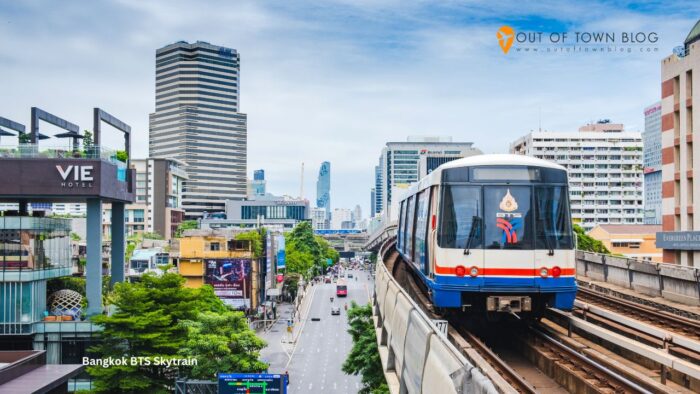
BTS vs MRT in Bangkok
The BTS and MRT are separate rail systems, but travelers can use both on the same trip in Bangkok.
The BTS is particularly useful around Siam, Sukhumvit, Silom, and Phrom Phong.
The MRT also reaches other key parts of Bangkok, including Chinatown and areas around the historic center.
For a longer sightseeing itinerary, it’s more practical to combine BTS, MRT, boats, buses, taxis, and walking than to rely on a single transportation system.
Bangkok BTS Guide for Tourists
The BTS works especially well for travelers visiting Bangkok’s shopping districts, restaurants, hotels, business areas, and modern attractions.
A simple sightseeing strategy is to choose accommodation near a BTS or MRT station. This gives you easier access to different parts of the city and reduces your dependence on taxis during busy periods.
For Filipino travelers visiting Bangkok, staying near a BTS station can also make it easier to build an itinerary around shopping malls, Thai restaurants, night markets, temples, cafes, and nightlife.
Bangkok BTS Travel Tips
Keep these tips in mind when using the Skytrain:
- Check the station and train direction before boarding.
- Stand behind the platform safety line.
- Let passengers exit before you board.
- Avoid blocking train doors.
- Keep your belongings secure in crowded stations and trains.
- Use station exits carefully because they can lead to different streets.
- Avoid traveling during peak commuter periods when possible.
- Combine BTS and MRT for longer sightseeing routes.
- Check the latest fares before your trip.
- Leave extra time when traveling to an appointment or airport connection.
Is the Bangkok BTS Worth Using?
Yes. The BTS is one of the most practical transportation options for tourists exploring central Bangkok.
It provides fast access to major commercial districts and connects travelers with other transportation systems. For visitors who want to explore Bangkok independently, learning how to use the BTS can save time and make daily sightseeing easier.
The best strategy is to plan your itinerary around BTS and MRT stations, then use taxis, ride-hailing services, boats, or walking for destinations beyond the rail network.
FAQ About the Bangkok BTS Guide
What is the BTS in Bangkok?
The BTS, or Bangkok Mass Transit System, is Bangkok’s elevated electric railway. Tourists commonly call it the Skytrain. It serves major commercial, residential, shopping, business, and entertainment areas across Bangkok. The system has two principal lines, the Sukhumvit Line and Silom Line, with Siam serving as the main interchange. The BTS is especially useful for travelers because it avoids much of Bangkok’s road traffic and connects with other public transportation options.
How do tourists use the Bangkok BTS?
Tourists can use the BTS by identifying their destination station, checking the correct train direction, purchasing or using an accepted ticket or payment method, and following the signs to the platform. Once on the train, listen to station announcements and check the displays to know when to get off. Station exit numbers also matter because different exits lead to different streets, malls, hotels, and attractions.
Is the Bangkok BTS easy for first-time visitors?
Yes. The BTS is relatively easy to navigate because stations use clear signs, line colors, station names, and station codes. The most important things to understand are which line you need, which direction to travel, where to transfer, and which station exit is closest to your destination. Using a navigation app alongside the BTS map can make your first few journeys even easier.
Can I use the BTS and MRT on the same Bangkok trip?
Yes. The BTS and MRT are separate rail systems, but tourists can combine them to reach more parts of Bangkok. Stations such as Asok and Sala Daeng connect to nearby MRT stations. You generally need to follow each system’s payment and transfer procedures. Combining BTS and MRT is especially useful when your itinerary covers both modern commercial districts and areas closer to Bangkok’s historic attractions.
Is the Bangkok BTS expensive for tourists?
The BTS can be affordable for tourists, especially when compared with taking taxis for every journey. Your total cost depends on how far you travel and how many trips you make each day. Short journeys cost less, while longer trips cost more. Travelers should check current fares before their trip because fares and payment options can change. If you plan many journeys, compare individual fares with available travel products before choosing the option that offers better value.
What are the best BTS stations for tourists in Bangkok?
Several BTS stations are particularly useful for tourists. Siam is ideal for shopping and transfers between the two main BTS lines. Asok connects with the MRT and provides direct access to Terminal 21. Phrom Phong is convenient for major shopping malls and Sukhumvit hotels. Thong Lo is great for restaurants and nightlife, while National Stadium gives you access to MBK Center and nearby attractions. Your ideal station depends on where you plan to stay and what you want to see.
Can I take the BTS from Bangkok airport?
The BTS does not serve Suvarnabhumi Airport directly. Travelers arriving at Suvarnabhumi can take the Airport Rail Link to reach Bangkok, then connect to the BTS or MRT depending on their destination. Don Mueang International Airport also has different transportation connections. Check your airport route before traveling because the most convenient transfer depends on your hotel location, luggage, arrival time, and current transit services.
What is the best way to use the BTS during a Bangkok vacation?
Plan your sightseeing by grouping destinations around nearby BTS and MRT stations. For example, spend part of the day exploring Siam’s shopping district, then take the BTS to Sukhumvit for restaurants and nightlife. For destinations outside the rail network, combine the BTS with walking, boats, taxis, or ride-hailing services. This approach reduces unnecessary backtracking and can help you spend more time exploring Bangkok instead of sitting in traffic.
Bangkok Travel Tour Packages You Should Try
Follow and subscribe to OutofTownBlog.com on Facebook , Twitter, Instagram, Pinterest, and YouTube for more Travel-related updates.
Read:
- Top 10 Best Hotels and Resorts in Chiang Mai, Thailand
- These captivating vintage photos of Manila showcase its timeless charm, despite its dark past.
- Best Night Markets in Bangkok: Ultimate Guide to Street Food, Shopping & Nightlife