

 Melo Villareal
Bucket List: 15 Best Tourist Attractions in Okinawa, Japan
Okinawa Prefecture comprises 160 islands, both inhabited and uninhabited, spread gracefully across the warm, blue waters at Japan’s southernmost edge. At its center lies Naha, the bustling capital, nestled on the largest of these islands, Okinawa Main Island. The region’s roots stretch deep into prehistory, evolving into the culturally rich Ryukyu Kingdom, famed for its maritime trade and unique traditions. In 1879, the abolition of the Ryukyu Kingdom and its integration into Japan marked the beginning of the modern Okinawa Prefecture.
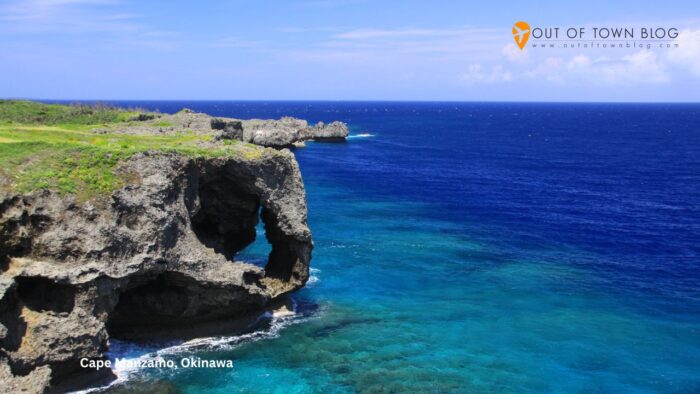
Cape Manzamo, Okinawa
Today, Okinawa’s exceptional legacy is recognized worldwide. UNESCO has granted Cultural World Heritage status to the Gusuku Sites and Related Properties of the Kingdom of Ryukyu, honoring their storied past and striking architecture. The northern wilds of Okinawa Island, along with the lush Iriomote, Amami-Oshima, and Tokunoshima islands, have also been celebrated as Natural World Heritage sites due to their remarkable ecological diversity. These treasured destinations not only showcase Okinawa’s spellbinding natural scenery—from coral reefs to subtropical forests—but also immerse visitors in its fascinating cultural heritage.
Snorkeling

Dive shops and tour operators around Okinawa offer one of the most immersive tours of Okinawa’s natural beauty: snorkeling tours. The prefecture’s rich biodiversity can be credited to the hundreds of coral species in its waters. The astonishing underwater paradise can easily be seen because of the clear and shallow waters surrounding Okinawa.
Some of the prominent dive spots in Okinawa are Blue Cave, named after its blue hues when light filters through an opening, which is one of the most popular spots, which makes it one of the most crowded. Sunabe Seawall is one of the most accessible dive spots. Yabiji Reef is one of Japan’s most extensive reef formations, with over 100 species under shallow water. While Osaki Hanagoi and Cape Maeda are ideal for beginning divers, advanced divers can explore Manza Dream Hole, a dark tunnel open on both ends where divers must drop down 75 feet, and Kaitei Iseki, where the mysterious Yonaguni Monument is located.
Cape Manzamo

Cape Manzamo, located on the western coast of Okinawa near Onna Village, is one of the island’s most iconic natural landmarks, celebrated for its breathtaking ocean views and dramatic limestone cliffs shaped like an elephant’s trunk. The cape’s name, meaning “a field where 10,000 people can sit,” reflects its wide grassy plateau overlooking the East China Sea, offering stunning sunset vistas and a peaceful atmosphere.
Formed by centuries of ocean erosion, this elevated coral reef not only showcases Okinawa’s natural beauty but also holds cultural significance — it was once admired by Ryukyu royalty. Its easy accessibility, scenic walking paths, and proximity to popular resort areas make Cape Manzamo a must-visit destination for travelers seeking both relaxation and awe-inspiring coastal scenery.
Location: Onna, Kunigami District, Okinawa Prefecture
Entrance Rates: 100 yen per person
Gesashi Bay Mangrove Forest

Gesashi Bay Mangrove Forest, located in Higashi Village within Okinawa’s Yanbaru region, is a stunning natural attraction and the largest mangrove forest on Okinawa’s main island, covering about 10 hectares. This lush ecosystem, where three of Japan’s four mangrove species thrive, offers a rare glimpse into Okinawa’s subtropical biodiversity.
Visitors can explore its tranquil waterways by kayak or canoe, gliding through tunnels of mangrove roots while spotting unique birds, crabs, and fish that inhabit the area. The serene atmosphere, combined with its ecological richness and scenic beauty—especially during sunrise or sunset—makes Gesashi Bay Mangrove Forest a perfect destination for nature lovers and eco-tourists seeking a peaceful, immersive experience in Okinawa’s wild side.
Shurijo Castle

Shurijo Castle, or Shuri Castle, is the former capital of the Ryukyu Kingdom. The castle was built in the 1300s and was home to several Ryukyu kings until the late 1800s. The site played an integral role in Ryukyu Kingdom’s diplomacy and politics for centuries until Okinawa became a prefecture in 1879. Shurijo Castle was listed in the UNESCO World Heritage in 2000 under “Gusuku Sites and Related Properties of the Kingdom of Ryukyu”. Throughout its long history, the castle has been destroyed by wars and fires. Its most recent fire-related destruction happened in 2019, destroying the Seiden main hall and other castle buildings.
Visitors should wear comfortable footwear as the castle sits atop a small hill that overlooks Naha City. Once within the interiors of Seiden, Hokuden, and Nanden Halls, visitors can interact with the exhibits that tell the history of Ryukyu Kingdom and see historical artifacts and replicas that show the opulence of Ryukyu kings.
Location: 1-2 Shurikinjo-cho, Naha City, Okinawa Prefecture
Visiting Hours: 8:30AM to 6PM, Daily
Entrance Rates: 400 yen per person
Website: oki-park.jp/shurijo
Shikinaen Royal Garden

Shikinaen Royal Garden in Naha is a perfect tourist spot in Okinawa because it beautifully reflects the elegance and cultural harmony of the Ryukyu Kingdom. Built in 1799 as a royal villa, the garden served both as a retreat for the Ryukyu kings and as a venue for entertaining Chinese envoys, symbolizing the kingdom’s diplomatic ties and refined artistry.
Its design blends Okinawan, Japanese, and Chinese influences, featuring a circular walking path around a serene pond, arched stone bridges, lush greenery, and a graceful wooden palace. Despite being destroyed during World War II, Shikinaen was meticulously restored and now stands as a UNESCO World Heritage Site, offering visitors a peaceful escape and a glimpse into Okinawa’s royal heritage and traditional landscape architecture.
Location: 421-7 Maaji, Naha City, Okinawa Prefecture
Visiting Hours: 9AM to 6PM, Daily (Last entry at 5:30PM)
Entrance Rates: 400 yen per person
Nakijin Castle Ruins

Nakijin Castle is another former Ryukyu castle constructed in the late 1200s. It was one of the largest castles second to Shurijo Castle. Nakijin Castle served as the seat to several northern Hokuzan kings before the island unified into Ryukyu Kingdom in the 15th century. Nakijin Castle Ruins was listed in the UNESCO World Heritage in 2000 under “Gusuku Sites and Related Properties of the Kingdom of Ryukyu”. Located within the ruins is the Nakijin Village History and Culture Center, a small red-tiled building that displays unearthed ancient artifacts and archival documents that tell the history and culture of Nakijin Village.
Location: 5101 Imadomari, Nakijin, Kunigami District, Okinawa Prefecture
Visiting Hours: 8AM to 6PM, Daily
Entrance Rates: 600 yen per person
Katsuren Castle Ruins

The ruins of Katsuren Castle were listed in the UNESCO World Heritage in 2000 under “Gusuku Sites and Related Properties of the Kingdom of Ryukyu.” The former Ryukyu castle sits atop a hill with sweeping views of the nearby coast. The castle is also known to be the seat of the legendary Lord Amawari in the 15th century. According to the legend, Lord Amawari was a feeble and sickly young child abandoned in the mountains but grew up to be a commanding leader who defeated a tyrannical lord and took over Katsuren Castle.
Location: 3807-2 Katsurenhaebaru, Uruma City, Okinawa Prefecture
Visiting Hours: 24/7
Entrance Rates: FREE
Nakagusuku Castle Ruins

Another historic site listed in the UNESCO World Heritage under “Gusuku Sites and Related Properties of the Kingdom of Ryukyu” are the well-preserved ruins of Nakagusuku Castle. The ruins are among the best-preserved Okinawa, where citadels can still be identified. The north and third enclosures of Nakagusuku Castle were said to be built by Lord Gosamaru using the most advanced masonry technique to defend against the attacks of Lord Amawari of Katsuren Castle.
A traditional Okinawan-style residence from the 18th century is located close to the ruins. Nakamurake demonstrates the conventional features of an affluent Okinawan residence, from the red-tiled roofs of the structure to the lion-like statues that repel evil spirits.
Nakagusuku Castle Ruins
Location: 503 Ogusuku, Kitanakagusuku, Nakagami District, Okinawa Prefecture
Visiting Hours: 8:30AM to 6PM, Daily (Last entry until 5PM)
Entrance Rates: FREE
Nakamurake
Visiting Hours: 9AM to 5PM, Wednesdays, and Thursdays (Last entry until 4:40PM)
Entrance Rates: 500 yen per person
Zakimi Castle Ruins

Zakimi Castle was constructed around 1420 by the Chuzan Kingdom as a defense against the rebels when the Chuzan Kingdom united Okinawa into the Ryukyu Kingdom. The castle was built with unique features, such as its false passageways to confuse attackers and with innovative masonry techniques that stand the test of time. Today, its ruins remain where visitors can get a bird’s-eye view of the surroundings. The Zakimi Castle Ruins are listed in the UNESCO World Heritage under “Gusuku Sites and Related Properties of the Kingdom of Ryukyu”.
Within the grounds of the castle ruins is the Yuntanza Museum. The museum exhibits relics unearthed that give perspective on the daily lives of Yomitan Village.
Location: Yomitan, Nakagami District, Okinawa Prefecture
Visiting Hours: 24/7
Entrance Rates: FREE
Kaiyohaku Park
Kaiyohaku Park, or Ocean Expo Park, was constructed in the 1970s to remember the Okinawa International Ocean Expo held at the same site. The 3-kilometer park has bus routes that stop at several attractions. Some of the park’s entertainment and learning facilities include the Oceanic Culture Museum and Planetarium, which has interactive exhibits on Asian and South Pacific culture and replicas of trade ships from the Ryukyu Kingdom, the Native Okinawan Village that features residences and structures from the different eras and regions of Okinawa, the arboretums and nature trails of the Tropical Dream Center, and Emerald Beach.
Location: Ishikawa, Motobu, Kunigami District, Okinawa Prefecture
Visiting Hours: 8:30AM to 8PM, Daily (Last entry until 7PM)
Entrance Rates: FREE
Oceanic Culture Museum and Planetarium
Visiting Hours: 8:30AM to 8PM, Daily (Last entry until 7PM)
Entrance Rates: FREE, Children under 6 years old, elementary students and high school students; 190 yen, Adults
Native Okinawan Village
Visiting Hours: 8:30AM to 8PM, Daily (Last entry until 7PM)
Entrance Rates: FREE
Tropical Dream Center
Visiting Hours: 8:30AM to 8PM, Daily (Last entry until 7PM)
Entrance Rates: FREE, Children under 6 years old, elementary students and high school students; 760 yen, Adults
Churaumi Aquarium

The Okinawa Churaumi Aquarium is one of the best tourist spots in Okinawa because it offers an awe-inspiring journey into the vibrant marine world of the Okinawan seas, showcasing the region’s rich ocean biodiversity. Located within Ocean Expo Park in Motobu, the aquarium’s main highlight is the massive Kuroshio Sea tank—one of the largest in the world—where visitors can marvel at majestic whale sharks, manta rays, and hundreds of tropical fish gliding gracefully through crystal-clear waters.
Beyond this, Churaumi features captivating exhibits of coral reefs, deep-sea creatures, and interactive touch pools, blending education with wonder. Its world-class facilities, scenic seaside setting, and family-friendly atmosphere make it a must-visit destination that captures the essence of Okinawa’s deep connection to the ocean.
Location: Ishikawa, Motobu, Kunigami District, Okinawa Prefecture
Visiting Hours: 8:30AM to 8PM, Daily (Last entry until 7PM)
Kuroshio Tank Feeding Times: 9:30AM, 3PM, and 5PM
Entrance Rates: FREE, Children under 6 years old; 710 yen, Elementary students; 1,440 yen, High school students; 2,180 yen, Adults
Website: churaumi.okinawa/en/haisai/
Okinawa World

Okinawa World is a theme park that showcases Okinawan culture and heritage with several cultural and natural attractions. Its most famous attraction is the five-kilometer-long Gyokusendo Cave, a natural museum formed over 300,000 years with striking stalactites and stalagmites.
Other exciting attractions are Habu Park, a snake, and reptile museum that hosts snake and reptile exhibits and shows, the Tropical Orchards, where over 450 tropical trees are cultivated; and the Culture Center, a museum that displays the Ryukyuan daily life, culture, and heritage.
Location: Tamagusuku Maekawa, Nanjo-city, Okinawa Prefecture
Visiting Hours: 9AM to 5:30PM, Daily (Last entry at 4PM)
Entrance Rates: 1,000 yen, Children; 2,000 yen, Adults
Website: gyokusendo.co.jp/okinawaworld
Okinawa Zoo and Museum

Visitors can get a chance to see over 200 different species of mammals, birds, fish, reptiles, and insects at Okinawa Zoo and Museum. The park houses hundreds of animals native to the Ryukyu Islands, like the Yakushima macaques and Ryukyu Dogs, and migratory birds that visit yearly. The park’s Wonder Museum and Children’s Center are one of the first and only facilities in Okinawa dedicated to fostering their growth and creativity.
Other things to see around the park are the Furusato-en, a replica of a traditional Okinawan farm village from the Meiji to Taisho era, the various rides the park, like the Texas train ride and Merry-go-round, and the birdwatching deck where hundreds of different migratory birds can be seen.
Location: 5-7-1 Goya, Okinawa City, Okinawa Prefecture
Visiting Hours: 9:30AM to 6PM, Wednesdays to Mondays, April to September (Last entry until 5PM); 9:30AM to 5:30PM, Wednesdays to Mondays, October to March (Last entry until 4:30PM); Closed on Tuesdays
Website: okzm.jp
Okinawa Zoo
Entrance Rates: FREE, Children below 3 years old; 100 yen for 4-year-old children to elementary school students; 200 yen, Junior high and high school students; 500 yen, Adults
Wonder Museum
Entrance Rates: FREE, Children below 3 years old; 100 yen for 4-year-old children to high school students; 200 yen, for Adults
Children’s Center
Entrance Rates: FREE
Rides
The Texas train ride: 200 Yen per person
Go-karting: 100 Yen per person
Merry-go-round: 200 Yen per person
3D Theater Dinosaur World: 300 Yen per person
Valley of Gangala

The Valley of Gangala is an impressive limestone cave formed hundreds of thousands of years ago. Excavations are underway to find traces of the Minatogawa people, ancestors of the Japanese, that date back 20,000 years ago. A giant banyan tree over 150 years old can be seen in the valley, its roots hanging over a cliff.
The only way to see the valley is by booking a guided tour. No walk-ins are allowed. The departure point for tours are at the Cave Café where live events also take place.
Location: Maekawa-202, Tamagusuku, Nanjo, Okinawa Prefecture
Tour Departure Times: 10AM, 12PM, 2PM, 4PM
Guided Tour Rates: FREE, Children below 12 years old; 2,500 yen, Adults
Nago Pineapple Park

Nago Pineapple Park is a theme park that promotes pineapples as a tourist attraction. Before the arrival of cheaper pineapples from other countries, Okinawa has been the primary source of fruit around Japan.
Visitors to the park can get a chance to ride through the pineapple fields in the pineapple train, learn about the history of pineapple and its cultivation in Okinawa, its health benefits, and the different types of pineapples within the park, and dine at Ananas Kitchen and have a try of their pineapple gourmets like cakes, chocolates, and wine.
Location: 1195 Biimata, Nago City, Okinawa Prefecture
Visiting Hours: 10AM to 5PM, Weekdays (Last entry at 4:30PM); 10AM to 6PM, Saturdays, and Sundays (Last entry at 5:30PM)
Entrance Rates: FREE, Children under 4 years old; 600 yen, Children between 4 and 15 years old; 1,200 yen, Adults
Website: nagopine.com
Getting to and around Okinawa is proven to be a breeze. International and direct flights can connect to {Naha Airport, the main point of entry to Okinawa, and other airports in {Okinawa’s remote islands, such as Ishigaki Airport and Shimojishima Airport. Once on the main island, visitors can choose from Okinawa’s various transportation options. For a convenient way of getting between destinations, express ferries, monorails, buses, and taxis are great options. To explore the islands at one’s own pace, get rental bicycles and motorcycles. Choose the best mode according to your itinerary.
Okinawa Travel and Tour Packages
Follow and Subscribe to OutofTownBlog.com on Facebook , Twitter, Instagram, Pinterest, and YouTube for more Travel related updates.
Also read:
- Japan Budget Travel Guide: Exploring Japan On A Shoestring
- Best Things To Do In Niseko, Japan
- OKINAWA TRAVEL GUIDE: Tourist Attractions and Places to Visit
- ENCHANTED KINGDOM TRAVEL GUIDE: Rides, Tickets + More


